Appliances · Buying Guide
Best Measuring Spoons For Liquid Accuracy And Easy Kitchen Storage
Finding the right measuring spoons for liquid tasks can greatly improve your everyday baking and cooking routines. Whether you are adding extracts, oils, or water, having tools that prevent spills and offer clear measurements makes food preparation much simpler. Different kitchen spaces and recipes demand specific tool designs, from magnetic stainless steel sets to compact nesting beakers and adjustable sliders.
Selecting appropriate liquid measuring instruments depends heavily on your storage space, cleaning preferences, and the types of recipes you tackle most often. Stainless steel models offer durable metal construction, while plastic beakers bring specialized spouts for precise pouring. Reviewing the physical layout of each set helps ensure you pick instruments that match your daily kitchen needs without unnecessary clutter.
As an Amazon Associate, StacyLaughs earns from qualifying purchases.
Buying guide
Material Selection for Liquid Tools
Choosing the correct material for your liquid measuring tools impacts both daily convenience and long-term durability in the kitchen. Stainless steel offers robust resistance to rust and bending, standing up well to heavy daily use and frequent dishwasher cycles. Plastic options, such as clear beakers or ABS sliders, bring lightweight handling and specialized pouring spouts.
Consider how your chosen material interacts with various liquids like oils, citrus juices, and hot broths. Metal models maintain their structural integrity across hot and cold ingredients without absorbing odors or stains over time. Evaluating your personal cleaning routine and storage habits helps determine whether resilient stainless steel or lightweight plastic best suits your culinary workflow.
Storage and Space Management
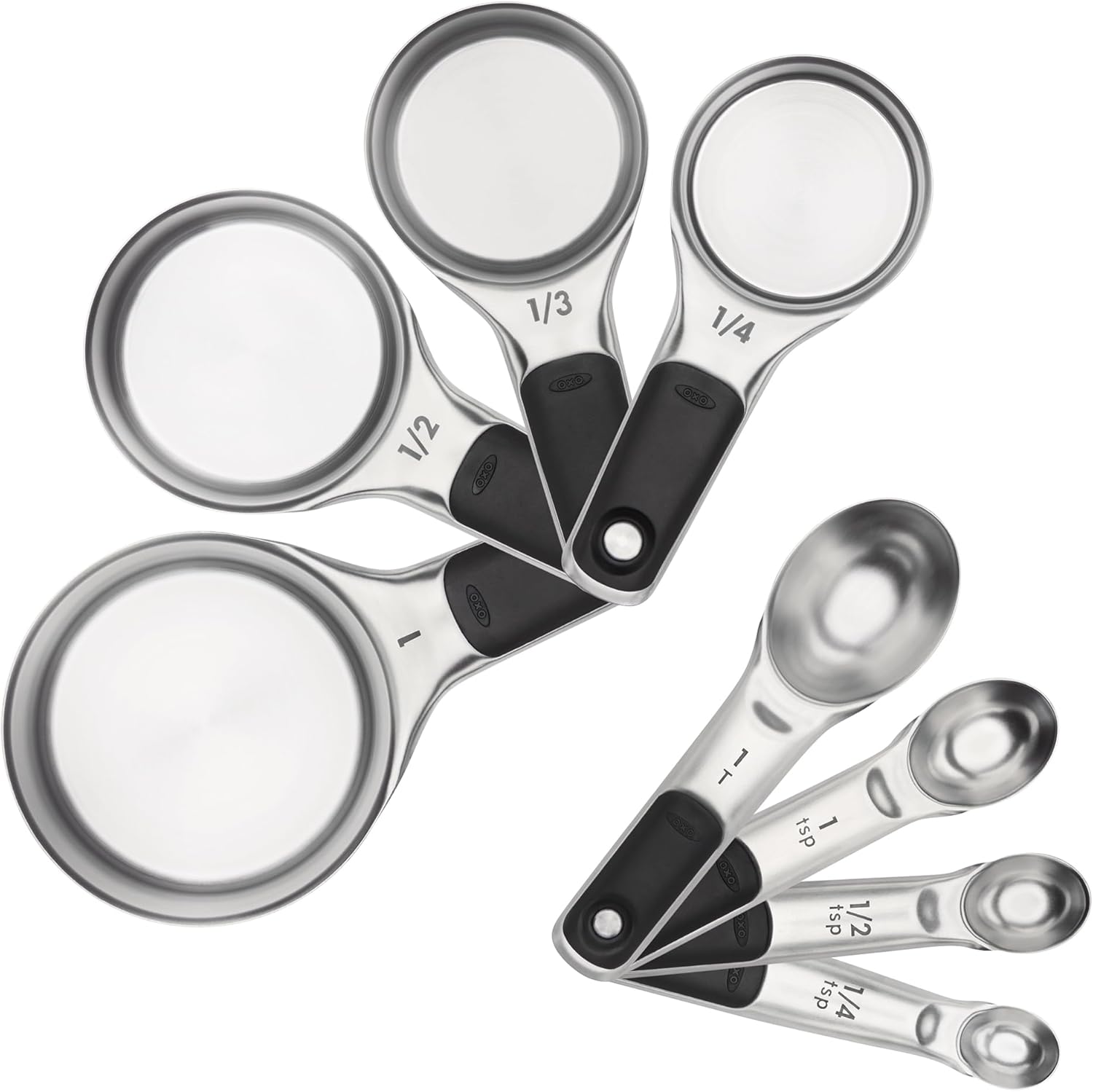
Kitchen drawer organization improves significantly when selecting measuring tools equipped with thoughtful storage solutions like magnetic nesting or convenient hanging holes. Magnetic handles let individual spoons snap together securely, eliminating tangled storage rings and saving precious minutes during food preparation. Streamlined nesting designs ensure multi-piece collections occupy minimal horizontal space inside shallow kitchen drawers.
Compact options like adjustable multi-size sliders reduce clutter by replacing numerous standalone pieces with a single compact unit. Measuring beakers also stack neatly inside one another to maximize vertical cabinet or drawer capacity. Reviewing your available kitchen storage dimensions before purchasing prevents overcrowding and ensures your measuring instruments remain easily accessible whenever recipes demand precise liquid additions.
Design Profiles for Liquid Pouring
The physical shape of a measuring spoon or beaker dictates how cleanly liquids transfer into mixing bowls and narrow containers. Rounded spoon heads provide natural pools for holding oils, extracts, and water without spilling over the edges. Dedicated pouring spouts and funnel-shaped beaker tops offer targeted streams, preventing messy drips when transferring small fluid quantities into narrow bottlenecks.
Dual-sided models separate liquid tasks onto the rounded end while dedicating the narrow oval end to dry spice jars. This dual profile prevents dry powders from clumping inside wet spoons during busy baking sessions. Evaluating how you typically combine ingredients guides you toward either specialized pouring spouts or versatile dual-ended spoons.
Accuracy and Measurement Markings
Precise liquid measurements depend heavily on clear, permanent markings that remain legible after months of washing and handling. Etched or stamped numbers on metal handles prevent fading over time, ensuring you always know the exact capacity of each spoon. Brightly colored or high-contrast printed markings on clear plastic beakers also enhance visibility when measuring dark liquids in bright kitchens.
Leveling features, such as included metal levelers or flat rim designs, help sweep away excess ingredients to guarantee exact quantities. Ensuring your measuring tools provide reliable calibration supports consistent baking results for delicate recipes. Prioritizing clear indicators and stable liquid holding profiles minimizes kitchen errors and improves overall cooking success across various meals.
Handle Comfort and Ergonomics
Comfortable handle design reduces hand strain during extensive baking sessions involving multiple liquid and dry ingredients. Soft-touch rubberized grips provide a secure, non-slip hold when your hands are slightly damp or greasy during food preparation tasks. Balanced weight distribution between the handle and the spoon head prevents tipping and improves overall stability.
Smooth metal handles offer a classic feel and effortless cleaning, though they lack rubberized cushioning. Ergonomic thumbprints on adjustable sliders help guide your fingers accurately when shifting between different measurement settings during busy cooking routines. Assessing your personal preference for cushioned grips versus solid metal construction ensures long-term comfort during daily food preparation tasks.
Cleaning and Maintenance Protocols
Maintaining hygiene and appearance in your measuring tools requires following proper manufacturer cleaning guidelines and dishwasher compatibility advice. Stainless steel sets typically withstand regular dishwasher cycles without rusting, though thorough drying prevents water spots on brushed finishes. Plastic beakers and adjustable sliders generally require top-rack dishwasher placement to avoid potential warping from heating elements.
Removable components, such as adjustable slider tracks, benefit from careful rinsing to eliminate sticky liquid residues trapped in small grooves. Selecting dishwasher-safe materials simplifies post-cooking cleanup and keeps your measuring instruments sanitary for future use. Reviewing maintenance requirements ensures your kitchen tools maintain their structural integrity and clean appearance over years of regular baking projects.
Frequently asked questions
Can stainless steel measuring spoons be used for both liquid and dry ingredients?
Yes, stainless steel measuring spoons handle both liquid and dry ingredients effectively. Models featuring round bowls or dual-sided designs provide dedicated round ends specifically shaped for holding liquids like oils and extracts, while narrow opposite ends fit into spice jars for dry powders. Metal construction resists absorbing odors or food stains, making them versatile for mixing various recipe components. Cleaning them is straightforward since durable stainless steel withstands routine dishwasher cycles without bending or rusting over time.
How do magnetic measuring spoons stay organized in kitchen drawers?
Magnetic measuring spoons feature built-in magnets embedded within their handles that allow each spoon to snap securely to the next one. This design lets the set nest together compactly, eliminating the need for traditional opening rings that can fumble or get misplaced. You can quickly pull out a single spoon for a specific measurement without taking apart the entire collection, keeping your kitchen drawers tidy and saving valuable time during food preparation.
Are plastic measuring beakers better for small liquid amounts?
Plastic measuring beakers excel at handling small liquid amounts because their funnel-shaped tops and dedicated pouring spouts make transferring tiny fluid quantities straightforward. Beakers designed for small volumes prevent spills when measuring extracts, food coloring, or lemon juice. Their clear construction and bright measurement markings also provide high visibility. However, users should place plastic beakers on the top rack of the dishwasher to prevent potential warping from high heat sources.
Do adjustable measuring spoons work well with sticky liquids?
Adjustable measuring spoons use sliding mechanisms to combine multiple sizes into a single tool, which works well for many kitchen tasks. When measuring sticky liquids, the sliding components require careful cleaning around the grooves and tracks to remove any residue effectively. Removing the slider parts when permitted by the design allows thorough washing. While they save significant storage space in crowded drawers, keeping the adjustment tracks clean ensures smooth movement over time.
How do I prevent water spots on stainless steel measuring spoons?
Preventing water spots on stainless steel measuring spoons involves thoroughly drying the metal items immediately after washing, especially if they feature a satin brushed finish. While food-grade stainless steel resists rust and corrosion effectively, mineral deposits from hard water can leave visible spots if allowed to air dry slowly. Towel drying your measuring tools right after taking them out of the dishwasher or sink helps maintain their polished appearance and clean exterior finish.