Appliances · Buying Guide
Best Mini Cheesecake Muffin Tin Options for Easy Baking
Baking mini cheesecakes requires the right hardware to achieve clean releases and even cooking results. Choosing between loose-bottom designs and traditional molded cavities shapes how you prep and serve your desserts.
Exploring different materials like stainless steel, carbon steel, and silicone helps match your kitchen routine. Reviewing these selections ensures you find a bakeware style that fits your exact baking preferences.
As an Amazon Associate, StacyLaughs earns from qualifying purchases.
Buying guide
Material Selection for Baking Pans
Bakeware materials directly influence heat conduction, durability, and maintenance routines. Carbon steel heats quickly and handles high temperatures, making it popular for browning edges.
Stainless steel offers a rustproof surface free of chemical coatings, while silicone provides flexibility. Choosing the right material depends on your preferred cleaning and baking style.
Understanding Pan Capacity Needs
Pan capacity dictates how many portions you can bake in a single oven cycle. Options range from 12-cup individual layouts to larger 24-cup configurations for high-volume needs.
Evaluating your typical batch size helps prevent overcrowding your oven or running multiple consecutive baking rounds for party preparations.
Removable Bottoms Versus Solid Cups
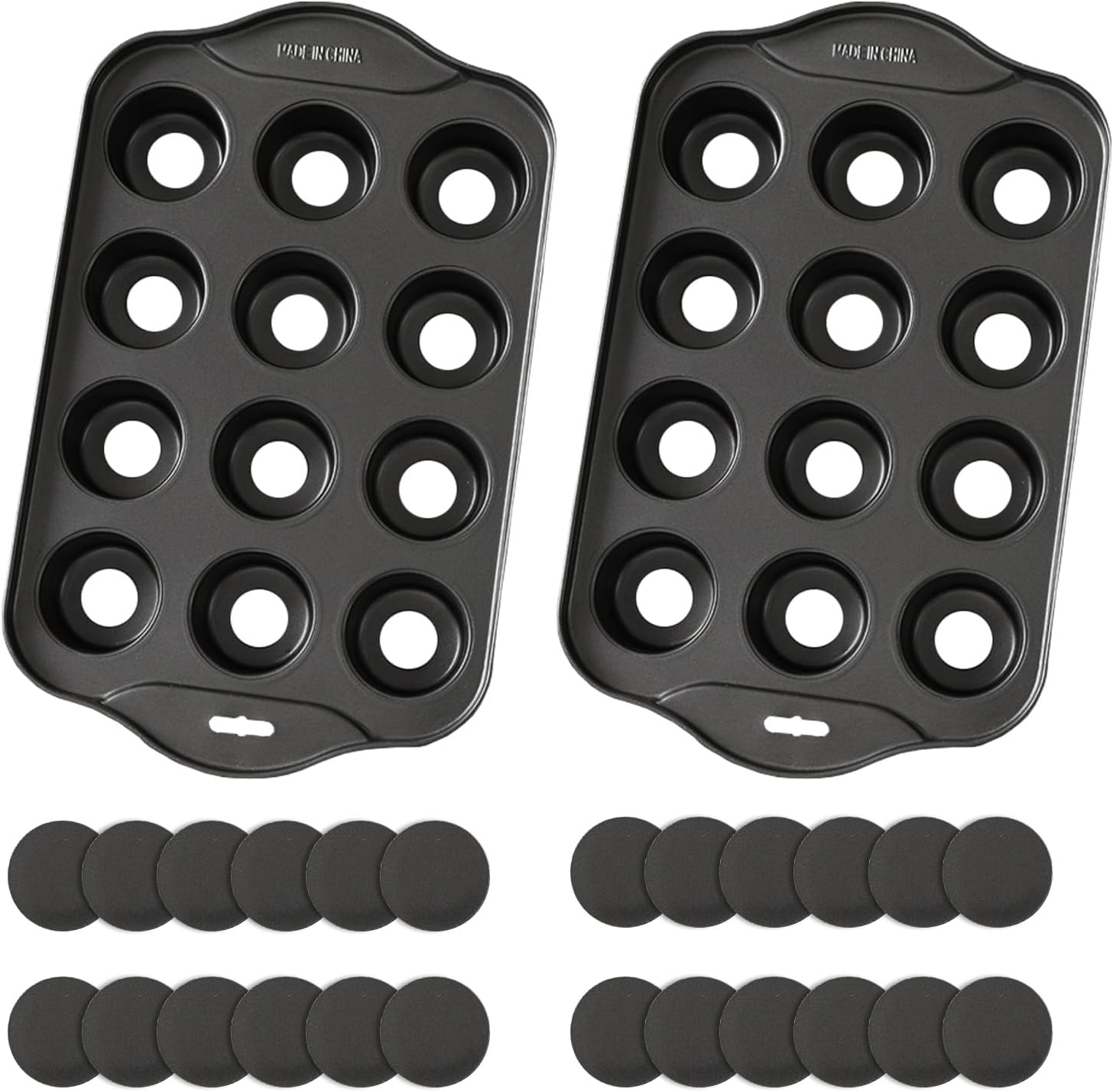
Removable bottom discs push upward to release delicate treats like mini cheesecakes without damaging crusts. This feature simplifies serving presentation.
Solid single-piece cups provide seamless construction with fewer parts to clean or misplace, suiting standard muffins and everyday cupcakes.
Temperature Limits and Oven Safety
Different pans feature varying maximum temperature thresholds, often ranging from 446 to 550 degrees Fahrenheit. Checking these limits prevents warping.
Matching your pan threshold to your baking recipes ensures safe performance and protects the lifespan of nonstick or silicone coatings.
Cleaning and Maintenance Practices
Cleaning requirements vary between dishwasher-safe models and those requiring hand washing with mild soap. Following care instructions preserves coatings.
Proper drying routines for steel pans prevent moisture accumulation, maintaining surface integrity and preventing long-term corrosion issues.
Sizing and Oven Fit Considerations
Exterior pan dimensions determine whether a tray fits comfortably inside standard home oven racks. Measuring your interior space avoids clearance issues.
Compact profiles also affect cabinet storage space, making stackable designs or single-tray sets better suited for smaller kitchens.
Frequently asked questions
Can I use paper liners in loose-bottom mini cheesecake pans?
Many loose-bottom pans accommodate standard paper liners within their circular cups, though some bakers prefer baking directly against the nonstick surface or removable disc. Using liners can simplify cleanup and help lift out certain cake varieties, but you should check the cup diameter against standard liner sizes to ensure a proper fit before pouring your batter.
How do removable bottom pans prevent leaks with thin batters?
Removable bottom pans rely on precise engineering and tight-fitting base discs to hold standard cheesecake and muffin batters securely. While thicker cheesecake fillings rarely pose an issue, very liquid batters may require careful pouring. Ensuring the base disc rests flat inside the cavity helps maintain a secure barrier during the baking process.
Is stainless steel better than coated carbon steel for baking?
Stainless steel offers a durable, rustproof surface entirely free of chemical coatings like PTFE or PFOA, appealing to those avoiding nonstick layers. Coated carbon steel, however, conducts heat evenly and offers superior food release properties out of the box. Your choice depends on whether you prioritize uncoated longevity or effortless nonstick release performance.
Are silicone muffin pans safe for high-temperature baking?
Silicone pans with reinforced metal frames typically handle temperatures up to around 446 degrees Fahrenheit safely. While this covers most standard baking tasks, it falls slightly short of heavy carbon steel pans that can withstand up to 550 degrees. Always verify your specific silicone product temperature threshold before operating high-heat recipes.
How should I clean pans with nonstick or specialized coatings?
Pans featuring specialized nonstick coatings generally benefit from gentle hand washing using warm water, mild soap, and a soft sponge or cloth. Although some manufacturers list their pans as dishwasher safe, hand washing helps protect the coating surface from harsh detergent wear and abrasive dishwasher racks over extended periods of use.