Appliances · Buying Guide
Best Mixing Bowl with Spout Options for Everyday Baking and Cooking
Finding the right mixing bowl with spout options can transform how you handle batters, sauces, and everyday food preparation tasks. Whether you are whipping up fluffy pancakes, mixing thick bread dough, or pouring delicate crepe batter into a hot pan, having a dedicated pouring lip helps minimize frustrating drips and countertop messes while keeping your prep work efficient.
Different materials and designs bring distinct advantages to your countertop. From durable stainless steel sets and lightweight microwave-safe plastics to heavy-duty clear glass options, understanding your specific baking habits ensures you select a bowl that balances comfortable handling and stable placement.
As an Amazon Associate, StacyLaughs earns from qualifying purchases.
Buying guide
Material Composition and Durability
Selecting the appropriate material for your mixing bowl with spout significantly impacts long-term durability, daily handling weight, and overall cleaning routines. Stainless steel offers exceptional resistance to rust, chips, and cracks while remaining remarkably lighter than comparable glass vessels.
Plastic variants provide shatterproof performance and lightweight handling, though they may develop surface scratches under heavy utensil use. Glass delivers superior thermal stability and nonporous qualities, resisting food stains and lingering odors completely, though it introduces a heavier empty weight and potential breakage risks if dropped. Combining these attributes helps match your specific kitchen habits.
Capacity Sizing and Recipe Needs
Evaluating capacity requirements ensures your mixing bowl handles everything from small egg-whisking tasks to massive batches of bread dough. Smaller two-quart bowls work wonderfully for quick sauces and dressings, while larger three to five-quart options accommodate family-sized cake batters without overflowing.
Choosing multi-bowl sets gives you versatile sizing choices for complex recipes that require multiple separated ingredients. Single bowls suit specific single-task baking routines, but having a progression of sizes prevents frequent bowl swapping. Match your typical cooking volume to the bowl capacity to maintain efficient meal preparation workflows without unnecessary container crowding.
Pour Spout Design and Mess Reduction
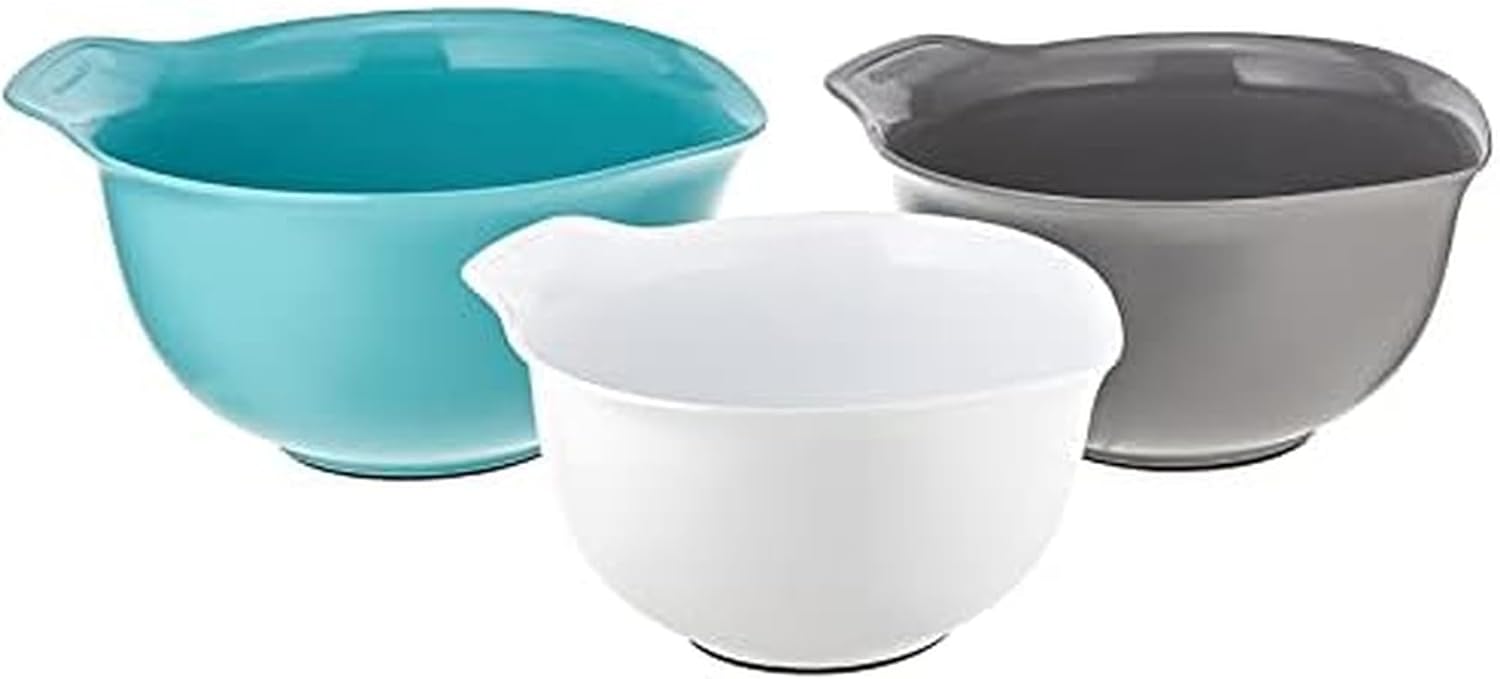
The primary purpose of a specialized pouring lip is to guide liquid ingredients and thick batters smoothly into pans, muffin tins, or baking dishes. A well-molded or integrated spout channels the mixture in a controlled stream, minimizing messy drips down the outer walls of your container.
Inspecting how the spout is shaped helps you anticipate its performance with different consistencies, from runny crepe batter to heavier cookie doughs. Spouts paired with high sidewalls or comfortable grip handles provide better overall control during the transfer process. This design detail reduces cleanup time and keeps your countertop spotless during active baking projects.
Stability Features and Nonslip Bases
Maintaining stability during vigorous whisking or electric hand-mixing prevents accidental spills and reduces arm fatigue. Many bowls feature integrated nonslip silicone bases or specialized rubber rings that anchor the container firmly to countertops, keeping the vessel from sliding around while you work.
Ergonomic handles complement stable bases by offering a secure grasp when you need to tilt or hold the bowl steady. Whether featuring soft-grip rubberized inserts or sturdy molded plastic, a comfortable handle improves your leverage. Pairing a stable base with an accessible handle ensures safe maneuvering during high-speed mixing operations.
Storage Options and Nesting Footprint
Kitchen cabinet space is often at a premium, making efficient storage a vital consideration when purchasing mixing bowls. Nesting sets allow smaller bowls to fit neatly inside larger ones, creating a compact stack that occupies minimal shelf space between your baking sessions.
Some sets also include tight-fitting lids, transforming your mixing bowls into convenient food storage containers for leftover batters, salads, or meal prep ingredients. Evaluating whether you need lids for refrigeration or simply want space-saving nesting helps streamline your kitchen organization without cluttering cupboards with standalone bowls.
Heat Resistance and Appliance Compatibility
Understanding temperature limits determines whether your mixing bowl can double as a melting or baking vessel. Glass and certain specialized plastics withstand microwave heating, allowing you to melt butter or warm milk directly in the prep bowl without dirtying extra dishes.
Tempered glass options often accommodate pre-heated ovens up to specific temperature thresholds, expanding their usefulness for baking tasks. Conversely, metal bowls offer durability and dishwasher safety but cannot enter a microwave. Checking appliance compatibility ensures your chosen bowl supports your preferred cooking methods safely.
Frequently asked questions
What are the main benefits of using a mixing bowl with a spout?
A mixing bowl featuring an integrated pour spout provides significant convenience when transferring liquid ingredients, pancake batter, or cake mixtures into pans, molds, or baking dishes. The specialized pouring lip helps direct the flow in a controlled stream, which dramatically reduces messy drips down the outer walls of the container and keeps your countertops cleaner. This design element eliminates the need for extra funnel tools or awkward spooning, streamlining your food preparation tasks and saving valuable cleanup time after baking.
Can I use plastic mixing bowls in the microwave?
Appliance compatibility depends entirely on the specific manufacturing specifications of each individual bowl. Certain plastic mixing bowls are explicitly engineered to be microwave-safe, allowing you to conveniently melt chocolate, soften butter, or warm milk directly inside the vessel before combining your dry ingredients. However, you should always verify the manufacturer guidelines provided with your exact product model before placing any plastic container into a microwave, as not all plastics withstand high heat without warping or sustaining surface damage.
Are stainless steel bowls better than glass mixing bowls?
Neither material is universally superior; instead, each offers distinct practical advantages depending on your baking habits. Stainless steel bowls provide exceptional durability, remaining completely resistant to chips, cracks, and shattering while offering a lightweight structure that is easy to lift. On the other hand, heavy glass bowls deliver superior thermal versatility, allowing for oven baking and microwave heating while resisting stains and lingering odors. Your choice depends entirely on whether you prioritize lightweight unbreakable metal or heat-safe glass.
How do non-slip bases improve mixing performance?
Non-slip bases or silicone bottom rings significantly enhance countertop stability by anchoring the mixing bowl firmly in place during vigorous stirring, whisking, or high-speed electric mixing. This added friction prevents the container from sliding across your work surface, reducing the physical effort needed to hold the bowl steady and lowering the risk of accidental spills. By keeping the vessel securely anchored, non-slip bases allow you to focus entirely on combining your ingredients efficiently and safely.
How should I clean and store my nesting mixing bowl sets?
Most modern mixing bowl sets feature dishwasher-safe construction, allowing for easy cleanup using warm water and standard dishwasher cycles according to manufacturer guidelines. For storage, nesting bowl sets are specifically designed so that smaller bowls fit neatly inside the largest container, creating a single compact unit that minimizes cabinet footprint. This efficient nesting arrangement keeps your kitchen cupboards organized and ensures all matching sizes stay together in one accessible location between cooking projects.