Appliances · Buying Guide
Best Mixing Bowls for Baking: Durable Sets for Every Kitchen
Finding the right mixing bowls for baking transforms how you prep ingredients, whisk batters, and store leftovers. Whether you are whipping up a weekend cake or organizing a multi-step dinner recipe, having a dependable set of bowls makes the entire process smoother and cleaner. Different materials, from lightweight plastic to heavy-duty stainless steel and tempered glass, offer distinct advantages for your daily kitchen tasks.
Selecting a suitable collection depends heavily on your specific cooking habits, available cabinet storage space, and cleanup preferences. Some cooks prioritize non-slip silicone bases to keep containers steady on busy counters, while others look for nested designs or integrated pour spouts. Reviewing the core attributes of each option helps you choose a reliable set tailored to your everyday baking and meal preparation needs.
As an Amazon Associate, StacyLaughs earns from qualifying purchases.
Buying guide
Choosing the Right Bowl Material
Selecting the proper material for your mixing bowls significantly impacts how comfortably you prep ingredients, bake sweet treats, and clean up afterward. Stainless steel offers a durable, rust-resistant surface that handles vigorous whisking without absorbing food odors or stubborn stains. Many metal options feature mirror-polished interiors that help batters and dough release smoothly during active kitchen tasks.
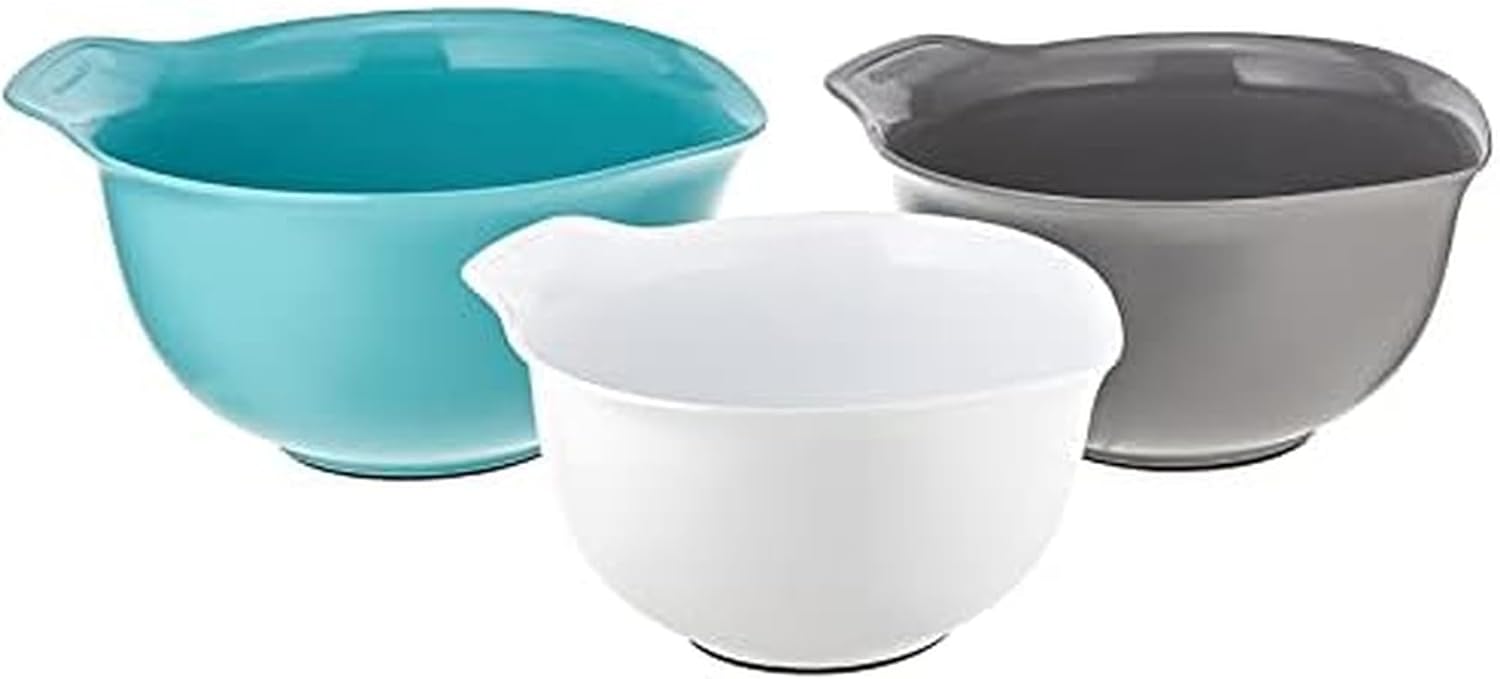
Glass provides a heavier, sturdy alternative that resists staining and permits safe transitions directly into the microwave, freezer, or dishwasher. Plastic versions deliver lightweight handling and frequently incorporate helpful pour spouts or nonslip rubberized bases for enhanced stability. Carefully consider your typical baking routines and storage preferences to determine which specific material fits your culinary lifestyle best.
Capacity and Size Selection
Having a diverse range of bowl capacities ensures you always have an appropriately sized container for every recipe step. Smaller bowls holding one to two quarts excel at whisking individual eggs, measuring dry spices, or holding chopped garlic and herbs. Mid-size vessels handle standard cake batters, dressings, and smaller salad tossings with ease without taking up unnecessary counter space.
Larger bowls ranging from four to five and a half quarts provide the ample room needed for kneading thick bread dough, tossing family-sized salads, or mixing large batches of cookies. Choosing a multi-size nesting set eliminates guesswork by supplying graduated dimensions for simple meal preparation. Evaluating your typical household recipe scale prevents overcrowding workspaces and messy ingredient overflows.
Countertop Stability and Bases
Vigorous whisking and rapid stirring can cause slick metal or plastic bowls to slide across smooth kitchen countertops, creating frustrating spills and messes. Selecting models equipped with non-slip silicone or rubberized bases significantly increases friction against your work surface. This added grip anchors the container firmly in place, allowing you to mix dense batters and whip egg whites comfortably without chasing the bowl.
Textured or rubberized bottoms also protect delicate stone countertops like marble and granite from scratching or scuffing during active food preparation tasks. While standard smooth-bottomed bowls often require a damp towel underneath for stability, silicone-based alternatives offer built-in convenience right out of the box. Prioritizing this stability feature improves safety, confidence, and overall efficiency when tackling rigorous baking projects in your home kitchen.
Storage and Nesting Design
Managing kitchen cabinet space is an ongoing challenge for home bakers, making smart storage design an essential purchasing consideration. Nesting mixing bowl sets allow smaller containers to fit snugly inside larger ones, collapsing an entire multi-piece collection into a single compact footprint. This vertical stacking reduces kitchen cupboard clutter effectively between baking sessions without requiring awkward reorganizing.
When evaluating nested options, check whether the set includes fitted storage lids that allow you to use the bowls for refrigerator meal prep and leftovers. Covered nesting systems save both cabinet space and refrigerator space by doubling as functional food storage containers. Choosing a streamlined stackable design keeps your essential baking gear organized and readily accessible whenever culinary inspiration strikes your household.
Pour Spouts and Clean Transfer
Transferring runny cake batters, pancake mixes, or liquid ingredients from a mixing bowl into baking pans can easily lead to messy countertop spills. Bowls featuring integrated pour spouts provide a guided channel that directs liquids smoothly into pans, baking dishes, and muffin tins. This intentional design feature minimizes frustrating drips down the exterior side of the container during busy recipe steps.
Pour spouts work alongside lightweight plastic or flexible materials to give you precise control when tipping the vessel. While traditional round bowls require careful maneuvering or separate scraping tools to avoid countertop messes, spouted rims simplify fluid transfers significantly. Look for this convenient attribute if you frequently bake delicate cupcakes, fluffy pancakes, or layered birthday cakes entirely from scratch.
Maintenance and Cleanup Ease
After finishing an extensive baking project, spending minimal time on cleanup allows you to enjoy your freshly baked treats without hassle. Dishwasher-safe mixing bowls simplify post-cooking maintenance by letting your kitchen machine handle the heavy scrubbing. Stainless steel and tempered glass surfaces naturally resist staining and release sticky food residue quickly during the washing cycle.
Certain materials and matching accessories, such as plastic storage lids or specialized grater attachments, may require hand-washing to prevent thermal warping from high dishwasher heat. Reviewing manufacturer care instructions helps preserve the structural longevity of your bowls and lids. Choosing easy-to-clean components ensures your mixing set remains in top condition through years of regular baking routines.
Frequently asked questions
What size mixing bowl do I need for baking?
The ideal mixing bowl size depends entirely on the specific recipe you are preparing. Smaller bowls holding one to two quarts are best suited for whisking individual eggs, mixing small dressings, or holding measured dry spices. Medium bowls around three quarts handle standard cake batters and side dishes comfortably. Larger bowls measuring four to five and a half quarts provide necessary room for kneading dense bread dough or tossing family-sized salads without messy overflows.
Are stainless steel mixing bowls better than glass bowls?
Both stainless steel and glass bowls offer unique advantages depending on your baking preferences. Stainless steel is lightweight, rust-resistant, unbreakable during drops, and excellent for rapid temperature changes or general mixing tasks. Glass bowls provide a heavier, sturdy base that resists stains and odors while allowing safe transitions into the microwave, freezer, or dishwasher. Your choice depends on whether you prioritize lightweight portability and durability or microwave compatibility and stain resistance.
How do I keep mixing bowls from sliding on the counter?
To prevent mixing bowls from sliding while you vigorously whisk or stir, look for sets featuring built-in non-slip silicone or rubberized bottom bases. These grips increase friction against stone, laminate, or wooden countertops to anchor the container securely. If your bowls have smooth metal or plastic bottoms, placing a damp kitchen towel underneath the base creates a similar stabilizing effect and prevents unwanted movement during food preparation tasks.
Can I put mixing bowls and their lids in the dishwasher?
Most mixing bowls constructed from stainless steel, durable plastic, or tempered glass are fully dishwasher-safe for convenient cleanup after baking. However, matching plastic storage lids frequently require careful hand-washing instead. High heat cycles inside standard automatic dishwashers can warp flexible plastic lids, compromising their airtight seal and proper fit over time. Always check manufacturer care guidelines to determine whether specific lids should be kept out of heated drying cycles to maintain longevity.
Why are nesting mixing bowls recommended for small kitchens?
Nesting mixing bowls are highly recommended for smaller kitchens because their graduated sizing allows smaller containers to fit completely inside larger ones. This clever design collapses an entire multi-piece collection into a single, compact vertical stack that occupies minimal cupboard space. Instead of cluttering shelves with scattered bowls of various dimensions, a nesting set keeps your baking equipment neatly organized, easily accessible, and safely stored between recipe preparations.