Appliances · Buying Guide
Best Muffin and Cupcake Pans for Every Kitchen Baking Style
Baking muffins and cupcakes at home requires reliable bakeware that ensures even heat distribution and effortless food release. Choosing the right pan depends on your preferred materials, whether you prefer traditional carbon steel, heavy-weight steel, or flexible silicone with metal frames. Each material offers distinct advantages for everyday baking tasks, helping you achieve evenly browned treats or simple pop-out releases without struggling with stuck batters.
Exploring different pan capacities and configurations lets you match your bakeware to your specific recipe needs, from standard batches to oversized bakery-style treats or mini portions. Reviewing the physical attributes and manufacturer care instructions helps you select options that fit comfortably in your oven and align with your cleaning preferences, ensuring long-term utility across countless baking sessions.
As an Amazon Associate, StacyLaughs earns from qualifying purchases.
Buying guide
Material Selection for Baking Performance
Selecting the right material for your baking pans directly influences how heat transfers to your batters. Carbon steel and traditional heavy-weight steel conduct heat rapidly, promoting uniform browning and crisp exterior crusts on standard muffins and cupcakes. These metallic options typically rely on applied nonstick coatings to prevent food adhesion during high-heat baking sessions.
Silicone pans offer extreme flexibility, allowing you to pop out delicate baked goods by gently pressing the bottom of each individual cup. Many silicone designs incorporate integrated metal reinforced frames to maintain structural rigidity during oven transfers. Evaluating your personal preference for rigid metal versus flexible silicone helps determine your ideal bakeware match for daily kitchen tasks.
Evaluating Pan Capacity and Cup Counts
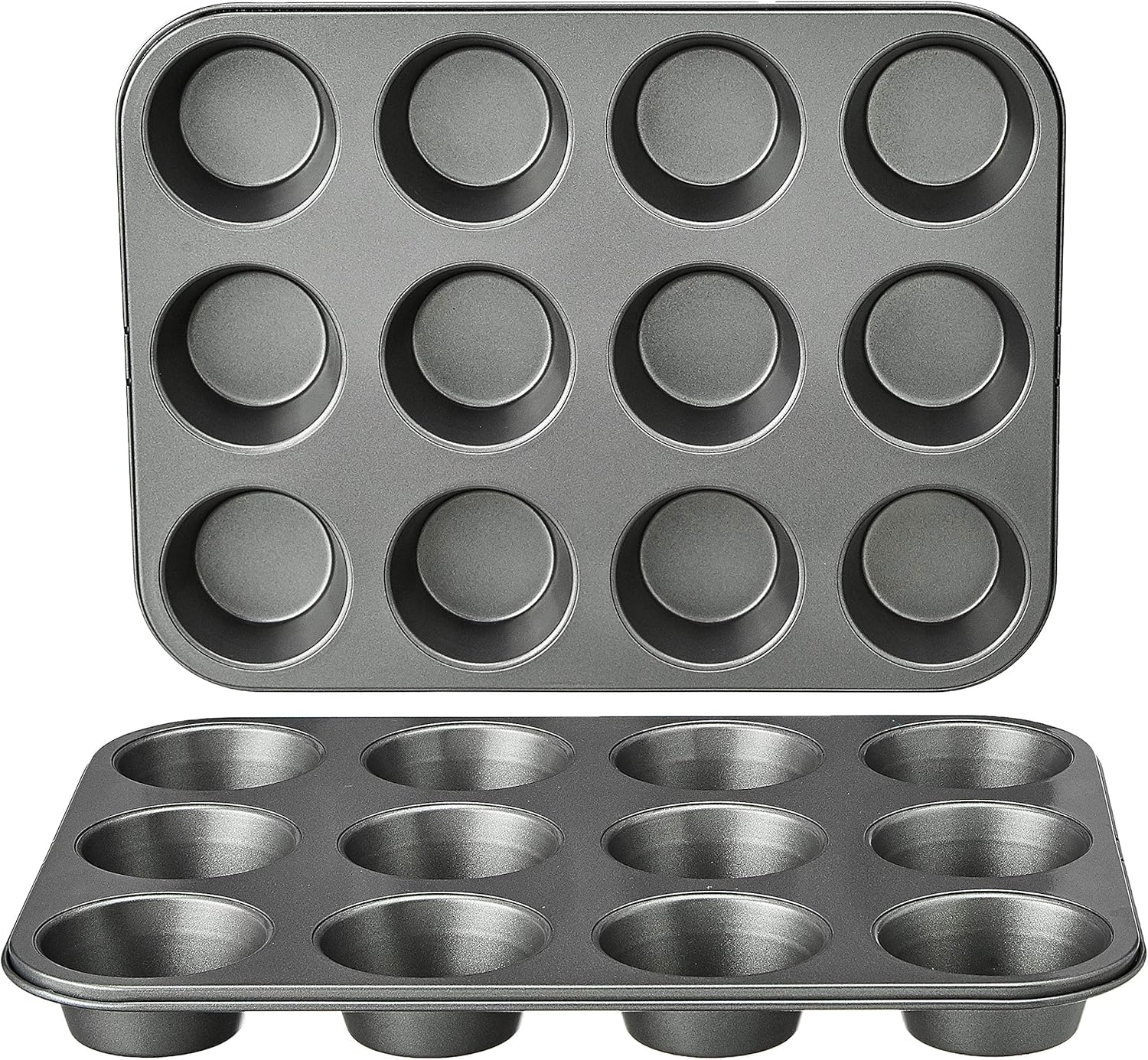
Bakeware capacity dictates how many delicious treats you can produce in a single oven cycle. Standard twelve-cup pans suit average household baking batches, while twin-pack sets double your output to twenty-four cups for larger gatherings or weekly meal prep. Assessing your typical household baking volume clarifies whether you need high-capacity multi-packs or smaller cooking layouts.
Individual cup dimensions also vary across different pan styles, ranging from compact mini portions to extra-large jumbo designs. Jumbo pans feature wider and deeper wells tailored specifically for bakery-style oversized muffins, requiring appropriate recipe proportions. Matching your baking goals to the correct cup count and size ensures proper batter fill levels and consistent baking results every time.
Temperature Thresholds and Oven Safety
Understanding maximum temperature ratings ensures your baking pans remain structurally sound under high oven heat. Most carbon steel and reinforced silicone bakeware options safely withstand temperatures up to 450 degrees Fahrenheit, accommodating standard dessert and breakfast baking tasks easily. Exceeding these manufacturer-specified upper thermal limits can damage nonstick coatings or compromise metal frames during prolonged baking sessions.
Certain materials also permit direct freezer-to-oven transitions, allowing you to prepare frozen recipes ahead of time without changing containers. Always review specific product guidelines regarding broiler or grill usage, as many standard pans explicitly prohibit direct exposure to intense overhead heating elements. Respecting these thermal boundaries preserves the long-term safety and structural integrity of your bakeware investment.
Cleaning and Maintenance Requirements
Proper maintenance routines significantly extend the active lifespan of your muffin and cupcake pans. While select carbon steel and silicone models carry dishwasher-safe designations, many manufacturers recommend gentle hand washing with warm soapy water to protect delicate nonstick properties. Abrasive scrubbers and harsh cleaning agents should always be avoided to prevent scratching sensitive surface coatings.
Drying your pans thoroughly after washing prevents moisture accumulation, especially on carbon steel surfaces that require careful upkeep. Following specific brand care instructions ensures your bakeware stays in pristine condition across numerous baking sessions, maintaining reliable food release and effortless cleanup for years of dependable home kitchen use without premature coating degradation.
Handling and Structural Stability
Safe handling features make moving loaded baking pans into a hot oven much easier and more secure. Extended side handles provide reliable grip points, significantly reducing the risk of accidental slips while wearing bulky oven mitts. Pans built with dent-resistant carbon steel or metal reinforced silicone frames resist twisting under heavy loads of wet batter.
Flimsy pans can flex unexpectedly when filled with heavy liquid batter, leading to accidental spills or misshapen baked goods. Choosing rigid steel or supported silicone structures ensures stable transport from your kitchen counter to the oven rack. Prioritizing robust construction improves overall baking confidence and safety during busy recipe preparations and family gatherings.
Accessories and Supplementary Inclusions
Some baking pan packages include helpful accessories like paper liners or multi-pack configurations that add immediate practical value. Bonus cupcake liners allow you to start baking straight out of the box without needing to purchase separate baking supplies. Twin-pack bundles also provide expanded baking capacity for larger households preparing multiple batches.
Evaluating bundled extras helps you determine overall kit utility based on your current kitchen inventory. Whether you need disposable paper liners for quick cleanup or multiple pans for simultaneous baking rounds, choosing complete sets streamlines your baking preparation routines. Assessing these inclusions ensures you secure practical utility tailored specifically to your regular baking style and household habits.
Frequently asked questions
Should I grease nonstick muffin pans before adding batter?
Many modern nonstick carbon steel and silicone muffin pans feature easy-release coatings designed to let baked goods slide out smoothly without heavy greasing. However, depending on the specific recipe ingredients and your personal preferences, applying a light coating of cooking spray or using paper liners can provide extra insurance against sticking. Reviewing manufacturer instructions helps determine whether greasing is necessary or if the specialized surface coating handles food release independently for your specific treats.
Can silicone muffin pans go straight from the freezer to the oven?
Certain professional-grade silicone muffin pans featuring metal reinforced frames are engineered to withstand wide thermal swings, allowing safe transitions from deep freezer storage directly into a hot oven. This thermal resilience makes them convenient for meal prepping frozen egg bites or bake-ahead desserts. You should always verify the manufacturer's specified temperature limits and guidelines to ensure the specific silicone material can handle rapid temperature changes without sustaining damage or releasing odors.
How do I clean carbon steel muffin pans safely?
Cleaning carbon steel muffin pans properly involves washing them with warm water and mild dish soap using a soft sponge or cloth. While some models carry dishwasher-safe labels, many manufacturers recommend hand washing to preserve the longevity of the nonstick coating and prevent premature wear. Avoid using abrasive steel wool pads or harsh chemical cleaners that can scratch the protective surface, and dry the pan thoroughly after washing to prevent moisture-related rust accumulation.
Why choose a jumbo muffin pan over a standard 12-cup pan?
Choosing a jumbo muffin pan allows you to bake extra-large, bakery-style oversized muffins, XL cupcakes, and hearty breakfast egg bites that require deeper and wider cup capacities. Standard twelve-cup pans produce regular-sized portions ideal for standard recipes and larger batch counts. Selecting a jumbo pan depends entirely on whether your recipes call for substantial, large-format portions or if you prefer making higher quantities of standard-sized treats for parties and gatherings.
Are metal reinforced frames necessary on silicone baking pans?
Metal reinforced frames provide essential structural rigidity to flexible silicone baking pans, preventing the tray from bending or warping when filled with heavy liquid batter. While pure silicone pans offer excellent flexibility for popping out baked goods, they can feel overly flimsy during transport to and from the hot oven. Pans with embedded metal frames combine flexible push-out release benefits with the stable handling characteristics of traditional rigid metal bakeware.