Appliances · Buying Guide
Best Mushroom And Pyrex Mixing Bowls For Every Kitchen Task
Choosing the right mixing bowls involves balancing capacity, material durability, and design preferences for everyday cooking tasks. Whether preparing large batches of bread dough or whipping up morning pancake batter, having reliable kitchen vessels simplifies food preparation significantly. Modern buyers often look for options that transition smoothly from countertop prep to refrigerator storage without losing functionality.
This careful selection covers durable tempered glass sets alongside charming ceramic and enameled aluminum options featuring distinct decorative patterns. Examining individual specifications ensures you select vessels matching your specific baking and food storage routines safely and efficiently. Each material offers unique handling characteristics suited for different food preparation environments around the home.
As an Amazon Associate, StacyLaughs earns from qualifying purchases.
Buying guide
Material Selection For Kitchen Bowls
Choosing the appropriate bowl material dictates how your kitchenware handles daily demands. Glass models offer structural sturdiness and stain resistance without absorbing food odors over years of heavy food preparation. Borosilicate and tempered glass types withstand temperature shifts, making them ideal for baking and microwave tasks. However, glass inherently carries more physical weight than alternative materials like aluminum.
Ceramic options provide charming decorative aesthetics alongside high-temperature durability, though they require careful handling to avoid accidental chipping. Enameled aluminum delivers lightweight portability for quick tasks but often lacks microwave compatibility. Evaluating your frequent cooking habits helps determine which specific material fits your kitchen workflow without causing maintenance frustrations down the road.
Understanding Capacity And Bowl Dimensions
Bowl capacity determines the scope of recipes you can comfortably execute in a single vessel. Smaller one-quart containers excel at whisking eggs, mixing dressings, or preparing single portions of pancake batter. Medium sizes ranging from one-and-a-half to two-and-a-half quarts handle standard baking prep and vegetable tossing. Large multi-quart options accommodate family-sized dough risings and extensive mixing tasks efficiently.
Considering physical dimensions alongside stated volume ensures your bowls fit comfortably inside available storage spaces and appliance interiors. Wide rims offer better leverage during manual mixing, while narrower bases provide stability on countertops. Matching your typical batch sizes to the correct capacity prevents overflow messes and streamlines your daily cooking routines significantly.
Evaluating Pouring Spouts And Handles
Specialized features like integrated pouring spouts and sturdy handles drastically improve usability for liquid-heavy recipes. A well-designed spout channels batters and beaten eggs smoothly into baking pans or onto hot griddles without dripping down the exterior wall. This precision minimizes countertop cleanup and reduces food waste during active food preparation sessions.
Handles provide an essential anchor point when tilting heavier ceramic or metal bowls to extract thick mixtures. When selecting vessels for batter tasks, verify that the handle offers an ergonomic grip that feels secure in your hand. While traditional round bowls rely on rim pinching, designated batter bowls with handles transform fluid transfer into a much safer, controlled procedure.
Lid Compatibility And Food Storage
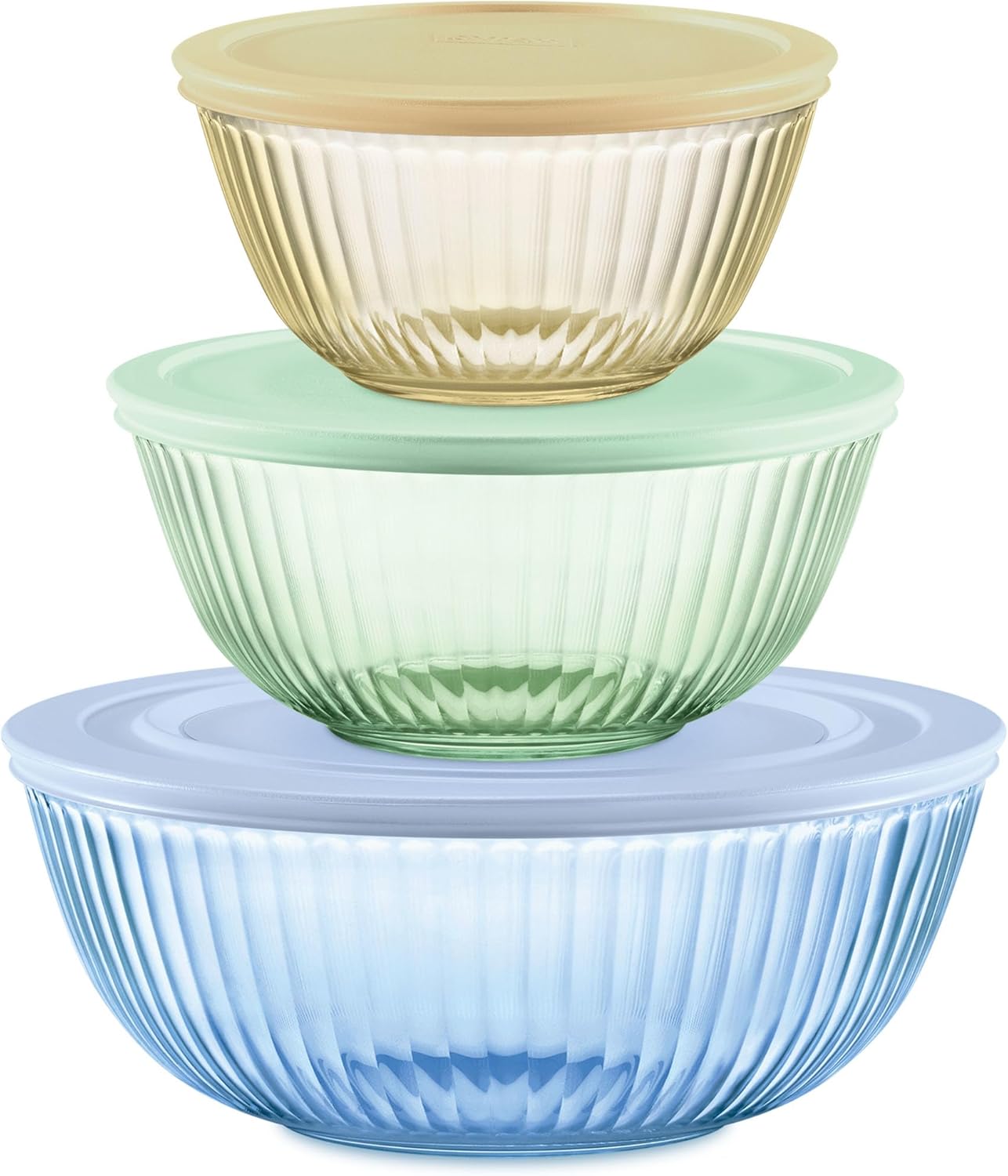
Transitioning food directly from preparation to refrigerator storage relies heavily on secure, well-fitted lids. Plastic covers designed with tight seals keep leftovers fresh and tasty for extended periods without requiring disposable plastic wrap. Reviewing whether a set includes matching lids saves you from searching for aftermarket covers later in your kitchen routine.
Lids constructed from food-grade, BPA-free materials offer complete peace of mind when storing warm foods or chilling ingredients overnight in the refrigerator. Some glass sets omit lids entirely, prioritizing high-heat baking performance over storage utility. Assessing whether you need active food preservation or purely mixing vessels ensures your investment aligns perfectly with your household storage habits.
Cleaning And Maintenance Guidelines
Maintaining kitchenware according to manufacturer guidelines preserves the surface finish and structural integrity over years of use. Most glass, ceramic, and enameled aluminum bowls support dishwasher cleaning for effortless cleanup after messy baking sessions. However, certain enameled metals strictly forbid microwave usage, requiring careful attention before attempting to reheat contents directly inside the vessel.
Plastic storage lids often require top-rack dishwasher placement to prevent structural warping from intense lower-rack heating elements. Glass and ceramic models naturally resist staining and lingering food odors, simplifying manual scrubbing when stubborn residues occur. Understanding these maintenance boundaries prevents accidental damage and extends the operational lifespan of your kitchenware collection significantly.
Storage Space And Stackability
Managing available cabinet space is a primary concern when acquiring multiple mixing bowls of varying diameters. Stackable designs allow smaller vessels to nest neatly inside larger counterparts, minimizing the storage footprint inside crowded kitchen cupboards. Enameled aluminum and lightweight sets often facilitate seamless nesting without risking surface damage during daily retrieval.
Glass and ceramic bowls require cautious stacking habits to prevent chipping or scratching delicate rims during retrieval. Evaluating your available shelf space alongside the physical footprint of large multi-quart sets prevents storage bottlenecks in smaller kitchens. Prioritizing stackable options ensures your kitchen stays organized and clutter-free regardless of how many pieces your chosen set contains.
Frequently asked questions
Can glass mixing bowls be used safely in the microwave?
Many glass mixing bowls, including tempered and borosilicate options, are explicitly rated as microwave safe for warming food and melting baking ingredients. Always check the specific manufacturer guidelines for your exact model before placing glass containers in a microwave. Furthermore, ensure that any plastic storage lids are removed or properly vented if product instructions permit heating with the lid attached. Following these simple precautions prevents thermal shock and avoids warping plastic components during your daily kitchen tasks.
Are ceramic batter bowls suitable for everyday mixing tasks?
Ceramic batter bowls featuring integrated pouring spouts and convenient handles excel at everyday tasks like beating eggs, mixing pancake batter, and preparing small batches of ingredients. Their high temperature fired ceramic build provides reliable stability and durability for routine kitchen prep work. However, their restricted one-quart capacity means they are better suited for light mixing rather than heavy bread doughs or large family-sized baking projects. Users genuinely appreciate their decorative charm alongside practical pouring functionality.
How should enameled aluminum bowls be cleaned and maintained?
Enameled aluminum storage bowls typically support dishwasher cleaning for straightforward maintenance after serving fruits, salads, or vegetables. However, you must carefully verify product specifications because enameled aluminum containers are often explicitly not suitable for microwave use. Avoid using abrasive scouring pads that might scratch the decorative exterior patterns or the interior enameled coating. Storing them carefully and respecting temperature limitations ensures the materials remain durable and visually appealing over years of regular household use.
Do glass mixing bowls come with matching storage lids?
Lid inclusion varies significantly depending on the specific product line and manufacturer configuration. Some multi-piece glass sets include secure, BPA-free plastic lids designed for airtight food storage and leftover preservation in the refrigerator. Other classic glass baking sets omit lids entirely, focusing strictly on open-bowl prep and high-heat oven performance. Reviewing the exact listing details ensures you select a set that matches your personal preference for active food storage versus pure baking functionality.
What are the advantages of using tempered versus borosilicate glass bowls?
Both tempered and borosilicate glass options offer excellent resistance to food stains and lingering odors, making them popular choices for kitchen longevity. Tempered glass undergoes specialized thermal treatments to enhance overall physical strength and durability against everyday bumps. Borosilicate glass is renowned for its exceptional resistance to thermal shock, handling rapid temperature shifts with reliable stability. Selecting between these glass types depends on your specific baking habits and desired level of toughness during heavy kitchen tasks.