Appliances · Buying Guide
Best Non Stick Baguette Pans for Crispy French Bread at Home
Baking artisan French bread at home transforms ordinary kitchen routines into a rewarding baking experience, but achieving that distinct bakery-style crust requires specialized equipment. Standard flat baking sheets often fail to support the iconic curved shape of baguettes, leading to flat loaves or uneven bottom crusts that lack professional definition and proper air circulation.
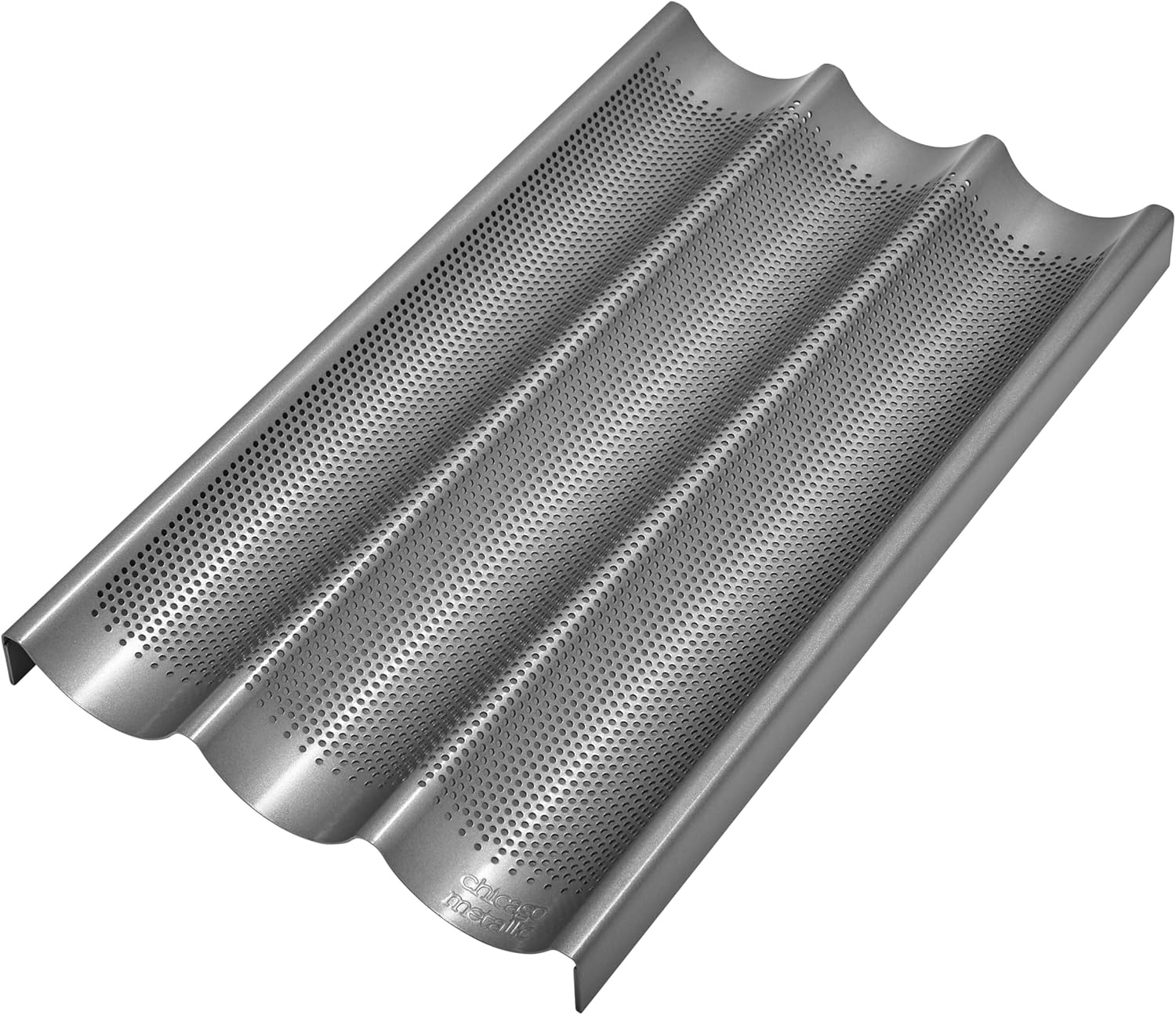
Purpose-built nonstick baguette pans feature dedicated curved channels and perforated surfaces designed to promote optimal airflow and heat circulation across every single loaf. These thoughtfully engineered molds help dough maintain its structural shape during both the rise and bake cycles, delivering golden results for sandwich rolls, sub buns, and traditional bread without requiring complicated preparation methods.
As an Amazon Associate, StacyLaughs earns from qualifying purchases.
Buying guide
Material Composition and Heat Conduction
Selecting the right material is essential for achieving professional baking results with any baguette pan. Carbon steel and heavy-weight aluminum are the primary options available, each offering distinct advantages for heat transfer. Aluminum provides rapid and uniform heat distribution across the entire surface, helping prevent localized hot spots. Carbon steel delivers exceptional durability and maintains structural integrity under high oven temperatures.
When choosing between these metals, consider how your oven heats and your typical baking frequency. Aluminum pans heat up quickly, which benefits shorter baking times, while carbon steel options retain warmth effectively for steady baking consistency. Matching the material to your preferred recipes ensures that your bread develops an even internal crumb structure and a reliably golden exterior finish without unexpected burning issues.
Perforation Patterns and Crust Development
Perforations play a crucial role in creating the crackly, golden-brown crust characteristic of authentic French baguettes. These tiny holes allow hot air to circulate freely around the dough during the baking process, preventing excess moisture from trapping underneath the loaf. Dense perforation layouts ensure that heat reaches all sides of the expanding dough uniformly.
Without adequate ventilation, dough can become soggy on the bottom and fail to develop a proper artisan crunch. When evaluating different tray designs, look for evenly spaced pores that cover the entire channel base. This airflow optimization supports a superior rise and delivers the desirable bakery-style texture that elevates homemade bread from ordinary to exceptional.
Capacity and Oven Size Compatibility
Matching your baking pan dimensions to your oven interior prevents frustrating clearance issues during baking. Standard baguette pans range from compact two-loaf designs measuring around fifteen inches long to larger three or four-loaf trays extending past sixteen inches. Always measure your oven racks before purchasing to ensure the tray slides in smoothly without hitting the interior walls.
Consider your typical household needs alongside your spatial limitations. While high-capacity trays let you bake more bread at once, they require considerably more width and depth inside the appliance. Choosing a smaller two-loaf configuration makes sense if you cook for fewer people or manage a compact kitchen oven with limited internal space.
Nonstick Coatings and Release Quality
A reliable nonstick coating simplifies the process of removing baked baguettes without tearing the delicate crust. Premium coatings allow finished loaves to slide effortlessly out of the curved channels, reducing cleanup effort and preserving the appearance of your bread. Dual-layer options provide extra reassurance against sticking, especially when baking high-hydration doughs that naturally cling to metal surfaces.
Even with advanced nonstick technology, applying a light coating of oil or using parchment paper can further enhance food release. Protect your investment by avoiding metal utensils that might scratch the treated surface. Selecting a pan with a dependable nonstick finish ensures that every baking session ends with clean loaves and simple post-baking cleanup routines.
Maintenance and Cleaning Requirements
Proper maintenance habits significantly extend the lifespan of your baguette pan and protect its nonstick properties. Reviewing manufacturer care guidelines helps you determine whether a pan is dishwasher safe or requires manual hand washing. Carbon steel baking trays typically demand thorough hand washing followed by complete drying to prevent moisture-related surface rust over extended periods of regular use.
Even when dishwasher-safe labeling is present, gentle hand cleaning with mild soap often preserves protective coatings longer. Avoiding harsh abrasive scrubbers prevents microscopic scratches that compromise nonstick performance. Establishing a consistent cleaning and drying routine keeps your baking equipment in optimal condition, ready for your next batch of homemade French bread or sandwich rolls.
Structural Rigidity and Proofing Support
Structural rigidity ensures that your baguette pan remains flat and warp-resistant under high baking temperatures. Thickened metal construction prevents the tray from twisting when exposed to intense heat inside the oven. Some rigid designs even double as proofing molds, allowing your dough to rise directly in the channels so the loaves retain their ideal shape from start to finish.
Sturdy construction also improves handling safety when you transport heavy, loaded trays between the counter and the oven racks. Look for pans featuring reinforced edges or rounded corners that provide a secure grip. Investing in a rigid, well-built baking mold eliminates the worry of flexing or bending during busy meal preparation sessions.
Frequently asked questions
Do I need to use parchment paper with a nonstick baguette pan?
While nonstick baguette pans are designed to release baked bread easily without extra linings, using parchment paper is entirely optional and often recommended for very sticky or high-hydration doughs. Parchment helps prevent delicate dough from gripping the perforated holes, ensuring flawless release and effortless cleanup. If your recipe involves standard dough, a light application of butter or oil directly on the surface works wonderfully. Ultimately, parchment paper provides extra insurance for bakers who want guaranteed zero-stick results without altering the classic crust texture.
Can I proof bread dough directly inside a baguette pan?
Many rigid carbon steel and aluminum baguette pans allow you to proof dough directly in the channels, helping the loaves maintain their distinct curved shape from the initial rise straight into the hot oven. This convenient method eliminates the need for separate proofing baskets or cloths, simplifying your overall baking workflow. However, you should always check the manufacturer guidelines to confirm whether your specific tray model is engineered to support direct dough proofing without risking damage or sticking during the rising stage.
How should I clean a carbon steel baguette pan to prevent rust?
Cleaning a carbon steel baguette pan requires careful manual washing using warm water, mild dish soap, and a soft sponge or cloth rather than harsh metal scouring pads. After washing, you must dry the pan completely with a clean towel and ensure no residual moisture remains in the perforated holes or curved channels. Storing the dry pan in a moisture-free environment helps prevent surface oxidation and rust development over time. Always avoid soaking carbon steel bakeware in water for extended periods to preserve its structural integrity.
What temperature limits apply to typical baguette baking pans?
Most standard nonstick baguette pans are rated for oven temperatures ranging from 446 to 450 degrees Fahrenheit, accommodating the high heat needed to develop a proper artisan crust. Exceeding these manufacturer-specified upper temperature ratings can damage the nonstick coating or warp the metal construction. Always verify your specific model's temperature threshold before preheating your oven or using specialized baking functions like broiling. Operating within the recommended heat range ensures your baking equipment remains safe and functional for years of regular use.
Why are baguette pans perforated with so many small holes?
The small perforations distributed across a baguette pan serve the vital purpose of maximizing airflow and heat circulation around the baking dough. These holes allow steam to escape freely, preventing moisture from pooling beneath the loaf and ensuring the bottom crust becomes wonderfully crispy and golden-brown. Without adequate ventilation, bread can develop a soggy base and uneven texture. The perforated design mimics professional bakery ovens, helping home bakers achieve authentic crust characteristics that flat baking sheets simply cannot replicate.