Appliances · Buying Guide
Best Non Toxic Mixing Bowls for Everyday Meal Prep and Baking
Finding the right kitchenware involves looking closely at materials that handle daily baking, vigorous whisking, and food storage without leaching unwanted elements into your ingredients. Non toxic mixing bowls give home cooks reliable peace of mind when preparing family meals, handling acidic dressings, or safely storing leftovers in the refrigerator overnight.
Whether you prefer the insulating grip of stainless steel, the heat-resistant clarity of tempered glass, or the convenience of included airtight lids and graters, selecting the right set depends entirely on your typical kitchen routines. This practical overview examines five popular options to help you choose sturdy containers matching your available storage space and everyday cooking style.
As an Amazon Associate, StacyLaughs earns from qualifying purchases.
Buying guide
Material Selection and Safety
Choosing the right material for your mixing bowls directly affects durability, maintenance, and food safety during daily preparation tasks. Stainless steel offers a lightweight, shatterproof option that withstands heavy drops and resists rust when dried properly after cleaning. Glass provides a smooth, non-porous surface that never absorbs stubborn food odors or stains from acidic ingredients like tomatoes or citrus juices.
Your personal cooking style dictates which material serves you best in a busy kitchen environment. If you frequently transfer ingredients between the refrigerator, microwave, and dishwasher, tempered glass provides exceptional thermal flexibility. Conversely, bakers who engage in vigorous hand whisking often prefer metal bowls for their impact resistance and deep interior contours, ensuring ingredients stay securely inside.
Capacity Range and Nesting Storage
Kitchen cabinet space is often limited, making nested storage a valuable feature for multi-bowl sets. Sets featuring graduated sizes from small fractional capacities up to five quarts stack neatly inside one another, freeing up valuable shelf space. Smaller bowls handle whisking eggs, whipping cream, or holding measured spices, while larger vessels easily accommodate whole heads of lettuce, bread dough, or family-sized salads without messy overflows.
Evaluating the specific size distribution ensures you have the right tool for every recipe you attempt. A collection lacking intermediate sizes might force you to use an oversized container for small tasks or crowd ingredients in a tight space. Reviewing your typical batch sizes before purchasing helps guarantee your new bowls meet daily demands efficiently.
Stability and Base Design
Vigorous whisking and heavy mixing require a stable base to prevent bowls from sliding across countertops during meal preparation. Non-slip silicone bottoms provide a firm grip on smooth stone, laminate, or wood surfaces, eliminating the need to hold the vessel with one hand while stirring with the other. This added friction helps reduce spills and keeps your workspace steady when working with thick batters or dense dough mixtures.
Alternatively, flat metal bases and weighted designs offer reliable stability without rubber attachments, though they may slide if countertops become wet. Considering how aggressively you mix ingredients helps determine whether a specialized silicone bottom or a traditional weighted base suits your kitchen habits best.
Lids and Food Storage Convenience
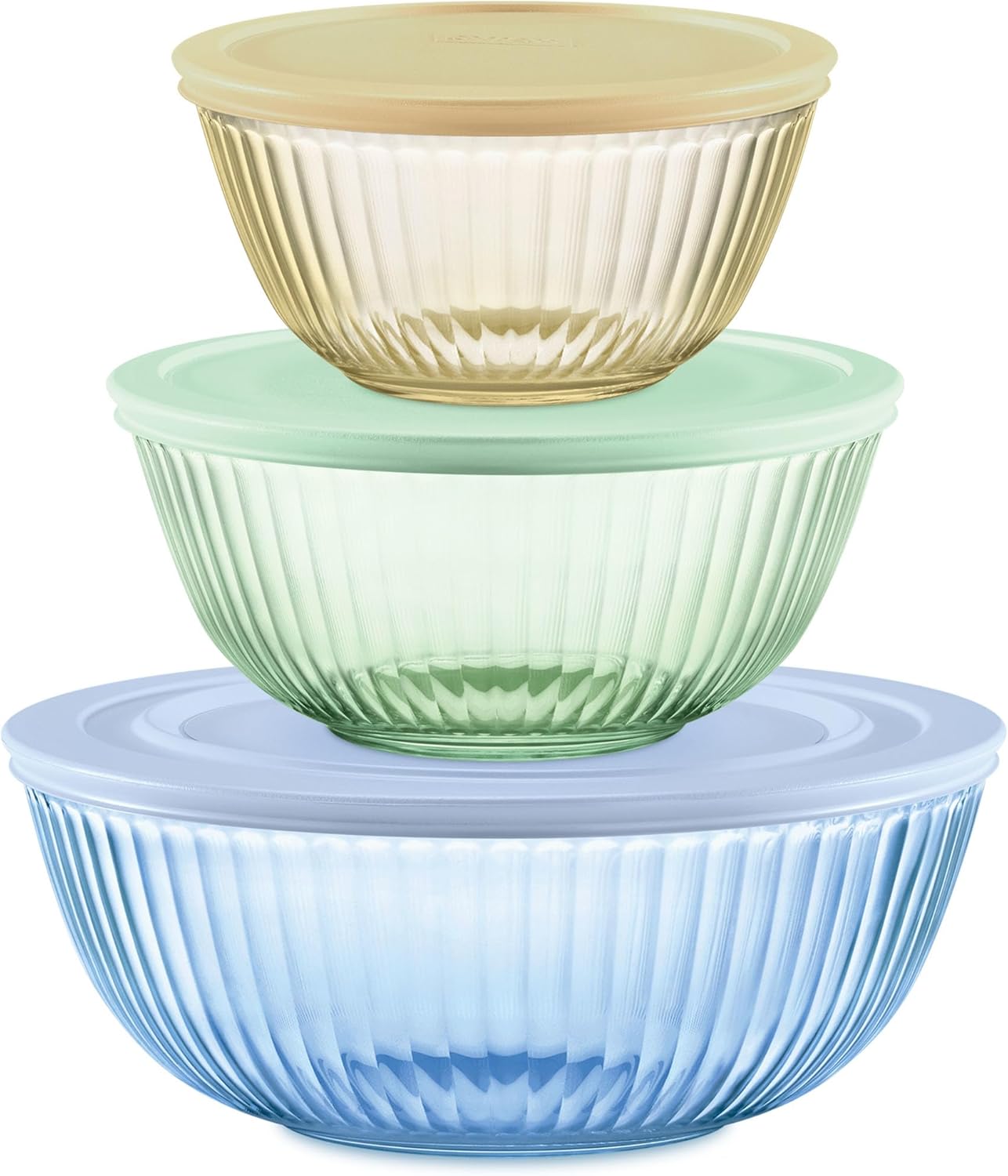
Many modern mixing bowl sets include fitted lids, transforming ordinary prep vessels into convenient food storage containers for the refrigerator or freezer. Airtight plastic covers keep leftover salads, marinated meats, and prepared dough fresh for longer periods without requiring extra storage containers. These lids simplify meal prepping by allowing you to mix, cover, and chill ingredients directly within the same vessel, cutting down on extra dishwashing later.
However, users should pay close attention to manufacturer care instructions regarding these protective covers. Many plastic lids require manual hand washing or top-rack dishwasher placement to prevent structural warping from high appliance heat, balancing storage convenience with routine maintenance requirements.
Included Graters and Prep Accessories
Some advanced stainless steel bowl sets come equipped with specialized grater attachments that fit directly over the rim of the container. These multi-purpose accessories allow you to slice, shred, and grate vegetables or cheese straight into the bowl, eliminating the need for separate cutting boards and extra cleanup. This streamlined approach keeps counters tidy and speeds up complex meal preparation tasks involving fresh produce.
While these attachments add notable functionality, shoppers should consider whether they actually use grating tools in their daily cooking routines. If you rarely shred vegetables or cheese, a standard bowl set without accessories might offer simpler storage and easier handling for your specific baking and cooking needs.
Maintenance and Long-Term Care
Proper cleaning practices ensure your mixing bowls remain hygienic, rust-free, and visually appealing over many years of regular kitchen use. Stainless steel bowls generally benefit from prompt hand drying after washing to prevent water spots and corrosion from residual moisture. Glass vessels tolerate dishwasher cycles effortlessly, though care must be taken to avoid dropping heavy glass items against hard kitchen tile or granite countertops.
Following manufacturer guidelines for both bowls and lids preserves their structural integrity and prevents premature wear. Paying attention to specific temperature limits and washing methods protects your investment, ensuring your chosen kitchenware continues performing reliably across countless baking projects and family meals.
Frequently asked questions
Are stainless steel mixing bowls completely safe for storing acidic foods?
High-grade stainless steel is food-grade and highly resistant to corrosion, making it a reliable choice for preparing and storing various ingredients, including acidic items like dressings or tomato-based mixtures. Unlike reactive metals, quality stainless steel will not impart metallic tastes or leach unwanted toxins into your food. However, it is always best practice to clean and dry your bowls promptly after use to maintain the protective metal finish and prevent any potential surface spotting over long-term kitchen use.
Can glass mixing bowls go directly from the refrigerator into a hot microwave?
Tempered glass mixing bowls are engineered to withstand thermal shifts, allowing them to transition between cold environments like freezers or refrigerators and warming appliances like microwaves safely. Even so, avoiding extreme thermal shock, such as placing a freezing cold glass bowl onto a blazing hot stove burner, is crucial to prevent cracking. Always check the specific manufacturer guidelines for your glassware set to ensure safe handling when warming or baking various recipes at home.
Why do some mixing bowls feature silicone bases on the bottom?
Silicone bases are specifically designed to provide essential traction and stability on slippery kitchen countertops. When you are vigorously whisking heavy batters, beating eggs, or kneading dense dough, standard metal or glass bowls can easily slide around, requiring you to awkwardly hold the vessel with one hand. A non-slip rubberized bottom anchors the bowl firmly in place, keeping your hands completely free and significantly reducing the likelihood of messy counter spills during intensive cooking tasks.
How should I wash plastic lids that come with mixing bowl sets?
Manufacturer guidelines for plastic storage lids often recommend gentle hand washing or placing them exclusively on the top rack of a dishwasher. Because high heat from the lower heating elements of a dishwasher can cause plastic components to warp or lose their airtight seal, following these care instructions helps preserve their functionality. Taking a few extra moments to wash lids by hand ensures they maintain a secure, snug fit on your mixing bowls over years of regular food storage.
What is the advantage of buying a nested mixing bowl set?
Nested mixing bowl sets offer exceptional space-saving benefits for kitchen cabinets by allowing smaller bowls to fit neatly inside larger ones. Instead of scattering various containers across multiple shelves, a nested collection keeps your entire range of sizes organized in one compact footprint. This design also ensures you always have the appropriate capacity on hand, whether you are measuring a small pinch of spices, whipping cream, or tossing a massive family salad for dinner.