Appliances · Buying Guide
Best Optimal Temperature for Sourdough Starter: Top Tools for Precise Fermentation
Achieving consistent baking results relies heavily on maintaining the optimal temperature for sourdough starter activity. Fluctuating kitchen conditions often disrupt wild yeast and beneficial bacteria, leading to sluggish rises, unpredictable fermentation, or overly sour loaves. Specialized warming and cooling devices remove environmental guesswork by stabilizing your jar's precise microclimate.
Whether you need gentle heating during chilly winter months or precise temperature regulation to slow down fermentation on busy schedules, dedicated appliances help you master daily proofing routines. Choosing the right tool depends entirely on your available kitchen counter space, preferred jar dimensions, and whether your baking style requires both active heating and cooling capabilities.
As an Amazon Associate, StacyLaughs earns from qualifying purchases.
Buying guide
Temperature Range Versatility
When selecting a sourdough temperature control device, evaluating the available temperature range is essential for matching your local climate and baking frequency. Simple warming mats typically operate between seventy and one hundred degrees Fahrenheit, which works wonderfully for boosting yeast activity during cold winter months. However, if your kitchen gets excessively warm in summer, basic heaters will not help you slow down overactive fermentation.
Advanced chambers and climate cubes offer broader ranges, often spanning from forty-one to one hundred twenty-two degrees Fahrenheit. These versatile systems include cooling capabilities alongside traditional heating, allowing you to precisely manipulate yeast growth rates. Assessing whether you only need winter warmth or year-round thermal management ensures you choose an appliance that adapts to seasonal weather shifts without compromising your daily baking routine.
Jar Compatibility and Capacity
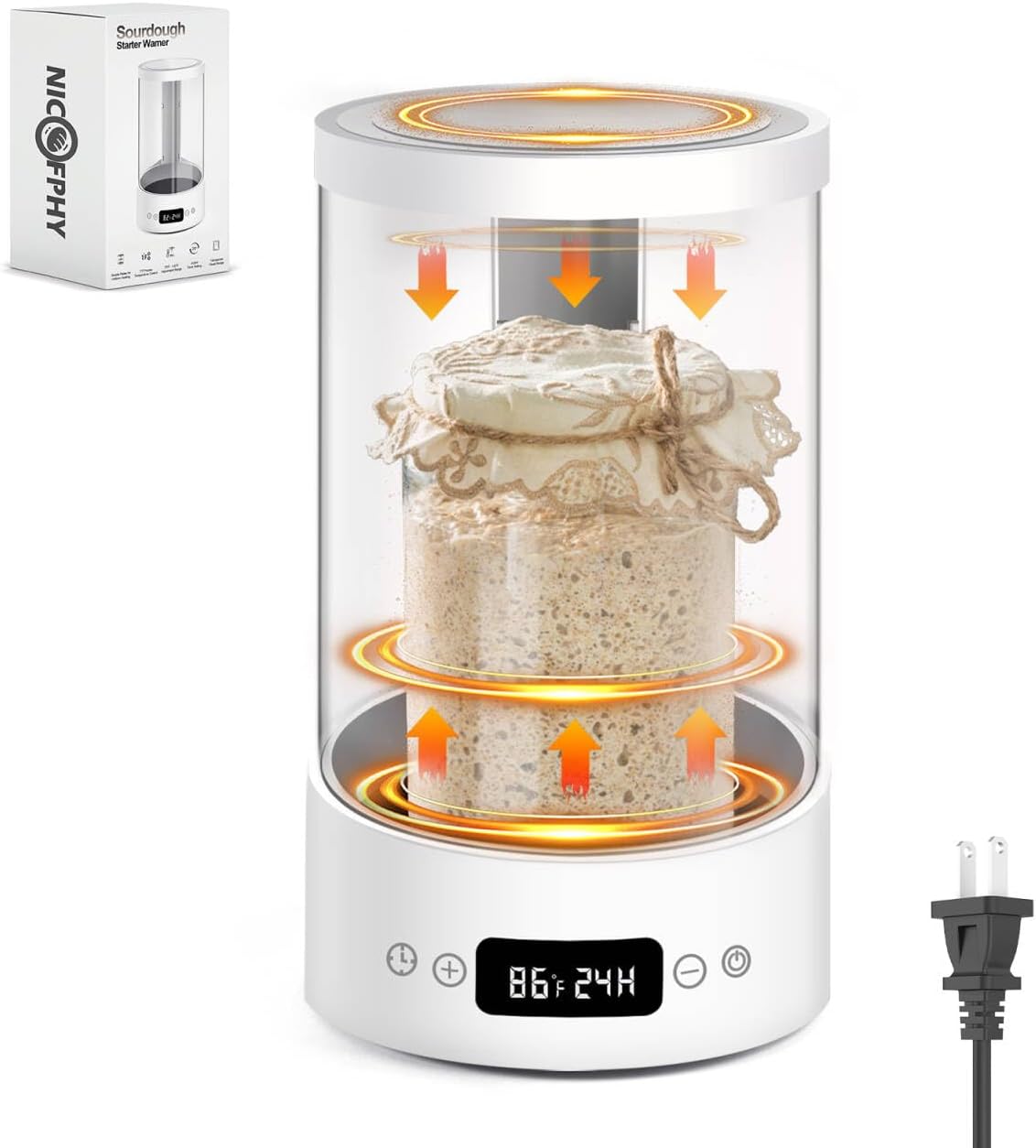
Your preferred jar size and shape dictate which temperature control tool will integrate smoothly into your kitchen workflow. Many compact warming bases and mats feature designated heating zones tailored for standard mason jars ranging from twenty-four to forty ounces. If you prefer tall, narrow vessels or heavy glass containers, you must verify that the heating pad's diameter matches your base.
Enclosed boxes and cabinet incubators impose stricter height and width limits because the protective domes or doors must seal properly. Measuring your favorite feeding vessels before purchasing prevents frustrating compatibility issues. Selecting a device with adjustable probes or removable shelves also accommodates varying container styles, ensuring your preferred feeding vessel fits comfortably inside the warm or cool environment.
Heating Versus Dual-Climate Control
Deciding between a simple heating appliance and a dual-climate system depends heavily on your household's ambient temperature stability. Basic warming mats and plates provide steady low-wattage heat to combat drafty countertops and chilly winter mornings, effectively speeding up sluggish starters. Yet they remain entirely dependent on room temperature for the lower limit, offering zero assistance when your kitchen becomes too hot.
Dual-climate units utilize semiconductor technology to actively warm and cool your starter within a controlled internal chamber. This bidirectional capability lets you chill your starter during hot summer heatwaves to prevent over-acidification, or warm it gently during freezing weather. Investing in a dual-climate incubator provides ultimate scheduling flexibility, letting you pause or accelerate fermentation cycles to fit your personal calendar.
Monitoring and Probe Precision
Monitoring your starter's internal climate removes the guesswork from daily baking routines and ensures consistent rise times. Basic devices warm the air surrounding the jar, relying on glass conductivity to gradually warm the ferment inside. While functional, ambient air heaters can sometimes create slight temperature discrepancies depending on glass thickness and room drafts.
Advanced tools integrate stainless-steel probes that insert directly into the fermenting starter mixture, measuring core temperatures with exact precision. This direct measurement approach gives you absolute confidence in your starter's thermal state. Alternatively, clear viewing windows let you inspect bubble development visually without opening doors, preserving the internal microclimate while keeping a close eye on yeast activity.
Countertop Footprint and Storage
Kitchen counter space is a valuable commodity, making the physical footprint of your sourdough starter appliance an important purchasing factor. Slim heating mats and low-profile bases take up minimal surface area and can often be tucked away into shallow drawers when not actively in use. They offer a discreet way to manage starter warmth without crowding your food preparation spaces.
Enclosed boxes and cabinet-style incubators require permanent countertop real estate due to their structured framing and built-in insulation. While they provide superior draft protection and multi-jar organization, their larger dimensions demand careful placement planning. Weighing your available kitchen storage against your desire for an enclosed microclimate helps you select a tool that fits your living space.
Timer and Memory Automation
Automated features such as programmable timers and smart memory settings streamline your daily baking maintenance schedule. Smart memory functions automatically retain your last used temperature and operating mode when power remains connected, eliminating the need to reprogram the device after every single feeding. This convenience saves time for bakers who maintain strict daily routines.
Integrated timers with automatic shut-off capabilities prevent your starter from overheating during long fermentation windows or overnight rests. Whether you need a twelve-hour shutdown or a twenty-four-hour monitoring cycle, these automated controls provide peace of mind. Selecting a device with robust timer options ensures your starter receives precise warmth for the exact duration required by your recipe.
Frequently asked questions
What temperature range is best for maintaining an active sourdough starter?
Maintaining your sourdough starter between seventy and eighty degrees Fahrenheit generally provides the most reliable balance for wild yeast and lactic acid bacteria activity. Within this range, fermentation proceeds at a predictable pace, allowing you to time your daily feedings and baking schedules effectively. Temperatures dropping below sixty-five degrees often result in sluggish, dormant yeast behavior, while readings exceeding ninety degrees can accelerate fermentation too quickly, depleting nutrients prematurely and producing an overly acidic flavor profile that impacts your final loaf's taste.
Do I need a device that cools my starter, or is a simple warmer enough?
Choosing between a simple warmer and a dual-climate cooling system depends heavily on your local climate and kitchen conditions. If you live in a region with cold winters and maintain comfortable indoor temperatures during summer, a basic heating mat or proofing base is usually sufficient to combat drafts. However, if your kitchen regularly gets hot during summer months, a cooling unit helps slow down yeast activity, preventing your starter from over-fermenting and starving between scheduled feeding times.
Can I use standard mason jars with these sourdough starter temperature control tools?
Most sourdough warming mats and compact bases are specifically designed to accommodate standard mason jars, glass containers, and common kitchen fermentation vessels. However, you must always check the manufacturer's specified dimensions, especially when using enclosed boxes, domes, or cabinet incubators. Taller jars or wide-mouth containers may exceed height and width clearances inside enclosed chambers, whereas open warming mats fit a wider variety of vessel shapes as long as the base makes proper contact.
How do core temperature probes differ from ambient air heating pads?
Core temperature probes measure the internal thermal state directly inside the fermenting starter mixture, removing any guesswork caused by glass thickness or external air currents. In contrast, standard heating pads warm the surface beneath your jar, relying on ambient air and thermal conductivity to heat the contents indirectly. While ambient pads offer great convenience, integrated probes give you precise data on how warm your actual yeast colony is, ensuring exact consistency across every single baking batch.
How do I clean and maintain my sourdough starter warmer or incubator?
Maintenance requirements vary depending on the specific device design, but following manufacturer guidelines ensures longevity and safe operation. Flat warming mats and smooth bases generally require only a quick wipe with a damp cloth after unplugging and cooling down. Enclosed boxes and cabinet incubators with removable shelves should be checked for flour dust or spilled starter residue, cleaning interior surfaces gently with mild soap where permitted. Always avoid submerging electronic heating bases or control panels in water.