Appliances · Buying Guide
Best Overnight Bulk Fermentation Sourdough Containers for Your Kitchen
Baking exceptional sourdough bread requires careful attention to temperature and time, particularly during the critical overnight bulk fermentation stage. Choosing the right container helps home bakers monitor the dough rise, maintain proper moisture levels, and achieve consistent results from batch to batch without guesswork or unnecessary kitchen clutter during busy baking projects.
Whether you are maintaining a delicate starter culture or managing a large batch of dough for multiple loaves, dedicated jars and buckets simplify the process. Selecting appropriate vessels with clear visibility, functional volume markings, and reliable seals ensures your baking routine remains organized and efficient every single day while easily accommodating different recipe sizes and hectic baking schedules.
As an Amazon Associate, StacyLaughs earns from qualifying purchases.
Buying guide
Selecting the Right Container Material
Container material plays a major role in how well your fermentation vessels perform during overnight baking preparation and routine kitchen tasks. Glass offers exceptional visual clarity, non-porous surfaces that resist food odors, and dependable resistance to stains over years of heavy use. Borosilicate glass variants handle thermal shifts safely across microwave and oven environments when lids are removed.
Polycarbonate alternatives provide shatter-resistant durability that withstands accidental drops on hard kitchen floors without cracking. Understanding these distinct material differences helps you choose a vessel that aligns with your household safety habits, cleaning preferences, and handling style. While glass adds reassuring heft, lightweight plastics simplify moving large batches from counter to refrigerator shelves.
Managing Capacity for Different Batch Sizes
Matching container capacity to your specific recipe scale prevents messy overflows during aggressive overnight fermentation cycles and active feeding phases. Smaller jars around twenty to forty ounces excel at maintaining active sourdough starters without taking up excessive counter space. These compact options keep your daily feeding routine streamlined, organized, and manageable across busy baking schedules.
Larger bowls and buckets exceeding seventy ounces provide the necessary headroom for dough to double or triple in volume during bulk proofing. Assessing your typical baking output ensures you select vessels that comfortably accommodate single loaves or large multi-loaf baking projects. Choosing correct volumes avoids overcrowding your refrigerator shelves while supporting professional results.
Monitoring Fermentation Progress Visually
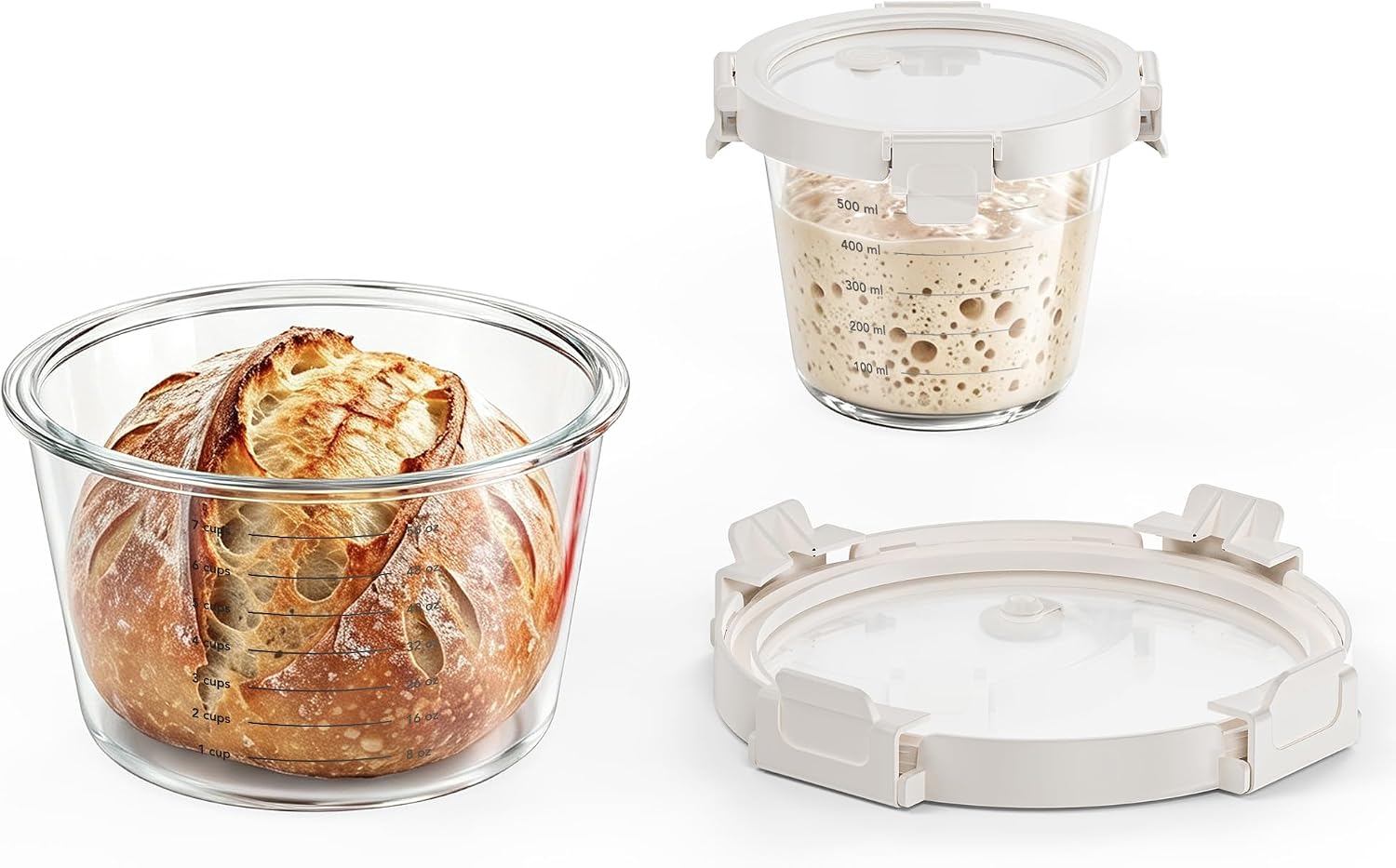
Crystal-clear transparency allows bakers to monitor the hidden activity happening inside dough during long overnight rests without disturbing the vessel. Being able to observe rising bubbles, structural changes, and overall expansion helps determine exactly when bulk fermentation has reached its ideal peak. Visual confirmation supports better crumb structure in your finished bread loaves.
Integrated volume markings printed directly on the container walls provide precise measurements for tracking growth over several hours. This helpful visual feedback eliminates guesswork, ensuring your dough is shaped, proofed, and baked at the optimal moment of fermentation. Clear measurement tracking improves consistency across different flour types and varying seasonal room temperatures.
Sealing Mechanisms and Airflow Control
Managing airflow is essential when maintaining a sourdough starter or fermenting dough overnight in varied kitchen environments. Airtight seals prevent the outer surface of the mixture from drying out, while specialized vents or breathable cloth covers allow fermentation gases to escape safely. Balancing moisture retention with proper ventilation protects your living yeast culture effectively.
Choosing between snap lids, stainless-steel clamp mechanisms, and vented plugs depends entirely on your preferred fermentation technique and refrigerator storage habits. Secure seals protect against accidental spills in the refrigerator, while breathable options support active wild yeast development during counter resting periods. Evaluating these sealing mechanisms ensures reliable daily baking performance.
Maintenance and Cleanup Requirements
Keeping fermentation containers clean ensures hygienic conditions for wild yeast propagation and routine daily baking tasks in your kitchen. Smooth inner walls prevent sticky dough residues from clinging stubbornly, making post-bake cleanup much faster and less frustrating for busy home bakers. Non-porous glass and polycarbonate surfaces also resist lingering sourdough odors between different fermentation batches.
Many glass and polycarbonate vessels offer convenient dishwasher-safe construction, though removable rubber gaskets, metal spring clamps, or cloth covers often require careful hand washing. Following manufacturer care guidelines preserves the structural longevity of your baking equipment and prevents accidental warping or component loss over extended periods of regular kitchen use.
Storage and Kitchen Space Management
Efficient storage is crucial when your kitchen houses multiple jars and containers for starter maintenance and bulk dough preparation. Stackable designs and nesting capabilities help keep crowded kitchen cabinets neatly and efficiently organized when your baking equipment is not actively in use. Selecting space-saving geometries prevents unnecessary clutter from accumulating over time.
Considering container shape, such as round footprints versus space-efficient profiles, helps maximize available refrigerator shelf space during cold fermentation cycles. Thoughtful space planning ensures you can store large dough bowls securely alongside everyday household groceries without creating storage bottlenecks. Careful organization supports a smoother baking workflow overall throughout the entire baking week.
Frequently asked questions
Why is overnight bulk fermentation important for sourdough bread?
Overnight bulk fermentation allows wild yeast and lactic acid bacteria ample time to develop complex flavors and optimal gas structure within the dough. Cooler overnight temperatures slow down yeast activity, giving bakers better control over the fermentation timeline and preventing over-proofing. This extended rest period strengthens the gluten network, resulting in an improved crumb structure and better oven spring when baked the following day. Managing this stage in a dedicated container helps you monitor volume increases accurately.
Should I use glass or polycarbonate containers for dough proofing?
Choosing between glass and polycarbonate depends primarily on your preferred handling habits and kitchen environment. Glass containers offer excellent clarity, non-porous surfaces that resist stains, and thermal shock resistance that allows safe transitions from refrigerators to microwaves or ovens. Polycarbonate buckets provide lightweight, shatter-resistant durability that withstands accidental drops on hard kitchen floors, though they lack oven safety compatibility. Selecting the right material comes down to balancing weight, thermal versatility, and breakage concerns in your kitchen.
How do I know when my overnight bulk fermentation is finished?
Determining when bulk fermentation is complete involves observing visual cues such as dough expansion, aerated bubbles along the container sides, and a domed surface topography. Using clear containers with integrated volume markings makes it much easier to track whether your dough has increased by fifty to one hundred percent in size. Temperature plays a major factor, so warmer doughs ferment faster than cold ones resting in a refrigerator overnight.
What is the benefit of using wide-mouth jars for sourdough starter?
Wide-mouth jars simplify every aspect of sourdough starter maintenance by giving you unhindered access to the interior walls. When feeding flour and water or stirring thick starter cultures, a wider opening reduces spills and makes scraping leftover batter much easier. This design also provides adequate headroom for active starters to expand during peak feeding cycles without overflowing the rim, keeping your countertop clean and organized throughout the week.
How should I clean and maintain my fermentation containers?
Cleaning and maintaining your fermentation containers properly ensures hygienic conditions for wild yeast and prevents lingering odors. Many glass and polycarbonate vessels feature dishwasher-safe construction, though you should always follow manufacturer guidelines regarding removable components. Rubber gaskets, metal spring clamps, and breathable cloth covers often require gentle hand washing to preserve their integrity. Taking care to remove sticky dough residues promptly prevents stubborn buildup on inner walls over time.