Appliances · Buying Guide
Best Glass Mixing Bowls for Baking and Kitchen Prep
Outfitting a kitchen with reliable mixing bowls makes everyday cooking, baking, and meal preparation much smoother. Glass options offer distinct advantages for handling various ingredients without retaining unwanted food odors or staining over time. Home cooks frequently seek durable vessels that transition easily from counter prep to appliance use while maintaining clear visibility of their ingredients.
Selecting the right set depends heavily on your specific cooking habits, storage constraints, and heating requirements. Whether you need specialized batter bowls with integrated spouts, large multi-piece nesting sets for space-saving storage, or covered containers for preserving leftovers, understanding each option's structural traits ensures a practical addition to your workspace.
As an Amazon Associate, StacyLaughs earns from qualifying purchases.
Buying guide
Material Composition and Durability
Choosing glass mixing bowls starts with understanding the specific material composition used in manufacturing. Standard tempered glass handles thermal stress well and resists daily scratches, making it a dependable choice for general kitchen tasks. High borosilicate glass offers even greater resistance to extreme temperature fluctuations, allowing direct transitions from freezing environments to intense oven heat without structural compromise.
Evaluating how material types handle daily wear ensures your kitchenware lasts through heavy use. Nonporous glass surfaces prevent food acids and oils from penetrating the bowl wall, stopping permanent stains or lingering smells from forming. Checking these material traits helps you match the bowl's physical resilience to your routine cooking and baking demands.
Sizing Options and Capacity Needs
Selecting appropriate bowl sizes directly impacts how efficiently you can complete everyday recipes without unnecessary mess. Smaller vessels under two quarts work wonderfully for whipping individual eggs, melting small amounts of butter, or staging measured spices ahead of time. Medium bowls between two and three quarts handle standard cake batters, side dishes, and marinade preparation without overcrowding your workspace during active cooking sessions.
Larger mixing bowls exceeding four quarts provide the necessary volume for kneading bread dough, tossing family-sized salads, or mixing heavy holiday recipe ingredients. Assessing your typical recipe batch sizes prevents choosing bowls that prove too cramped or unnecessarily bulky for your kitchen counters. Building a balanced collection of varied capacities keeps you thoroughly prepared for any culinary challenge that arises.
Storage and Nesting Design
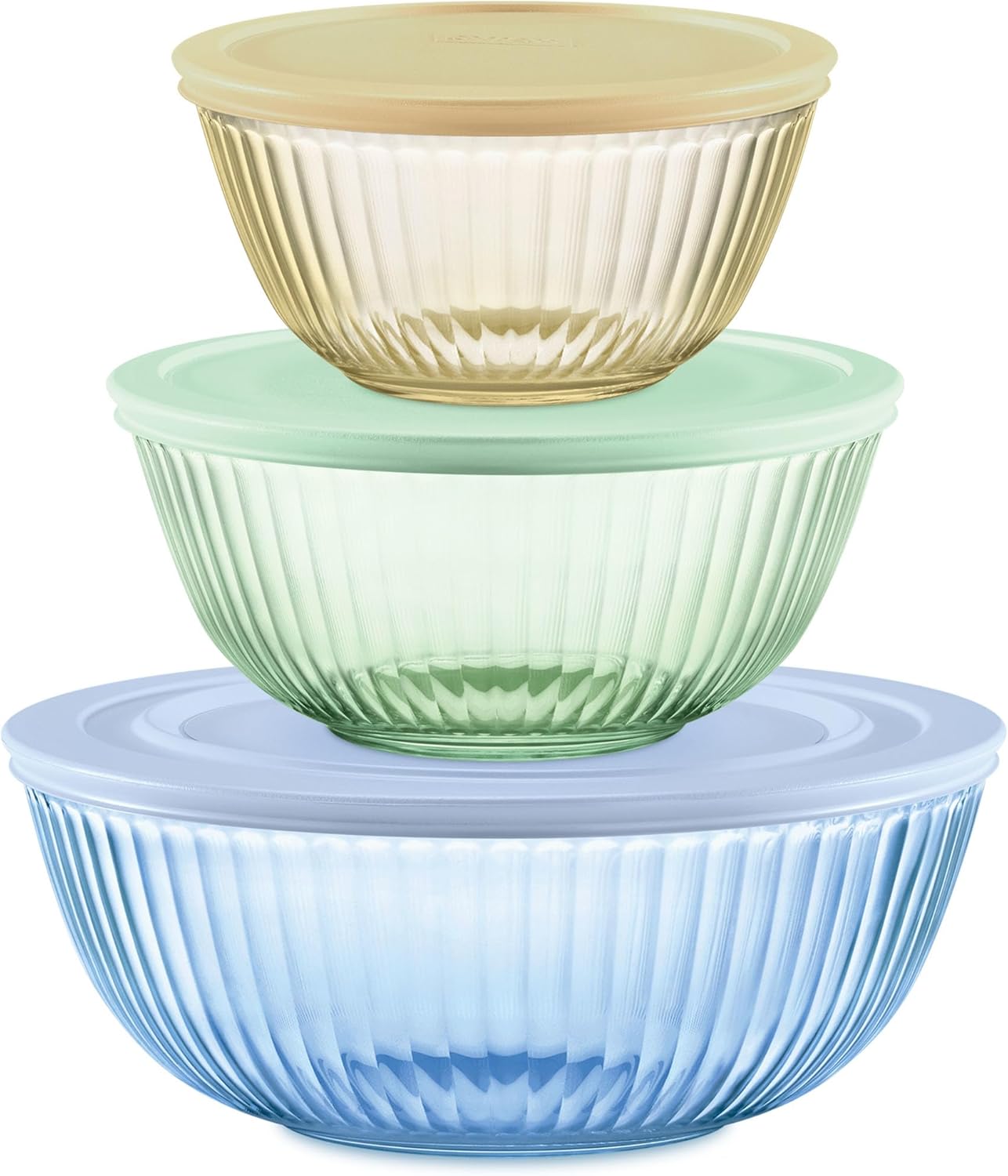
Managing kitchen cabinet space requires careful attention to how mixing bowls store when not actively in use. Nesting bowl sets allow smaller vessels to fit neatly inside larger ones, drastically reducing the physical footprint required in your cupboards. This compact stacking capability keeps your kitchen organized and leaves ample room for other dinnerware and cookware items.
Evaluating the rim design and base stability is equally important for successful cabinet storage and counter use. Flat bowl bases prevent tipping during vigorous whipping or whisking tasks, while wide rolled rims provide secure hand placement. Balancing stackability with ergonomic handling ensures your bowls remain both easy to store and comfortable to maneuver.
Thermal Compatibility and Appliance Use
Understanding thermal limitations prevents accidental damage when moving glass bowls between different kitchen appliances during meal preparation. Certain glass formulations tolerate high oven temperatures safely, while others are strictly restricted to countertop prep and refrigerator storage without heating elements. Always verify manufacturer guidelines regarding microwave and oven safety before subjecting your glassware to thermal shifts.
Freezer and dishwasher compatibility also influence how convenient daily cleanup and future meal planning will be. Dishwasher-safe glass simplifies post-cooking maintenance significantly, though accompanying plastic or silicone lids often require specific top-rack placement or specialized care to maintain their shape. Matching appliance capabilities to your cooking workflow protects your kitchen investment from premature wear and thermal shock.
Lids and Food Preservation Features
Choosing between open-top bowls and lidded sets depends heavily on whether you frequently store leftovers or prep ingredients ahead of time. Bowls equipped with airtight silicone gaskets and locking lids keep prepared foods fresh and prevent accidental spills inside your refrigerator shelves. These covered options eliminate the ongoing need for disposable plastic wraps or aluminum foil during food preservation.
Open-top bowls prioritize active mixing, pouring, and baking tasks where protective covers are completely unnecessary. If you primarily use bowls for mixing wet batters or tossing fresh salads immediately before serving, lid features become secondary considerations. Assessing your daily storage habits helps determine whether lidded container sets offer genuine practical value for your specific cooking routines.
Maintenance and Long-Term Care
Proper maintenance ensures your glass mixing bowls remain clear, hygienic, and structurally sound over years of regular kitchen use. Nonporous glass naturally resists staining and odor absorption, meaning routine washing removes grease and food residue effortlessly without harsh scrubbing. Most glass bodies handle standard dishwasher cycles safely, significantly reducing the effort required for post-meal cleanup routines.
Accessories like rubber gaskets, locking clasps, or plastic lids often demand extra attention to prevent warping or loss of seal integrity over time. Following manufacturer care instructions, such as soaking distorted silicone seals in hot water, successfully restores proper lid function. Paying close attention to these maintenance details extends the lifespan of both your glass bowls and their accompanying lids.
Frequently asked questions
Can glass mixing bowls be used safely in the oven?
Whether a glass mixing bowl can go into the oven depends entirely on its specific material composition and manufacturer instructions. Tempered glass bowls and high borosilicate options often support baking at moderate temperatures, but you must always check individual product specifications first. Some decorative or multi-piece nesting sets explicitly prohibit oven and microwave use because their glass formulation cannot handle high thermal stress. Verifying these details before baking prevents cracking and ensures safe kitchen operation.
How do I prevent plastic or silicone lids from warping?
Preventing lids from warping involves following proper cleaning and storage guidelines provided by the manufacturer. Many plastic and silicone lids are rated for top-rack dishwasher use, but exposing them to lower-rack heating elements can cause distortion. If a silicone gasket or locking lid loses its proper shape over time, soaking it in boiling water for a few minutes can help soften the material so you can reshape it to fit the bowl snugly once again.
Are glass mixing bowls better than plastic or metal alternatives?
Glass mixing bowls offer distinct advantages over plastic and metal by being completely nonporous, which prevents them from absorbing food odors, flavors, or unsightly stains over years of use. Unlike plastic, high-quality glass will not warp or leach chemical compounds into your food during heating. While metal bowls are exceptionally lightweight for tossing ingredients, glass provides heat tolerance for microwave or oven tasks and allows you to monitor ingredients easily through transparent walls.
What is the advantage of a batter bowl with a spout?
A batter bowl featuring a molded pouring spout and an integrated handle streamlines the process of transferring liquid mixtures directly into baking pans, waffle irons, or griddles. Embossed measurement lines on the side further simplify baking tasks by allowing you to measure ingredients directly inside the vessel without dirtying extra measuring cups. This specialized design combines mixing, measuring, and pouring into a single convenient container for pancake and dessert preparation.
How should I store a large set of nesting glass bowls?
Storing a large set of nesting glass bowls is simple because smaller vessels fit directly inside the larger ones to minimize the total cabinet space required. When stacking your bowls, ensure they are clean and dry to prevent slipping. Placing a thin protective cloth or paper towel between tightly nested glass bowls can also help prevent scratching or friction during daily removal and replacement in your crowded kitchen cabinets.