Appliances · Buying Guide
Best Pans for Cheesecake Baking for Reliable Release
Baking a successful cheesecake requires specialized equipment that supports easy release and even heat distribution without damaging delicate crusts or fillings. Traditional solid cake tins force you to invert desserts, making springform designs with removable bottoms and secure metal latches essential for keeping layered treats intact and visually appealing for guests.
Exploring various carbon steel and alloy steel materials, multi-piece size sets, and integrated water-bath accessories helps match your specific baking style to the right tool. Whether you need a compact single pan for everyday treats or a versatile collection with protective sleeves, understanding these physical details ensures confident, clean dessert presentation in your home kitchen every time.
As an Amazon Associate, StacyLaughs earns from qualifying purchases.
Buying guide
Material Composition and Durability
Selecting the right pan material dictates how evenly your cheesecake bakes and how long the equipment lasts in your kitchen. Most springform pans rely on carbon steel or alloy steel, which conduct heat quickly and promote consistent browning. Carbon steel resists warping under high heat, making it a reliable choice for frequent baking sessions.
Paying attention to gauge thickness helps prevent hot spots that can scorch delicate crusts. While steel provides structural strength, pairing it with proper care ensures the metal remains rust-free and sturdy over years of dessert preparation. Evaluating these foundational material qualities guides you toward a pan that withstands regular use without bending.
Nonstick Coatings and Food Release
A reliable nonstick coating is essential for releasing delicate cheesecakes and mousse cakes without tearing the crust or edges. Double-layer coatings create a smooth barrier that prevents batter from bonding directly to the metal surface. This feature reduces the need for heavy greasing or flouring before pouring your ingredients into the mold.
Protecting this coating requires using silicone, nylon, or wooden utensils instead of metal knives that can scratch the finish. Selecting a pan with quality nonstick properties simplifies both the unmolding process and the subsequent cleanup routine. Prioritizing safe, chemical-free coatings ensures you can serve flawless desserts while maintaining your bakeware in top condition.
Latch Mechanisms and Leak Resistance
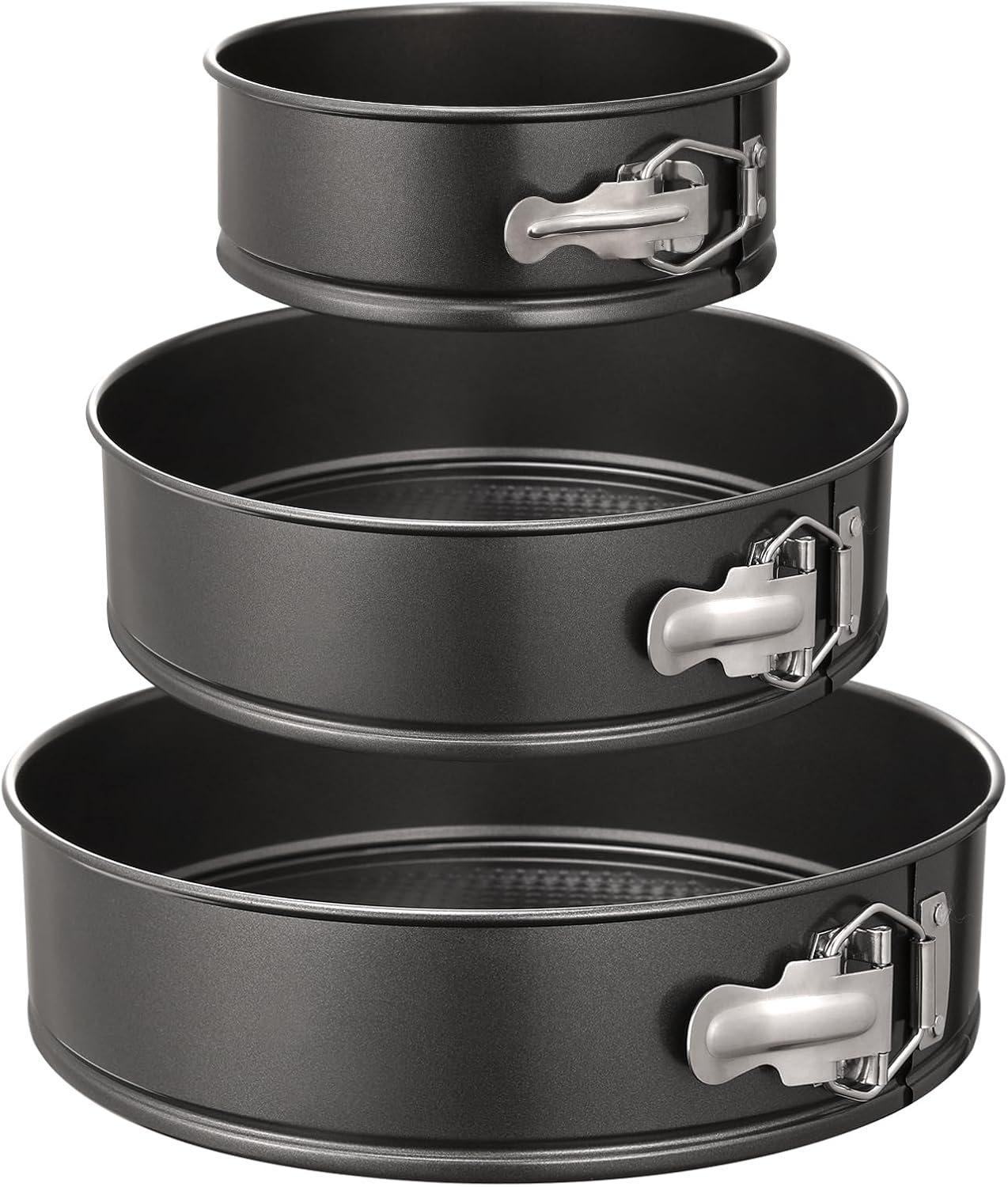
The springform buckle is the mechanical heart of any cheesecake pan, holding the removable collar tightly against the base. A sturdy stainless steel latch provides smooth operation, allowing you to secure the pan easily before filling and release it gently afterward. Weak latches can slip or bend during use, compromising the structure of your dessert.
While springform designs are inherently detachable, tighter tolerances reduce the likelihood of liquid batter seeping through the side seams during baking. Checking for a secure, well-aligned clasp ensures the pan maintains its shape under pressure. Investing in a robust buckle mechanism prevents frustrating leaks and guarantees dependable performance across numerous baking projects.
Sizing Options and Recipe Capacity
Choosing the correct pan diameter depends on the volume of batter you mix and the number of guests you plan to serve. Standard nine-inch pans accommodate traditional recipes, while multi-size sets offer six, eight, and ten-inch options for scaling desserts up or down. Smaller pans work well for intimate gatherings or compact toaster ovens.
Wall height also matters when calculating capacity, as taller sides accommodate thick New York style fillings or complex layered creations without spilling over the rim. Evaluating your favorite recipes helps you determine whether a single versatile size or a multi-piece collection best satisfies your baking ambitions and available kitchen storage space.
Water-Bath Accessories and Protection
Baking cheesecakes often involves a water bath to maintain gentle, humid heat that prevents the top from cracking. Traditionally, bakers wrap pans in aluminum foil to block water seepage, but reusable silicone protectors offer a cleaner, foil-free alternative. These fitted sleeves create a waterproof barrier around the base during submerged baking.
Integrated handles on silicone sleeves also make lifting heavy, hot pans out of roasting dishes much safer and easier for home cooks. If you frequently bake delicate custard desserts, selecting a pan that includes a dedicated protector streamlines your workflow and eliminates messy foil leaks. This simple accessory enhances overall baking confidence.
Cleaning and Maintenance Guidelines
Proper maintenance ensures your springform pans remain rust-free and retain their nonstick performance over years of recipe testing. Most manufacturers recommend washing steel pans by hand using mild soap and warm water rather than relying on automated dishwashers. Drying the pieces thoroughly immediately after washing prevents moisture from causing rust along the seams.
Following these care guidelines preserves the protective coatings and mechanical integrity of the springform buckles over time. Storing pans in a dry environment prevents unnecessary wear on the movable components. Respecting manufacturer maintenance instructions protects your investment and guarantees consistent release performance every time you bake a dessert.
Frequently asked questions
Do springform pans leak during cheesecake baking?
Springform pans feature a removable bottom and side band, which means minor seepage can occur with very thin liquid batters, especially during water baths. While many modern pans incorporate tight engineering to minimize gaps, using a silicone water-bath protector or wrapping the base securely helps prevent water from entering and batter from escaping. Baking thicker cheesecake mixtures naturally reduces leakage risks compared to runny batters, ensuring your crust remains intact and your oven stays clean throughout the cooking process.
Can I put my springform pan in the dishwasher?
Most manufacturers explicitly recommend hand washing springform pans to protect the delicate nonstick coating and prevent rust from forming along the steel seams and buckles. Dishwasher detergents can be overly abrasive and harsh chemicals may degrade the nonstick finish over time. Washing your pans manually with mild soap, warm water, and a soft sponge ensures longevity. Thoroughly drying the components immediately after cleaning helps maintain the mechanical latch and keeps your bakeware performing reliably.
What is the purpose of a silicone sleeve for cheesecake pans?
A silicone sleeve acts as a reusable, waterproof barrier that wraps around the bottom and sides of a springform pan during water-bath baking. This accessory replaces traditional aluminum foil, eliminating messy leaks and keeping water out of your cheesecake batter. Additionally, many silicone protectors feature reinforced lips and built-in handles, making it significantly safer and easier to lift heavy, hot pans out of roasting dishes without burning your fingers or destabilizing the cake.
What temperature can these cheesecake pans safely withstand?
The cheesecake pans featured in this collection generally support upper temperature ratings ranging from 400 degrees Fahrenheit up to 450 degrees Fahrenheit, depending on the specific model and manufacturer design. Heavy-duty carbon steel and alloy steel constructions tolerate these baking thresholds safely without warping. Always check the exact temperature specifications for your specific pan before preheating your oven to ensure you remain within safe operating limits for optimal baking results.
Why do I need multiple sizes of springform pans?
Owning multiple sizes of springform pans, such as six, eight, and ten-inch diameters, provides incredible versatility for adapting recipes to different occasions. Smaller pans work wonderfully for intimate dinners, mini desserts, or households with fewer people, while medium and large pans accommodate traditional family-sized cheesecakes and tiered celebration layer cakes. Having a variety of sizes ensures you always have the appropriate mold on hand regardless of the recipe requirements or guest count.