Appliances · Buying Guide

Best Pizza Dough Roller Machine Options for Uniform Home Baking

Finding the right pizza dough roller machine can transform your home baking routine by removing the physical strain of traditional rolling pins. Whether you are crafting thin-crust pizzas, delicate pastries, or family-sized bread loaves, a manual dough sheeter offers consistent thickness without requiring electrical power outlets on your busy counters.

The market features various mechanical configurations built from durable metals like stainless steel and aluminum, paired with adjustable roller gaps. This guide reviews five distinct manual dough rolling systems, detailing their structural builds, thickness ranges, and practical folding designs to help you select a suitable tool for your daily kitchen projects.

As an Amazon Associate, StacyLaughs earns from qualifying purchases.

DKN Extra Large Pizza Dough Roller Machine with Hand Crank
#1 Best Overall

DKN Extra Large Pizza Dough Roller Machine with Hand Crank

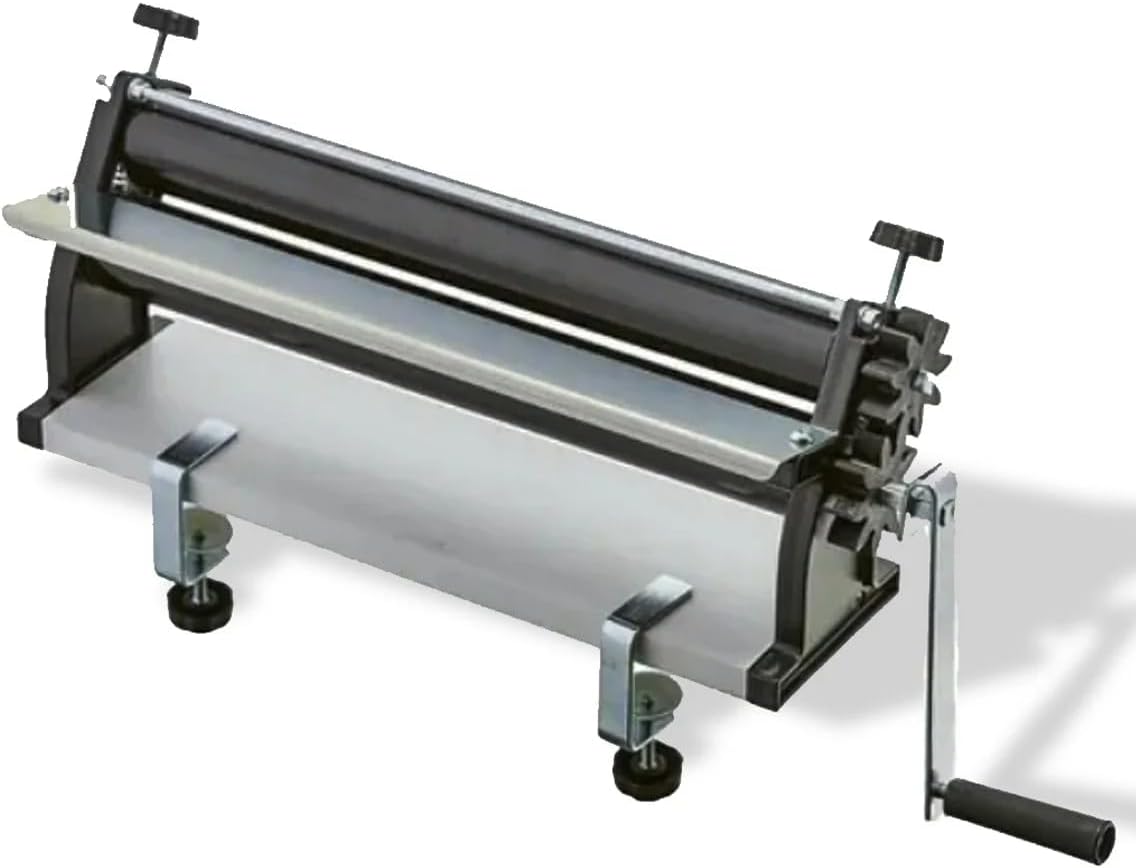
Built with mostly steel and aluminum materials, this manual crank machine features a large feeder and thickness control ranging from 0.12 to 0.25 inches. Measuring 20.91 by 6.5 by 7.72 inches and weighing 7.9 pounds, it serves as a versatile tool for rolling oversized pizza dough, fondant, tortillas, and pasta sheets while maintaining stable gear operation.

Best for Extra-large pizza dough rolling

Steel and aluminum constructionThickness control dialIncludes hand crankLarge feeder designVersatile baking applications
View on Amazon →

What stands out

  • Constructed with mostly steel and aluminum materials for long-lasting durability during regular baking tasks.
  • Includes a simple thickness control mechanism allowing easy adjustments between 0.12 and 0.25 inches for consistent results.
  • Features sturdy aluminum gears designed to prevent slipping or stripping during prolonged hand-crank operation.

What to consider

  • The minimum thickness is limited to 0.12 inches, which might restrict users who want to press ultra-thin sheets for specific delicate pastries.
  • Weighing nearly eight pounds without a foldable frame requires dedicated storage space on standard kitchen countertops or nearby shelving units.
Key specifications
Item Dimensions L x W x H
20.91"L x 6.5"W x 7.72"H
Material Type
Aluminum, Steel, non-stick
Operation Mode
Manual - crank
Minimum Sheet Thickness
0.12 inches
Maximum Sheet Thickness
0.25 inches
Item Weight
7.9 pounds

The practical verdict

This machine is best for home bakers seeking a sturdy metal press for large pizzas and tortillas. Avoid it if you need ultra-thin dough sheets below 0.12 inches or require a foldable space-saving unit. The main trade-off lies between its robust steel construction and its larger stationary footprint.

#2
BOSBAK 12-Inch Folding Dough Sheeter Machine for Home
Compact Folding Sheeter

BOSBAK 12-Inch Folding Dough Sheeter Machine for Home

Best for Small kitchen folding roller

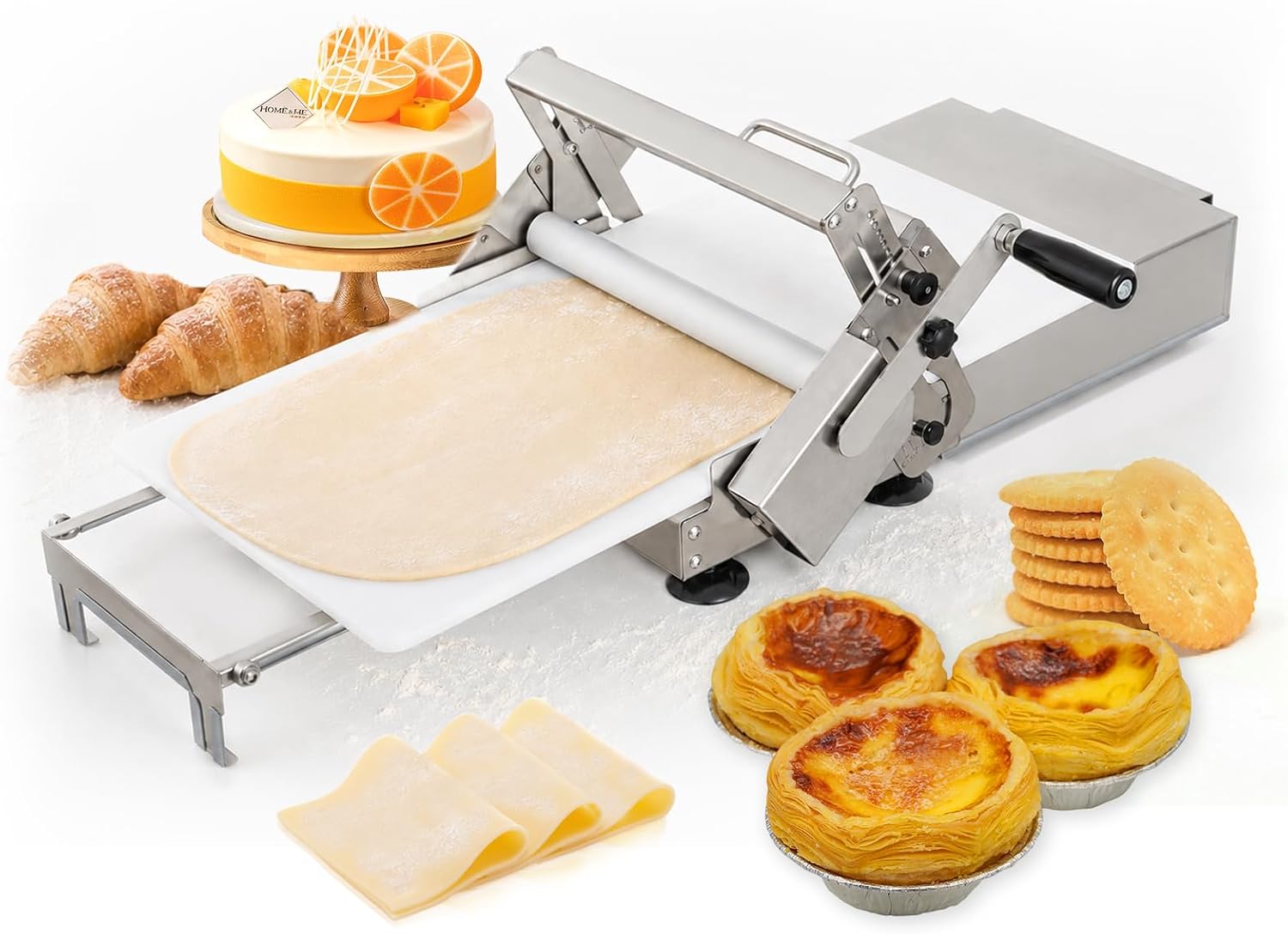
Featuring a thick stainless steel body and a 12 by 23 inch food-grade PE board, this manual dough machine provides precise thickness adjustments from zero to 27 millimeters. Weighing 15.4 pounds, it includes a detachable handle, rollers, and board for straightforward cleaning, alongside a foldable design that saves counter space in home kitchens and small shops.

What stands out

  • Provides precise thickness adjustment up to 27 millimeters to accommodate various baking tasks like croissants and pizza dough.
  • Incorporates a foldable design that reduces the overall footprint to save valuable counter space in smaller kitchens.
  • Features detachable rollers, handle, and a food-grade PE board to simplify the post-baking cleanup process.

What to consider

  • Weighing over 15 pounds, the unit is considerably heavy, making frequent relocation across different kitchen counters a demanding physical task.
  • The manual crank relies entirely on physical effort, which could cause arm fatigue during extended baking sessions with dense doughs.
Key specifications
Item Weight
15.4 pounds
Material Type
Stainless Steel
Operation Mode
Manual
Included Components
12-Inch Folding Dough Sheeter with 23.6“ x 11.8” Sheeter Board
Item Highlight
Adjustable Thickness, Easily Produce Puff Pastry Pizza Dough, Stainless Steel, Compact Storage
Brand Name
BOSBAK

The practical verdict

This model is best for bakers wanting precise thickness control and easy cleanup with a foldable frame. Avoid it if you prefer lightweight appliances that are effortless to lift and store. The primary trade-off balances a heavy, stable stainless steel build against physical lifting demands.

#3
Generic 15.75-Inch Chrome Dough Laminator and Manual Pasta Maker
Chrome Roller Laminator

Generic 15.75-Inch Chrome Dough Laminator and Manual Pasta Maker

Best for Manual noodle and pizza rolling

Designed with chrome-plated rollers measuring 15.75 inches long and 2.24 inches in diameter, this manual dough laminator handles noodles, breads, and pizza crusts. It uses PP knobs for thickness settings ranging from 0.3 to 0.6 centimeters. Measuring 18 by 5.99 by 8 inches, the unit includes a detachable reinforced steel handle with an ergonomic grip for steady manual control.

What stands out

  • Equipped with chrome-plated rollers that offer enhanced durability and smooth operation during frequent baking tasks.
  • Features PP knobs that allow straightforward thickness adjustments between 0.3 and 0.6 centimeters for consistency.
  • Includes a detachable reinforced steel handle with an ergonomic grip to ensure comfort and stability.

What to consider

  • The maximum roller gap reaches only 0.6 centimeters, which limits your ability to press very thick bread doughs or pastries.
  • The narrow thickness range provides fewer intermediate settings compared to multi-level counterparts, restricting fine adjustments for specialized recipes.
Key specifications
Item Dimensions L x W x H
18"L x 5.99"W x 8"H
Material Type
chrome nylon
Operation Mode
Manual
Minimum Sheet Thickness
0.3 centimeters
Maximum Sheet Thickness
0.6 centimeters
Number of settings
1

The practical verdict

This laminator is best for users preparing noodles, flatbreads, and pizza bases within a moderate thickness window. Avoid it if your recipes require thick crusts exceeding 0.6 centimeters or micro-adjustable settings. The main trade-off centers on its durable chrome rollers and limited thickness range.

#4
Xigugo 40.5-Inch Folding Stainless Steel Pastry Roller for Bakery
Wide Bakery Sheeter

Xigugo 40.5-Inch Folding Stainless Steel Pastry Roller for Bakery

Best for Wide-format bakery rolling

Built for high-volume home baking, this manual sheeter features a stainless steel frame and a polished roller surface to minimize sticking. It offers adjustable thickness from 2 to 25 millimeters via a precision knob. The secure tabletop design, 360-degree rotating handle, and foldable structure make it practical for processing pizza dough, pastries, and cookies while saving storage space.

What stands out

  • Offers a wide adjustable thickness range from 2 to 25 millimeters controlled by a precision adjustment knob.
  • Incorporates a 360-degree rotating handle and smooth gear system to deliver effortless rolling control during use.
  • Utilizes a foldable structure that simplifies storage while supporting wide applications like pastries, cookies, and pizza dough.

What to consider

  • The wide physical dimensions require a substantial amount of clear tabletop space to operate safely without crowding other kitchen items.
  • Operating a larger manual roller system demands steady hand coordination to feed wide dough sheets evenly through the metal cylinders.
Key specifications
Material Type
Stainless Steel
Operation Mode
Manual
Minimum Sheet Thickness
2 millimeters
Maximum Sheet Thickness
30 millimeters
Item Highlight
Foldable Design, Adjustable Thickness Control, Smooth Dough Processing, Compact Storage, Ideal for Pizza & Pastry Making
Brand Name
Xigugo

The practical verdict

This model is best for bakers needing a wide, adjustable rolling surface for large batches of pastries and pizza. Avoid it if you have limited counter space or prefer compact appliances. The primary trade-off involves its expansive rolling capacity and the large surface area required for operation.

#5
Hskonxo Compact Countertop Manual Dough Sheeter Machine
Multi-Level Countertop Press

Hskonxo Compact Countertop Manual Dough Sheeter Machine

Best for Portable multi-level dough pressing

Weighing 7.5 kilograms, this portable countertop dough sheeter uses rust-proof stainless steel and food-grade PE components. It features ten thickness levels with 55 total options ranging from 0.5 to 25 millimeters. The foldable design, non-slip base, and ergonomic handle support making pizza, biscuits, fondant, and puff pastry without requiring electricity, making it adaptable for home kitchens, RVs, and camping trips.

What stands out

  • Provides ten thickness levels offering up to 55 distinct options ranging from 0.5 to 25 millimeters.
  • Features a lightweight stainless steel and food-grade PE body that weighs just 7.5 kilograms for portability.
  • Incorporates a non-slip base and an ergonomic handle to maintain stability during various countertop rolling tasks.

What to consider

  • Managing up to 55 thickness options can introduce a learning curve when trying to select the exact setting for everyday recipes.
  • The compact countertop footprint may restrict the maximum width of large dough sheets compared to wider industrial-scale bakery sheeter machines.
Key specifications
Material Type
Stainless Steel
Operation Mode
Manual
Minimum Sheet Thickness
0.5 millimeters
Maximum Sheet Thickness
25 millimeters
Number of settings
10
Item Highlight
12 IN Wide Dough Machine With Adjustable Thickness, 304 Stainless Steel for Bakery Pizza

The practical verdict

This machine is best for home cooks seeking detailed thickness adjustments across a wide variety of portable baking projects. Avoid it if you prefer simple single-knob setups with fewer adjustment steps. The main trade-off exists between offering extensive thickness customization and navigating multiple adjustment levels.

Buying guide

Material Construction and Durability

Selecting a sturdy material ensures your machine withstands regular pressure when flattening dense doughs. Stainless steel and aluminum offer robust frames that resist bending during heavy manual operation, keeping the structure aligned through years of frequent baking sessions. Premium metal builds prevent common structural failures found in lighter plastic alternatives, giving home bakers reliable performance for daily meal preparation tasks.

Metal rollers also prevent warping over time, providing consistent contact across the entire width of your pizza crust or pastry sheet. Smooth metallic surfaces naturally resist sticking, which helps maintain clean dough edges and reduces cleanup time after you finish cooking. Evaluating the core metal composition helps you choose a machine capable of handling tough yeast doughs without mechanical strain.

Thickness Adjustment Range and Precision

The thickness adjustment range determines what types of baked goods you can successfully prepare with your machine. Models offering micro-settings or multi-level knobs let you switch easily between ultra-thin pastry sheets and thick bread crusts without guessing. Precision control prevents tearing, giving you uniform results whether you are pressing delicate wrappers or sturdy pizza bases for family dinners.

Reviewing the minimum and maximum gap measurements ensures the device matches your specific culinary needs. A wider span accommodates large pie crusts, while tighter settings handle delicate dumpling wrappers with equal ease. Selecting a unit with reliable adjustment knobs prevents accidental shifting during active rolling procedures, ensuring uniform thickness from edge to edge every single time.

Operation Mode and Physical Effort

Manual crank systems rely entirely on physical effort rather than electrical power, making them energy-efficient and reliable for home kitchens. Operating a hand-crank machine requires a steady rhythm to feed dough smoothly through the metal rollers without binding or bunching up against the frame. This direct mechanical control gives bakers immediate tactile feedback during the pressing process.

Ergonomic handles and smooth gear ratios reduce arm fatigue during extended baking sessions, especially when processing stiff or heavy doughs. Evaluating the mechanical efficiency of the handle ensures comfortable usage over long periods, making your baking routine much more enjoyable and physically manageable. A secure non-slip base further enhances safety by keeping the device steady while you turn the crank.

Size, Storage, and Countertop Footprint

Kitchen countertop space is often limited, making the physical dimensions and storage capabilities of your machine critical factors to consider. Foldable designs allow you to tuck the appliance neatly away inside standard cabinets or narrow storage spaces when it is not in active use. This space-saving engineering helps keep your kitchen counters clear for other food preparation tasks.

Heavier models provide exceptional stability during rolling tasks but demand dedicated workspace and physical lifting effort during storage transitions. Balancing your available kitchen storage with the overall physical size of the machine ensures it integrates smoothly into your daily cooking environment without causing clutter. Compact frames work well in tighter spaces, while wider units suit larger prep areas.

Cleaning and Maintenance Requirements

Maintaining a clean rolling mechanism prevents flour buildup and ensures proper hygiene during your regular baking routines. Units featuring detachable rollers, boards, and handles make thorough cleaning significantly easier after processing sticky doughs or buttery pastries. Quick-release components allow you to access hidden corners where flour particles might otherwise accumulate over time.

Smooth stainless steel or non-stick surfaces wipe down quickly with minimal effort, reducing the time spent on post-cooking chores in the kitchen. Following manufacturer maintenance guidelines helps preserve the mechanical parts and keeps the roller gears operating smoothly for years of reliable service. Regular wipe-downs protect the metal finish from corrosion and maintain optimal performance.

Versatility Across Different Dough Types

A versatile rolling machine handles much more than standard pizza crusts, expanding your baking capabilities to include fresh pasta, pastries, and fondant sheets. Multi-purpose rollers adapt well to various dough consistencies and moisture levels, making them exceptionally useful additions to active home kitchens. This flexibility lets you prepare multiple recipe types using a single mechanical device.

Checking whether a specific model accommodates different recipes ensures you get maximum value and utility from your purchasing investment. Choosing a flexible press lets you experiment with diverse baked goods without needing separate specialized tools for every single task. Evaluating recipe compatibility helps you select a machine that matches your broad baking ambitions.

Frequently asked questions

How do I choose the right thickness setting on a manual dough machine?

Selecting the correct thickness depends entirely on the specific baked good you plan to prepare. Most manual machines feature adjustable knobs or dials ranging from fractional millimeter increments up to twenty-five millimeters or more. Start by consulting your recipe requirements, then adjust the roller gap incrementally. Begin with wider settings for dense bread doughs or thick crusts, and gradually decrease the gap for thin pastries or flatbreads. Always test a small piece of dough first to verify the output thickness before running your main batch through the rollers.

Can a manual pizza dough roller machine handle sticky or wet doughs?

Manual dough rollers can process various dough types, but sticky or high-moisture mixtures require careful handling to prevent bunching. Many units incorporate non-stick rollers, chrome-plated cylinders, or food-grade PE boards designed to minimize sticking during operation. Lightly dusting your dough and the roller surface with flour before feeding it through the machine helps maintain smooth movement. If your recipe is exceptionally wet, allow it to rest or incorporate a bit more flour to ensure it passes cleanly through the mechanical rollers without tearing.

Are manual dough sheeters difficult to clean after baking sessions?

Cleaning a manual dough sheeter is generally straightforward, especially if the model includes detachable components like rollers, handles, and rolling boards. Smooth stainless steel or aluminum surfaces allow you to wipe away leftover flour and dough remnants easily with a damp cloth. Avoid submerging non-detachable mechanical gears in water unless specified by the manufacturer. Regularly clearing away residue prevents buildup in tight spaces, keeps the rolling mechanism operating smoothly, and maintains proper kitchen hygiene standards for your next baking project.

Do I need electrical power to operate these dough rolling machines?

None of the reviewed dough rolling machines require electrical power, as they rely entirely on manual hand-crank operation. This mechanical design makes them highly energy-efficient and portable, allowing you to use them on countertops without access to wall outlets. They are ideal for home kitchens, small shops, and even outdoor settings like RVs or camping trips where electricity might be unavailable. Turning the ergonomic handle gives you direct control over the rolling speed and pressure applied to your dough sheets during preparation.

How much counter space do I need for a manual dough sheeter?

The required counter space varies depending on the physical dimensions and whether the model features a foldable storage design. Compact countertop units take up minimal room, often fitting easily on standard kitchen surfaces during operation. Larger wide-format sheeters require expansive tabletop space to safely process wide dough sheets without crowding other items. Many models include foldable structures that reduce their footprint significantly when stored away in cabinets, making them practical choices for kitchens with limited storage capacity.

Final thoughts

Investing in a manual pizza dough roller machine simplifies the process of flattening uniform crusts, pastries, and pasta sheets without relying on electrical outlets. By carefully evaluating structural metal materials, adjustable thickness ranges, and practical storage designs, you can find a suitable mechanical press for your specific kitchen workspace.

Whether you choose a compact folding sheeter or a heavy-duty stainless steel press, these versatile tools offer reliable performance for everyday baking projects. Reviewing your available counter space, desired thickness levels, and daily recipe needs will guide you toward a practical option that enhances your home cooking experience.