Appliances · Buying Guide
Best Pizza Stone and Peel Sets for Crispy Homemade Crusts
Baking authentic pizza at home requires specialized equipment capable of managing high thermal output and absorbing excess moisture effectively. Natural cordierite stone sets paired with wooden paddles provide a practical setup for transforming standard kitchen ovens or outdoor barbecue grills into high-temperature baking environments suited for achieving crisp artisan crusts on fresh dough, flatbreads, and frozen meals.
Selecting the right configuration involves balancing physical surface dimensions, included accessories like stainless steel cutters or specialized cleaning brushes, and maximum temperature thresholds. Evaluating these specific attributes helps match a baking kit directly to your kitchen workspace, storage constraints, and regular cooking frequency for optimal results.
As an Amazon Associate, StacyLaughs earns from qualifying purchases.
Buying guide
Material Composition and Cordierite Quality
Cordierite is widely favored for baking stones due to its exceptional thermal shock resistance and naturally porous micro-structure. This specialized ceramic material absorbs sudden temperature shifts without fracturing, making it highly suitable for intense indoor kitchen ovens and scorching outdoor barbecue grills. Choosing a pure cordierite construction ensures long-term structural durability and reliable performance during repeated high-heat cooking sessions over many years.
The presence of invisible micro-pores within the stone structure allows it to draw excess moisture away from raw dough effectively. This targeted moisture absorption directly contributes to achieving an authentic, crispy crust on homemade pizzas, calzones, and flatbreads without scorching the bottom surface or causing sogginess.
Dimensions and Oven Compatibility
Evaluating the physical dimensions of a baking stone is essential to ensure it fits properly inside your specific oven cavity or grill. Rectangular models typically range from compact fifteen by twelve inch layouts up to larger sixteen by fourteen inch surfaces, while round alternatives offer distinct diameter variations. Measuring your interior oven racks and door opening beforehand prevents frustrating clearance issues during loading.
Adequate airflow around the edges of the stone is critical for maintaining even heat circulation within the enclosed cooking space. Choosing a size that leaves sufficient gap margins guarantees that heat travels uniformly around the food, preventing hot spots and ensuring consistent baking results across every homemade culinary attempt.
Thickness and Heat Retention
The thickness of a baking stone directly influences its heat retention capabilities and structural durability during high-temperature cooking cycles. Thicker profiles, ranging from zero point four to nearly zero point six inches, store thermal energy much more efficiently, which helps recover heat quickly after loading cold dough onto the hot surface. This thermal mass prevents rapid temperature drops when cold items make contact.
While thicker stones provide superior thermal stability for continuous baking, they also add considerable weight to the overall assembly. Balancing stone thickness with your personal handling preferences ensures you can safely lift, position, and store the heavy ceramic plate without experiencing strain or accidental drops during busy kitchen tasks.
Selecting Pizza Peels and Paddles
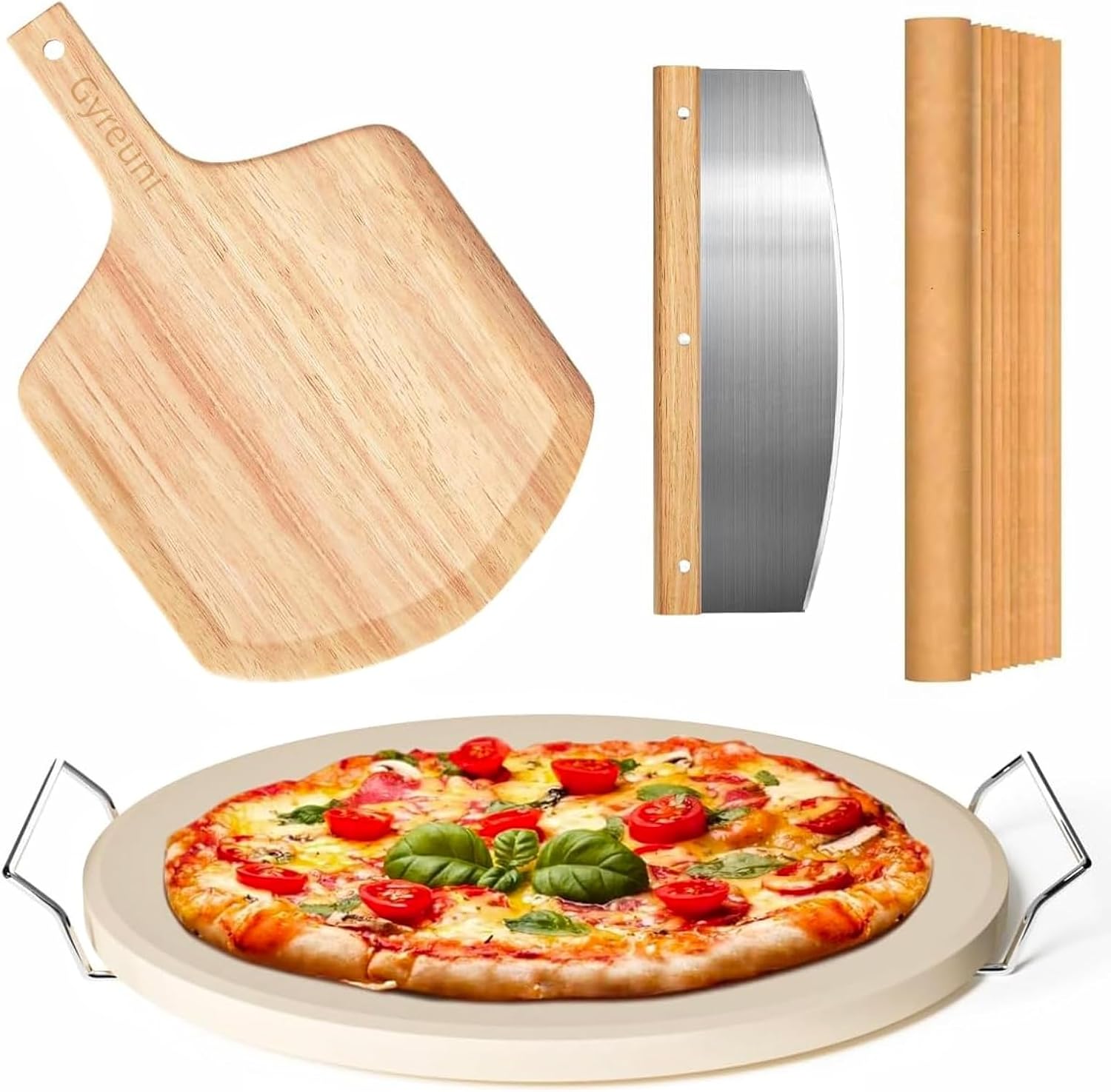
A pizza peel serves as the primary tool for transferring raw dough onto a scorching hot baking stone safely and efficiently. Wooden paddles, particularly those crafted from durable oak, offer a natural surface barrier and feature tapered leading edges that slide smoothly underneath unbaked crusts without sticking or tearing the delicate dough.
Using a properly tapered wooden peel keeps your hands and arms safely away from extreme heat sources located inside the hot oven enclosure. Matching the peel blade width to your specific stone dimensions ensures you maintain adequate mechanical control and clearance when launching or retrieving food items from the baking chamber.
Included Accessories and Convenience Kits
Many baking stone packages include supplementary accessories designed to enhance the overall pizza-making experience right out of the box. Bundles frequently feature stainless steel cutting blades with ergonomic handles, disposable parchment paper sheets to prevent sticking, and specialized cleaning brushes for scraping away stubborn baked food residue from the porous stone surface.
Assessing these included components helps determine the overall value and convenience of a specific set based on your existing kitchen inventory. Having matching tools readily available eliminates the need for separate purchases and streamlines both the food preparation, slicing workflow, and post-cooking cleanup routines significantly for busy home cooks and families.
Maintenance and Care Guidelines
Proper maintenance ensures the longevity and consistent cooking performance of a cordierite baking stone over years of regular use. Because these ceramic stones feature highly porous micro-structures, manufacturers strictly advise against using soap or chemical detergents during cleaning, as the porous material can absorb foreign soap residues and alter subsequent baking flavors.
Routine care involves scraping away excess food debris with a spatula after the stone has cooled completely, followed by rinsing with warm water while scrubbing lightly with a brush. Surface staining from natural cooking oils and cheese is entirely normal and does not impair functionality, often improving baking performance over time for artisan crusts.
Frequently asked questions
Can I use soap to clean my pizza stone?
Manufacturers explicitly advise against using soap, dishwashing liquids, or chemical detergents when cleaning cordierite pizza stones. The material contains an extensive network of invisible micro-pores designed to absorb moisture, which means it can also absorb soapy residues. These trapped chemicals will release unpleasant flavors into your food during subsequent high-heat baking sessions. Instead, allow the stone to cool completely, scrape off excess food debris with a spatula, and scrub it gently under warm water using a simple brush without any soap.
Why is my pizza stone developing dark stains?
Developing dark stains and discoloration on a cordierite baking stone is an entirely normal part of the regular pizza-making process. These marks typically result from natural oils, melted cheese, crust remnants, and baked food particles interacting with the porous surface during high-temperature cooking. Such stains do not affect the structural integrity, cleanliness, or cooking performance of the stone in any way. In fact, many experienced home cooks and bakers actually prefer a well-used stone that has developed a seasoned appearance over time.
How should I preheat my pizza stone before baking?
Proper preheating is essential for achieving a crispy base on your homemade pizzas and preventing dough from sticking to the surface. When using a new cordierite stone for the first time, clean and dry it thoroughly before placing it inside a cold oven. Preheat the stone gradually by setting your oven to four hundred degrees Fahrenheit or higher and allowing it to heat for at least thirty minutes. This thorough preheating process eliminates moisture, ensures even heat distribution, and prevents thermal shock cracking.
Can I use a pizza stone on an outdoor grill?
Many cordierite pizza stones are engineered to handle high-heat environments found in both indoor kitchen ovens and outdoor barbecue grills safely. These stones typically feature high maximum temperature tolerances ranging from one thousand up to fourteen hundred seventy-two degrees Fahrenheit, making them versatile tools for outdoor cooking. When transferring a stone to a grill, ensure it is placed correctly to benefit from even heat distribution, and always allow the stone to cool completely before attempting any handling or cleaning.
What is the purpose of the wooden pizza peel?
A wooden pizza peel functions as a traditional and practical paddle designed to transfer unbaked dough safely onto a scorching hot baking stone without deforming its shape. Crafted from materials like durable oak, these peels feature tapered leading edges that slide easily beneath raw crusts or finished baked goods. This design allows you to launch and retrieve items smoothly while keeping your hands and arms safely away from extreme heat sources inside the enclosed oven or grill chamber during cooking.