Appliances · Buying Guide
Best 8 Cup Glass Measuring Cups for Large Baking Batches
Finding the right large measuring vessel can completely transform how you handle big baking projects, family-style meal preparation, and large-batch cooking tasks in a busy home kitchen. When standard two-cup containers fall short of your recipe requirements, an eight-cup capacity glass measuring tool provides the essential volume needed for mixing massive batches of cake batter, heavy soups, and savory cooking stocks.
These heavy-duty glass containers combine generous sizing with clear measurement markings, dependable heat resistance, and sturdy ergonomic handles, offering practical reliability for home kitchens and busy commercial environments alike. Exploring the specific product options available helps you select a reliable kitchen companion tailored precisely to your everyday cooking and baking routines without unnecessary guesswork or frustration.
As an Amazon Associate, StacyLaughs earns from qualifying purchases.
Buying guide
Capacity and Volume Requirements
Selecting an eight-cup measuring vessel requires evaluating your typical recipe sizes and batch preparation habits. Standard two-cup tools often fall short when mixing family-sized quantities of pancake batter, homemade soups, or multi-ingredient baking recipes. An eight-cup or two-quart capacity provides ample headspace to stir dense mixtures vigorously without splashing ingredients over the rim.
Larger vessels also accommodate dry ingredients efficiently, allowing home cooks to scale flour and sugar for big baking days without utilizing multiple smaller bowls. However, matching your container size to your actual cooking habits ensures you do not struggle with oversized glassware that is cumbersome to wash and store in compact kitchens.
Material Composition and Thermal Durability
Glass material selection significantly impacts how safely a large measuring vessel handles extreme temperature fluctuations in a busy kitchen environment. Borosilicate glass and heavy tempered glass options offer distinct advantages for safely handling boiling liquids or transitioning directly from a cold refrigerator into a preheated oven. Checking these thermal specifications prevents accidental cracking during complex cooking tasks.
Nonporous glass surfaces also prevent chemical leaching, staining, and persistent odor retention, maintaining food flavor purity across years of heavy daily use. While thick glass adds considerable empty weight compared to plastic alternatives, its structural durability and chemical safety make it an ideal choice for melting ingredients, reheating liquids, and mixing savory dishes safely.
Measurement Markings and Visibility
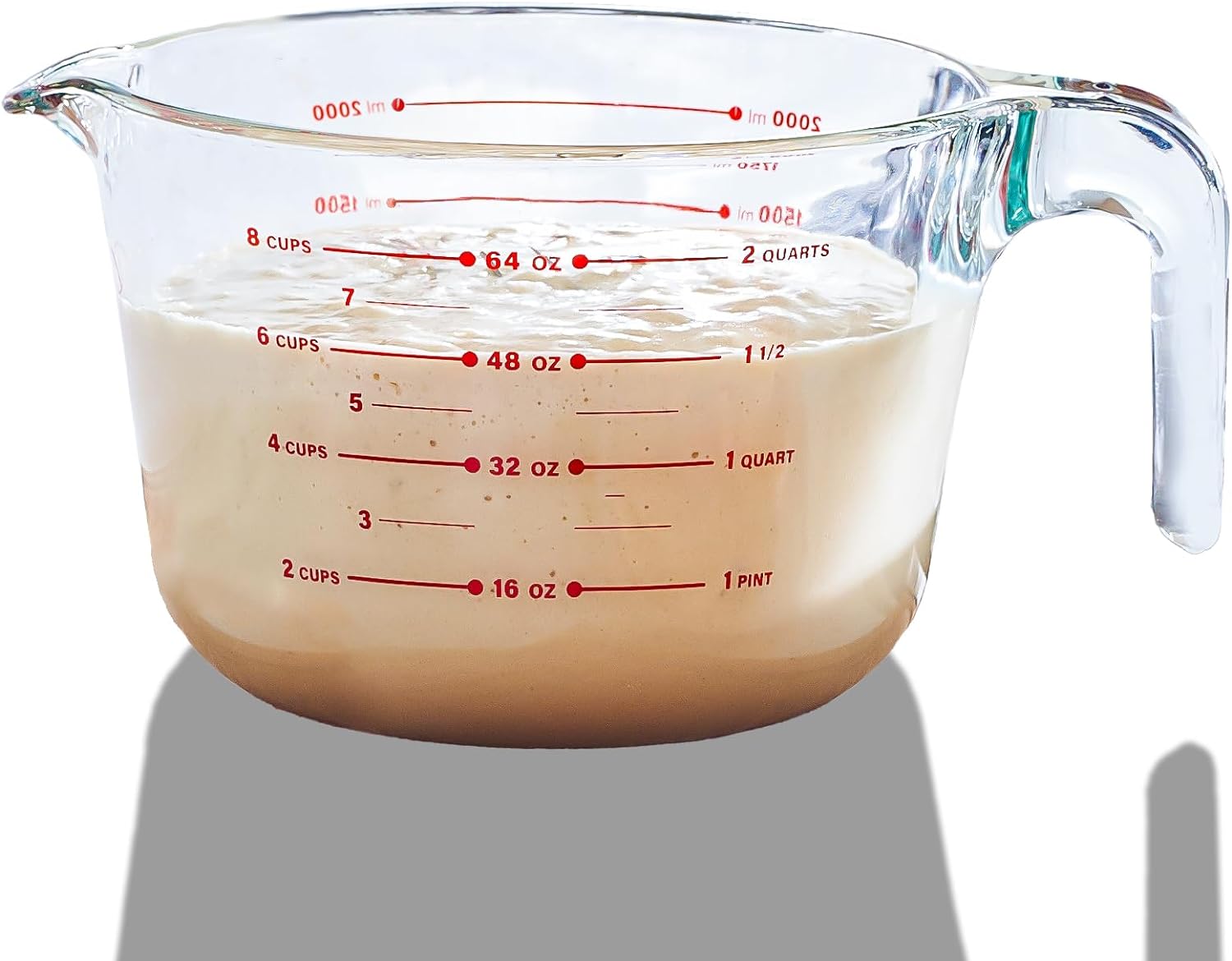
Accurate recipe execution depends heavily on the clarity and placement of measurement markings printed, etched, or embossed on the container body. High-contrast, bold lines allow users to gauge liquid levels quickly from above without needing to lift heavy, filled pitchers to eye level constantly. Clear visibility reduces human error during precise baking and cooking steps.
Certain models feature tactile embossed markings that offer permanent durability against fading from frequent washing, though they sometimes lack color contrast in dim kitchen settings. Evaluating whether you prefer high-visibility printed text or long-lasting embossed lines helps ensure your measuring tool matches your visual preferences and lighting conditions during food preparation routines.
Pour Spouts and Handling Ergonomics
Pouring heavy liquids from a sixty-four-ounce vessel requires thoughtful handle design and a precision spout to prevent messy kitchen counters during food prep. Contoured handles and textured grips provide the physical stability needed to lift heavy glass assemblies with confidence, reducing hand fatigue during extended pouring tasks. An anti-drip spout directs liquid flow cleanly into pans.
Evaluating the physical shape of the handle and rim ensures you can maintain a secure hold even when wearing thick oven mitts or handling slippery ingredients. Vessels lacking properly molded spouts or ergonomic grips can cause accidental spills when transferring hot soups or thick batters into baking pans and storage containers.
Lids and Accessory Integration
Choosing a measuring vessel that includes a specialized lid expands its functional utility from simple liquid measuring into batch storage and food preservation. Lids featuring secure locking mechanisms keep mixed ingredients fresh and prevent accidental spills if the container is moved around a crowded refrigerator. Integrated strainers add further versatility for rinsing food items directly.
However, buyers must consider whether added lid components fit their specific storage habits and daily cleaning routines. While covered bowls eliminate the need for plastic wrap when saving leftovers, lids often require mindful maintenance, and many standard covers are not rated for safe heating inside microwave or preheated oven appliances.
Storage and Maintenance Considerations
Large eight-cup glass measuring containers demand significant physical space within kitchen cabinets, pantry shelves, and dishwashers due to their wide dimensions and heavy build. Assessing your available storage room prevents cabinet overcrowding and ensures the vessel fits comfortably on your dish racks without blocking other frequently used kitchenware items or appliances.
Maintenance requirements also heavily influence long-term satisfaction with heavy glassware products. Most glass bodies tolerate standard dishwasher cleaning cycles effortlessly, but understanding proper care guidelines for associated lids or handling heavy items during washing helps prevent accidental slips in busy sink environments, preserving your kitchen investment over years of regular baking sessions.
Frequently asked questions
Can an eight-cup glass measuring cup be used safely in a preheated oven?
Many heavy glass measuring cups and batter bowls designed with tempered or borosilicate glass are rated safe for use in preheated ovens up to specified temperature limits, such as four hundred twenty-five degrees. However, you must always check the specific product manufacturer guidelines before baking, as sudden thermal shock can crack glass if it transitions too rapidly from extreme cold to intense heat. Additionally, any included plastic lids or non-glass accessories must be removed entirely before placing the glass vessel inside a hot oven environment to prevent melting or damage.
How do I read measurement markings on transparent or embossed glass cups?
Reading measurements on transparent glass typically involves checking bold printed lines against the liquid level from eye level to ensure accuracy. For containers featuring embossed or etched lines rather than colored printing, looking closely at the raised or indented glass ridges under good kitchen lighting helps you gauge exact volumes. Some users find it helpful to place the heavy cup on a flat countertop and bend down to view the meniscus at eye level rather than holding the filled vessel in the air, which reduces reading errors.
Are eight-cup glass measuring cups dishwasher safe?
Yes, the vast majority of glass measuring cups and batter bowls constructed from durable borosilicate or tempered glass are fully dishwasher safe for effortless cleanup after messy baking projects. The nonporous glass material resists staining, clouding, and food odors even when subjected to frequent high-temperature washing cycles. However, if your specific model includes a matching plastic storage lid or a specialized sealing mechanism, you should verify whether that particular accessory requires hand washing to prevent warping or degradation over extended periods of regular kitchen use.
What is the difference between borosilicate glass and standard tempered glass in these cups?
Borosilicate glass is engineered specifically to withstand extreme temperature fluctuations without cracking or shattering, making an excellent choice for handling boiling liquids or rapid thermal shifts. Tempered glass, on the other hand, undergoes a specialized heating and rapid cooling manufacturing process that increases its mechanical strength and impact resistance against chipping or heavy kitchen handling. While both materials offer exceptional durability and safety compared to plastic or thin metal, borosilicate is prized for superior thermal shock resistance, whereas tempered glass excels in overall structural toughness.
Can I use an eight-cup measuring cup to mix heavy baking batters?
Absolutely, an eight-cup capacity measuring cup or batter bowl provides ample volume and wide openings specifically designed for mixing thick batters, pancake mixes, and large batches of cookie dough. The heavy-duty glass walls and sturdy handles offer the stability needed to whisk, beat, and stir ingredients vigorously right inside the vessel without splashing contents over the sides. Because glass is nonporous, it will not absorb sticky residues or food odors, allowing you to transition easily from mixing batters to storing leftovers or cleaning the bowl afterward.