Appliances · Buying Guide
Best Pyrex Blue Glass Mixing Bowls for Everyday Kitchen Prep
Finding reliable kitchenware for everyday food preparation and storage can transform how you handle ingredients in a busy home kitchen. Tempered glass options offer a sturdy, dependable surface for mixing batters, tossing fresh salads, baking casseroles, and keeping prepared meals or leftovers tightly sealed for tomorrow without retaining stubborn food smells or oil residue from previous cooking tasks.
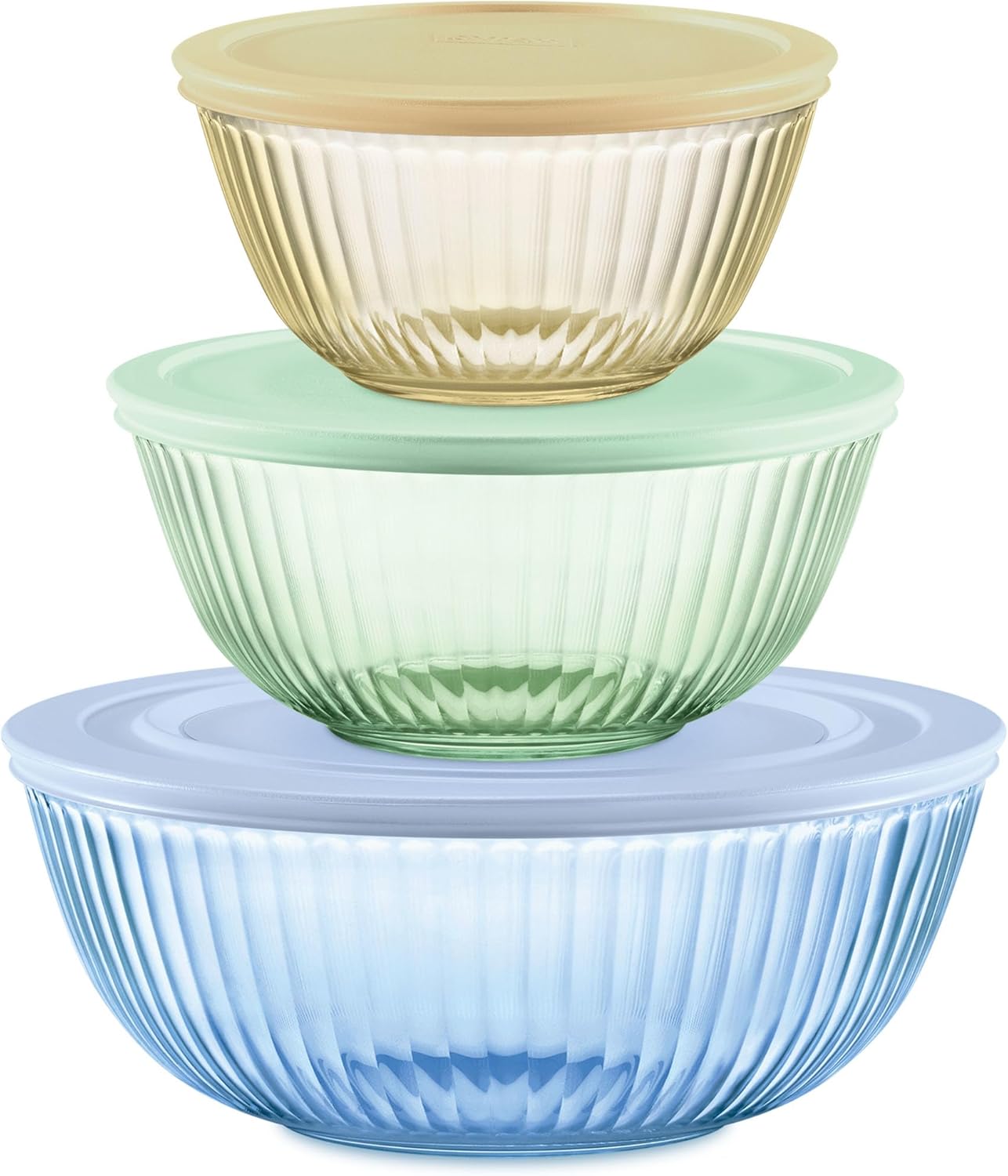
Pyrex provides various glass mixing bowl configurations featuring matching blue lids and colorful tinted designs. These manufactured multi-piece sets and individual pieces cater to home cooks needing durable vessels that transition smoothly from the refrigerator or freezer to the microwave or preheated oven while resisting everyday stains, ensuring a practical experience for all your baking and serving requirements.
As an Amazon Associate, StacyLaughs earns from qualifying purchases.
Buying guide
Understanding Glass Material and Durability
Selecting glass mixing bowls begins with understanding tempered glass construction. Unlike standard glass, tempered varieties undergo specialized heating and cooling processes to enhance resistance against thermal shock and physical impacts. This manufacturing standard helps the bowls withstand transitions from cold refrigerators to warm microwaves or preheated ovens safely during routine baking and food preparation tasks.
Non-porous surfaces offer significant advantages for daily kitchen routines. Because glass does not absorb microscopic food particles, these bowls resist stubborn stains and lingering odors from pungent ingredients like garlic or tomato sauces. Cleaning remains straightforward, as smooth glass interiors wipe clean easily or tolerate automated dishwasher cycles without degrading in clarity or structural integrity over years of regular use.
Evaluating Capacity and Size Requirements
Choosing the right bowl capacity depends heavily on your typical cooking and baking habits. Smaller vessels holding around one to two quarts suit whisking eggs, melting butter, or mixing dressings. Mid-range options around two to three quarts handle standard cake batters and side dishes comfortably, while large bowls exceeding four or ten cups accommodate bulky bread doughs and family-sized salads.
Consider how physical dimensions impact your workflow and storage availability. Wider bowls provide more surface area for hand stirring and whisking ingredients efficiently, but they demand greater counter space. Matching your bowl sizes to your standard recipe volumes prevents unnecessary clutter while ensuring you always have adequate room for mixing without messy overflows.
Assessing Lid Compatibility and Storage Features
Storage lids transform a standard mixing bowl into a dual-purpose food preservation container. BPA-free plastic lids designed specifically for glass bowls create a secure seal that keeps leftovers fresh in the refrigerator or freezer. Checking part numbers ensures the cover fits snugly over the rim, preventing accidental slips or spills during stacking and transport between kitchen counters and storage shelves.
Unlidded bowls offer advantages for cooks who already own alternative storage solutions or prioritize open-vessel nesting. Nesting designs allow multiple bowls to stack tightly inside one another, conserving valuable cabinet space. Weighing whether you need integrated snap-on covers or prefer streamlined stackability helps simplify your kitchen organization based on your specific food storage routines.
Cleaning and Maintenance Best Practices
Maintaining tempered glass mixing bowls requires straightforward care to preserve their appearance and utility. Most glass components are dishwasher safe, tolerating high water temperatures and standard detergents without losing their smooth finish. Avoiding harsh metal scouring pads prevents surface scratches that could weaken the glass structure over extended periods of frequent cleaning and heavy everyday kitchen use.
Plastic storage lids demand slightly more attention during maintenance routines. Manufacturers typically recommend placing BPA-free lids on the top rack of your dishwasher to protect them from heating elements that can cause warping. Hand washing can also extend lid longevity, ensuring the flexible borders maintain their tight, secure fit over years of opening and closing during daily meal storage tasks.
Examining Color Tinting and Design Choices
Modern glass mixing bowls frequently feature decorative color tints alongside traditional clear glass constructions. Tinted options introduce vibrant hues like blue, green, yellow, or pink to your kitchen setup, adding aesthetic appeal during countertop food preparation and serving. These exterior colors allow cooks to coordinate kitchen accessories or easily identify specific bowl sets stored within busy pantry shelves.
While tinted designs look appealing, they alter the visual experience compared to completely clear glass. Colored glass walls make it slightly more challenging to observe ingredient mixing consistency or batter blending from the side profile. Evaluating whether aesthetic color accents or unobstructed side visibility matter more to your cooking style will guide your final selection between tinted and clear vessels.
Balancing Sets Versus Individual Bowls
Deciding between a complete multi-piece set and an individual bowl depends on your current kitchen inventory and cooking scope. Multi-pack sets provide a graduated assortment of sizes, equipping you for complex recipes that require multiple bowls simultaneously. Purchasing sets often delivers better overall value for outfitting a kitchen with coordinated mixing and storage options from the start.
Individual bowls suit home cooks who need to replace a lost item or expand their collection with a specific high-capacity vessel. Buying single bowls avoids paying for smaller sizes you might never use. Assess your current cookware inventory to determine if a comprehensive multi-pack or a targeted standalone bowl best fits your culinary preparation requirements and available storage space.
Frequently asked questions
Are Pyrex glass mixing bowls safe for use in preheated ovens?
Tempered glass mixing bowls manufactured by Pyrex are engineered to withstand heating in preheated ovens. The specialized thermal tempering process allows the glass to handle moderate temperature changes safely. However, you must always avoid placing cold glass bowls directly onto extremely hot heating elements or exposing them to severe, sudden thermal shocks, such as pouring freezing liquid into a scalding hot dish, to prevent potential cracking or shattering during your baking and cooking routines.
Can I put the plastic lids into the microwave and dishwasher?
The BPA-free plastic lids designed for these glass bowls are safe for microwave use when warming food, as well as freezer storage. For cleaning, manufacturers recommend placing these plastic lids on the top rack of your dishwasher. This specific placement keeps the lids safely away from lower heating elements that can cause warping or structural deformation, ensuring the covers maintain their secure fit over extended periods of everyday kitchen use and routine cleaning cycles.
Do tinted glass mixing bowls stain or retain food odors over time?
High-quality tempered glass features a non-porous surface that naturally resists absorbing food odors, flavors, and stubborn stains. Unlike porous plastic containers, glass will not hold onto lingering smells from pungent ingredients like onions, garlic, or tomato-based sauces. Even when mixing deeply colored ingredients, the smooth glass interior wipes clean easily during washing, ensuring your bowls remain fresh, hygienic, and ready for your next baking or food preparation task without residual flavor transfer.
How do I find the correct replacement lid part number for my bowl?
To find the correct replacement lid, look at the stamped numbers located on the bottom of your glass dish. Pyrex bowls typically feature a specific model number, such as 325 or 7403, molded directly into the glass. You must match this exact part number to the corresponding lid number before purchasing, because lids are custom-engineered for specific bowl dimensions and will not interchange safely across different dish shapes or capacities within the product lineup.
Are unlidded glass mixing bowls better for stacking in cabinets?
Unlidded glass mixing bowls are often exceptionally convenient for cabinet storage because their open rims allow them to nest tightly inside one another, minimizing the physical footprint on your shelves. While lidded bowls can also nest, managing multiple matching plastic covers alongside the stacked glass vessels requires extra organizational effort. If your primary goal is maximizing compact storage space and you rarely use built-in snap-on covers, unlidded nested sets offer a streamlined solution for home kitchens.