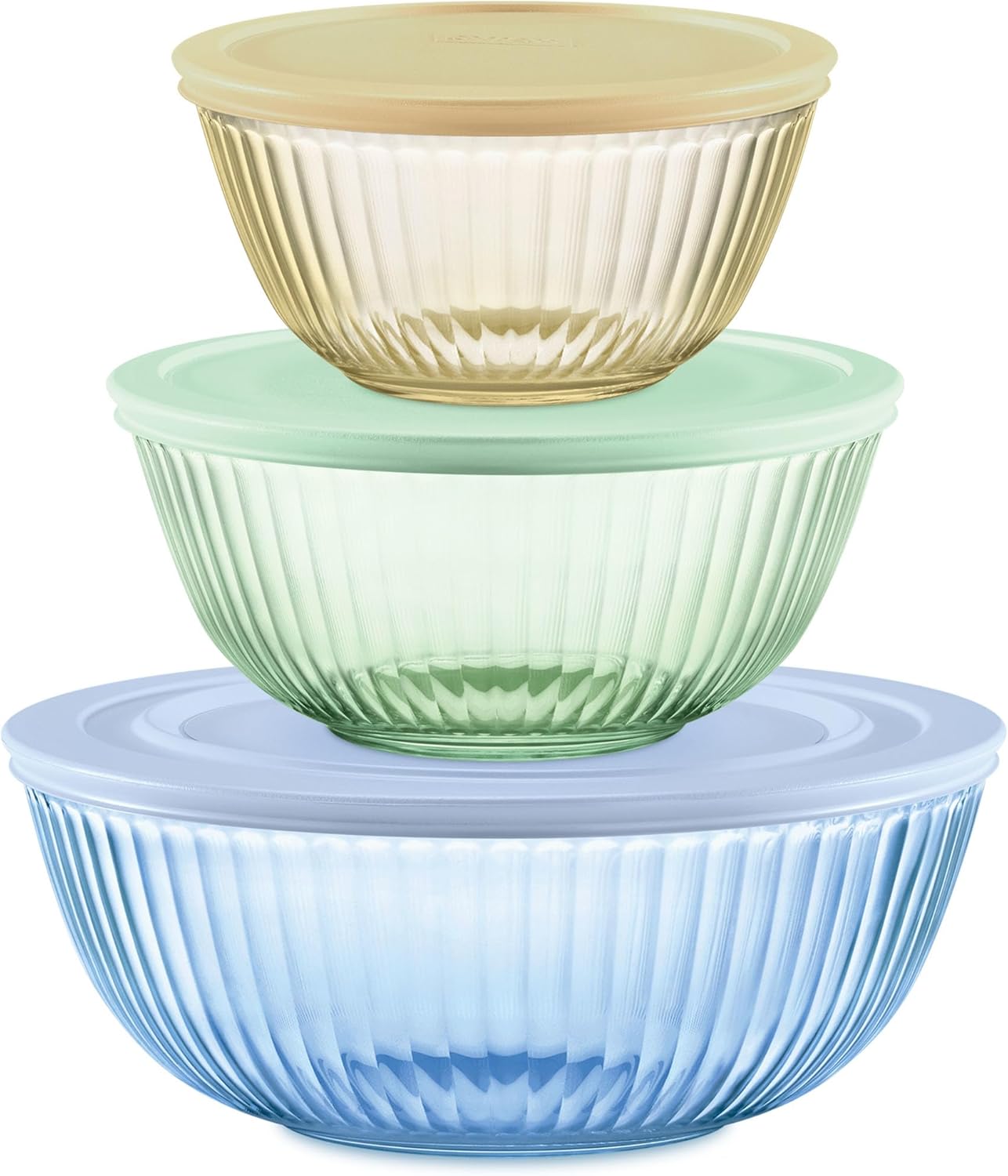
Appliances · Buying Guide
Best Pyrex Crazy Daisy Mixing Bowls Options for Daily Prep
Finding reliable cookware that bridges nostalgia and modern functionality can be challenging when you want dependable vessels for food preparation, baking, and storage. While classic patterns evoke fond memories, current tempered glass options provide robust everyday performance without sacrificing aesthetic appeal in busy kitchens.
This overview explores several durable glass bowl configurations designed to handle daily culinary tasks from mixing ingredients to sealing leftovers. By reviewing specific pack counts, capacities, and included lids, you can select the right set to match your household storage and baking routines effectively.
As an Amazon Associate, StacyLaughs earns from qualifying purchases.
Buying guide
Evaluating Glass Material and Durability
When selecting glass mixing bowls, understanding the material composition helps ensure long-term kitchen reliability. Tempered and borosilicate glass options provide resistance against thermal shock during baking and microwave use. These robust surfaces withstand daily scraping from utensils without scratching easily.
Non-porous glass structures prevent food odors and stains from settling into the bowl walls over time. This characteristic keeps your prep vessels hygienic and fresh, even after mixing strongly scented ingredients like garlic, spices, or tomato-based sauces.
Selecting Capacity and Size Ranges
Kitchen tasks require different bowl sizes depending on whether you are whipping a quick dressing or kneading heavy bread dough. Sets featuring graduated capacities, such as one-quart up to 4.5-quart vessels, offer maximum versatility for various culinary projects.
Assessing your typical cooking volume prevents purchasing oversized bowls that clutter counters or undersized bowls that overflow. Matching bowl dimensions to your household routine ensures efficient food staging and successful baking results.
Importance of Included Lids and Storage
Transitioning food directly from mixing to refrigeration saves time and reduces dish cleanup. Sets that include custom-fit, BPA-free plastic lids allow you to seal leftover ingredients or dough securely without needing plastic wrap.
Verify whether lids are included in your chosen set or sold separately. Secure seals protect food freshness in refrigerators and freezers while making stacked storage in crowded kitchen cabinets much more manageable.
Cleaning and Maintenance Requirements
Easy maintenance keeps kitchen tools ready for frequent use. Dishwasher-safe glass bowls and top-rack safe plastic lids simplify post-cooking cleanup routines significantly.
Following manufacturer guidelines for cleaning prevents premature wear on plastic components. Smooth glass surfaces clean up quickly by hand or machine, resisting baked-on food residue effectively after high-heat baking sessions.
Cabinet Storage and Nesting Design
Kitchen storage space is often at a premium, making nesting bowl designs a practical priority. Bowls that fit neatly inside one another reduce the footprint required inside crowded cupboards.
Consider the total piece count, including lids, when planning your storage space. Proper nesting prevents rattling and scratching, protecting your glass collection while keeping counters clear during active cooking.
Aesthetic Choices and Tinted Glass
Glass mixing bowls serve decorative and functional roles when brought directly to the table for serving. Tinted or sculpted glass options add personality and vintage-inspired charm to your kitchen decor.
While colored glass enhances visual appeal during home entertainment, consider whether you prefer traditional transparency for monitoring food consistency from side angles during mixing and baking tasks.
Frequently asked questions
Can these glass mixing bowls be used safely in the microwave?
Most featured glass mixing bowls are manufactured from durable tempered or borosilicate glass, making them safe for microwave heating. This allows you to melt butter, warm liquids, or soften ingredients directly in the bowl. Always verify specific manufacturer instructions for each set, and ensure any plastic lids are removed or safely positioned before starting microwave cycles.
Are the included plastic lids airtight for food storage?
The BPA-free plastic lids included with select glass bowl sets are designed to create a secure, snug fit over the rim. While they effectively keep leftovers fresh and prevent spills during refrigerator or freezer storage, they are generally designed for food preservation rather than liquid-tight transport. Handling bowls carefully prevents accidental shifting of the flexible plastic covers.
How do I prevent stubborn stains or odors on glass bowls?
Glass is naturally non-porous, meaning it resists absorbing food odors and staining much better than plastic alternatives. To maintain this clean surface, wash the bowls promptly after use in a dishwasher or by hand using warm, soapy water. Avoid abrasive scouring pads that could scratch the glass surface over extended periods of heavy kitchen use.
Do these mixing bowl sets nest together for easy storage?
Many multi-pack mixing bowl sets feature graduated dimensions specifically engineered for efficient nesting. By placing smaller bowls inside larger ones, you can significantly reduce the cabinet space required for storage. However, accounting for matching plastic lids requires additional organizational planning to keep pairing components together neatly.
What is the difference between standard glass and borosilicate glass?
Borosilicate glass and tempered glass both offer enhanced durability and resistance to thermal changes compared to regular glass. Borosilicate formulation is traditionally recognized for handling extreme temperature shifts efficiently, while tempered glass provides robust strength against everyday impacts and scratches during active food preparation and baking tasks.