Appliances · Buying Guide
Best Pyrex Glass Mixing Bowl Set Choices for Baking and Food Storage
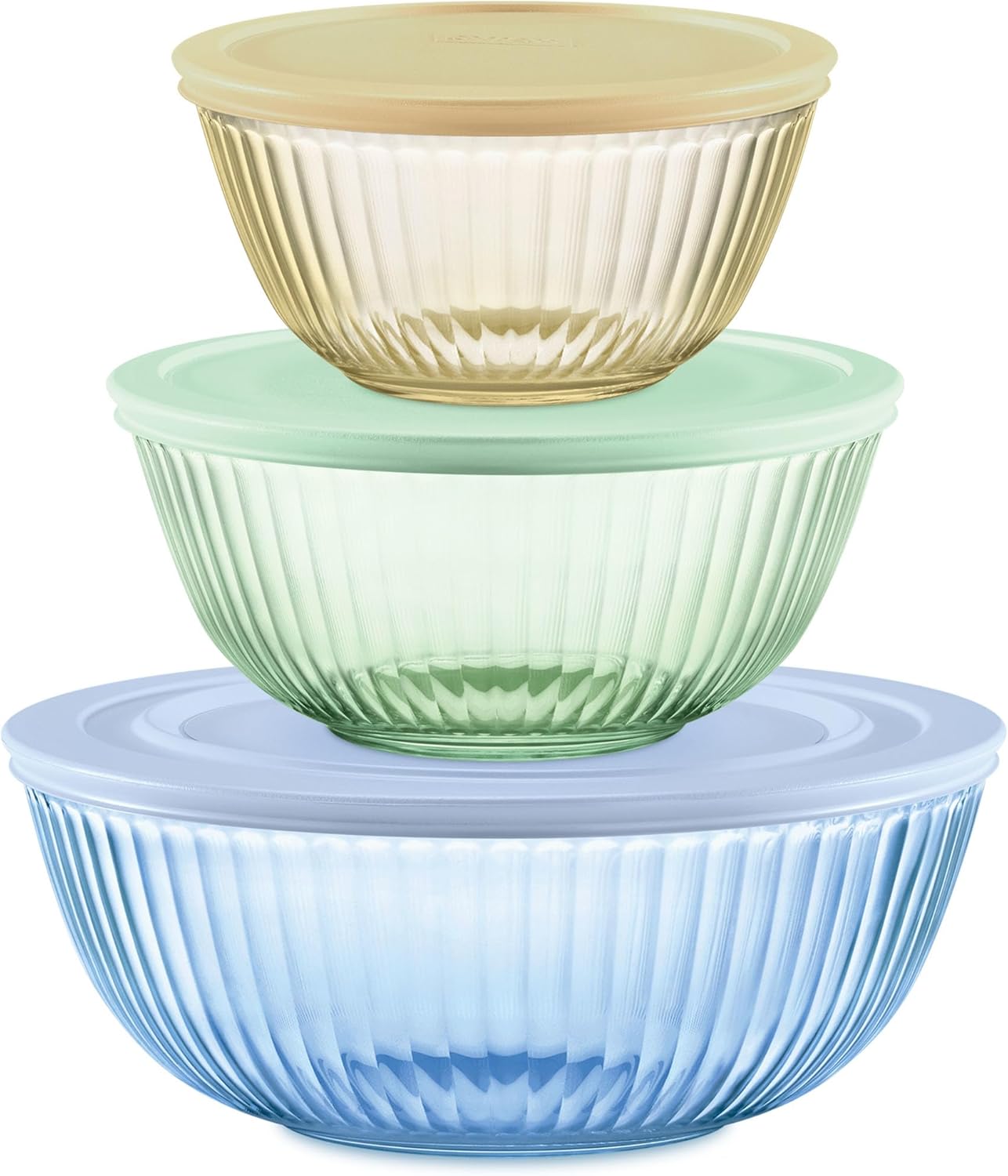
Finding the right equipment for food preparation makes daily cooking tasks much simpler and more efficient. A reliable set of mixing bowls lets you handle everything from whipping eggs to storing leftovers in the exact same container. Pyrex offers various configurations featuring durable tempered glass designed to withstand standard oven temperatures and everyday kitchen use without absorbing unwanted food odors.
Whether you need a compact three-piece arrangement for basic baking or a larger multi-piece collection complete with matching plastic lids, these glass options provide practical utility. Understanding the differences in bowl counts, capacity sizes, and included covers helps you select a suitable configuration for your specific cooking routines and refrigerator storage needs.
As an Amazon Associate, StacyLaughs earns from qualifying purchases.
Buying guide
Material Composition
Choosing the right material for your mixing bowls impacts durability, heat tolerance, and ease of maintenance. Pyrex glassware utilizes tempered or borosilicate glass designed to handle standard oven baking temperatures when preheated properly. Glass does not absorb food odors or stubborn stains from ingredients like tomato sauce, ensuring your bowls remain fresh over years of regular use in busy kitchens.
Unlike plastic alternatives, glass provides a sturdy weight that prevents the bowl from sliding around your countertop during vigorous whisking or mixing tasks. While glass requires careful handling to avoid chipping or thermal shock, its non-reactive surface makes it ideal for mixing acidic ingredients, baking casseroles, and storing leftovers safely in the refrigerator or freezer without altering food flavors.
Capacity and Size Range
Selecting an appropriate capacity range depends heavily on the types of recipes you prepare most frequently. Smaller one-quart bowls work exceptionally well for whisking individual eggs, melting butter, or mixing dressings. Intermediate sizes handle batters and side dishes, while larger bowls exceeding four quarts provide ample room for tossing large salads, kneading bread dough, or preparing family-sized holiday meals.
Purchasing a multi-piece set ensures you always have the correct size available without overcrowding your workspace. Sets featuring graduated dimensions allow you to nest the bowls together efficiently inside kitchen cabinets, saving valuable storage space while keeping your prep gear organized and ready for your next baking adventure or weeknight dinner preparation.
Lid Inclusion and Storage
Having matching lids transforms a standard mixing bowl into a versatile food storage container. Many Pyrex sets include BPA-free plastic covers designed to fit securely over the bowls, allowing you to transition seamlessly from mixing ingredients to keeping leftovers fresh in the refrigerator. This eliminates the need for disposable plastic wrap or separate storage containers during meal prep.
When evaluating options with lids, consider whether you prefer airtight seals for transporting food or standard covers for basic refrigerator stacking. Keep in mind that plastic lids typically require top-rack dishwasher placement to prevent warping, and you must always remove them before transferring any glass bowl into a conventional oven for baking or warming.
Thermal Handling and Safety
Glass cookware requires mindful thermal handling to prevent cracking or breakage caused by sudden temperature shifts. Always allow cold glass bowls to reach room temperature before placing them into a preheated oven. Similarly, avoid pouring cold liquids into hot glass or setting heated dishes onto cold or wet surfaces to maintain structural integrity during cooking.
Following proper manufacturer guidelines ensures your glass bowls remain safe for use across microwaves, freezers, and conventional ovens. Because glass retains heat efficiently, using oven mitts when removing baked goods protects your hands from burns. Respecting these practical temperature boundaries allows you to bake, reheat, and store meals with complete confidence every single day.
Cabinet Space and Nesting
Managing kitchen storage space is a crucial consideration when choosing a mixing bowl collection. Sets designed with graduated dimensions nest neatly inside one another, occupying the footprint of just the largest bowl. This space-saving attribute makes multi-piece collections practical even for kitchens with limited cupboard availability or modest counter space.
If your set includes matching plastic lids, you will also need to decide how to store those covers efficiently. Many cooks store lids vertically in a drawer or nested flat beneath the inverted bowls. Assessing your available cabinet height and shelf depth beforehand prevents storage frustration and ensures your new baking gear integrates smoothly into your kitchen.
Maintenance and Cleaning
Keeping your glassware clean should be a straightforward part of your post-cooking routine. Pyrex glass bowls are dishwasher safe, allowing you to run them through standard wash cycles without worrying about stubborn stains or lingering garlic and onion aromas. The smooth glass surfaces also make manual hand washing simple when dealing with sticky batters or heavy dough residues.
Plastic lids require slightly more attention, as manufacturer recommendations typically specify top-rack dishwasher placement to avoid heat distortion. Inspecting your lids periodically and washing them promptly after storing highly pigmented foods helps maintain their shape and appearance. Proper maintenance routines preserve the durability and clean look of your entire glassware collection for years.
Frequently asked questions
Can I put Pyrex glass mixing bowls directly into a preheated oven?
Yes, Pyrex glass bowls are designed for conventional or convection ovens at any temperature your recipe calls for, provided the oven is fully preheated beforehand. However, you must avoid sudden temperature extremes, such as placing a cold bowl straight from the refrigerator into a hot oven, because thermal shock can cause the glass to crack or break. Always let refrigerated bowls adjust to room temperature first, use dry potholders when handling hot dishes, and never place glass bowls directly on stovemates or under active broiler elements.
Are the included plastic lids safe for microwave and dishwasher use?
The BPA-free plastic lids provided with many Pyrex bowl sets are indeed safe for use in the microwave when you need to warm contents, and they are also safe for the dishwasher. To ensure longevity and prevent accidental warping, it is generally recommended to place these plastic lids on the top rack of your dishwasher away from heating elements. Always remove the lids entirely before placing the glass bowls into an oven, as plastic covers cannot withstand baking temperatures.
Do glass mixing bowls absorb food odors or stains from tomato sauces?
High-quality tempered and borosilicate glass surfaces are naturally non-porous, meaning they resist stubborn food odors and stains from acidic ingredients like tomato sauce, garlic, or marinades. Unlike plastic containers that can discolor or hold onto lingering smells over time, Pyrex glass washes clean easily in the dishwasher or by hand. This makes glass mixing bowls an excellent choice for marinating foods, mixing strongly flavored ingredients, and transitioning between sweet and savory recipes without flavor transfer.
How should I store my mixing bowl set to save cabinet space?
Most Pyrex bowl sets feature graduated sizing that allows the containers to nest securely inside one another, reducing the required storage footprint to the size of the largest bowl. To keep your cupboards organized, stack the bowls from largest to smallest on a stable shelf. If your set includes matching plastic lids, you can store them flat beneath the stacked bowls or vertically in a dedicated drawer to prevent them from getting misplaced among your cookware.
What is the difference between tempered glass and borosilicate glass bowls?
Both tempered glass and borosilicate glass provide exceptional durability, heat resistance, and resistance to staining or odors during everyday kitchen tasks. Tempered glass undergoes a specialized heating and rapid cooling process that increases its mechanical strength against everyday bumps and thermal stress. Borosilicate glass contains unique thermal properties that offer high resistance to extreme temperature changes. Both types perform reliably for baking, food preparation, and storage when following proper manufacturer care guidelines and avoiding extreme thermal shocks.