Appliances · Buying Guide
Best Pyrex Glass Mixing Bowls for Baking and Food Storage
Finding the right kitchen prep gear often comes down to choosing versatile containers that can move smoothly from counter to oven, microwave, and refrigerator. Pyrex glass mixing bowls offer reliable options for everyday cooks who need durable vessels for tossing salads, whipping eggs, baking casseroles, or keeping food sealed for later use.
Because these bowls come in various set configurations and individual sizes, selecting the right option depends heavily on your specific cooking habits and storage needs. Reviewing the available configurations helps clarify which capacities, matching lids, and set sizes best match your kitchen routines without adding unnecessary clutter to your cupboards.
As an Amazon Associate, StacyLaughs earns from qualifying purchases.
Buying guide
Determining the Right Capacity Range
Choosing the appropriate bowl capacity ensures you have enough room for ingredients without overflowing your counters or crowding small kitchen workspaces. Smaller one-quart bowls handle quick tasks like whisking eggs, beating small amounts of batter, or melting butter in the microwave. Medium capacities around two quarts suit standard baking prep, while larger four-quart options easily manage heavy bread doughs, large salads, and batch cooking for multiple people.
Assessing your typical cooking habits clarifies whether a single medium-sized vessel suffices or if a multi-piece set covering various volumes is necessary for efficient daily meal preparation. Matching your recipes to the correct bowl size prevents messy spills and keeps your workflow organized.
Understanding Tempered Glass Durability
Tempered glass construction offers distinct advantages for everyday kitchen environments by providing dependable resistance against food stains and lingering odors. Unlike some plastics that absorb garlic, tomato sauce, or spice oils, glass surfaces clean thoroughly in the dishwasher. However, users must follow proper thermal care guidelines to prevent damage from sudden temperature shifts. Always let cold bowls reach room temperature before placing them into a preheated oven to ensure long-lasting durability.
Recognizing these material characteristics helps protect your glassware during baking, reheating, and storage routines. Handling glass with care prevents accidental thermal shock while maintaining a safe, nonporous cooking vessel for your favorite family recipes and daily meal prep tasks.
Evaluating Lids and Storage Features
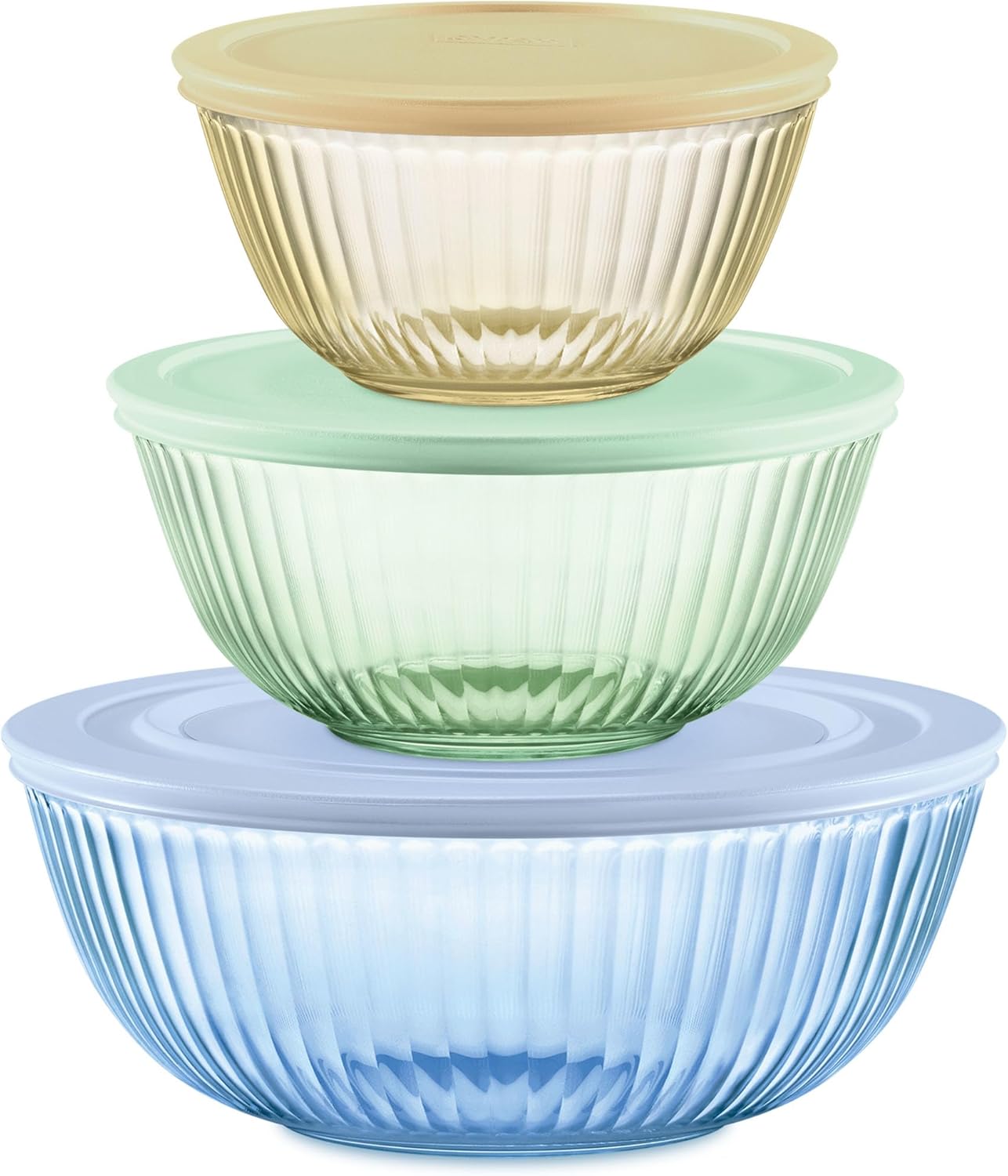
Many glass mixing bowl sets include matching BPA-free plastic lids that transform prep bowls into convenient food storage containers. These lids create a secure seal to keep leftovers fresh inside the refrigerator or freezer, eliminating the need for single-use plastic wrap. When selecting a set, check whether lids are included or sold separately, as standalone bowls often require individual lid part matching. Ensure you keep plastic covers away from direct oven heat.
Having reliable covers streamlines your kitchen routine by letting you mix, bake, serve, and store food using the exact same vessel. This reduces overall cleanup effort and minimizes extra container clutter inside your kitchen cabinets.
Balancing Set Configurations Versus Standalone Bowls
Deciding between a bundled multi-piece set and an individual standalone bowl depends entirely on your current kitchen inventory and cooking demands. Multi-piece sets provide a graduated range of sizes that nest together neatly to save cabinet space while accommodating diverse recipes. Conversely, purchasing a single standalone bowl works well when replacing a broken piece or adding a specific capacity for frequent baking tasks without buying extra items.
Weighing your storage availability against your cooking frequency helps you select the ideal configuration. Buying a complete set offers greater versatility, whereas individual bowls target specific volume needs without excess clutter.
Safe Oven and Microwave Usage Practices
Pyrex tempered glass bowls are designed for use in conventional and convection ovens, as well as microwaves, making them exceptionally versatile for heating and baking. However, safety guidelines dictate that glass bowls should only go into a fully preheated oven and must never be used on stovetops or under broilers. Additionally, users must always remove plastic lids before placing any glass bowl into a hot oven to prevent melting or warping.
Following these manufacturer recommendations ensures safe operation during meal prep. Proper heating practices prevent thermal stress and allow you to transition ingredients smoothly from countertop mixing to oven baking without complications.
Maintenance and Cleaning Considerations
Maintaining your glass mixing bowls requires minimal effort thanks to dishwasher-safe construction that handles messy baking residue with ease. Glass surfaces do not retain food odors or discoloration, ensuring your bowls look clean after handling colorful ingredients like berries or tomato sauces. When sets include plastic lids, check manufacturer instructions regarding top-rack dishwasher placement to keep the seals fitting snugly over time without distortion from intense lower-rack heating elements.
Proper cleaning routines preserve the clarity and structural integrity of your glassware through years of regular use. Simple washing habits keep your prep bowls hygienic and ready for your next culinary project.
Frequently asked questions
Can Pyrex glass mixing bowls go straight from the refrigerator into a hot oven?
Like all glass products, Pyrex bowls require careful handling during extreme temperature changes to avoid thermal shock. You should never pour cold liquid into a hot glass bowl or take a cold bowl straight from the refrigerator into a fully preheated oven. Instead, allow the chilled bowl to warm up gradually to room temperature before placing it into the oven. Following this precaution prevents cracking and ensures your tempered glass bowls remain durable and safe throughout repeated baking and meal prep sessions.
Are the plastic lids included with these bowl sets microwave and dishwasher safe?
The BPA-free plastic lids designed for these glass bowls are safe for use in microwaves, freezers, and top-rack dishwashers. They allow you to warm food directly or store leftovers conveniently without transferring contents to another container. However, you must always remove the plastic lids before placing the glass bowls into a conventional oven, as the lids cannot withstand high baking temperatures. Following these care instructions protects the plastic material and maintains a snug, secure fit for your food storage needs.
Can I use Pyrex glass bowls on a stovetop burner or under a broiler?
No, Pyrex glass mixing bowls are strictly designed for conventional or convection ovens, microwaves, refrigerators, and freezers. You should never place them directly on a stovetop burner, electric coil, gas flame, or under a broiler element. Direct heat exposure creates extreme thermal stress that can cause the glass to shatter. Always restrict your use of these bowls to baking, food preparation, microwave reheating, and general storage according to the manufacturer guidelines provided for safe kitchen operation.
How do I find the correct replacement lid for my individual Pyrex bowl?
To find the correct replacement lid for a specific Pyrex bowl, check the part number stamped on the bottom of the glass dish, such as the number 325. Match that exact part number to the corresponding lid model before making a purchase. Pyrex lids are specifically molded to fit designated dish dimensions, meaning a lid from one bowl size will typically not fit another. Verifying the bottom stamp ensures a tight, secure seal for storing your leftovers and prepped ingredients.
Do Pyrex glass bowls absorb food odors or stains from sauces like tomato?
One of the primary benefits of high-quality tempered borosilicate and nonporous glass is its strong resistance to stains and odors. Unlike plastic containers that frequently discolor or retain lingering smells after storing tomato sauces, garlic, or marinades, glass surfaces wash clean easily. After running through the dishwasher or washing by hand, your bowls will not hold onto funny smells or residual pigments. This nonporous quality ensures your glassware remains fresh and ready for sweet or savory recipes alike.