Appliances · Buying Guide
Best Pyrex White Mixing Bowl Alternatives and Glass Sets for Every Kitchen
Selecting the right mixing bowl involves carefully evaluating materials like tempered glass, ceramic, stainless steel, and durable plastic to match your daily baking and cooking routines. Whether you are prepping ingredients, whisking batters, or storing leftovers, understanding your options ensures efficient kitchen food preparation workflows.
While classic glass options from trusted brands like Pyrex along with alternative ceramic, steel, or plastic sets offer distinct daily benefits, knowing their physical attributes helps you choose wisely. This detailed guide examines several popular mixing bowl configurations to help you find the ideal match for your kitchen storage, countertop stability, and food prep needs.
As an Amazon Associate, StacyLaughs earns from qualifying purchases.
Buying guide
Material Selection for Mixing Bowls
Choosing the correct bowl material impacts durability, weight, and thermal performance across baking tasks. Glass and ceramic options offer non-porous surfaces that resist stains and odors while supporting microwave heating.
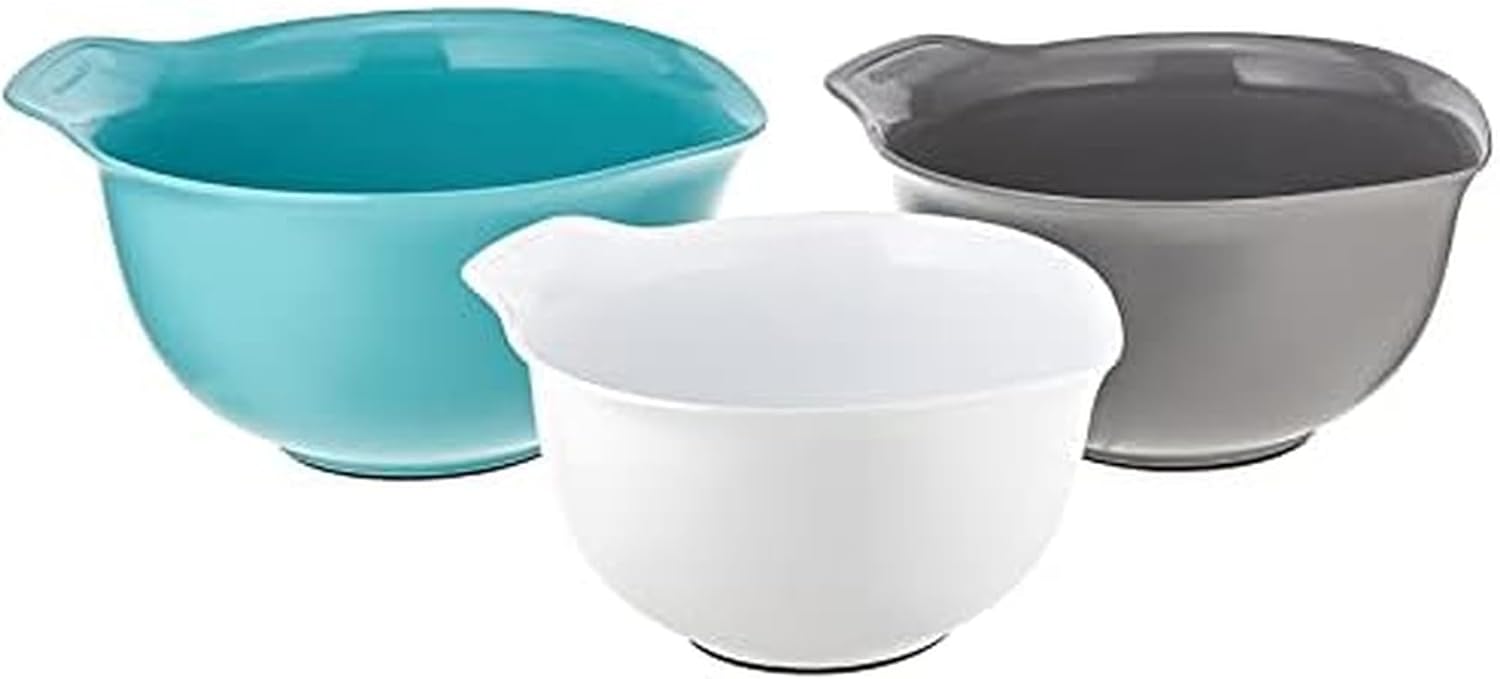
Stainless steel provides lightweight durability and handles extreme temperatures well, while plastic offers lightweight convenience and integrated pouring spouts for everyday batter preparation.
Evaluating Capacity and Sizing
Reviewing capacity ensures your bowls handle small prep tasks and large batch mixing without overflow issues. Sets featuring multiple sizes from one quart up to five quarts cover diverse culinary needs.
Selecting single large bowls or tiered nesting sets depends on whether you routinely mix heavy double batches or simple everyday dressings and marinades.
Storage and Nesting Design
Kitchen cabinet space is valuable, making nesting configurations an efficient choice for multi-piece sets. Bowls that stack neatly inside one another reduce clutter on shelves.
Evaluating the outer dimensions and stacking height ensures the set fits comfortably inside your designated pantry or lower cabinet storage spaces.
Cleaning and Maintenance Requirements
Proper maintenance preserves the appearance and structural integrity of your mixing bowls over years of use. Dishwasher-safe glass and ceramic simplify cleanup after sticky baking sessions.
Certain materials like insulated steel may require hand washing to protect exterior coatings, so reviewing manufacturer care instructions keeps maintenance straightforward.
Stability and Base Construction
A stable base prevents unwanted sliding while you vigorously whisk eggs, beat batter, or knead thick dough. Non-skid rubber bottoms and textured grips enhance countertop friction.
Raised outer edges also provide reliable finger holds, helping you transfer heavy or hot mixtures safely from the workspace to appliances.
Pouring and Transferring Features
Pour spouts integrated into the rim help channel liquid batters and sauces cleanly into pans or baking dishes. This feature minimizes drips and messy countertop cleanup.
When selecting bowls, consider whether rolled rims or dedicated spouts best match your preferred method for transferring prepared ingredients.
Frequently asked questions
What materials are available for mixing bowls?
Mixing bowls are commonly crafted from tempered glass, ceramic, stainless steel, and durable plastic. Each material offers distinct advantages, such as glass and ceramic resisting stains and odors, stainless steel providing rugged durability, and plastic delivering lightweight handling with pour spouts.
How do I choose the correct bowl capacity?
Choosing the right capacity depends on your typical recipes. Small bowls around one to two quarts suit whisking eggs and prepping small ingredients, while larger bowls exceeding three to five quarts accommodate big dough batches and family salads.
Are glass mixing bowls safe for the microwave?
Tempered glass mixing bowls are generally engineered to be microwave, freezer, and dishwasher safe. They allow you to warm ingredients directly in the bowl without worrying about warping or releasing plastic compounds into your food.
Can nesting bowls save cabinet space?
Yes, nesting bowl sets are specifically designed to stack inside one another, creating a compact single footprint. This arrangement minimizes the storage area required in your kitchen cabinets compared to storing individual standalone bowls.
How should I clean stainless steel versus glass bowls?
Glass and ceramic bowls are typically dishwasher safe and resist staining. Stainless steel bowls with standard interiors clean easily in the dishwasher, though models featuring insulated plastic exteriors often require hand washing to protect the outer layers.