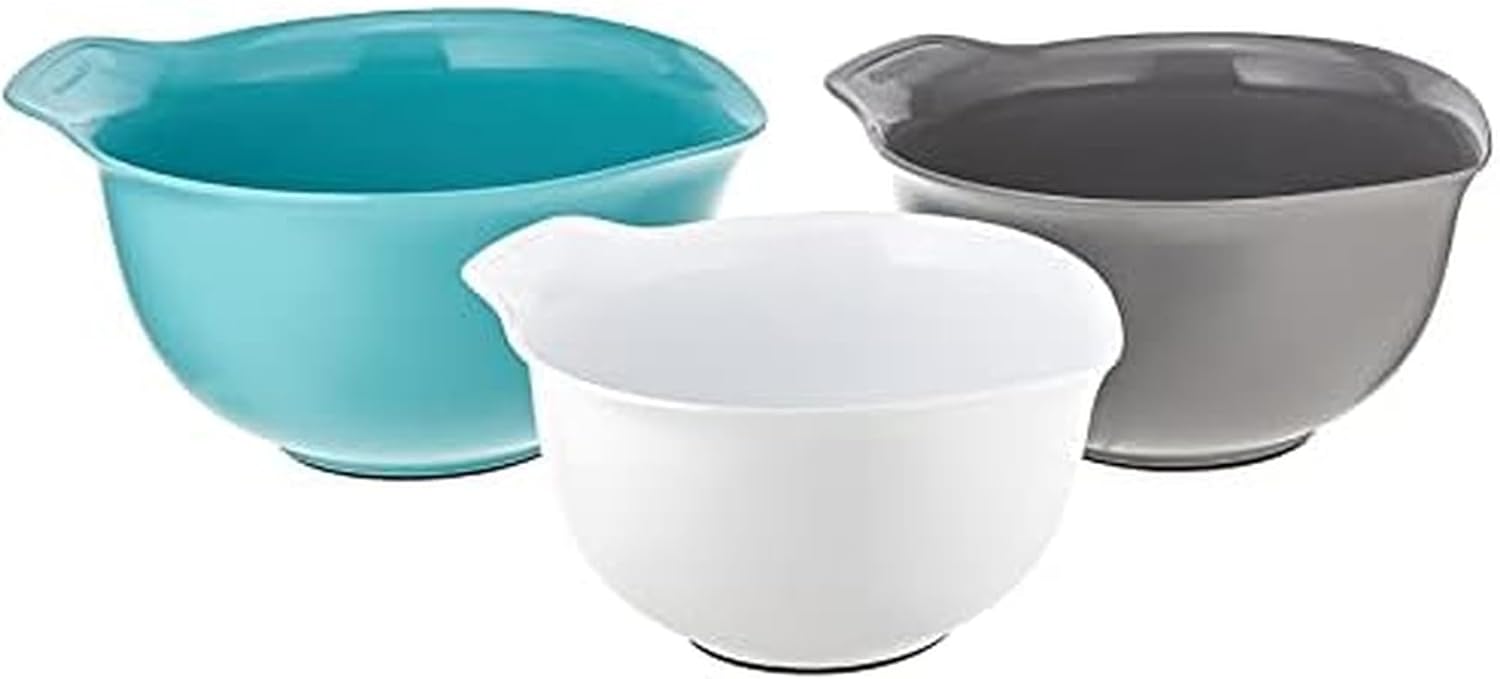
Appliances · Buying Guide
Best Rated Mixing Bowls for Every Kitchen Task and Prep Need
Finding the right mixing bowl set transforms everyday food preparation, baking, and meal storage. Whether you need stainless steel durability or lightweight plastic convenience, modern kitchen sets offer diverse features like non-slip silicone bases, airtight lids, and nested designs. Selecting the correct bowls depends on your specific cooking habits, storage space, and preferred materials for mixing ingredients or marinating meats.
This overview examines five distinct mixing bowl options based directly on manufacturer specifications and included accessories. From multi-piece collections featuring built-in graters and colanders to classic multi-size nesting sets, each option provides unique practical advantages. Examining these features helps you match a set to your daily kitchen routines without relying on unverified claims or ratings.
As an Amazon Associate, StacyLaughs earns from qualifying purchases.
Buying guide
Material Selection and Durability
Choosing the right material forms the foundation of any mixing bowl purchase. Stainless steel options provide exceptional resistance to rust, dents, and stains while remaining relatively lightweight for everyday handling. Many stainless bowls feature mirrored interiors for easy cleaning and brushed exteriors to mask wear. Plastic alternatives offer lightweight convenience and dedicated features like pour spouts, though they lack the robust thermal properties and long-term resilience of metal alternatives.
When evaluating metal versus plastic, consider your typical recipes and cleaning preferences. Stainless steel withstands heavy-duty mixing and frequent washing without degrading, making it a reliable long-term investment for active kitchens. Plastic sets provide budget-friendly flexibility and distinct pouring shapes but may show surface wear over time. Matching your material choice to your specific cooking habits ensures your bowls perform reliably across countless baking and meal preparation tasks.
Capacity Range and Size Variety
Assessing your cooking volume helps determine the ideal bowl set capacity. Smaller bowls around one to two quarts handle quick tasks like whisking eggs, whipping cream, or mixing dressings. Mid-size containers ranging from three to four quarts comfortably manage standard cake batters and medium salads. Large five-quart or eight-quart bowls accommodate bulky ingredients, whole heads of lettuce, and substantial bread dough batches without risking accidental overflow during vigorous stirring sessions.
Purchasing a multi-size collection ensures you always have the correct container dimensions for your specific ingredient quantities. Sets that span a broad range eliminate the need to transfer ingredients between multiple vessels during complex recipes. Reviewing the smallest and largest capacities included in a collection prevents you from buying redundant sizes or lacking sufficient room for family-sized meal preparation and baking projects.
Base Stability and Counter Protection
Maintaining bowl stability during vigorous mixing prevents spills and reduces arm fatigue. Many modern mixing bowls incorporate non-slip silicone bases that grip countertops firmly, eliminating the need to hold the container with one hand while whisking with the other. These rubberized bottoms also protect delicate stone surfaces like marble or granite from scratching, scuffing, or leaving dark metal marks during heavy culinary preparation tasks.
Evaluating counter traction is especially important if you frequently knead heavy doughs or whip ingredients at high speeds. Silicone-bottomed bowls stay anchored under significant lateral force, keeping your workspace clean and secure. If a set lacks a specialized non-slip base, consider how you intend to stabilize the container on smooth laminate or wooden countertops during intensive mixing routines.
Storage Solutions and Nesting Design
Kitchen cabinet space is often at a premium, making nested storage a vital feature for multi-piece bowl collections. Nesting bowls fit compactly inside one another, transforming ten-piece or five-piece sets into a single neat stack that occupies minimal shelf room. This efficient design keeps your kitchen organized and ensures all matching lids and specialized attachments remain together in one designated storage location between cooking sessions.
When reviewing stackable options, consider the total piece count and whether included accessories like colanders or grater attachments also nest within the main bowls. Comprehensive sets with numerous components require slightly more vertical clearance in your cupboards. Checking dimensions and nesting capability in advance guarantees your new mixing bowl collection will fit comfortably inside your existing kitchen storage layout.
Included Accessories and Lids
Modern mixing bowl sets frequently include valuable accessories that extend their everyday utility beyond basic stirring. Airtight BPA-free lids transform mixing containers into convenient food storage vessels, letting you prep ingredients in advance or save leftovers securely. Some advanced sets incorporate specialized tools such as stainless steel colanders for washing produce and interchangeable grater attachments for direct slicing and shredding into the bowl interior.
Evaluating these extra features helps determine the overall value and daily convenience of a collection. While airtight seals keep foods fresh, manufacturers often recommend hand washing plastic lids to prevent heat warping from automatic dishwashers. Balancing the benefits of integrated graters and strainers against your willingness to perform manual lid care ensures you select accessories that truly match your cooking style.
Maintenance and Cleaning Guidelines
Proper maintenance preserves the appearance and functionality of your mixing bowl investment over years of use. Stainless steel bowls are typically dishwasher safe, offering effortless cleanup after messy baking projects. However, manufacturer guidelines frequently specify hand washing for plastic lids and auxiliary covers to maintain airtight sealing performance and prevent heat damage. Drying metal interiors promptly with a cloth prevents moisture spots.
Understanding care requirements before purchasing prevents unexpected cleaning complications in your daily routine. Reviewing whether a set requires manual lid care or careful interior drying helps you choose products that align with your household cleaning preferences. Following manufacturer instructions for every component ensures your stainless steel or plastic bowls remain hygienic, durable, and visually appealing throughout their operational lifespan.
Frequently asked questions
Can stainless steel mixing bowls go in the dishwasher?
Most stainless steel mixing bowls are classified as dishwasher safe for easy cleaning after food preparation. However, manufacturer maintenance guidelines almost universally recommend hand washing any plastic lids or specialized covers included in the set. Automatic dishwasher heat can warp plastic components and degrade airtight sealing edges over time. To keep your complete set in optimal condition, place the metal bowls on the top or bottom rack of the dishwasher while washing the plastic lids by hand in warm, soapy water.
Why are non-slip silicone bases important on mixing bowls?
Non-slip silicone bases provide essential friction that keeps mixing bowls securely anchored to countertops during vigorous whisking, beating, or kneading tasks. Without a rubberized bottom, metal or plastic bowls tend to slide across smooth surfaces, forcing you to use one hand strictly for stabilization. Furthermore, these silicone pads protect delicate kitchen work surfaces such as marble, granite, or finished wood from getting scratched, scuffed, or marked by bare metal edges during heavy-duty culinary preparation.
How do nested mixing bowl sets save kitchen space?
Nested mixing bowl sets save valuable kitchen cabinet space by allowing smaller bowls to fit entirely inside larger containers. Instead of taking up multiple shelves or spreading across wide cabinet areas, a collection of three to ten pieces collapses into a single compact stack. Many comprehensive sets even accommodate included colanders or specialized lids within the nested structure. This clever design keeps your entire food preparation collection organized, easily accessible, and neatly contained between baking or cooking sessions.
Are airtight lids safe for food storage in the refrigerator?
Airtight BPA-free lids included with modern mixing bowl sets are designed specifically for temporary food storage, meal preparation, and preserving leftovers in refrigerators or freezers. These secure covers lock in flavors and prevent liquid spills or refrigerator odors from contaminating your prepped ingredients. Users should verify manufacturer instructions regarding freezer safety for specific metal bowls and ensure that plastic lids are always washed by hand rather than exposed to high dishwasher heat.
What are the benefits of interior volume measurements in mixing bowls?
Interior volume measurements etched or embossed directly into mixing bowls act as built-in measuring cups during cooking and baking tasks. These clear markers let you gauge liquid and dry ingredient proportions without needing extra measuring utensils, streamlining your prep work and reducing kitchen clutter. Whether you are scaling a recipe or combining ingredients on the fly, visible capacity markings provide quick reference points that simplify everyday food preparation right inside the bowl.