Appliances · Buying Guide
Best Rectangular Baking Pan Sizes for Every Kitchen Oven Layout
Choosing the right rectangular baking pan sizes transforms how you handle everyday roasting and baking tasks, ensuring your favorite recipes fit comfortably within your available oven space. Different dishes require specific dimensional proportions, ranging from compact toaster oven trays to large sheet formats designed for family meals, holiday parties, and diverse daily cooking needs.
Exploring various dimensional options helps you match your cookware to specific cooking requirements, whether you need deep sidewalls for layered casseroles or expansive surfaces for batch baking. Understanding how length, width, and depth influence heat distribution allows you to select reliable bakeware for consistent results across diverse menus, professional recipes, and routine household baking projects.
As an Amazon Associate, StacyLaughs earns from qualifying purchases.
Buying guide
Material Composition and Heat Conduction
Selecting the appropriate material for your rectangular baking pan heavily influences how heat transfers to your food items. Options range from heavy gauge steel and aluminized steel blends to carbon steel and pure stainless steel variants. Each metal offers distinct thermal properties that affect browning speeds and structural rigidity during high-temperature roasting or delicate baking procedures.
Understanding metal composition helps you anticipate how a pan reacts inside a hot oven environment. Steel provides robust durability against warping, while aluminum combinations enhance thermal conductivity for uniform baking results across various recipes. Matching the material to your common cooking habits ensures consistent temperature absorption across your entire baking routine without unexpected hot spots.
Dimensional Sizing and Oven Fit
Evaluating dimensional sizing ensures your rectangular baking pan fits comfortably within your specific oven interior and toaster cavity. Standard sizes like nine by thirteen inches suit traditional family portions, whereas compact eleven-inch models accommodate smaller appliances and tight kitchen spaces. Measuring your available rack space prevents awkward placement issues during busy meal preparation and baking sessions.
Beyond oven clearance, pan dimensions dictate portion yields and ingredient distribution across your recipes. Wider pans spread batters thinly for faster cooking times, while shorter lengths concentrate depth for denser bakes. Assessing your typical recipe volume against available pan sizes guarantees you select bakeware that matches your household serving requirements without ever overcrowding your oven cavity.
Depth and Sidewall Design
Sidewall depth plays a crucial role in determining what types of dishes a rectangular baking pan can successfully accommodate during cooking. Pans featuring two-inch deep walls provide necessary vertical containment for bubbling casseroles, heavy lasagna layers, and tall sheet cakes. Full-height vertical walls prevent liquid ingredients from spilling over the edges onto hot oven floors.
Examining corner construction alongside sidewall height reveals how easily baked goods release after cooking sessions conclude. Rounded interior corners eliminate tight crevices where food particles typically accumulate, significantly simplifying the subsequent cleaning process. Selecting an appropriate wall height prevents messy overflows while supporting structured baked items like brownies and breads securely.
Surface Coatings and Release
Non-stick surface treatments significantly alter how easily food releases from the interior of a rectangular baking pan after baking. Coatings formulated without harmful chemicals offer conscious cooking performance during high-heat tasks while reducing the need for excessive oil or butter. Alternatively, uncoated stainless steel surfaces rely on traditional greasing methods for reliable food release.
Textured surfaces, such as corrugated metal bottoms, introduce microscopic air channels beneath baked goods to encourage quick sliding action and even browning. Evaluating whether a pan utilizes a smooth mirror finish, a silicone non-stick layer, or raw metal helps you align your cleaning preferences and recipe requirements with the right bakeware choice for your kitchen.
Storage and Lid Integration
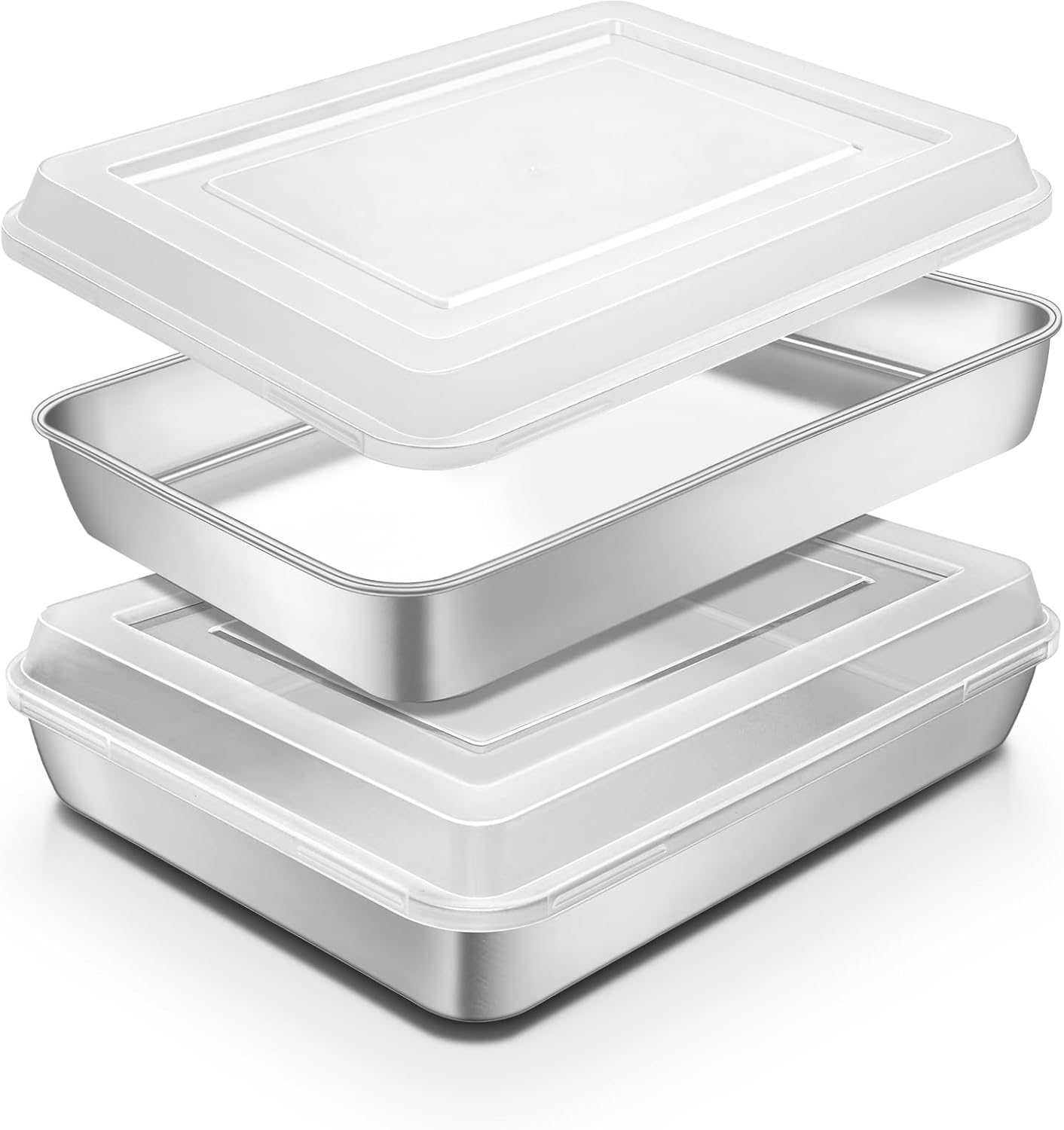
Storage considerations become essential when managing multiple rectangular baking pans within crowded kitchen cabinets and tight pantry shelves. Bakeware items featuring included lids provide an all-in-one solution for baking, cooling, and storing leftovers directly inside refrigerators. Snap-on covers with multiple locking points secure contents tightly, eliminating the ongoing need for disposable plastic wrap during food transport.
When lids include raised center designs, they protect delicate icing and decorations on frosted sheet cakes from getting crushed during movement. Assessing whether your bakeware stack nests efficiently or requires specific vertical lid clearance helps optimize your pantry organization and ensures your prepared food remains fresh during travel or routine storage periods.
Maintenance and Care Requirements
Proper maintenance and cleaning protocols extend the functional lifespan of your rectangular baking pans significantly across years of service. While many modern metal designs claim dishwasher-safe convenience, manufacturers frequently recommend gentle hand washing to preserve delicate non-stick coatings. Adhering to these care guidelines prevents premature scratching and surface degradation over years of heavy kitchen usage.
Avoiding abrasive scouring pads and harsh chemical cleaners protects delicate mirror finishes and specialized silicone treatments from unnecessary wear and tear. Drying metal pans promptly after washing inhibits moisture-related rusting on carbon and gauge steel variants. Establishing a consistent cleaning routine safeguards your bakeware investment, ensuring reliable performance across countless roasting and baking sessions.
Frequently asked questions
How do I choose the correct rectangular baking pan size for my oven?
Choosing the correct rectangular baking pan size requires measuring your oven interior dimensions and checking available rack space before purchasing. Consider the volume of your favorite recipes, such as standard nine by thirteen inch formats for family casseroles or compact eleven-inch trays for smaller toaster ovens. Ensuring proper clearance around all sides of the pan allows heated air to circulate freely inside the oven cavity, promoting even browning and preventing accidental spills against the oven walls during high-temperature baking tasks.
Are rectangular baking pans with lids safe for refrigerator and freezer storage?
Many rectangular baking pans equipped with matching lids are designed for convenient food storage in refrigerators and freezers. Lids featuring secure snap locks create an airtight seal that keeps prepared meals fresh and protects frosted sheet cakes from damage. However, you should always check the manufacturer specifications to confirm whether a specific lid material withstands low-temperature freezing environments without cracking. Using a fitted cover eliminates the need for plastic wrap while transitioning dishes seamlessly from oven to storage.
What is the difference between aluminized steel, carbon steel, and stainless steel pans?
Different metal compositions offer unique benefits for baking performance and durability. Aluminized steel combines the structural strength of steel with aluminum heat conductivity for superior baking results and even browning. Carbon steel provides high hardness, excellent heat transfer rates, and a smooth surface suitable for large-scale pastry production. Pure stainless steel offers a chemical-coating-free alternative that resists stains and handles high temperatures safely, though it may require careful greasing to ensure food releases easily without sticking during baking.
Why do some rectangular baking pans feature corrugated surfaces?
Rectangular baking pans featuring corrugated surfaces use a textured bottom pattern to facilitate airflow underneath baked goods. This raised design promotes quick release and helps achieve evenly baked results by preventing food from making flat, direct contact with the entire pan base. The microscopic air channels reduce sticking risks and support uniform heat distribution across brownies, cakes, and biscuits. Proper cleaning around the textured ridges ensures food residue does not accumulate over repeated baking sessions.
How should I clean and maintain my non-stick rectangular baking pans?
Maintaining non-stick rectangular baking pans involves following manufacturer care guidelines to preserve the integrity of the surface coating. Although certain pans are listed as dishwasher safe, hand washing with mild soap and warm water is frequently recommended to prevent premature wear. Avoid using metal utensils or abrasive scouring pads that can scratch the finish. Drying the pan immediately after washing helps prevent moisture-related rusting, ensuring your bakeware remains durable and reliable for future kitchen tasks.