Appliances · Buying Guide

Best Sourdough Starter Revival Tools for Fridge Storage Success

Bringing a sourdough culture back to life after cold storage requires managing ambient temperature shifts effectively during baking preparation. When you pull a dormant jar from the refrigerator, stabilizing its surrounding environment helps reactivate dormant yeast and beneficial bacteria populations efficiently without risking extreme temperature swings that disrupt fermentation consistency in your kitchen workspace.

Baking enthusiasts often use specialized warming equipment or structured glass feeding kits to monitor progress closely during daily routines. Selecting appropriate gear depends on whether you prefer automated climate control chambers, precision heating bases, or traditional manual jar management routines during daily feeding schedules, recipe preparation, and general baking tasks.

As an Amazon Associate, StacyLaughs earns from qualifying purchases.

AirVows Sourdough Home Temperature Controlled Starter Incubator
#1 Best Overall

AirVows Sourdough Home Temperature Controlled Starter Incubator

This sourdough home incubator features dual-semiconductor temperature control, offering precise conditions for creating and storing starters. It includes an upgraded viewing window, a 110V power cord, and a removable shelf for layered small jar storage. The unit maintains ideal fermentation conditions with dual heating and cooling modes, operating from 41°F to 122°F with strict precision to support your baking routine.

Best for Precise temperature climate control

Precise temperature controlDual heating and coolingUpgraded viewing windowCompact countertop designRemovable storage shelf
View on Amazon →

What stands out

  • Dual-semiconductor technology provides reliable temperature control for creating and storing sourdough starters with ease.
  • Upgraded viewing window lets you monitor the starter directly without opening the door and causing temperature fluctuations.
  • Removable shelf design accommodates layered small jar storage for added convenience during busy baking sessions.

What to consider

  • The plastic frame construction and compact interior dimensions require checking outside measurements beforehand to ensure a proper fit on crowded kitchen counters.
  • Users must allow a recommended six-hour warm-up or cool-down period for peak thermal performance when adjusting operating modes significantly.
Key specifications
Capacity
6 liters
Chamber Volume
10 liters
Frame Material
Plastic
Inner Material
Ethylene Vinyl Acetate (EVA)
Color
White
Model Number
SSH-10W

The practical verdict

This temperature-controlled chamber is best for bakers seeking precise environmental management for dormant cultures pulled from cold storage. Avoid this device if you require simple ambient counter storage without electrical equipment. The primary trade-off involves dedicating dedicated counter space to a motorized appliance rather than a simple glass jar, alongside the need to account for specific interior chamber dimensions when managing multiple vessels.

#2
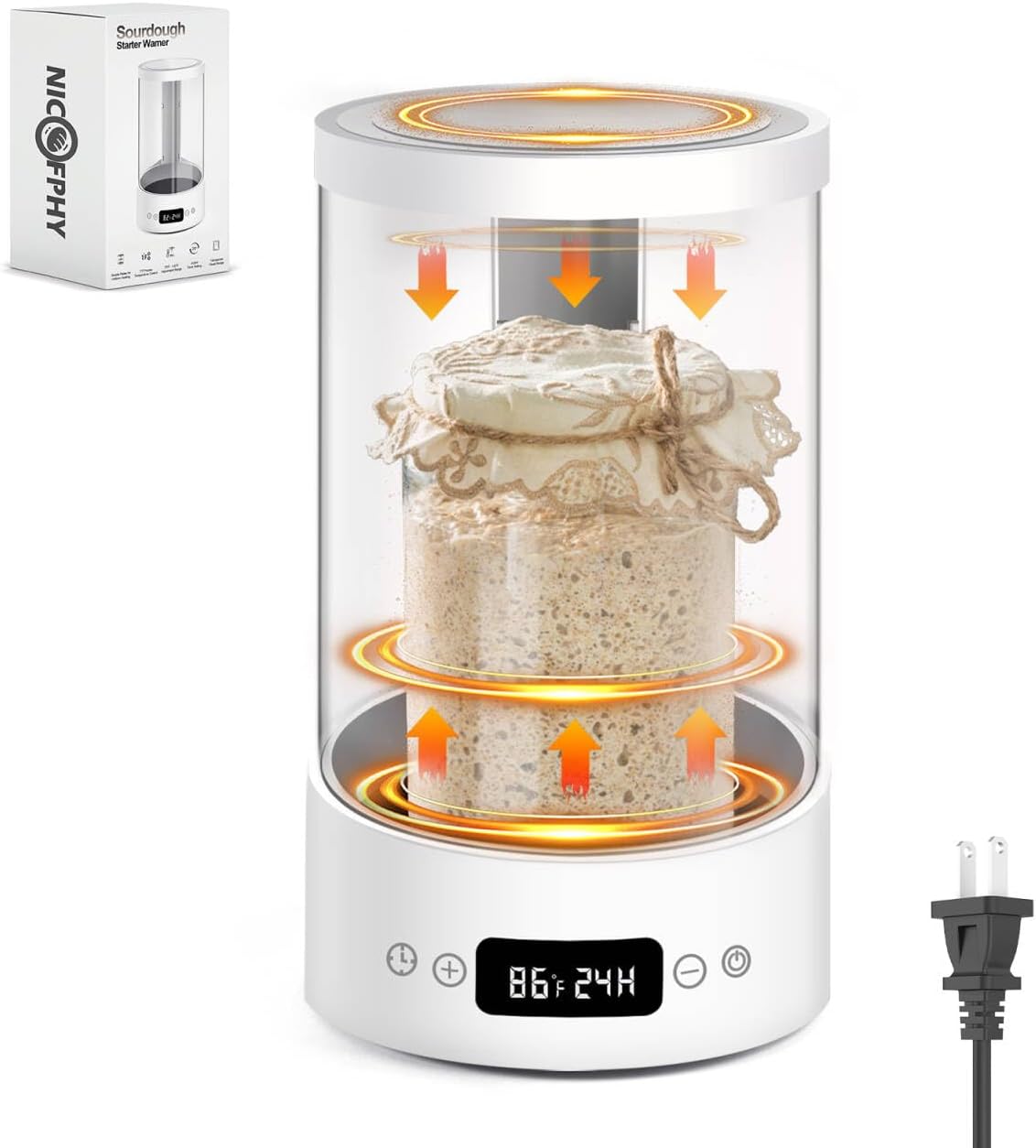
NICOFPHY Sourdough Starter Warmer Box with Dual Plates
Dual-Plate Warming Box

NICOFPHY Sourdough Starter Warmer Box with Dual Plates

Best for Enclosed warm environment creation

Designed as a home incubator for starter fermentation, this warmer box utilizes dual heating plates positioned at the bottom and top. Connected through magnetic attraction and conductivity, they create a stable and uniform warm environment. The thermostat control allows precise temperature adjustments from 70°F to 100°F. An acrylic warming dome and transparent design let you observe the starter while keeping it windless during colder months.

What stands out

  • Dual heating plates at the top and bottom deliver a stable and uniform warm environment inside the enclosed box.
  • Precise thermostat control lets you adjust settings accurately from 70°F to 100°F to speed up fermentation.
  • Transparent acrylic design and warming dome allow easy visual monitoring while protecting the vessel from drafts.

What to consider

  • The enclosed warming dome limits jar height to seven inches and diameter to four point four inches, restricting taller container options significantly.
  • Users must carefully ensure that the warming dome is properly secured to successfully power the upper heating plate during active fermentation periods.
Key specifications
Wattage
20 watts
Maximum Temperature
100 °F
Upper Temperature Rating
100 °F
Material Type
Acrylic
Color
White
Model Number
SSWPP

The practical verdict

This warming box is best for bakers struggling with cold winter kitchen temperatures who want an enclosed environment. Avoid it if you routinely use oversized storage jars exceeding height restrictions. The primary trade-off is container size limitation imposed by the acrylic warming dome height, requiring you to select compatible vessels that fit within the specific interior clearances while ensuring the upper heating plate remains properly engaged.

#3
Pakusane SourKeeper Sourdough Starter Warmer Pro with Probe
Probed Heating Base

Pakusane SourKeeper Sourdough Starter Warmer Pro with Probe

Best for Direct core temperature tracking

This proofing base integrates a stainless-steel dough probe that measures core temperature directly inside your mixture. It offers degree-by-degree temperature settings from 70 to 110 degrees Fahrenheit, a built-in sensor, an auto-warming switch, and a 24-hour timer function. Compatible with various mason jars and glass containers, the adjustable probe accommodates different vessel shapes while the sleek walnut finish adds a decorative touch to your counter.

What stands out

  • Integrated stainless-steel dough probe measures core temperature directly inside the mixture rather than relying on air warmth.
  • Degree-by-degree temperature settings span from 70 to 110 degrees Fahrenheit for precise thermal adjustment during feeding cycles.
  • Versatile design accommodates various mason jars and glass containers using an adjustable probe configuration.

What to consider

  • The warming base requires careful placement of the external stainless-steel probe directly into the starter mixture during every feeding and monitoring cycle.
  • Operating strictly as a base without an enclosed top leaves the upper portion of taller jars exposed to ambient kitchen room drafts.
Key specifications
Item Dimensions L x W x H
6.5"L x 6.5"W x 0.98"H
Item Weight
1.1 pounds
Maximum Temperature
110 °F
Upper Temperature Rating
110 °F
Lower Temperature Rating
21 °C
Material Type
Plastic

The practical verdict

This heating base is best for bakers wanting direct core temperature feedback instead of ambient air readings. Avoid this product if you prefer an entirely enclosed chamber that shields tall jars from ambient kitchen drafts. The main trade-off is using an open base format that requires inserting a physical probe directly into the starter, meaning taller containers remain exposed to surrounding room air temperatures during the revival process.

#4
KNEADACE 34 oz Sourdough Starter Jar Kit
Comprehensive Starter Kit

KNEADACE 34 oz Sourdough Starter Jar Kit

Best for All-in-one manual jar setup

Molded with a funnel-shaped opening, this large 34-ounce glass jar facilitates effortless handling and maintenance. The comprehensive kit includes a silicone cover for fridge storage that also functions as an anti-slip base during counter fermentation, a cloth cover, volume and feed line marks, an attached thermometer, a spatula, and a weekday-labeled elastic band to track feeding schedules easily while reviving your sourdough culture.

What stands out

  • Funnel-shaped glass opening enables effortless handling, stirring, and feeding during daily sourdough maintenance routines.
  • Included silicone cover serves dual purposes for secure fridge storage and acting as an anti-slip counter base.
  • Weekday-labeled elastic band and clear volume markings help you accurately track the last feeding time and level.

What to consider

  • Hand wash only maintenance instructions require manual cleaning of the 34-ounce glass jar rather than relying on automatic dishwasher cycles.
  • Manual jar setups lack active electrical heating elements, meaning you must rely entirely on ambient room conditions for thermal regulation.
Key specifications
Item Volume
34 fluid ounces
Material Type
Glass
Product Care Instructions
Hand Wash Only
Item Weight
0.9 kg
Container Shape
Round
Other Special Features of the Product
Durable

The practical verdict

This comprehensive starter kit is best for bakers who prefer traditional manual jar management with dedicated tracking accessories. Avoid this product if you need motorized heating or cooling chambers to combat cold room temperatures. The primary trade-off is relying entirely on ambient room warmth for culture revival without electrical assistance, paired with the requirement for manual hand-washing maintenance of the glass container and silicone accessories.

#5
Snuvid 1L Glass Sourdough Starter Jar with Lids
Glass Feeding Jar Set

Snuvid 1L Glass Sourdough Starter Jar with Lids

Best for Traditional glass jar feeding

This complete set features a one-liter wide-mouth glass jar designed with clear measurement markings and a spherical shape for easy stirring. It includes both a cloth cover for airflow during active fermentation and a bamboo lid for clean refrigerator storage. Accessories consist of a feeding day band, a thermometer strip with a built-in groove, a silicone spatula, and a storage box to support your home baking endeavors.

What stands out

  • Wide-mouth spherical glass jar design allows easy stirring, scraping, and cleaning during regular feeding routines.
  • Dual lid options provide a cloth cover for active airflow and a bamboo lid for refrigerator storage.
  • Built-in groove secures the included thermometer strip firmly against the glass for clear temperature visibility.

What to consider

  • The glass material and spherical container shape add noticeable physical weight to your kitchen counter compared to lightweight plastic storage alternatives.
  • Passive jar storage systems lack integrated electronic heating plates, requiring you to find warm microclimates in your kitchen manually.
Key specifications
Item Dimensions L x W x H
4.3"L x 4.3"W x 5.7"H
Item Volume
1 liters
Material Type
Glass
Product Care Instructions
Dishwasher Safe, Freezer Safe, Refrigerator Safe
Lid Material
Bamboo
Container Shape
Round

The practical verdict

This glass feeding jar set is best for bakers seeking a traditional manual container equipped with dual lid options for fridge and counter stages. Avoid it if you require active temperature control devices to revive sluggish cultures. The primary trade-off is the absence of powered heating mechanisms, requiring you to manually manage ambient room warmth and feeding schedules to bring your refrigerated starter back to active bubbly life.

Buying guide

Evaluating Temperature Control Needs

When reviving a sourdough starter from cold storage, managing thermal conditions is essential for successful fermentation. Dormant wild yeast and beneficial bacteria require consistent warmth to awaken properly after weeks sitting idle in a cold refrigerator environment. Carefully assess your kitchen's ambient room temperature during colder months before selecting your baking equipment.

If your kitchen stays naturally cold, motorized incubators or heated proofing bases provide reliable, steady warmth to speed up the revival process significantly. Conversely, if your home remains consistently warm year-round, basic glass jars paired with breathable cloth covers work adequately without requiring electrical assistance, cords, or dedicated counter plug space.

Selecting Container Materials and Shapes

Container material plays an important practical role in daily maintenance and visual monitoring routines. Thick glass vessels provide clear visibility, allowing you to observe bubble formation, yeast activity, and rise levels easily as your dormant culture revives from cold refrigerator slumber each morning. Many bakers prefer spherical or wide-mouth shapes because they simplify stirring and scraping down inner walls.

Plastic incubator frames and acrylic warming domes offer lightweight alternative housing for specialized heating units. When choosing between materials, consider whether you prefer dishwasher-safe glass durability or lightweight electrical enclosures designed specifically to maintain steady internal temperatures during colder weather cycles in your kitchen. Always check container dimensions to ensure proper compatibility with heated domes.

Managing Space and Counter Footprint

Kitchen counter space is a valuable commodity for home bakers managing daily cooking tasks. Compact warming boxes and slim proofing bases minimize clutter while delivering targeted heat directly to your starter jar. Measure your available kitchen surface area carefully before purchasing motorized appliances that require permanent plug placement near outlets. Evaluating spatial requirements prevents overcrowding around your other appliances.

Simple glass jar kits occupy minimal footprint since they rely on ambient air without requiring power cords. However, if you choose to use enclosed incubators, check both interior chamber dimensions and exterior measurements to ensure complete compatibility with your preferred tall feeding vessels. Proper planning avoids storage conflicts on busy counters.

Tracking Feeding Schedules and Progress

Maintaining a regular feeding routine is critical when bringing a sluggish starter back from the refrigerator. Accessories such as weekday-labeled elastic bands and volume mark lines help you visually track precisely when the culture was last fed and how high it has risen since your last kitchen session. These simple markers prevent accidental scheduling errors.

Built-in thermometer strips further enhance tracking by displaying exact jar temperatures at a glance during daily management routines. Utilizing these integrated tools removes guesswork from the revival process, ensuring your wild yeast receives optimal thermal conditions throughout the entire feeding and maintenance schedule without requiring external probes.

Understanding Temperature Precision and Probes

Advanced revival tools offer precise temperature adjustments, ranging from degree-by-degree digital controls to dual-semiconductor heating chambers. Precise thermostat management allows you to fine-tune the warmth surrounding your jar, accelerating fermentation time and boosting bread texture during cold winter seasons. Selecting exact temperatures helps stabilize yeast activity. Precise control eliminates unpredictable ambient weather swings in kitchens.

Some specialized devices feature stainless-steel probes that insert directly into the dough mixture. This core temperature measurement provides superior accuracy compared to reading ambient air warmth alone, giving you direct insight into how your starter is responding during revival. Monitoring core temperature ensures reliable fermentation outcomes. Bakers benefit from exact data.

Cleaning and Maintenance Practicalities

Proper upkeep ensures your equipment remains hygienic and ready for frequent baking cycles throughout the year. Glass jars featuring wide-mouth openings make scraping and washing straightforward, whether you wash them by hand or place them in a dishwasher depending on specific manufacturer care guidelines. Regular cleaning prevents stubborn residue buildup.

Motorized warming boxes and electronic bases require minimal exterior wiping, but users should carefully avoid submerging electrical heating plates in water. Following manufacturer guidelines for maintenance protects internal electronic components while keeping your countertop setup functioning safely and reliably over extended periods of routine baking tasks and recipe prep.

Frequently asked questions

How do I revive a sourdough starter after storing it in the fridge?

When pulling a dormant starter from refrigerator storage, begin by discarding a portion of the old culture and feeding it fresh flour and water. To accelerate the awakening process, place your jar in a temperature-controlled environment such as a specialized warming box, incubator, or heated proofing base set between 70 and 110 degrees Fahrenheit. Alternatively, you can rely on ambient kitchen counter warmth, though cooler rooms will naturally slow down yeast activity and require more time before bubbles reappear.

Do I need an electronic warming box to revive a cold starter?

An electronic warming box is not strictly mandatory for reviving a refrigerated culture, but it provides significant convenience if your kitchen maintains cold temperatures. Traditional glass jar kits rely entirely on ambient room warmth and breathable cloth covers to encourage wild yeast activity. However, specialized heating devices and temperature-controlled chambers eliminate guesswork during winter months by maintaining steady, uniform heat, helping your dormant sourdough starter bubble and rise much faster than it would on a chilly counter.

What role does a temperature probe play in sourdough starter revival?

A stainless-steel temperature probe measures the core temperature directly inside the fermenting dough mixture rather than simply reading the surrounding air. During the revival process from cold storage, tracking core temperature gives you precise insight into how your culture is responding to applied heat. This eliminates guesswork, ensuring your starter maintains ideal thermal conditions for rapid yeast reactivation without overheating, which helps you achieve consistent baking results across different feeding cycles.

How do wide-mouth glass jars help with sourdough starter maintenance?

Wide-mouth glass jars simplify sourdough care by offering an expansive opening that makes stirring, feeding, and scraping down the interior walls effortless. When reviving a cold starter, you frequently need to mix fresh flour and water thoroughly into a thick mixture, and a wide opening prevents messy spills. Additionally, clear glass allows you to easily monitor bubble formation, rise levels, and overall yeast activity, while included measurement markings help track feeding schedules accurately.

How should I clean and maintain my sourdough revival equipment?

Maintenance requirements depend on the specific equipment you choose. Glass feeding jars often feature dishwasher-safe construction, though many bakers prefer hand-washing with warm water to preserve measurement markings and accessories. For motorized warming boxes, proofing bases, and electronic incubators, you should avoid submerging heating plates in water and instead rely on gentle exterior wiping with a damp cloth. Always follow the manufacturer care guidelines provided in your user manual to protect internal electrical components safely.

Final thoughts

Reviving a sourdough starter from cold refrigerator storage becomes significantly easier when you use the right tools tailored to your kitchen environment. Whether you choose an advanced temperature-controlled chamber, a probed heating base, or a traditional glass feeding jar set, managing thermal conditions properly brings dormant yeast back to active life.

Selecting equipment that matches your spatial needs and daily baking habits ensures long-term success. By combining proper feeding routines with reliable temperature management or clear visual tracking accessories, you can maintain a healthy, bubbly sourdough culture ready for artisan bread baking anytime.