Appliances · Buying Guide
Best Round Bread Baking Pans for Crispy Crusts and Layer Cakes
Baking round loaves and layered cakes requires carefully matching your bakeware to specific recipes, whether you want to achieve an artisanal crust or a tall, even sponge. Choosing the right round bread baking pans depends directly on material performance, heat retention, and physical dimensions that suit your kitchen setup and recipe volume for consistent results.
Different materials bring distinct structural advantages to the baking process, ranging from heavy-duty stainless steel to pre-seasoned and enameled cast iron pots. Reviewing these practical options helps you identify which construction style aligns with your preferred baking techniques, heat requirements, and daily kitchen maintenance routines for lasting durability across various meals.
As an Amazon Associate, StacyLaughs earns from qualifying purchases.
Buying guide
Material Composition and Heat Retention
Choosing the correct material for your round bread baking pan directly influences how heat transfers to your dough during baking. Heavy cast iron options offer exceptional thermal mass, absorbing high oven temperatures and releasing them slowly to build thick, professional-grade crusts on artisan sourdough loaves without dropping internal heat. Selecting heavy metal ensures lasting structural integrity under intense heat.
In contrast, stainless steel and carbon steel provide faster response times to temperature adjustments in everyday cooking environments. These metal variants heat up quickly and spread warmth evenly across the base, making them ideal for standard cakes, pastries, and quick breads that require predictable baking cycles and reliable domestic kitchen performance every single time.
Understanding Sizing and Dimensional Needs
Physical dimensions dictate both recipe capacity and how easily bakeware fits inside your home oven cavity. Eight-inch pans accommodate standard cake layers and moderate dough portions comfortably, while wider pots offer expansive bases for large round sourdough loaves that require ample horizontal spreading room during the initial rise and bake phases.
Reviewing internal versus external dimensions prevents overcrowding on crowded oven racks. Deep vertical walls provide ample clearance for rising bread and tall layered sponges, ensuring your batter or dough expands upward safely without spilling over the rim during the baking process. Proper measurements guarantee compatibility with standard kitchen storage spaces too.
Surface Coatings and Maintenance Requirements
Surface treatments dictate how you clean and maintain your baking pans after every single kitchen use. Uncoated stainless steel and pre-seasoned cast iron demand specific care routines, such as manual oil conditioning or traditional hand washing, to protect against rust and wear over long periods of frequent operation in busy home settings across diverse cooking tasks.
Enameled cast iron and reinforced non-stick carbon steel offer smoother food release without requiring ongoing seasoning routines. However, these coated surfaces often mandate gentle sponge cleaning and hand washing to prevent scratching or chipping over time, ensuring the protective layers remain intact for future baking projects and family recipes alike throughout their entire operational lifespan.
Lid Design and Steam Management
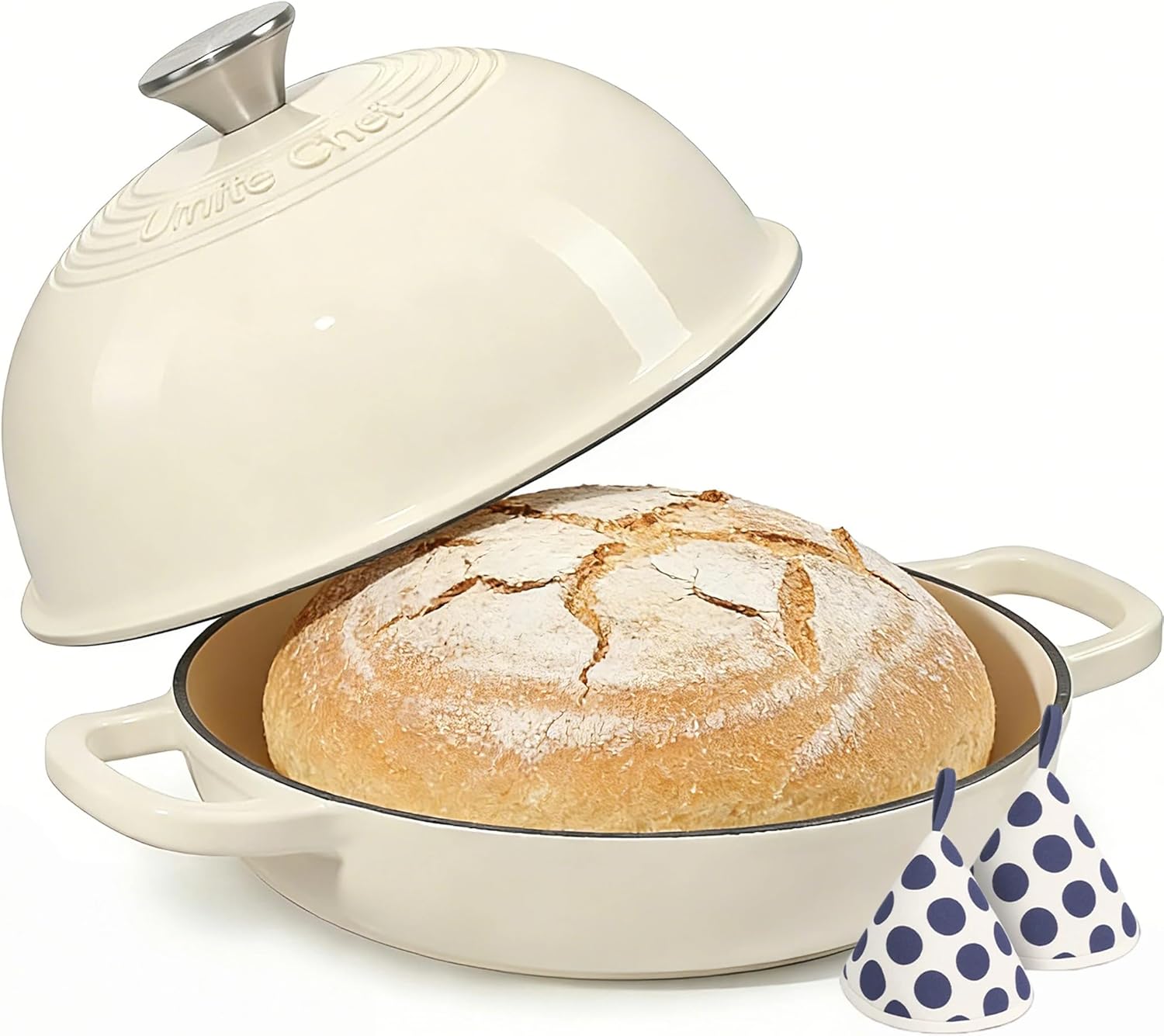
Bread baking often relies heavily on trapped steam to develop a crisp crust and optimal oven spring. Domed lids engineered for cast iron pots trap moisture and cause condensation to drip evenly onto the loaf during the initial baking phase, preventing the bread surface from drying out quickly under high heat conditions.
Tight-fitting lids ensure that steam does not escape prematurely, creating a specialized mini-oven environment inside the heavy pot. This moisture retention keeps the dough exterior flexible, allowing it to expand fully before the crust hardens into a golden, artisanal finish that resembles professional bakery standards every single time you bake at home.
Ergonomics and Handling Safety
Managing heavy bakeware requires secure grips and thoughtful design features to prevent accidents near hot kitchen ovens. Wide rolled rims and commercial-grade handles give bakers a stable hold when wearing thick kitchen mitts, ensuring pots can be lifted without slipping during transport across the room. Proper grip design matters immensely.
Pots that include specialized accessories, such as heat-resistant cotton potholders or fabric bread slings, add practical value by improving handling safety during intensive baking tasks. Selecting bakeware with ergonomic grips reduces hand fatigue and minimizes risks when transporting heavy, hot dishes from the oven cavity to the kitchen counter safely and efficiently without burning your hands.
Temperature Ratings and Oven Compatibility
Different baking pans feature specific temperature thresholds that dictate their suitability for high-heat recipes. While some carbon steel pans tolerate moderate baking heats up to standard thresholds, cast iron models often withstand extreme oven temperatures up to five hundred Fahrenheit without compromising structural integrity or performance quality in demanding home kitchens.
Verifying cooktop and oven compatibility ensures your chosen pan handles diverse cooking methods, from stovetop searing and frying to intense oven baking sessions. Matching the temperature rating to your preferred recipes prevents metal warping and protects surface coatings from thermal shock over years of regular culinary use across multiple family meals safely.
Frequently asked questions
What is the benefit of using a domed lid for bread baking?
A domed lid plays a crucial role in artisan bread baking by trapping steam released from the dough during the initial baking phase. As the moisture rises, the curved shape of the lid forces condensation to drip evenly back down onto the loaf walls instead of pooling in the center. This continuous moisture circulation keeps the exterior of the dough flexible, allowing it to achieve maximum oven spring before the crust hardens into a crisp, golden finish.
How should I maintain cast iron bread pans to prevent rust?
Maintaining cast iron bread pans requires strict adherence to hand washing guidelines, avoiding automated dishwashing entirely. After washing the pot with warm water and a soft brush, you must dry it completely with a clean cloth. To eliminate remaining moisture and protect the metal, heat the dry pan over medium burner heat. Finally, apply a thin layer of cooking oil across all surfaces before storing the cookware in a cool, dry place to build a natural non-stick patina over time.
Can stainless steel round pans be used for baking layer cakes?
Stainless steel round pans are exceptionally well-suited for baking layer cakes, especially models featuring high side walls that prevent batter from spilling over. The sturdy metal construction distributes heat evenly across the base, promoting uniform baking results that make cutting and stacking sponge layers much easier. While stainless steel lacks factory-applied non-stick coatings, thorough greasing ensures your baked cakes release smoothly from the pan without sticking or tearing during removal.
What advantages do enameled cast iron baking pots offer?
Enameled cast iron baking pots combine the superior heat retention of heavy-duty iron with a smooth, non-reactive glass-like coating that requires no seasoning. The enamel surface resists staining, chipping, and odors, making cleanup simple with warm soapy water and a soft sponge. These versatile pots transition seamlessly from oven to dining table as attractive serving pieces, and they handle high oven temperatures safely while maintaining consistent thermal performance for breads and stews.
Why choose carbon steel over traditional cast iron for baking?
Carbon steel baking pans provide a lighter weight alternative to traditional cast iron while offering similar durability and rapid heat responsiveness. They heat up quickly and distribute warmth evenly across the base, making them ideal for precise baking tasks like layer cakes and pastries. Additionally, carbon steel pans with chemical-free non-stick coatings deliver effortless food release and simplified cleanup compared to raw cast iron, though they typically operate within lower maximum temperature thresholds.