Appliances · Buying Guide
Best Round Sourdough Bread Loaf Tools for Perfect Baking
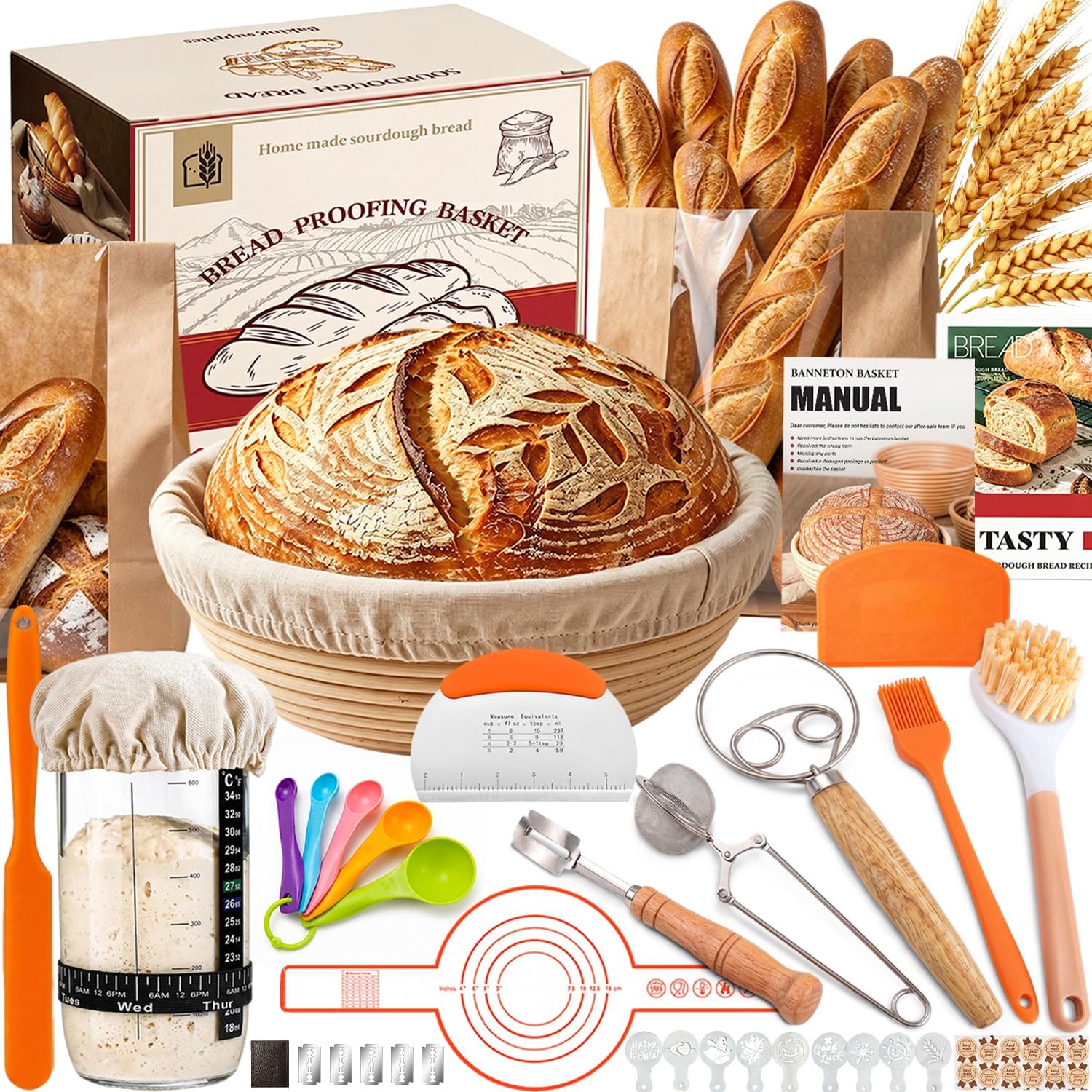
Baking a round sourdough bread loaf requires specific tools designed to handle dough fermentation, shaping, and baking stages effectively. Whether you are cultivating a fresh starter from scratch, proofing a delicate boule in a traditional basket, or managing the thermal environment inside your kitchen oven, having the right equipment transforms the process. Each stage of the artisan baking journey benefits from dedicated accessories that support proper structure and moisture control.
Selecting appropriate supplies depends heavily on your recipe batch sizes, preferred materials like natural rattan or pressed spruce pulp, and whether you need an all-in-one kit or standalone baking vessels. Exploring these options helps home bakers match their kitchen workflow with proven designs, ensuring consistent crust development and reliable crumb structure without unnecessary guesswork or complicated adjustments.
As an Amazon Associate, StacyLaughs earns from qualifying purchases.
Buying guide
Selecting the Correct Basket Material
Choosing between natural Indonesian rattan and pressed spruce wood pulp depends on your personal kitchen workflow and moisture management preferences. Rattan baskets offer traditional spiral patterns and excellent structural durability when reinforced with hidden staples.
Spruce wood pulp alternatives provide dense insulating walls that absorb excess water directly from the dough surface, creating an optimal skin for clean scoring and crisp baking results.
Evaluating Sizing and Capacity Needs
Matching your proofing container dimensions to your typical flour weight prevents structural collapse during the final fermentation stage. Compact 7-inch baskets suit smaller 500-gram dough portions.
Larger 9-inch round baskets comfortably support 1.5 to 2-pound boules. Verifying your standard recipe output ensures your dough maintains proper vertical tension and shape throughout its rise.
Utilizing Dedicated Baking Vessels
Baking enclosed round loaves requires thermal vessels that retain high oven temperatures and capture ambient dough moisture. Enameled cast iron double Dutch ovens provide steady, even heat distribution across heavy walls.
Enclosed chambers trap natural steam released by the baking dough, eliminating the need for complex external water tray setups while supporting proper vertical oven spring development.
Incorporating Safe Transfer Accessories
Transferring a delicate, proofed round loaf into a scorching hot baking vessel demands reliable handling accessories. Silicone bread slings offer a flexible, heat-resistant barrier that supports the base of the dough.
These slings allow bakers to lower heavy loads safely into deep pots, keeping hands away from radiant oven heat while reducing the risk of accidental deflation.
Managing Starter Cultivation Tools
Cultivating a vigorous wild yeast culture requires dedicated glass jars featuring clear measurement scales and breathable lids. Transparent containers let you monitor feeding activity and rise heights easily.
Paired with stainless steel dough whisks and flexible silicone scrapers, these vessels streamline the daily maintenance required to keep your sourdough starter healthy and active.
Maintenance and Long-Term Care Practices
Proper cleaning preserves the lifespan of your proofing baskets and baking hardware. Rattan and pulp containers generally require dry brushing to remove excess flour after moisture evaporates completely.
Enameled cast iron cookware relies on simple hand washing with mild detergents and thorough drying, avoiding harsh abrasive pads to protect the smooth non-stick finish over years of use.
Frequently asked questions
What size proofing basket do I need for a standard round sourdough bread loaf?
Selecting the correct proofing basket size depends directly on your total dough weight. A 7-inch round basket is typically designed to support smaller 500-gram dough quantities, making it ideal for compact single-person batches. For standard family-sized recipes using 1.5 to 2 pounds of flour, a 9-inch round basket provides the appropriate internal volume to maintain structural tension and support a high domed rise during final fermentation.
Why should I use a spruce wood pulp basket instead of rattan?
Spruce wood pulp baskets feature dense, pressed walls that offer superior thermal insulation for your fermenting dough, which helps maintain steady temperatures in cooler kitchen environments. The porous pulp material actively draws excess moisture away from the outer dough skin during the proofing process. This creates a drier surface that scores cleanly with a lame and bakes into a thin, crackly crust, though pulp requires dry-heat maintenance rather than water washing.
How does an enameled cast iron double Dutch oven help bake sourdough?
An enameled cast iron double Dutch oven creates an enclosed micro-environment that traps the natural steam released by the dough as it bakes. This trapped moisture keeps the outer crust flexible during the initial phase of baking, allowing the loaf to achieve maximum vertical oven spring. Once the lid is removed, the heavy enameled cast iron delivers steady, even radiant heat that browns the crust uniformly without requiring seasoning maintenance.
Do I need fabric liners inside my round rattan proofing basket?
Fabric liners are not strictly mandatory for every loaf, but they provide a smooth release barrier when working with very wet, high-hydration doughs or doughs containing sticky inclusions like olives and dried fruit. A cloth liner prevents sticky dough from embedding into the natural rattan coils. When working with well-developed gluten and standard hydration recipes, a light dusting of flour directly inside an unlined rattan basket works effectively.
What is the proper way to clean and maintain rattan proofing baskets?
Maintaining rattan proofing baskets involves letting residual flour dry completely after each use rather than washing them with standing water and soap. Once the excess dough residue dries, use a stiff-bristled brush to gently sweep away leftover flour from the coils. Store the clean basket in a dry, well-ventilated location to prevent moisture buildup and ensure long-lasting structural performance across years of regular artisan baking sessions.