Appliances · Buying Guide
Best Sandwich Bread Loaf Pan Options for Perfect Square Slices
Baking traditional sandwich bread at home requires reliable bakeware to achieve that classic bakery style, uniform crumb, and tender crust. A dedicated sandwich bread loaf pan helps home bakers control the shape and texture of every single loaf they produce, ensuring consistent results from your very first attempt to everyday baking sessions.
Whether you want perfectly square sandwich slices using a sliding lid or traditional golden domes without a cover, choosing the right material and design makes a noticeable difference for your kitchen routine. Exploring various available pans reveals how heavy carbon steel, aluminized steel, and specialized nonstick coatings impact your daily baking routine and long-term recipe success.
As an Amazon Associate, StacyLaughs earns from qualifying purchases.
Buying guide
Material Selection
Choosing the correct metal material significantly influences how your sandwich bread bakes and browns in domestic kitchen ovens. Carbon steel provides exceptional heat retention, helping develop a rich golden crust and steady interior rise for dense or airy sandwich loaf recipes alike. Aluminized steel effectively combines structural steel strength with aluminum thermal conductivity for balanced baking results across different oven types.
Carefully evaluate your preferred baking temperatures and daily maintenance habits before purchasing any new bakeware item. Heavy-gauge options resist thermal warping over years of regular use, while alternative metals might require more careful handling in high-heat environments. Matching the metal type to your personal cooking routine ensures long-term kitchen satisfaction and consistent daily loaf quality without unexpected frustrations.
Lid Configuration and Loaf Shape
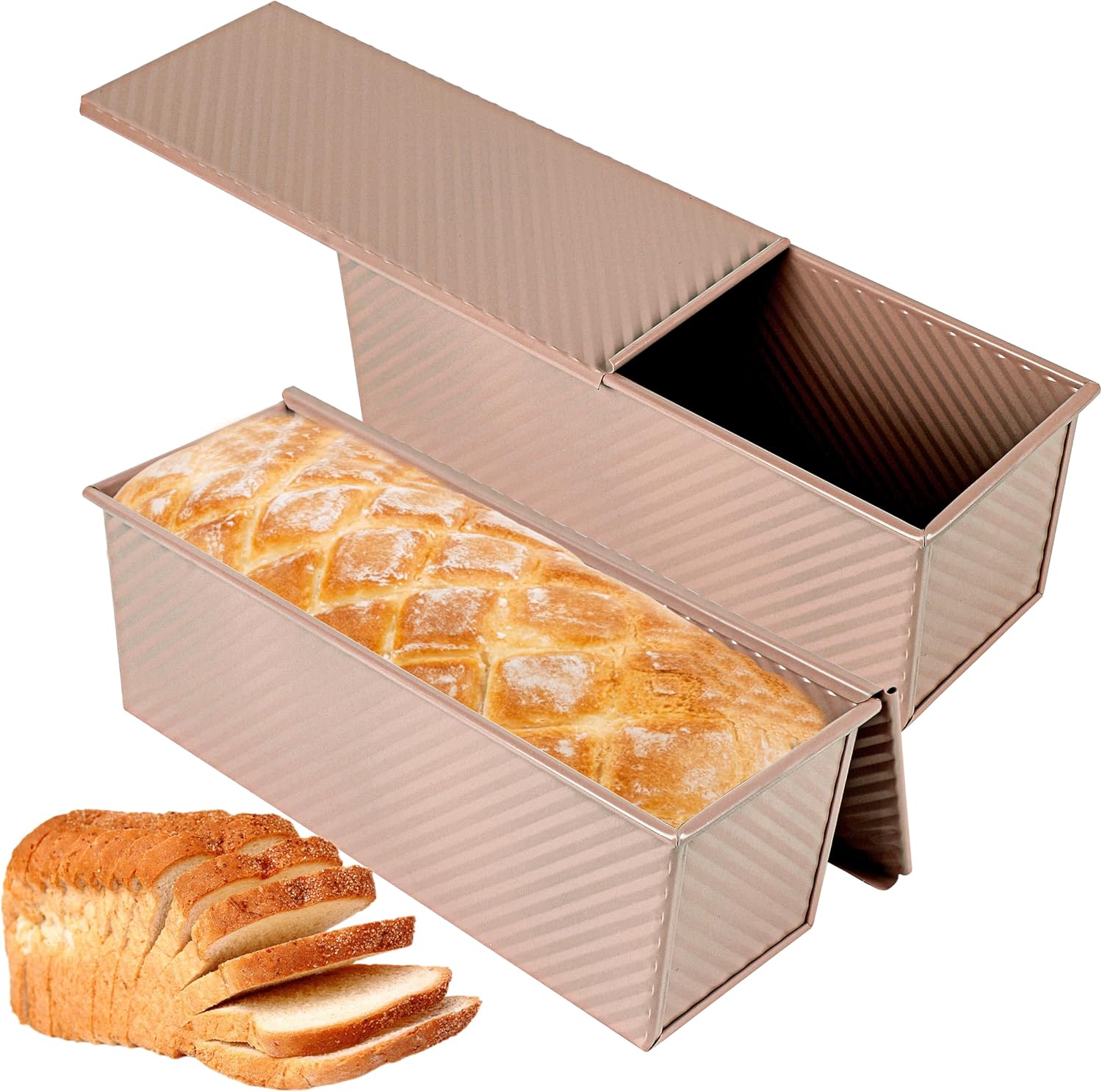
Deciding between a lidded Pullman pan and an open loaf pan determines your final baked bread shape. Sliding metal lids enclose the rising dough completely, forcing it to expand into a uniform square shape that is ideal for uniform sandwich slices. Removing the cover allows traditional golden domed crusts to form naturally during the baking cycle.
Think carefully about what kind of sandwiches or toast you enjoy preparing most frequently at home for your family members. Square Pullman loaves fit neatly into standard kitchen toasters and store easily in food storage containers. Open-top pans offer traditional rustic appeal and suit quick breads, meatloaves, or various artisan baking recipes without restrictions.
Nonstick Coatings and Safety
Nonstick coatings greatly simplify the bread release process, ensuring your baked loaves slide out cleanly without tearing the tender interior crumb. Modern bakeware frequently utilizes advanced PTFE, PFOA, and BPA-free formulations to give peace of mind during everyday food preparation tasks. Reviewing surface specifications helps you select products aligned closely with your specific household safety preferences.
Maintaining these specialized coatings requires close attention to manufacturer guidelines regarding kitchen utensils and washing methods. Using non-metal silicone or wooden tools prevents accidental surface scratches that could diminish nonstick performance over extended time periods. Proper care keeps your bakeware functioning smoothly through countless successful baking sessions without annoying sticking issues.
Dough Capacity and Sizing
Selecting the appropriate dough capacity ensures your bread has ample room to rise without overflowing the upper edges of the pan during baking. Standard home baking recipes often utilize one-pound or 2.2-pound dough weights depending on your specific family size requirements. Checking exterior and interior dimensions prevents unexpected storage surprises in your kitchen cabinets or pantry shelves.
Oversized pans easily accommodate larger baking batches for weekly meal prep, while compact models suit smaller households or specialty baking recipes perfectly. Matching the pan capacity to your typical flour amounts guarantees proportional crust development and even baking results every single time. Always consider your oven internal space limitations alongside these physical capacity measurements.
Cleaning and Maintenance
Proper cleaning routines extend the functional lifespan of your sandwich bread loaf pan significantly over years of regular kitchen use. Most nonstick bakeware requires gentle hand washing with warm soapy water and a soft sponge to protect delicate surface coatings. Avoiding abrasive steel wool scrubbers prevents permanent scratching and premature coating wear. Promptly washing and caring for pans keeps them ready for use.
Drying pans thoroughly, sometimes utilizing gentle residual oven heat, prevents unwanted moisture retention and potential rust development on carbon steel surfaces. Following manufacturer care guidelines ensures your bakeware remains reliable, clean, and visually appealing for upcoming baking projects in your busy kitchen environment. Proper maintenance protects your investment over time.
Temperature Limits and Heat Distribution
Understanding temperature ratings prevents accidental damage to your bakeware and nonstick coatings during high-heat baking sessions in domestic ovens. Most quality pans feature upper temperature limits ranging safely between four hundred and four hundred fifty degrees Fahrenheit. Operating strictly within these specified parameters maintains structural integrity and prolongs product life considerably over time for home bakers.
Efficient heat distribution ensures your bread bakes evenly from the outside crust straight to the soft interior center crumb. Corrugated surface designs and heavy-gauge metals promote optimal airflow and thermal conductivity, delivering dependable baking results across various conventional kitchen oven types without developing localized hot spots or uneven crusts during baking.
Frequently asked questions
What is the main benefit of using a Pullman loaf pan with a lid?
A Pullman loaf pan with a lid allows you to bake bread that develops a classic square shape with straight sides and a soft, tender center. When you slide the cover on during baking, the rising dough is contained, which forces it to fill the corners evenly. This specific shape is ideal for cutting uniform sandwich slices that fit standard toasters. Removing the lid lets you bake traditional domed loaves instead.
How should I clean and maintain my nonstick sandwich bread loaf pan?
Proper maintenance requires hand washing your loaf pan using warm soapy water and a soft sponge or cloth. You should avoid abrasive scrubbers, steel wool, and metal utensils that can scratch or damage the nonstick coating. After washing, dry the pan completely, sometimes using residual oven heat to remove lingering moisture and prevent rust formation. Following these care instructions extends the functional lifespan of your bakeware.
Can I bake recipes other than sandwich bread in these loaf pans?
These versatile loaf pans accommodate a wide variety of baked goods beyond standard sandwich bread. You can use them to prepare brioche, sourdough, milk bread, banana bread, zucchini bread, pound cake, meatloaves, and smaller casseroles. Choosing a lidded Pullman pan or an open steel pan depends on whether your recipe requires an enclosed environment for shaping or an open top for traditional domed crusts.
Why are carbon steel and aluminized steel popular choices for bread pans?
Carbon steel and aluminized steel are favored because they offer exceptional durability, heavy-duty construction, and reliable heat retention. These metal materials resist thermal warping during high-temperature baking and distribute heat evenly across the entire pan surface. This even thermal conductivity helps develop a uniform golden crust and a thoroughly baked interior crumb, ensuring consistent results across multiple home baking sessions.
Do I need to grease or line my nonstick loaf pan before adding dough?
While many pans feature food-grade nonstick coatings designed for easy release, applying a thin layer of butter or oil before your first use often enhances performance. For liquid batters or sticky recipes, lining the interior with parchment paper prevents leakage and ensures effortless removal. Always check your specific recipe requirements and manufacturer recommendations to determine the best preparation method for each bake.