Appliances · Buying Guide
Best Sheet Pan Pizza Dough Pans for Crispy Homemade Crusts
Baking homemade pizza requires the right equipment to achieve that ideal crispy crust and evenly cooked toppings every single time you bake. Whether you prefer a traditional round pie or a thick rectangular grandma-style slice, choosing the correct baking tray completely transforms your kitchen routine and baking results. Investing in a dedicated pan prevents soggy centers and supports proper heat distribution across your favorite dough recipes.
Different materials, ranging from durable carbon steel to reliable stainless steel, handle oven heat differently and directly affect your final bake. Exploring these options helps you find a tool matching your preferred dough style, maximum baking temperatures, and cleanup preferences for stress-free meal preparation at home. Understanding these physical attributes ensures your next pizza night delivers professional results right from your standard oven.
As an Amazon Associate, StacyLaughs earns from qualifying purchases.
Buying guide
Material Selection (Carbon Steel vs. Stainless Steel)
Choosing the ideal material for your pizza baking needs directly influences crust texture, heat retention, and overall product durability over years of regular home use. Carbon steel options provide exceptional heat transfer, allowing your dough to brown evenly and develop a delightfully crispy exterior. These pans often feature nonstick coatings that simplify food release and cleanup when making savory homemade pies.
Stainless steel alternatives offer a completely non-toxic, uncoated cooking surface that naturally resists warping under intense oven temperatures. While they require manual greasing or parchment paper to prevent sticking, they provide long-term resilience and full dishwasher safety. Consider your maintenance preferences and baking style carefully before choosing a specific metal type.
Evaluating Pan Shape and Style (Round vs. Rectangular)
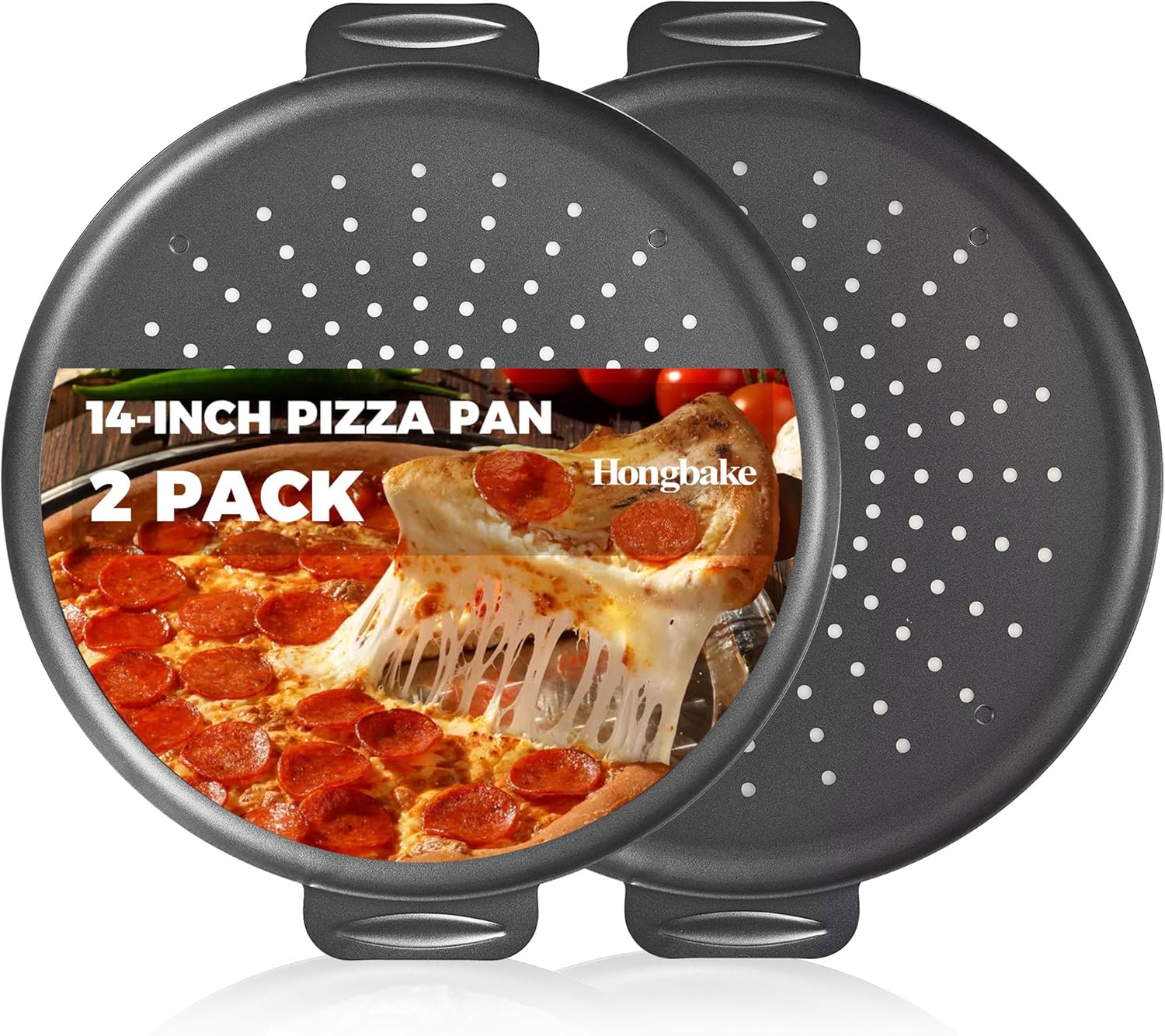
The physical shape of your baking pan determines the exact style of pizza you can successfully prepare at home for family meals. Round pans mimic traditional pizzeria pies, fitting standard circular ovens and working wonderfully for standard triangular slicing. Many round trays include perforated holes or built-in cutting guides to improve your overall baking experience.
Rectangular pans accommodate thick Sicilian or grandma-style recipes, offering generous corner pieces and deep edges to contain rich sauce and cheese toppings. These rectangular formats demand larger oven rack dimensions and careful storage planning compared to compact round alternatives. Match your preferred recipe style to the correct geometry for best results.
Perforations and Airflow for Crispiness
Achieving a truly crispy crust often depends on how effectively moisture escapes during the active baking process inside your hot oven. Perforated pizza pans feature small holes across the surface that promote continuous airflow directly beneath the dough. This specialized design prevents trapped steam from softening the base, resulting in a golden, crunchy finish.
While perforated models excel at crisping frozen or homemade dough, they require attention during initial loading to prevent liquid toppings from dripping through the tray. Pair these ventilated trays with slightly firmer dough preparations for optimal performance and less mess. Evaluate whether your favorite pizza style benefits from enhanced ventilation.
Sizing and Oven Compatibility
Selecting the correct pan size requires carefully measuring your oven interior and rack dimensions before making a final purchase decision online. A pan advertised as a certain diameter often includes external handles that expand its overall footprint significantly beyond the stated cooking area. Checking these physical dimensions prevents frustrating fitting issues on baking day.
Larger 16-inch or 17.5-inch pans offer ample space for big batches or family-sized pies but demand generous storage space in crowded kitchen cabinets. Smaller 13-inch or 14-inch options fit compact apartments and standard wall ovens with ease. Balance your household serving requirements directly against your kitchen spatial limits for a seamless experience.
Cleaning and Maintenance Requirements
Proper maintenance extends the lifespan of your pizza pan and preserves protective coatings against premature wear and rusting over years of regular use. Many carbon steel pans require gentle hand washing with mild soap and non-abrasive pads rather than automated dishwasher cycles. Following these manufacturer care guidelines protects delicate nonstick surfaces from scratching.
Stainless steel alternatives frequently offer complete dishwasher-safe convenience, saving you valuable time after preparing large meals or hosting weekend dinner parties. Assessing your willingness to perform manual cleanup versus relying on machine washing helps guide your ideal product selection. Prioritize pans matching your daily routine and household lifestyle.
Handling, Grips, and Safety Features
Transferring a hot pizza pan safely in and out of a high-temperature oven requires thoughtful ergonomic design elements and sturdy metal construction. Pans featuring extra-wide handles or smooth rolled edges provide a secure grip, significantly reducing the risk of accidental slips during transit. Molded bottom feet also elevate hot metal safely away from vulnerable kitchen countertops.
Evaluating these safety additions ensures you can maneuver heavy bakes comfortably, especially when wearing bulky protective oven mitts. Sloped rims further prevent ingredients from sliding off during transport from the oven interior. Prioritizing secure handling features protects both the cook and the finished homemade pizza creation every single time.
Frequently asked questions
Do I need to grease a nonstick pizza pan before baking?
While nonstick pizza pans are specifically designed to release baked goods smoothly without extra fats, applying a light touch of oil or cornmeal can still benefit certain dough types. High-moisture doughs or sticky homemade recipes often perform better with a very thin layer of oil or flour to guarantee effortless removal. However, verify manufacturer guidelines before using heavy sprays, as certain aerosol products can leave residue on coated carbon steel surfaces over time.
Can I use metal utensils on carbon steel pizza pans?
Using sharp metal utensils directly on coated carbon steel pizza pans is generally discouraged because it can scratch and damage the nonstick surface. Scratches compromise the protective coating, causing food to stick and potentially exposing the underlying metal to rust during washing. Instead, opt for wooden, silicone, or plastic spatulas and slicing tools to preserve your bakeware. Many round pans include built-in cutting guides, but you should still use non-scratch implements for serving.
How do I clean a pizza pan that is not dishwasher safe?
Cleaning a hand-wash-only pizza pan requires simple tools like warm water, mild dish soap, and a soft, non-abrasive sponge or cleaning pad. Avoid harsh scouring pads or steel wool, which can strip away protective nonstick coatings or rust-resistant layers. After washing, dry the pan thoroughly with a towel immediately to prevent moisture from causing corrosion, especially on carbon steel models. Never submerge hot metal directly into cold water to prevent warping.
What is the advantage of a perforated pizza pan?
Perforated pizza pans feature small holes distributed across the cooking surface that allow hot air to circulate freely directly beneath your pizza dough. This enhanced ventilation lets excess moisture escape during baking, preventing the crust from becoming soggy in the center. It results in a crispier, golden-brown crust texture that closely mimics professional pizzeria results right in your home kitchen. Just ensure your dough isn't overly runny to avoid drips.
How do I choose between round and rectangular pizza pans?
Choosing between round and rectangular pans depends entirely on the style of pizza you prefer to bake for your household. Round pans work wonderfully for traditional circular pies, standard triangular slicing, and fitting standard oven interiors. Rectangular pans accommodate thick Sicilian or grandma-style recipes, offering deep edges for heavy toppings and crispy corner slices. Consider your favorite dough style and available oven rack space before making your final selection.