Appliances · Buying Guide
Best Silicone Mat for Baking Cookies to Improve Sheet Pans
Baking cookies evenly without constant parchment paper waste requires a reliable silicone baking mat designed specifically for standard kitchen pans. These flexible sheets provide a dependable non-stick surface that safely handles high oven temperatures while protecting your metal baking pans from stubborn, baked-on messes and sticky sugar residues during long baking sessions.
Choosing the right mat depends heavily on your specific pan dimensions, preferred pack quantities, and routine baking temperatures. Whether you bake delicate French macarons or everyday chocolate chip cookies, integrating these reusable silicone liners simplifies both food release and post-baking cleanup across your everyday kitchen routines, cutting down single-use waste.
As an Amazon Associate, StacyLaughs earns from qualifying purchases.
Buying guide
Material Composition and Food Safety
Selecting a silicone baking mat requires checking food-grade material certifications to ensure safe food contact at high temperatures. High-quality mats typically use pure silicone or reinforced fiberglass cores that remain free from harmful chemicals like BPA.
Ensuring these standards protect your family while baking cookies or roasting meats without transferring unwanted flavors or odors into your food items.
Dimensions and Pan Compatibility
Matching your baking mat dimensions to your existing metal pans prevents edges from curling or bunching up during baking. Standard half-sheet pans usually require mats measuring around 16.5 by 11.6 inches for a flush fit.
Checking your specific tray sizes before purchasing ensures your new liners lay completely flat inside the oven without folding over cookies.
Temperature Limits and Heat Distribution
Different silicone mats handle varying maximum temperatures, with most rated safely between 450 and 500 degrees Fahrenheit. Reviewing these heat thresholds prevents material degradation during high-heat roasting tasks.
Even heat distribution across the mat surface also prevents hot spots, ensuring your cookies bake uniformly from edge to center every time.
Thickness and Structural Rigidity
Mat thickness influences both durability and flexibility, with standard options measuring around 0.75mm for enhanced sturdiness. Thicker mats resist warping and provide a firmer workspace for kneading dough.
Thinner alternatives offer greater flexibility, making them easier to roll up and store compactly inside crowded kitchen drawers or cabinets.
Cleaning and Maintenance Requirements
Easy cleanup is a primary advantage of silicone baking mats, as most options wipe clean with soapy water. Many variants also support dishwasher cleaning.
Following manufacturer guidelines, such as placing mats on the top rack, preserves the non-stick coating and extends the lifespan of your kitchen accessories.
Pack Quantity and Set Versatility
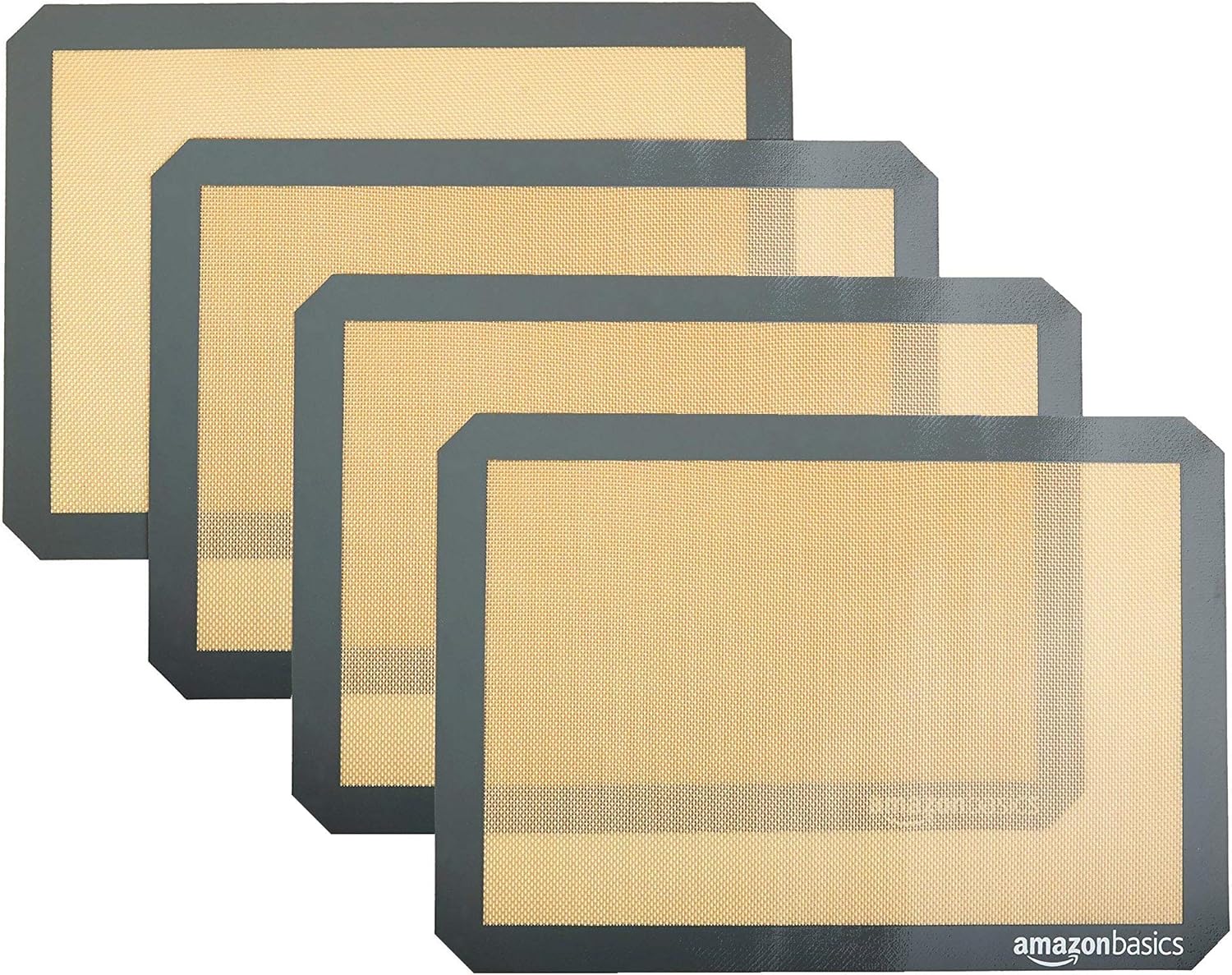
Purchasing multi-packs allows you to rotate multiple pans through the oven during high-volume baking sessions like holiday cookie exchanges. Sets often include two identical half-sheets.
Some collections incorporate mixed sizes like quarter-sheets, providing extra versatility if you frequently cook smaller portions or use compact toaster ovens.
Frequently asked questions
Do silicone baking mats eliminate the need for parchment paper or cooking spray?
Yes, silicone baking mats feature a naturally non-stick surface that allows you to bake cookies, pastries, and roasted vegetables without applying oils, cooking sprays, or laying down single-use parchment paper. Baked goods release effortlessly from the smooth silicone texture, which helps reduce kitchen waste and saves money over time. However, you should always check specific manufacturer instructions to ensure your chosen mat matches your intended recipe temperatures and pan sizes, as some extremely sticky batters may still benefit from light preparation depending on the ingredients used.
Can I put silicone baking mats directly on the oven rack?
Most standard silicone baking mats require a supportive metal baking sheet or tray underneath them during use and should not be placed directly on an open oven rack. Because flexible silicone lacks the rigid structural strength of metal pans, putting a mat directly on the rack can cause it to sag, fold, or let heavy dough spill through the wires. Always place your mat flat on a sturdy metal tray before sliding it into the oven to maintain even support and ensure safe baking results across all recipes.
How should I clean and store my silicone baking mats?
Cleaning silicone baking mats is straightforward; you can wash them by hand using warm soapy water and a soft sponge, or place them in the dishwasher depending on manufacturer guidelines. Many brands recommend placing them on the top rack of the dishwasher to avoid heavy heating elements. For storage, you can either lay the mats completely flat inside your cabinets or roll them up loosely to save space in crowded drawers. Avoid folding sharp creases into the silicone to prevent damaging the material over time.
What temperature limits apply to reusable silicone baking mats?
Reusable silicone baking mats generally withstand extreme temperatures ranging from negative forty degrees Fahrenheit up to 480 or 500 degrees Fahrenheit, depending on the specific product build. This wide temperature range makes them safe for freezer storage, microwave use, and high-heat oven baking. Exceeding the manufacturer stated maximum temperature can degrade the silicone material and ruin the non-stick coating. Always verify the rating of your specific mat before using it for high-heat tasks like roasting vegetables or baking artisan bread at elevated temperatures.
Are silicone baking mats safe for food contact and BPA-free?
High-quality silicone baking mats are crafted from food-grade silicone that is completely free from harmful chemicals like BPA and PFOA. These materials ensure that no toxic plastics or unpleasant chemical odors leach into your cookies, breads, or savory dishes during high-temperature baking. When shopping for mats, look for clear specifications indicating food-safe construction and compliance with relevant safety standards. Choosing certified food-grade mats gives you peace of mind while preparing homemade snacks and meals for your family every single day.