Appliances · Buying Guide
Best Sourdough Bread Loaf Pan Options for Crispy Crusts
Baking artisan sourdough at home requires specialized equipment capable of managing steady heat and trapping ambient moisture during the bake. Cast iron loaf pans offer a reliable solution for home bakers seeking professional-quality crusts and even interior textures without relying on standalone commercial ovens or complex setups. Selecting the proper vessel directly influences how your dough rises, sets, and develops a crackling exterior.
Choosing the right pan involves balancing features like dual-purpose lid configurations, enamel coatings versus traditional seasoning requirements, and standard 9x5 inch dimensions. Reviewing these specific attributes helps align your baking setup with everyday kitchen demands and favorite homemade bread recipes. Understanding material differences ensures your cookware matches your preferred cleaning habits and storage constraints.
As an Amazon Associate, StacyLaughs earns from qualifying purchases.
Buying guide
Material Composition and Heat Retention
Cast iron remains the gold standard for bread baking due to its exceptional thermal mass and steady heat distribution. When baking sourdough, maintaining a stable temperature prevents sudden oven spring collapse and ensures uniform crumb expansion throughout the loaf.
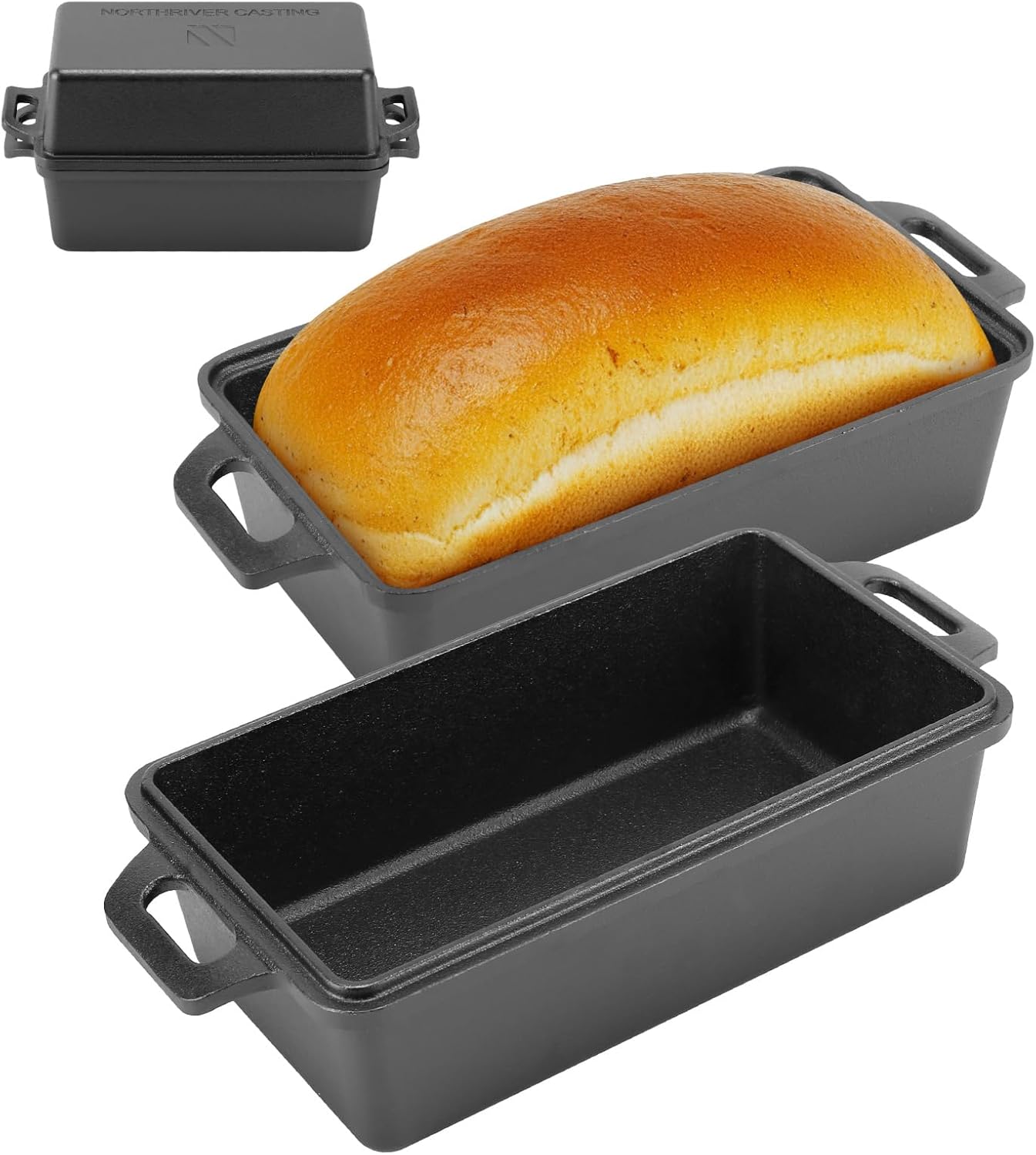
Selecting a quality pan means evaluating whether you prefer raw cast iron that builds seasoning over time or enameled options that offer immediate non-stick release without maintenance. Both materials excel at retaining heat, but they differ significantly in daily care routines.
Evaluating Capacity and Dimensions
Standard 9x5 inch loaf pans accommodate typical family-sized sandwich breads and medium artisan sourdough boules or batards. Checking internal dimensions ensures your dough has adequate vertical room to rise without hitting the lid prematurely during baking.
External dimensions also dictate cabinet storage and oven rack clearance. Taller domed lids or longer handles require measuring your oven interior to guarantee proper fit, especially when pairing the pan with baking stones.
Lid Configurations and Steam Control
A tight-fitting lid traps natural moisture escaping from the fermenting dough, creating a humid microclimate inside the vessel during the initial bake phase. This steam prevents the crust from setting too early, allowing maximum volume expansion.
Many modern cast iron loaf designs feature dual-purpose lids that double as secondary flat griddles or baking bases. Assess whether a flat top or a domed steam-circulating cover better matches your preferred bread crust style.
Cleaning and Maintenance Requirements
Raw cast iron pans demand hand washing, thorough drying, and periodic oil seasoning to prevent oxidation and build a natural non-stick surface. Skipping these maintenance steps can compromise the cooking longevity of the pan.
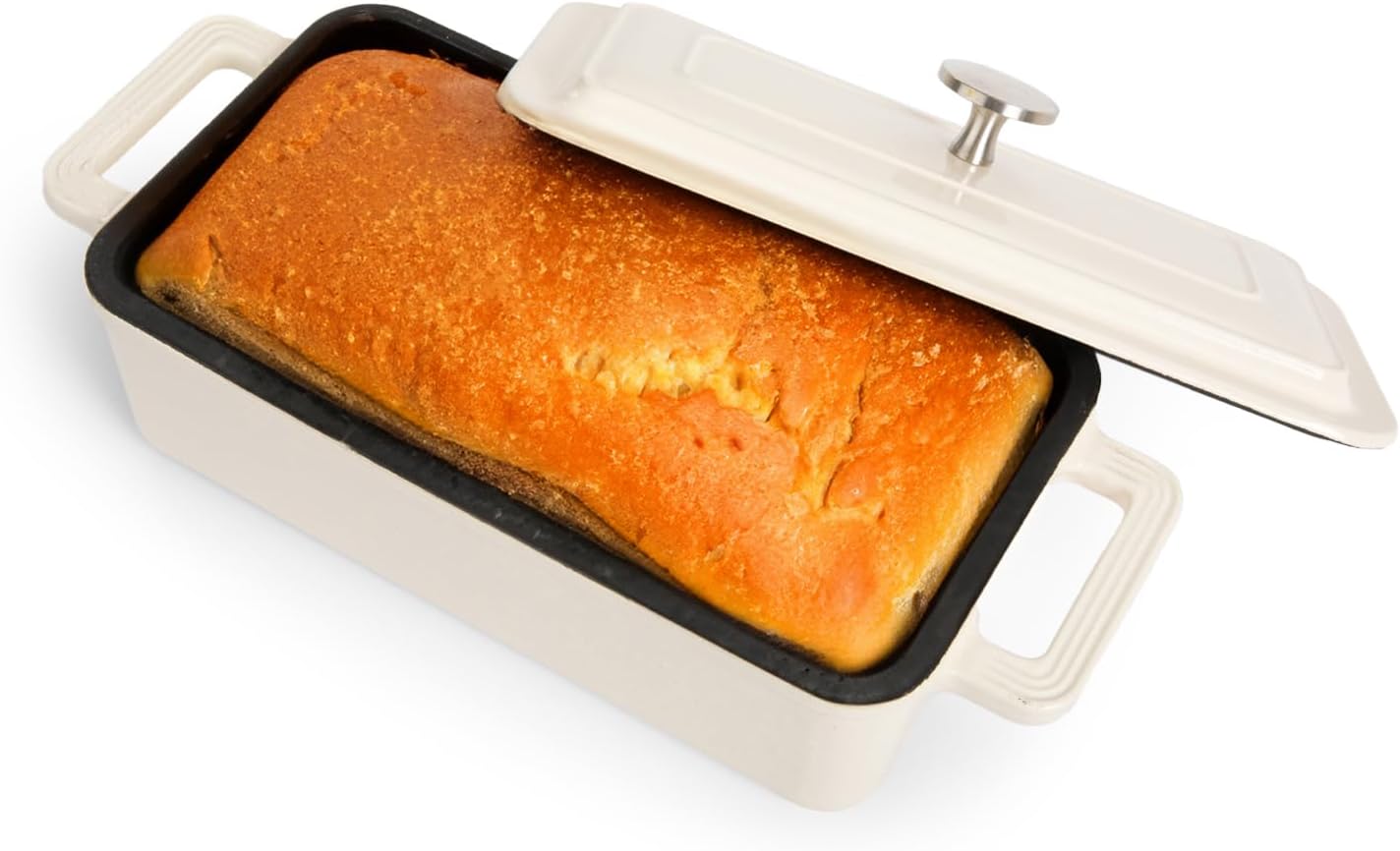
Conversely, enameled cast iron finishes eliminate seasoning steps and often permit easier cleanup or dishwasher cycles depending on manufacturer guidelines. Match your choice to your personal willingness to perform routine kitchen maintenance.
Weight and Ergonomic Handling
Cast iron cookware is inherently heavy, and loaded bread pans weigh significantly more when filled with dense dough. Integrated handles or curved grips provide crucial leverage points for safely transferring the hot vessel into a scorching oven.
Always factor in your physical comfort when lifting heavy cookware. Pans with well-designed side tabs or looped handles reduce awkward wrist angles when wearing thick protective oven mitts or heat-resistant leather gloves.
Versatility Across Cooking Environments
While primarily designed for indoor kitchen ovens, many cast iron loaf pans tolerate high temperatures up to 500 degrees Fahrenheit on gas, electric, or induction cooktops. Some models even support outdoor campfire baking.
Reviewing maximum temperature thresholds and heat source compatibility ensures your selected pan supports your broader culinary habits, whether you bake exclusively indoors or occasionally branch out to outdoor cooking setups.
Frequently asked questions
Why is a lid important for baking sourdough bread in a loaf pan?
A lid traps the natural moisture evaporating from the baking sourdough dough, creating a high-humidity environment inside the enclosed pan during the first part of the bake. This steam keeps the outer surface of the dough elastic, allowing the loaf to achieve maximum oven spring before the crust sets. Once the initial baking phase concludes, removing the lid lets dry heat circulate directly around the loaf to develop a dark, golden, and crispy artisan crust.
Do I need to season enameled cast iron loaf pans before first use?
No seasoning is required for enameled cast iron loaf pans because the glass-like enamel coating acts as a sealed, non-reactive barrier over the raw iron beneath. You can simply wash the pan with warm soapy water, dry it thoroughly, and begin baking immediately. This low-maintenance surface prevents rust and makes food release straightforward without needing the traditional oil polymerization process mandatory for raw cast iron cookware upkeep.
What is the advantage of a standard 9x5 inch size for homemade bread?
The standard 9x5 inch dimension represents a versatile sizing sweet spot for home bakers producing sandwich loaves, meatloaf, banana bread, and standard artisan sourdough recipes. This proportion provides enough horizontal length and cross-sectional volume to support uniform dough rise and even heat penetration from all sides. Furthermore, 9x5 pans fit easily onto standard kitchen oven racks and pair well with existing cabinet storage shelves without requiring custom organizational adjustments.
Can I use a cast iron loaf pan on an induction stovetop?
Cast iron is naturally ferromagnetic, making it fully compatible with induction cooktops, gas burners, electric stove coils, and even outdoor campfires, provided the manufacturer specifies general cooktop use. When using a cast iron loaf pan on a stovetop, you should preheat the metal gradually to avoid thermal shock. Always consult the specific product manual to confirm whether your exact pan model is rated for direct stovetop heating or restricted to oven-only baking environments.
How do I prevent bread from sticking to a raw cast iron loaf pan?
Preventing sticking on raw cast iron requires building and maintaining a well-seasoned polymer layer through regular use, thorough drying after washing, and applying a thin coat of cooking oil while the metal is warm. For stubborn doughs, you can also lightly grease the interior surfaces or dust them with cornmeal or flour before loading your unbaked sourdough. Over time, consistent seasoning use naturally enhances the non-stick release properties of the raw iron surface.