Appliances · Buying Guide
Best Sourdough Bread Pan With Lid Options for Home Bakers
Baking artisan sourdough at home requires equipment that can trap steam and distribute heat evenly for a professional crust. A specialized sourdough bread pan with lid transforms standard kitchen baking by creating a mini-oven environment inside your regular oven, holding moisture released from the dough during the initial bake.
Choosing the right vessel depends on your preferred loaf shape, whether you favor traditional rectangular sandwich loaves or rustic round batards. Reviewing available options helps match material types like raw or enameled cast iron with your specific baking routine and cleanup preferences.
As an Amazon Associate, StacyLaughs earns from qualifying purchases.
Buying guide
Material Composition and Maintenance
Choosing between raw cast iron and enameled cast iron dictates your long-term cleaning routine. Raw cast iron pans require periodic seasoning with oil to maintain their non-stick properties and prevent rust.
Enameled versions feature a smooth glass-like glaze that resists stains and sticking immediately, eliminating the need for seasoning while requiring gentle hand washing to protect the finish.
Capacity and Loaf Geometry
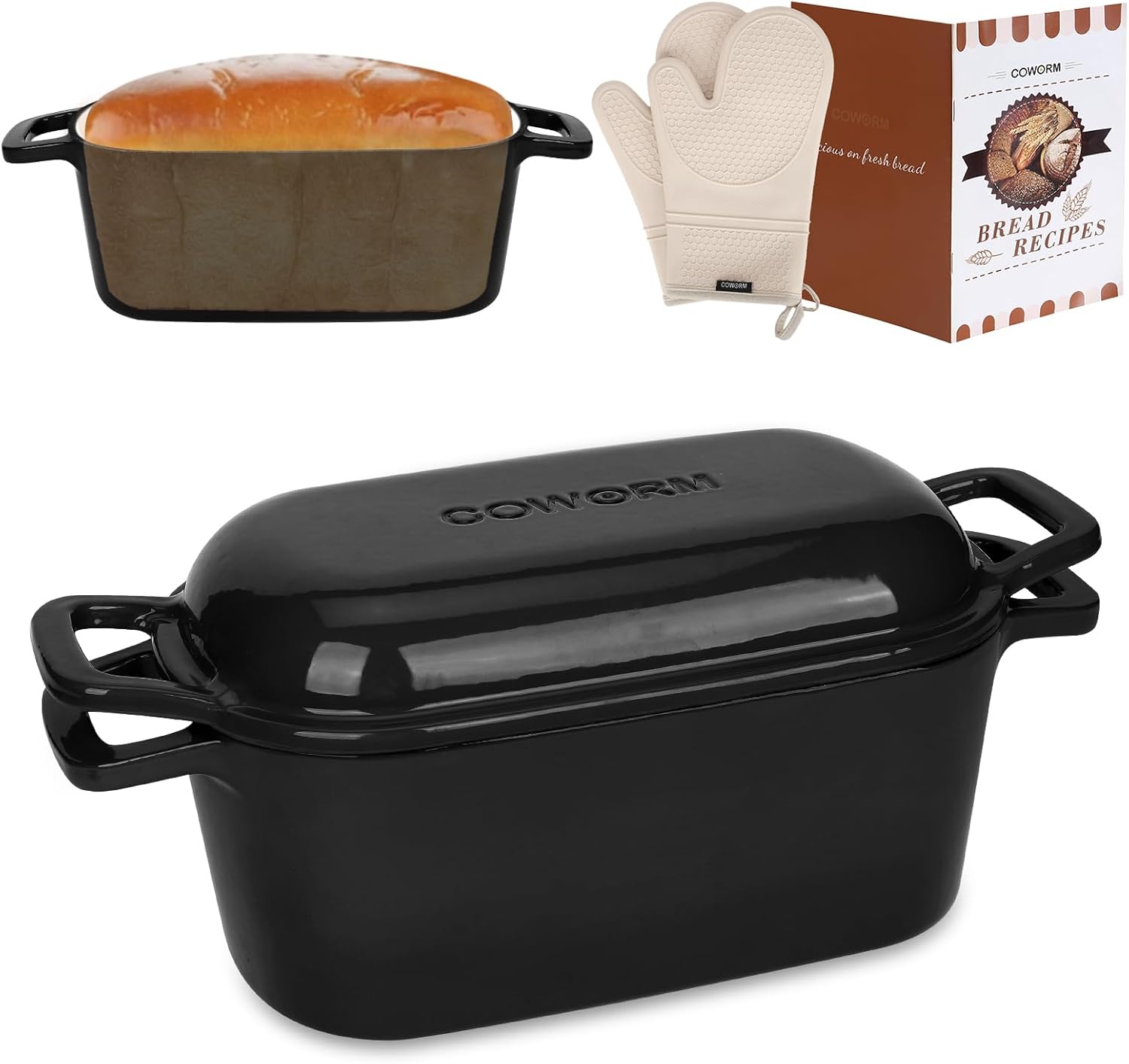
The interior volume of your baking vessel directly influences the final shape and height of your homemade bread. Smaller two-quart models suit compact oval batards.
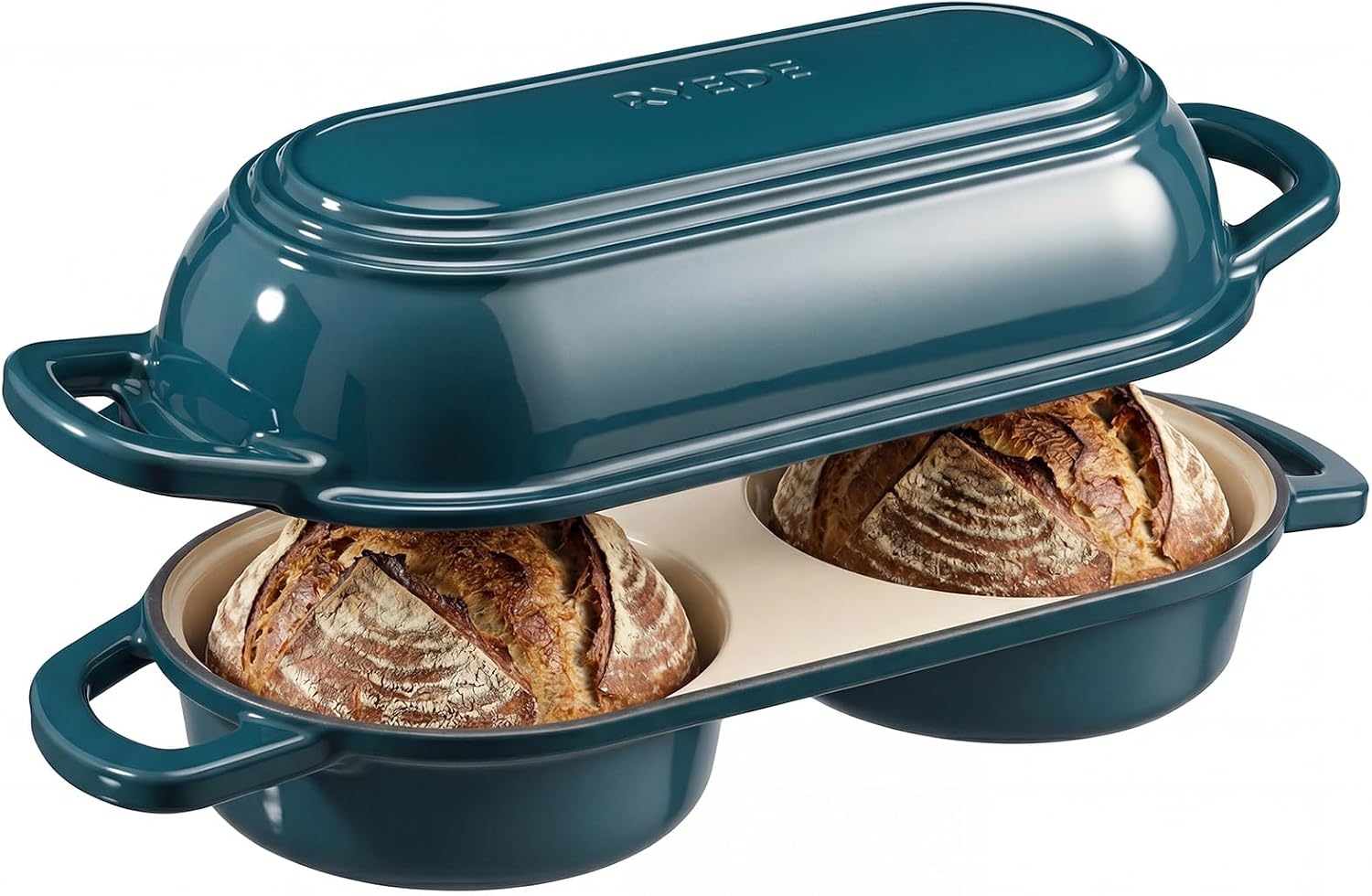
Larger rectangular models holding over three quarts accommodate traditional sandwich loaves, while multi-well designs let you bake two smaller loaves simultaneously for varied household preferences.
Thermal Retention and Temperature Limits
Cast iron excels at holding and distributing heat evenly across the entire baking surface, ensuring your dough achieves a proper oven spring. Most quality pans withstand up to five hundred degrees Fahrenheit.
Confirming your oven and stovetop compatibility ensures the pan transitions smoothly from preheating on a burner to high-temperature baking inside the main oven cavity.
Handle Design and Safe Maneuvering
Lifting a heavy cast iron pan loaded with hot dough requires secure, integrated handles on both the base and the lid. Angled or one-piece grips provide stability when wearing bulky oven mitts.
Evaluating handle placement helps prevent accidental slips, ensuring you can transfer the heavy baking vessel safely between countertops, stovetops, and oven racks.
Lid Fit and Steam Management
Trapping steam during the first portion of the baking cycle is essential for developing a shiny, blistered crust and an optimal vertical rise. Tight-fitting domed lids hold moisture effectively.
Removing the lid midway through baking allows heat to circulate freely around the loaf, helping the exterior turn golden brown and develop a satisfying crunch.
Storage Footprint and Kitchen Fit
Heavy cast iron baking pans occupy significant space in kitchen cabinets or ovens. Measuring your available storage space and oven interior before purchasing prevents clearance issues.
Longer double-well or wide rectangular pans require ample shelf room, whereas compact oval ovens fit easily into tighter spaces while still delivering high-heat baking performance.
Frequently asked questions
Do enameled sourdough bread pans require seasoning before the first use?
No, enameled cast iron pans feature a smooth vitreous glass coating that prevents food from sticking naturally without any seasoning. You can wash the pan with warm soapy water and begin baking immediately, whereas raw cast iron options do require initial and ongoing oil seasoning to build a non-stick surface over time.
Can I use a cast iron sourdough pan on an induction cooktop?
Many cast iron bread pans feature flat bottoms that work effectively on gas, electric, ceramic, and induction cooktops. Always verify the specific manufacturer compatibility details for your chosen model to ensure the base sits flat and safely transfers heat from your particular stovetop surface before attempting to preheat.
Why is a tight-fitting lid important when baking sourdough bread?
A tight-fitting lid traps the natural moisture evaporating from the wet sourdough dough during the initial stage of baking. This trapped steam keeps the outer crust flexible, allowing the loaf to achieve maximum vertical expansion or oven spring before the lid is removed to crisp up the exterior.
How should I clean my cast iron bread pan after baking?
Most cast iron bread pans require hand washing with warm soapy water and a soft nylon brush or sponge. Avoid harsh metal scouring pads that can scratch enameled surfaces or strip seasoning layers from raw cast iron, and ensure the pan is completely dry before storing it away.
What is the advantage of a double-well sourdough baking pan?
A double-well design incorporates two separate baking compartments within a single cast iron body, allowing you to bake two smaller loaves simultaneously. This is particularly useful for testing different flour recipes, baking smaller batches for small households, or preparing two different items at the same time.