Appliances · Buying Guide
Best Tools When Sourdough Dough Not Rising
When your sourdough dough refuses to rise, troubleshooting temperature, container choice, and ambient humidity can quickly transform a dense, flat loaf into an airy, beautifully textured masterpiece. Many home bakers frequently struggle with sluggish bulk fermentation caused by drafty kitchen counters, chilly room temperatures, or improper vessel sizing during the crucial initial proofing stages.
Investing in specialized translucent proofing containers, targeted warming mats, precision starter warmers, or fully enclosed temperature-controlled proofing boxes provides the stable thermal environment necessary for active yeast development. Exploring these dedicated baking accessories helps eliminate common fermentation roadblocks and actively supports consistent, professional-level bread rising results for every single baking project you undertake in your home kitchen.
As an Amazon Associate, StacyLaughs earns from qualifying purchases.
Buying guide
Understanding Ambient Temperature Impact
Ambient kitchen temperature plays a critical role in determining whether your sourdough dough rises successfully or remains flat and inactive. Wild yeast and lactic acid bacteria thrive in specific thermal ranges, usually between 75 and 82 degrees Fahrenheit for optimal bulk fermentation. When room temperatures drop below this ideal window, microbial activity slows down dramatically, causing sluggish rises and frustrating delays for bakers.
Addressing cold kitchen environments requires evaluating whether passive room placement is sufficient or if supplemental heating tools are necessary. Devices such as warming mats or temperature-controlled proofing boxes help bridge the gap during colder months. By maintaining consistent warmth, bakers can prevent stalled fermentations and achieve predictable, reliable bread rising schedules regardless of fluctuating household weather conditions.
Choosing the Right Proofing Vessel
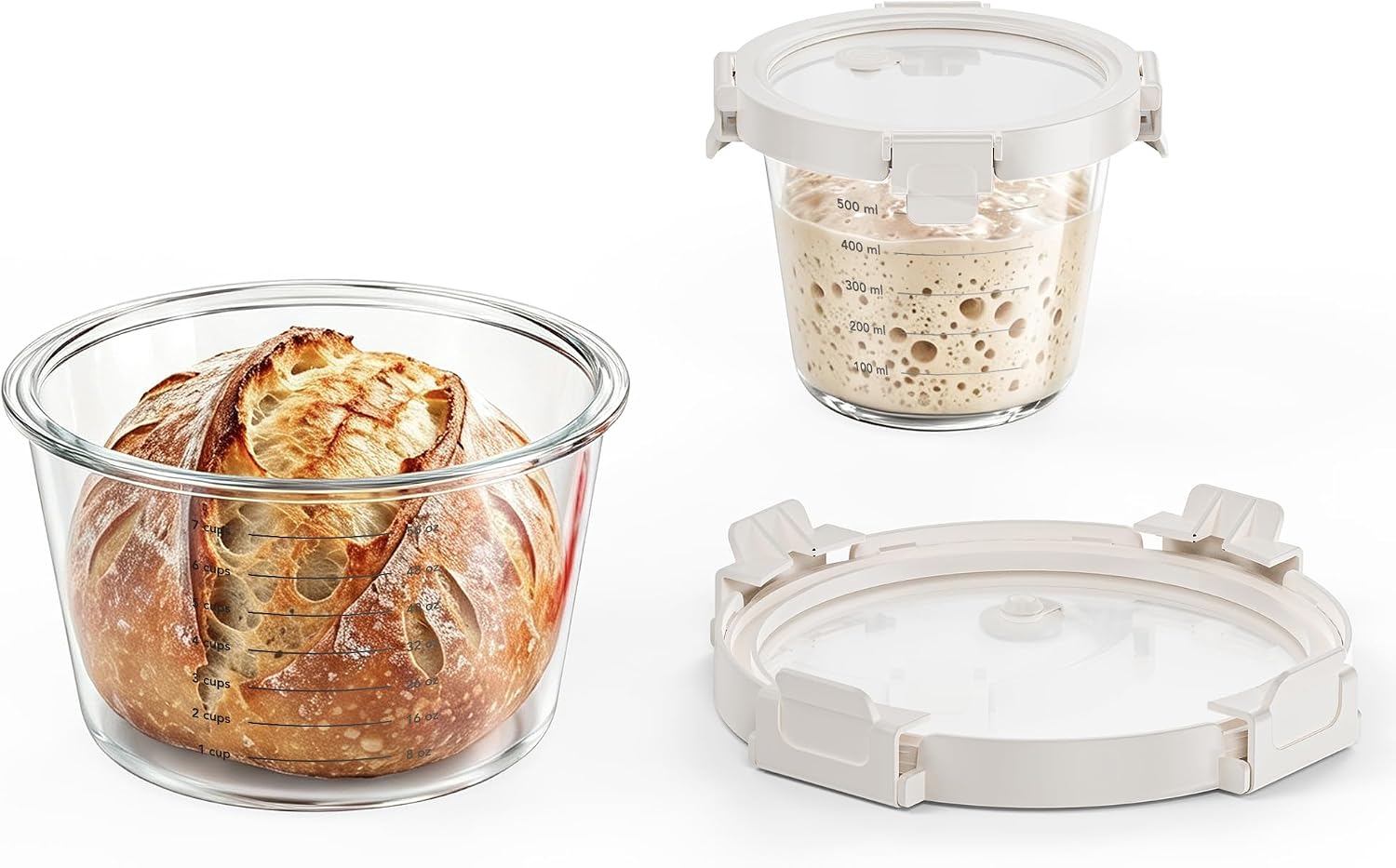
Selecting an appropriate container for bulk fermentation directly influences dough expansion, hydration management, and structural development during the proofing process. Translucent plastic tubs with straight sides allow bakers to easily track volume increases and bubble formation without disturbing the resting dough. Containers featuring wide bases also simplify essential folding techniques, enabling better gluten network alignment without sticking.
Alternatively, glass bowls offer superior clarity and thermal retention while supporting microwave and oven tasks. However, material weight and storage footprints must be considered to match your kitchen workflow. Evaluating container capacity against typical batch sizes ensures that your chosen vessel accommodates dough expansion adequately while preventing overflow or premature crust drying during long fermentation cycles.
Temperature Control and Precision Probing
Temperature fluctuations represent a primary culprit behind failed sourdough rises, making precision monitoring an essential practice for consistent baking results. Standard room thermometers only measure surrounding air, leaving the actual core temperature of dense dough masses unverified. Integrating specialized stainless steel temperature probes allows bakers to track thermal conditions directly inside the fermenting mixture with exact degree-by-degree accuracy.
Utilizing adjustable warming bases equipped with core probes removes guesswork from daily starter maintenance and bulk fermentation. These tools adapt to varying container sizes and ambient shifts, ensuring optimal yeast performance. Investing in precision thermal equipment ultimately empowers bakers to achieve reproducible, bakery-quality loaf structures even when dealing with unpredictable seasonal temperature drops in domestic kitchens.
Humidity Management and Surface Protection
Maintaining proper relative humidity around your sourdough dough prevents the outer surface from forming a premature, dry crust that restricts upward expansion. Exposed dough surfaces in drafty rooms quickly lose moisture, creating a tough outer layer that hinders overall volume gains. Utilizing dedicated containers equipped with tight-fitting lids or specialized proofing boxes with humidors helps trap natural moisture during long rises.
Protecting dough moisture preserves optimal extensibility and softness, allowing gas bubbles to expand the loaf evenly. When evaluating baking accessories, look for moisture-sealing designs that balance ventilation needs with humidity retention. This careful balance ensures that high-hydration recipes rise smoothly and maintain their desired structural integrity from initial mixing through final shaping and baking preparation.
Storage Space and Kitchen Layout
Kitchen space availability significantly impacts which proofing equipment and containers you can realistically integrate into your daily baking routine. Large multi-liter proofing boxes and stackable 5-quart containers offer immense capacity for serious bakers but demand dedicated countertop footprint or cabinet storage. Assessing your available kitchen real estate before purchasing large-format gear ensures a clutter-free and efficient baking workspace.
Compact alternatives, such as slim heating mats or versatile glass jar sets, provide targeted assistance without overwhelming limited storage areas. Folding proofing boxes collapse easily when not in use, offering a practical compromise for cooks with tight quarters. Balancing physical dimensions with your baking frequency helps you select equipment that delivers maximum performance without creating storage bottlenecks in your kitchen.
Starter Maintenance Versus Bulk Proofing
Differentiating between equipment designed for sourdough starter maintenance and tools built for large-scale dough proofing is vital for an efficient baking setup. Starter jars and precision warming bases focus on keeping small inoculant cultures active and vigorous through frequent feedings. In contrast, large-quart containers and enclosed proofing chambers accommodate massive dough batches and multi-loaf bread production requirements.
Understanding these distinct operational roles prevents mismatched expectations when troubleshooting rising issues in your kitchen. Bakers who struggle primarily with weak starters benefit most from targeted thermal warmers and feeding jars. Conversely, those experiencing flat loaves due to drafty bulk fermentation stages require spacious containers or dedicated proofing boxes to ensure successful, uniform dough expansion.
Frequently asked questions
Why is my sourdough dough not rising during bulk fermentation?
Sourdough dough often fails to rise due to cool ambient kitchen temperatures, inactive starter cultures, or insufficient gluten development. Wild yeast and beneficial bacteria require specific warmth, typically between 75 and 82 degrees Fahrenheit, to produce carbon dioxide efficiently. If your kitchen is drafty, fermentation slows down dramatically or stalls completely. Utilizing dedicated warming mats, precision starter heaters, or enclosed proofing boxes helps maintain optimal thermal conditions. Additionally, ensuring your sourdough starter is robust and active before mixing guarantees your dough has the biological power needed for a proper rise.
How can I maintain a consistent temperature for my sourdough starter?
Maintaining a consistent temperature for your sourdough starter involves placing it in a stable thermal environment away from cold drafts or direct heat sources. Precision warming bases equipped with stainless steel temperature probes offer exceptional control by measuring core jar conditions directly. Setting these devices between 70 and 110 degrees Fahrenheit ensures your wild yeast culture stays active. Alternatively, storing starter jars in borosilicate glass containers near appliances or inside insulated proofing boxes helps buffer minor kitchen temperature swings, keeping your feeding schedule reliable and predictable.
Are specialized proofing containers better than standard mixing bowls?
Specialized proofing containers offer distinct advantages over standard mixing bowls by incorporating features like translucent walls, volume markings, moisture-sealing lids, and wide flat bases. Translucent polypropylene or glass walls let you monitor bubble formation and dough expansion in real time without removing the lid. The measurement markings eliminate guesswork regarding rise percentages, helping you prevent over-fermentation. Furthermore, wide bases accommodate stretch and fold techniques directly inside the vessel, streamlining your baking workflow while protecting the dough from drying out in open air.
What is the difference between a heating mat and an enclosed proofing box?
A heating mat provides a slim, direct thermal surface designed to sit underneath bowls, jars, or containers, delivering bottom-up warmth to counteract cold counters. It is compact and easy to store. In contrast, an enclosed proofing box creates a fully protected, multi-zone thermal chamber with insulation, humidity control, and transparent windows. While a mat offers targeted, portable warmth, a proofing box shields your entire dough batch from ambient drafts and allows precise temperature and humidity regulation across multiple baking batches simultaneously.
How do I prevent my sourdough dough from drying out while rising?
Preventing your sourdough dough from drying out requires sealing in moisture during long bulk fermentation and proofing stages. Using containers with tight-fitting lids prevents ambient air from forming a tough, crusty layer on top of your dough. If using traditional bowls, covering them with damp towels or plastic wrap helps retain humidity. Enclosed proofing boxes equipped with humidors also maintain a balanced moisture-rich environment. Keeping your dough protected ensures optimal surface elasticity, allowing gases to expand the loaf uniformly without restriction.