Appliances · Buying Guide
Best Sourdough in Loaf Pan Options for Artisan Bread Baking
Baking artisan sourdough at home relies heavily on proper baking equipment that can effectively manage high heat retention and trap necessary moisture. Utilizing a dedicated cast iron loaf pan helps create the ideal closed baking environment for developing a crispy golden crust alongside a soft, airy interior during the entire baking process.
Selecting the right baking vessel involves carefully evaluating physical dimensions, material choices like traditional seasoned or smooth enameled cast iron, and dual-function lids that can double as secondary cooking surfaces. These specific physical attributes directly influence how well your homemade sourdough loaves rise, bake, and develop professional textures in standard home ovens or across various compatible cooktops.
As an Amazon Associate, StacyLaughs earns from qualifying purchases.
Buying guide
Material Selection for Sourdough Baking
Choosing the right material for your baking pan shapes how your sourdough develops its crust and interior crumb structure. Cast iron remains a top choice due to its exceptional thermal mass and steady heat distribution across the entire base. Traditional seasoned iron builds a natural non-stick layer over time, improving release performance with every single loaf you bake in the kitchen.
Alternatively, enameled cast iron offers a smooth protective surface that prevents rust and completely eliminates the need for manual oil seasoning routines. This option simplifies cleanup chores for beginners while still providing the heavy-duty heat retention necessary for successful artisan bread making. Your final choice depends entirely on your personal preference for maintenance routines versus coating convenience.
Understanding Size and Capacity Options
Standard loaf pans usually measure nine by five inches, providing ample room for typical sandwich bread or medium artisan sourdough rounds. Selecting this standard dimension ensures straightforward compatibility with most traditional recipes designed for home kitchens. Larger ten-inch options accommodate higher volume dough batches comfortably but require verifying your specific oven rack spacing beforehand.
Capacity ratings, ranging from three to over four quarts, indicate the overall volume the vessel can hold securely during the baking process. A deeper body helps contain rising dough and supports vertical expansion effectively. Matching the capacity to your typical batch size ensures your bread bakes evenly without overflowing the rim during the initial oven spring phase.
Evaluating Lid Versatility and Dual-Function Designs
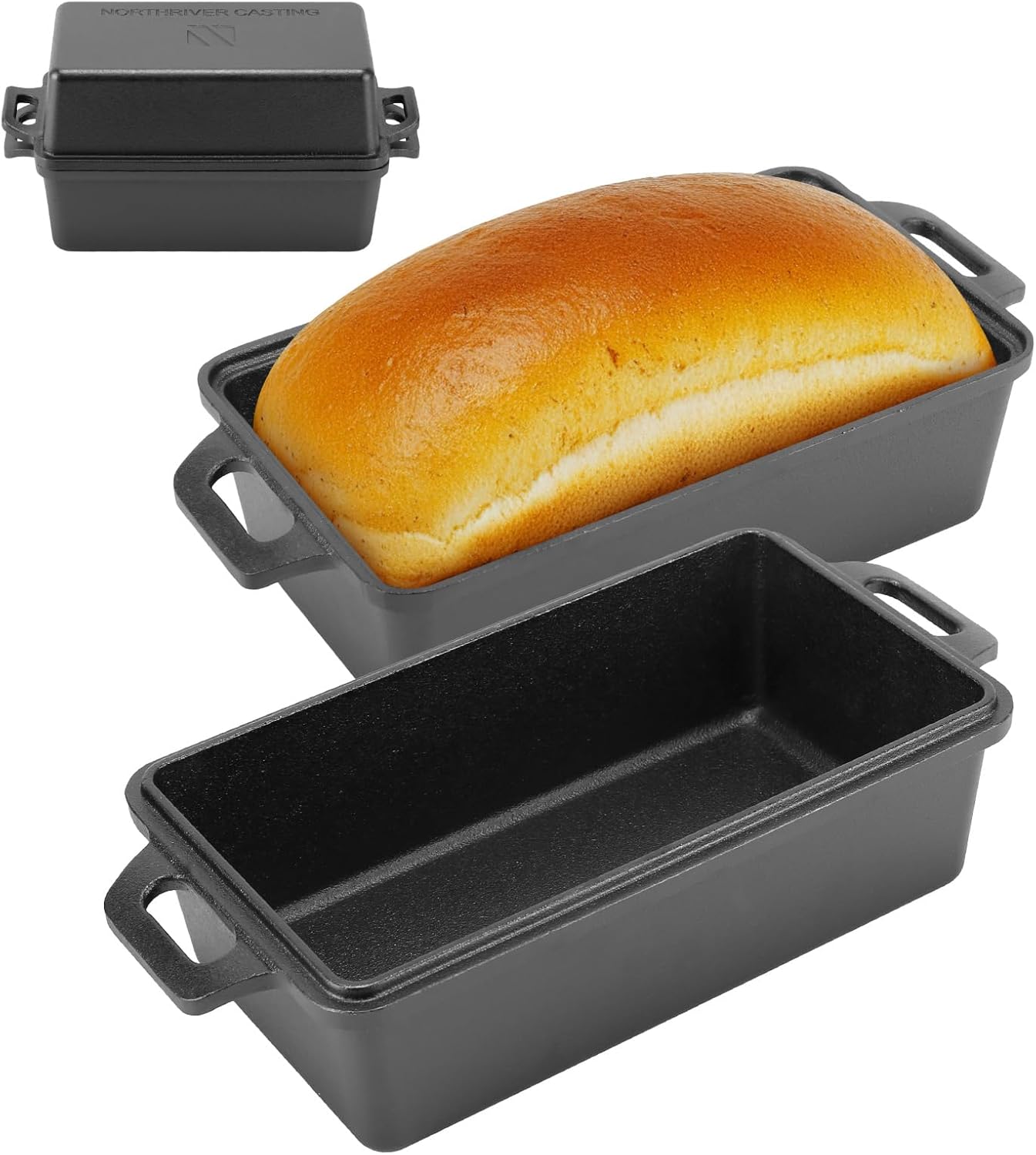
Many cast iron bread pans feature a versatile two-in-one design where the lid doubles as a secondary baking surface or a shallow open skillet. This configuration allows you to trap internal steam effectively during the first phase of baking, closely mimicking a professional steam-injected oven. Trapping this moisture is essential for developing a shiny, blistered crust on artisan sourdough.
When the lid is removed halfway through the cooking cycle, the exposed loaf receives direct radiant heat to brown the crust evenly across all sides. Assessing how the lid rests on the base helps ensure a tight seal for moisture retention. Look for integrated handles or secure grips on both matching pieces to manage the hot components safely.
Handling Heat Sources and Temperature Limits
Cast iron cookware is universally renowned for high heat tolerance, frequently rated safely up to five hundred degrees Fahrenheit for intense baking and roasting tasks. This high temperature threshold allows you to preheat your pan securely inside a blazing hot oven before loading your sticky sourdough dough. Always verify that your chosen pan matches your specific kitchen heat sources.
Some models support gas, electric, induction cooktops, and even outdoor campfires in addition to standard indoor ovens. If you plan to sear or bake across different cooking appliances, check the manufacturer compatibility details thoroughly. Proper heat distribution prevents hot spots, ensuring your bread achieves a uniform crumb structure without burning local sections during the bake.
Maintenance and Cleaning Requirements
Caring for cast iron depends heavily on whether the inner surface features traditional seasoning or a smooth enameled coating. Traditional iron requires careful hand washing, thorough drying, and periodic oil seasoning to maintain its natural non-stick properties over years of regular use. Avoiding dishwashers prevents destructive rust formation and preserves the structural integrity of the seasoned metal cooking surface.
Enameled cast iron simplifies routine cleanup chores by resisting rust and entirely removing the need for oil seasoning steps. However, both types generally require gentle hand washing rather than harsh abrasive scrubbing to protect the exterior color finish. Reviewing the manufacturer care instructions helps ensure your bread pan maintains its reliable performance across countless baking sessions.
Storage and Ergonomic Considerations
Storing heavy cast iron cookware safely requires evaluating your available cabinet shelf space and weight capacity limitations. Some loaf pan sets feature an intelligent space-saving stackable design where the lid rests neatly on top of the base, reducing the overall footprint inside crowded kitchen cupboards. Measuring your storage area beforehand prevents placement issues with bulky cookware.
Ergonomics play a major role when transferring heavy pans filled with wet dough into a hot oven environment. Look for curved handles or integrated side grips that provide a secure hold when wearing thick protective oven mitts. Thoughtful handle placement ensures you can maneuver the heavy cookware securely without losing your grip during kitchen baking sessions.
Frequently asked questions
Do I need to preheat a cast iron loaf pan for sourdough bread?
Preheating a cast iron loaf pan is a common practice among home bakers aiming to replicate the intense thermal shock of professional deck ovens. Placing the empty pan into the oven while it heats up helps generate an immediate oven spring when the sourdough dough is loaded inside. However, you must always follow specific manufacturer guidelines regarding preheating limits and thermal shocks. Using heat-resistant mitts is mandatory when handling a preheated cast iron pan to prevent burns.
What is the advantage of a 2-in-1 loaf pan design with a lid?
A dual-function loaf pan features a lid that serves multiple purposes, such as acting as a secondary baking surface or a shallow skillet. During sourdough baking, placing the lid over the base traps the natural moisture released by the fermenting dough. This trapped steam creates a humid environment inside the closed vessel, which is essential for developing a shiny, crispy crust. Removing the lid halfway through allows the loaf to brown evenly.
How do I clean and maintain a traditional seasoned cast iron loaf pan?
Traditional seasoned cast iron loaf pans require hand washing with warm water rather than harsh dishwashing soaps or automatic dishwashers. After washing, you must dry the pan thoroughly using a towel or low heat on a stove burner to prevent rust from forming. Applying a very thin layer of cooking oil while the metal is still warm helps maintain the natural non-stick seasoning layer over time. Proper ongoing care ensures your bread pan performs reliably for years.
Can enameled cast iron loaf pans be used without seasoning?
Enameled cast iron loaf pans feature a smooth vitreous coating that permanently seals the raw iron underneath. Because of this protective layer, enameled pans do not require traditional oil seasoning routines or special drying steps to prevent rust. They offer a naturally smoother release surface out of the box, making cleanup simpler for beginners. You should still avoid metal utensils and harsh abrasive scouring pads to protect the enameled finish from chipping during washing.
Are cast iron loaf pans compatible with induction cooktops and campfires?
Many cast iron loaf pans are engineered to be compatible with a wide variety of heat sources, including gas cooktops, electric burners, induction surfaces, ovens, and even open campfires. This broad compatibility stems from the durable thermal properties inherent in heavy-duty cast iron material. You should always review the manufacturer specifications for your exact pan model to confirm its approved temperature ratings and heating surfaces before taking it outside the traditional kitchen oven.