Appliances · Buying Guide

Best Tools For Fixing Sourdough Not Rising In Oven

Dealing with sourdough not rising in oven can turn an exciting baking day into a frustrating experience for home cooks. Whether your wild yeast starter looks sluggish on the counter or your shaped artisan loaf flattens out during the bake, temperature control and proper baking vessels play massive roles in achieving a successful baking outcome.

Fortunately, specialized kitchen tools can easily solve these common fermentation and baking hurdles. From precision warming bases and insulated proofing boxes to heavy enameled cast iron pots that trap steam, the right equipment helps you overcome cold kitchen drafts so you can achieve a tall rise, a bubbly crumb structure, and a crispy crust every single time.

As an Amazon Associate, StacyLaughs earns from qualifying purchases.

Rossallini Oval Enameled Cast Iron Bread Oven, 2 Quart
#1 Best Overall

Rossallini Oval Enameled Cast Iron Bread Oven, 2 Quart

Sourdough baking requires steady heat distribution and trapped moisture to encourage a strong oven spring. This enameled cast iron oval bread oven features a two-quart capacity designed for a single small to medium loaf. Its tight-fitting domed lid locks in escaping steam during the initial baking phase, helping develop a crisp crust. Weighing approximately 9.5 pounds with the base and lid combined, the heavy construction retains high heat efficiently. The smooth glazed interior resists stains and releases baked loaves cleanly without requiring traditional seasoning steps.

Best for Single loaf baking

Traps steam for crustPreheats to 500 degreesEnameled cast iron bodyCompact for small loavesEven heat distribution
View on Amazon →

What stands out

  • Domed lid securely traps steam early in the baking cycle to support a taller loaf rise and crisp crust.
  • Enameled cast iron material requires no messy seasoning and offers a smooth interior surface for clean bread release.
  • Handles on both the base and lid are angled to provide a secure grip while wearing thick oven mitts.

What to consider

  • The two-quart capacity is strictly sized for one small to medium oval loaf, limiting bakers who want to produce larger family-sized batches at once.
  • Requiring hand washing with warm soapy water means you cannot simply place this heavy cast iron vessel into the automatic dishwasher after baking.
Key specifications
Material Type
Cast Iron
Capacity
2 quarts
Item Dimensions L x W x H
12"L x 6.5"W x 6"H
Maximum Temperature
500 °F
Color
Oyster Grey
Shape
Oval

The practical verdict

This compact enameled cast iron oven suits single bakers looking to capture steam for a better crust on individual oval loaves. Avoid it if you need a high-capacity vessel for baking massive multi-loaf batches simultaneously. The heavy build retains heat effectively up to 500 degrees Fahrenheit, but its modest two-quart size restricts overall baking volume.

#2
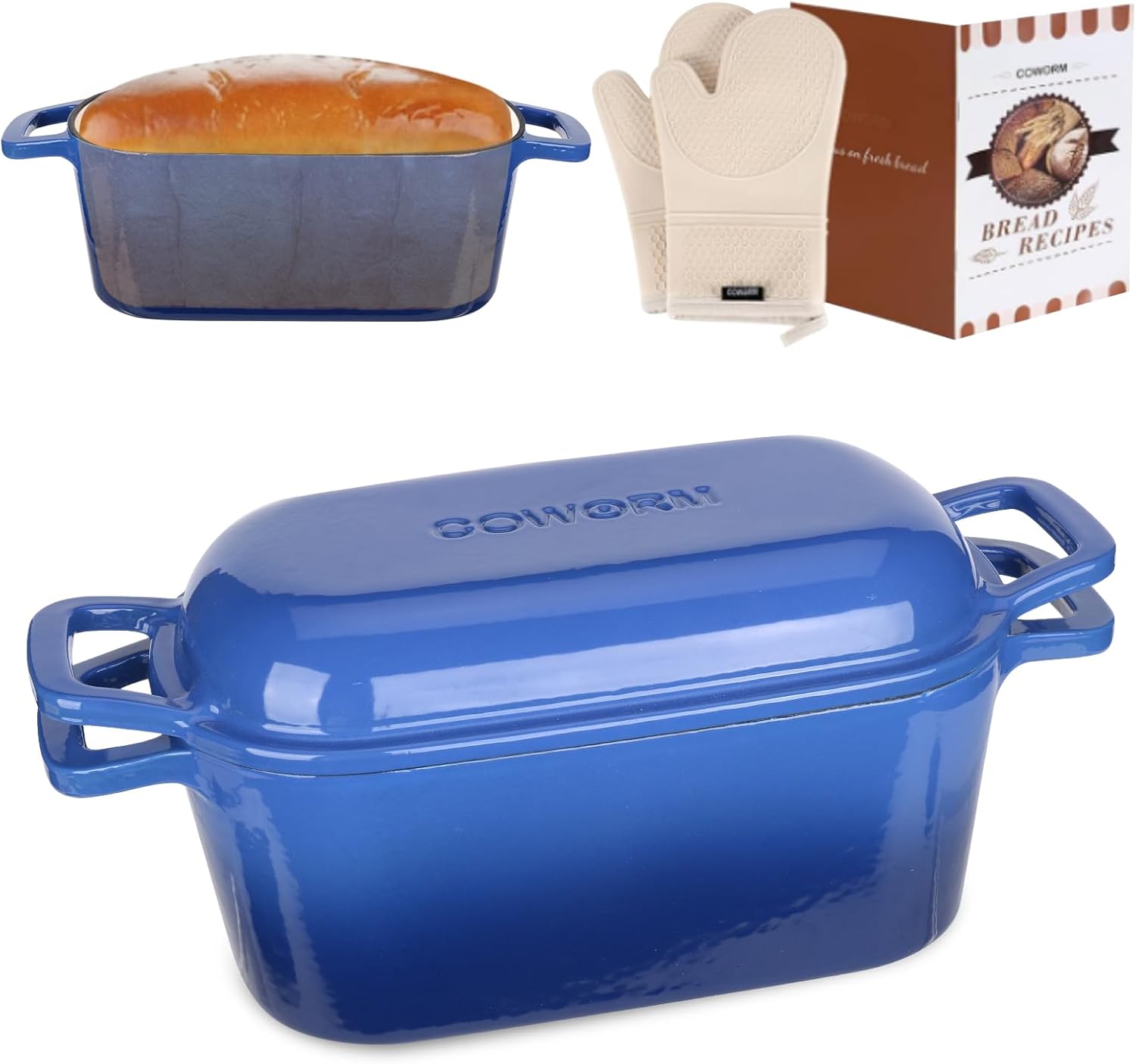
Coworm 3.6QT Enameled Cast Iron Oval Bread Pan
Family Sized Bread Pan

Coworm 3.6QT Enameled Cast Iron Oval Bread Pan

Best for Medium family batch baking

When dealing with flat loaves, managing the internal baking environment helps achieve a proper rise and soft interior texture. This 3.6-quart enameled cast iron bread pan provides extra space for larger homemade sandwich loaves and round artisan creations. The blue-finished exterior adds a decorative touch while the heavy cast iron construction distributes heat evenly across gas, electric, induction, and oven heat sources. A tight-fitting lid traps internal moisture, and the package includes helpful extras like oven mitts and recipes to support your baking routine.

What stands out

  • Generous 3.6-quart capacity accommodates larger homemade sandwich loaves and round artisan sourdough bread styles.
  • Compatible with a wide range of kitchen heat sources including gas, electric, induction, and standard ovens.
  • Included oven mitts and recipe materials provide immediate support for safe handling right out of the box.

What to consider

  • Unlike pre-glazed alternatives, this cast iron pan benefits from an initial pre-seasoning step before first use to establish a natural non-stick surface over time.
  • Weighing down your kitchen routine with hand wash requirements, this vessel must be carefully cleaned with warm soapy water rather than tossed in a machine.
Key specifications
Material
Cast Iron
Capacity
3.6 quarts
Item Dimensions
13.8 x 13.8 x 6 inches
Temperature Rating
500 °F
Product Care Instructions
Hand Wash Only, Oven Safe, Stove Safe, Wipe with Dry Cloth
Color
Blue

The practical verdict

Choose this pan if you want a versatile 3.6-quart vessel capable of handling standard family-sized loaves across multiple stovetop and oven types. Avoid it if you prefer completely maintenance-free glazed interiors that never require initial seasoning. While it delivers even heat and includes starter accessories, remember to wash it by hand to preserve the surface.

#3
Pakusane SourKeeper Sourdough Starter Warmer Pro with Probe
Starter Temperature Prober

Pakusane SourKeeper Sourdough Starter Warmer Pro with Probe

Best for Precise starter fermentation

Maintaining precise culture warmth is essential when your sourdough starter refuses to bubble or rise properly on the counter. This compact warming device features a built-in stainless steel probe that inserts directly into your dough or starter jar to measure core temperature rather than ambient room air. Offering degree-by-degree temperature settings from 70 to 110 degrees Fahrenheit, it includes an auto-warming switch and a 24-hour timer. The sleek walnut finish sits neatly beneath various glass fermentation vessels and mason jars on your kitchen counter.

What stands out

  • Stainless steel probe measures core temperature directly inside the sourdough starter rather than relying on general room air readings.
  • Adjustable temperature settings range from 70 to 110 degrees Fahrenheit to accommodate different ambient kitchen conditions.
  • Built-in 24-hour timer and auto-warming switch give you continuous control over the fermentation environment.

What to consider

  • The compact 6.5-inch square base footprint accommodates individual jars and containers, but it cannot support large proofing baskets or multiple bulk batches at once.
  • Constructed primarily from plastic with a walnut finish, it functions strictly as a warming base rather than an enclosed, insulated proofing chamber.
Key specifications
Item Dimensions L x W x H
6.5"L x 6.5"W x 0.98"H
Upper Temperature Rating
110 °F
Lower Temperature Rating
70 °F
Maximum Temperature
110 °F
Material Type
Plastic
Color
Walnut

The practical verdict

This tool fits home bakers struggling with cold kitchen temperatures that slow down starter activity. Avoid it if you need a fully enclosed box to hold large proofing baskets and bulk dough bowls simultaneously. By measuring core warmth directly, it removes guesswork from maintaining active sourdough cultures.

#4
XPLI Folding Bread Proofing Box with Temperature Control
Multi-Zone Proofing Box

XPLI Folding Bread Proofing Box with Temperature Control

Best for Foldable bulk dough rising

Dough that fails to rise often suffers from chilly drafts and inconsistent room temperatures during bulk fermentation. This folding bread proofing box utilizes three separate heating zones positioned at the front, back, and bottom to deliver rapid, even warming across your dough container. You can adjust the internal temperature from 50 to 113 degrees Fahrenheit and set timers up to 48 hours. Built with an Oxford fabric exterior, insulated cotton middle layer, and aluminum foil lining, it collapses flat for easy storage when not in use.

What stands out

  • Three independent heating zones provide even and rapid warming across the front, back, and bottom of the chamber.
  • Foldable design allows the unit to collapse quickly for clutter-free storage in compact kitchen spaces.
  • Insulated layers constructed with Oxford fabric and aluminum foil help maintain a stable internal temperature efficiently.

What to consider

  • The rectangular interior is sized specifically to fit standard proofing bowls and starter jars, meaning you cannot stack multiple large containers inside.
  • Constructed with flexible fabric and insulation layers, it requires careful handling during setup and folding compared to rigid countertop appliances.
Key specifications
Item Dimensions D x W x H
11"D x 15"W x 11"H
Material Type
Polyester
Recommended Uses For Product
Bread
Additional Features
Adjustable Temperature, Foldable, Timer
Color
Beige
Shape
Rectangular

The practical verdict

Ideal for bakers needing a dedicated, temperature-controlled environment to rescue sluggish dough from cold kitchen drafts. Avoid it if you require a rigid, permanent appliance housing multiple stacked tiers for high-volume commercial baking. Its foldable textile build and clear viewing window offer convenient performance for home kitchens.

#5
GIYUDOT Folding Bread Proofing Box with 36L Capacity
Spacious Dough Proofer

GIYUDOT Folding Bread Proofing Box with 36L Capacity

Best for High capacity dough proofing

Stable proofing conditions prevent frustrating baking failures caused by cold ambient air slowing down yeast and bacteria activity. Featuring an accurate NTC temperature sensor and three heating zones, this spacious bread proofer maintains a steady climate between 50 and 113 degrees Fahrenheit. The 36-liter interior accommodates multiple dough batches and standard proofing baskets, while a transparent acrylic viewing window lets you monitor progress without opening the lid. Constructed with five insulation layers, it also includes a stainless steel shelf and a humidor for versatile fermentation tasks.

What stands out

  • Generous 36-liter interior capacity easily accommodates multiple dough batches and standard proofing baskets at the same time.
  • Accurate NTC sensor continuously monitors internal air temperature to maintain stable and consistent fermentation conditions.
  • Transparent acrylic viewing window allows you to check dough progress without releasing warm air from the box.

What to consider

  • The multi-layered insulated fabric structure requires dedicated counter or storage space even though the interior holds large batches.
  • Operating with electronic temperature controls and internal heating zones means you must plug the unit into a nearby power outlet during use.
Key specifications
Wattage
65 watts
Control Type
Smart Controller
Temperature Range
50-113 °F
Capacity
36 liters
Item Dimensions D x W x H
11.8"D x 15.7"W x 11.8"H
Material
Polyester, Oxford Fabric, Acrylic, Polypropylene, Insulation Cotton

The practical verdict

This spacious proofer suits bakers handling multiple fermentation projects who need precise temperature stability to overcome cold environments. Avoid it if you lack counter space or prefer simple, non-electric proofing methods. With its included stainless steel shelf and humidor, it delivers reliable warmth for sourdough, yogurt, and pizza dough.

Buying guide

Managing Sourdough Fermentation Temperatures

Sourdough relies heavily on active wild yeasts and beneficial bacteria that thrive within specific warmth ranges. When a kitchen drops below sixty degrees Fahrenheit, these natural microbes slow down dramatically, causing flat loaves and disappointing oven spring during baking. Establishing a controlled thermal environment keeps your sourdough starter active and ready for successful baking sessions throughout the entire year.

Investing in specialized warming tools helps eliminate the guesswork associated with fluctuating room conditions. Whether you use a compact base heater with a core temperature probe or an insulated proofing box, maintaining stable warmth between seventy and eighty degrees ensures reliable bulk fermentation every single day without unexpected setbacks or frustrating flat results.

Selecting the Right Baking Vessel Size

Choosing a baking vessel that matches your dough batch size is critical for achieving a proper vertical rise in the oven. Smaller enameled cast iron pots hold heat efficiently around single individual loaves while trapping essential moisture. Selecting a container that closely matches your recipe volume prevents the proofed dough from spreading outward instead of rising upward.

Larger households or bakers producing bigger sandwich loaves require higher-capacity pans to avoid structural crowding during the final bake. Always check internal dimensions alongside total volume ratings before purchasing your cookware. Matching your equipment to your typical batch size ensures your sourdough develops a magnificent crispy crust and an exceptionally airy crumb structure every time.

Controlling Steam and Heat Retention

Steam plays a fundamental role in helping sourdough expand fully before the outer crust hardens in the oven. Heavy enameled cast iron cookware featuring tight-fitting domed lids effectively traps moisture released from the baking dough. This trapped environment keeps the dough surface flexible, allowing for maximum oven spring and a shiny, blistered crust.

Heavy construction also ensures that high temperatures remain steady throughout the entire baking cycle. When you preheat your heavy Dutch oven to five hundred degrees Fahrenheit, it delivers intense bottom and side heat to the loaf. This thermal mass prevents temperature drops when cold dough enters the chamber, supporting consistent artisanal results.

Utilizing Temperature Probes for Starters

Monitoring ambient room temperature often fails to reveal the true thermal state inside a dense jar of sourdough starter. Advanced warming devices equipped with stainless steel probes measure the core temperature directly inside the fermenting culture instead of just checking the surrounding air. This direct approach provides accurate data, ensuring your wild yeast population remains active.

Precise degree adjustments let you fine-tune the environment to match specific recipe requirements or seasonal weather shifts in your kitchen. By preventing your starter from becoming too cold or overheating, you maintain optimal microbial health day after day. This meticulous control translates directly into vigorous fermentation activity and prevents frustrating flat baking failures.

Optimizing Folding Proofing Box Capacity

Proofing boxes with foldable designs offer exceptional convenience for home bakers who have limited kitchen storage space. These collapsible units assemble quickly to provide a dedicated, insulated chamber for bulk fermentation tasks. Selecting a model with sufficient internal capacity ensures you can comfortably fit your favorite proofing baskets without cramping the rising sourdough dough.

Look for features such as multiple heating zones and transparent viewing windows that let you observe progress without disturbing internal warmth. A well-designed proofer maintains a steady climate even when placed in chilly pantries or cool countertops. This flexibility helps your sourdough achieve a consistent, bubbly rise regardless of outside weather conditions.

Maintenance and Care for Baking Equipment

Proper cleaning and maintenance practices extend the lifespan of your specialized bread-making gear and cookware. Enameled cast iron vessels require gentle hand washing with warm soapy water rather than harsh automatic dishwasher cycles. Following manufacturer cleaning guidelines protects glazed interior surfaces from unnecessary damage while preserving cooking performance over years of reliable kitchen service.

Fabric proofing boxes and electronic warming bases also benefit from simple routine care, such as wiping down waterproof interior linings after each use. Storing collapsible equipment completely dry prevents moisture accumulation and material degradation over time. Taking time to properly care for your tools guarantees they remain ready to rescue your baking routine.

Frequently asked questions

Why does my sourdough starter fail to bubble or rise on the counter?

Sourdough starters often fail to bubble or rise when the ambient kitchen temperature drops too low for wild yeasts and beneficial bacteria to remain active. Cooler environments slow microbial fermentation significantly. Using a dedicated starter warming base equipped with a core temperature probe allows you to monitor and adjust the warmth precisely between seventy and one hundred ten degrees Fahrenheit, keeping your culture lively and preventing flat baking results.

How does a baking vessel help fix a sourdough loaf that refuses to rise in the oven?

A proper baking vessel traps the moisture evaporating from your dough during the first part of the bake. Heavy enameled cast iron pots feature tight-fitting domed lids that capture this steam, creating a humid environment that keeps the crust flexible. This trapped steam allows the loaf to expand fully before the outer layer hardens, resulting in a taller rise and a crisp, golden crust instead of a dense, flat bread.

Can a proofing box rescue dough that is struggling with cold room temperatures?

Yes, a proofing box provides a controlled, insulated environment that shields your dough from chilly kitchen drafts. Models featuring multiple heating zones and accurate temperature sensors deliver even warmth throughout bulk fermentation. By setting the unit between fifty and one hundred thirteen degrees Fahrenheit, you maintain the ideal thermal conditions needed for slow yeast to multiply, helping your bread achieve a proper, bubbly rise every time.

Is initial seasoning required for enameled cast iron sourdough bread pans?

Some enameled cast iron pans feature smooth glazed interiors that require zero seasoning and resist stains right out of the box. However, certain traditional cast iron bread pans recommend an initial pre-seasoning step before your first bake to help build up a natural non-stick surface over time. Always check the specific manufacturer instructions provided with your cookware to determine the correct preparation and maintenance steps required for your specific model.

What is the best way to clean and store enameled cast iron baking pots?

Enameled cast iron baking pots should always be washed by hand using warm soapy water and a soft brush to protect the glazed surface. Avoid placing them in automatic dishwashers, as harsh detergents can dull the exterior finish. After washing, dry the pot thoroughly before storing it in a cabinet. Proper drying prevents moisture retention and keeps your heavy-duty baking vessel in top condition for your next sourdough baking session.

Final thoughts

Overcoming baking failures related to sourdough not rising in oven comes down to managing temperature and moisture correctly throughout every stage. By investing in dedicated proofing boxes, starter warmers, or heat-retaining cast iron vessels, you can completely transform your baking results and eliminate frustrating guesswork from the process.

Carefully review your kitchen setup, typical batch sizes, and ambient room conditions to choose the exact tools that best fit your personal baking style. With proper maintenance and the right equipment, you will enjoy consistent, beautiful loaves featuring professional crusts and airy, well-risen textures.