Appliances · Buying Guide
Best Sourdough Fermentation Trackers and Bulk Tracking Tools
Managing sourdough bulk fermentation requires careful observation of dough rise and temperature changes throughout the active baking process. Whether you rely on visual percentage scales in narrow tracking tubes or precise temperature controls on dedicated warming bases, having the right equipment makes monitoring your dough much easier during every single baking session you undertake at home.
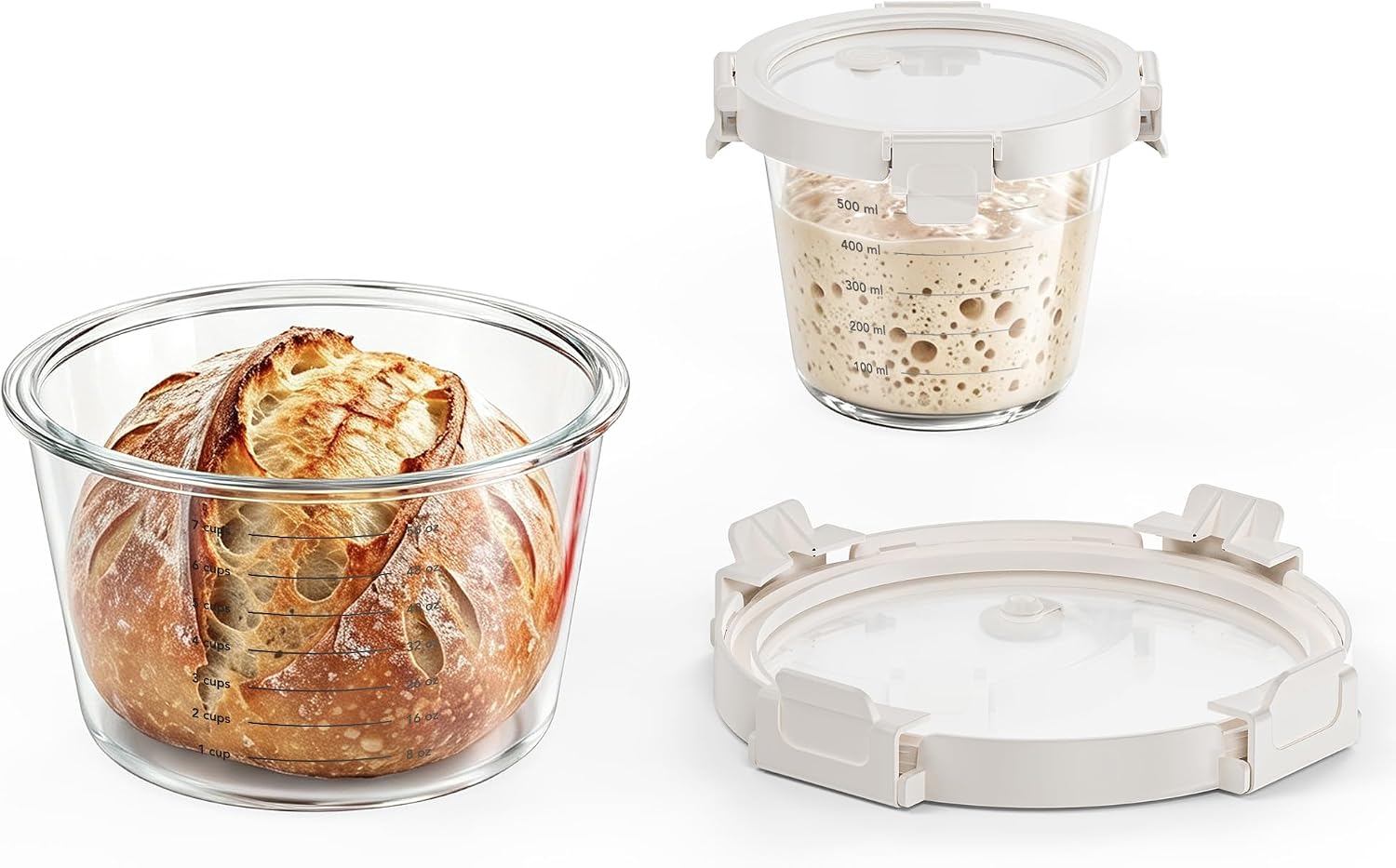
Different baking setups call for specialized tools, ranging from compact aliquot tubes that track percentage rise to warming bases and multi-size borosilicate glass containers. Exploring these options helps you select practical gear for your specific kitchen routine and baking preferences without relying entirely on simple guesswork or basic timers.
As an Amazon Associate, StacyLaughs earns from qualifying purchases.
Buying guide
Choosing Fermentation Tracking Methods
Selecting the right tool for bulk fermentation depends on whether you prefer observing a small sample in a narrow tube or managing your entire dough batch in a large glass container. Visual percentage scales help you track rise progress accurately without relying solely on casual observation or basic kitchen timers during busy baking sessions at home.
Aliquot jars allow you to isolate a tiny portion of dough to watch it expand, providing a clear reference alongside ambient kitchen temperature and dough appearance. This specific method works very well for home bakers who want precise visual milestones for shaping or chilling their dough without constant guessing or uncertainty.
Understanding Borosilicate Glass Durability
When selecting containers for feeding starter and proofing dough, material durability matters greatly for daily kitchen tasks and frequent baking sessions at home. Borosilicate glass handles temperature fluctuations significantly better than standard glass types, making it suitable for transitioning between warm proofing spots, refrigerators, and routine cleaning cycles without unnecessary stress on the material.
Clear glass walls also let you closely monitor starter bubbles, yeast activity, and batter consistency in real time during active fermentation stages. Choosing heat-safe containers provides extra versatility if you need to warm liquids or bake directly in the vessel after removing any airtight lids during your everyday bread preparation routine.
Managing Temperature During Proofing
Ambient kitchen temperatures often fluctuate significantly throughout the day, making it quite challenging to achieve consistent rise times for your sourdough starter and bulk proofing dough loaves. Utilizing specialized warming bases equipped with adjustable temperature settings helps maintain steady warmth regardless of seasonal weather changes or cool drafts present in your home kitchen.
Devices featuring integrated stainless-steel probes measure core temperature directly inside the dough rather than just relying on surrounding air warmth. This direct internal measurement gives you highly reliable data for controlling fermentation speed and ensuring repeatable baking results batch after batch without relying entirely on simple kitchen guesswork.
Selecting Proper Container Capacity
Matching container capacity to your specific baking volume keeps kitchen counters organized and prevents accidental messy overflows during active fermentation stages in your kitchen. Smaller jars work exceptionally well for feeding a modest amount of sourdough starter, while larger bowls comfortably accommodate extensive batch mixing and heavy dough expansion during proofing sessions.
Carefully evaluating your typical recipe batch size helps you choose between compact aliquot tracking tubes and multi-quart mixing vessels for daily kitchen use. Selecting appropriately sized containers ensures your rising dough has adequate room to expand without crowding your refrigerator shelves or limiting your available countertop food prep areas.
Cleaning and Maintenance Protocols
Maintaining your fermentation gear requires regular cleaning routines to remove sticky dough residue and prevent flour buildup on printed percentage measuring scales. Following manufacturer care instructions, such as hand washing delicate glass tubes carefully or utilizing included cleaning rods and brushes, keeps your equipment functioning properly over many baking cycles at home.
Ensuring all silicone seals, vacuum pumps, and borosilicate glass components are thoroughly washed and dried promptly after each baking session prevents stubborn residue accumulation on surfaces. Proper maintenance preserves the visibility of percentage markings on tracking tubes and protects your long term investment in specialized bread baking tools for everyday use.
Enhancing Precision in Baking Routines
Carefully combining visual fermentation trackers with structured glass mixing containers helps you build a reliable daily routine that reduces baking guesswork significantly across batches. Data driven monitoring methods allow you to observe exact rise percentages and core temperatures, supporting consistent loaf development regardless of seasonal environmental variations present in your kitchen space.
Adopting these specialized baking accessories simplifies the crucial transition from bulk fermentation to shaping and final baking stages in your routine. Whether you regularly bake traditional sourdough loaves or enriched doughs like brioche, precise tools give you much better control over your final bread results batch after successful baking batch.
Frequently asked questions
How does an aliquot jar help with bulk fermentation?
An aliquot jar allows you to isolate a small sample of your dough in a separate, scaled tube while your main batch proofs. Because the small sample expands at the same rate as the main dough, you can read the percentage scale to track rise levels accurately. This visual reference helps you determine the exact moment your dough reaches its target expansion before shaping or chilling, removing the need for guesswork or relying entirely on elapsed time alone during your baking preparation routine.
Can I use borosilicate glass containers for baking?
Borosilicate glass containers are designed to handle temperature fluctuations significantly better than standard glass types, making them safe for microwave and oven use after you remove the airtight plastic or glass lids. You can use them comfortably for feeding your sourdough starter, mixing ingredients, and proofing bulk dough. However, you must always verify specific manufacturer guidelines regarding temperature limits and remember to remove airtight lids before placing containers into a hot oven during your baking process.
Why is monitoring core dough temperature important?
Core temperature directly influences how fast yeast and bacteria ferment your sourdough starter and proofing dough. Ambient air temperatures in a kitchen do not always reflect the actual warmth inside a dense mass of fermenting dough. Using a specialized warming base with a stainless steel probe allows you to measure and control the internal temperature directly. This precise thermal management ensures consistent fermentation speeds and predictable baking outcomes regardless of seasonal weather changes in your home environment.
How do I clean narrow aliquot tracking tubes?
Narrow aliquot tracking tubes require careful cleaning to remove sticky dough residue from their interior walls. Most manufacturers include specialized cleaning brushes or rods designed to reach inside the slim glass structure. You should wash the tube and its components by hand using warm water and mild soap promptly after each use to prevent residue from drying and hardening. Following these cleaning instructions maintains the clarity of percentage scales and keeps your equipment ready for upcoming baking sessions.
What is the benefit of a dual-scale fermentation tracker?
A dual-scale fermentation tracker features two separate gradients on a single glass tube, such as a standard percentage scale alongside a higher-resolution B-series scale. This design accommodates different sample sizes and provides finer increments for tracking dough expansion. It is especially useful when your recipe requires strict adherence to specific rise targets, helping both beginners and experienced bakers maintain consistent quality and avoid over-proofing or under-proofing their bread across multiple batches.