Appliances · Buying Guide
Best Solutions When Your Sourdough Starter Stopped Rising
When a sourdough starter stopped rising, kitchen temperature fluctuations and cold drafts are frequently the underlying cause. Traditional kitchen counters and unheated cupboards rarely maintain the steady, gentle warmth that wild yeast and beneficial bacteria require for active daily fermentation. Introducing dedicated warming equipment helps restore predictable bubbling activity and reliable schedules.
Selecting the right thermal device depends on whether you need direct jar temperature probes, compact heating mats, or fully enclosed proofing boxes with viewing windows. Temperature-controlled accessories allow home bakers to manage fermentation environments precisely, bypassing cold winter rooms, seasonal drops, or air-conditioned spaces that stall standard dough expansion and disrupt regular feeding routines entirely.
As an Amazon Associate, StacyLaughs earns from qualifying purchases.
Buying guide
Temperature Range and Precision Control
Maintaining an exact thermal environment is vital when a sourdough starter stopped rising due to seasonal chills or unheated kitchen counters. Look for equipment offering degree-by-degree temperature adjustments rather than broad, generalized dials. Precise calibration ensures wild yeast and beneficial bacteria remain active without accidentally overheating delicate microbial cultures during long fermentation cycles.
Devices spanning calibrated ranges from 50 to 130 degrees Fahrenheit give home bakers maximum operational flexibility for diverse sourdough tasks, pizza doughs, and extended cold ferments. Evaluating your typical kitchen ambient baseline helps determine whether you require gentle baseline surface warmth or robust multi-stage heating capabilities to successfully conquer persistent winter drafts and cold rooms.
Enclosure Style and Spatial Capacity
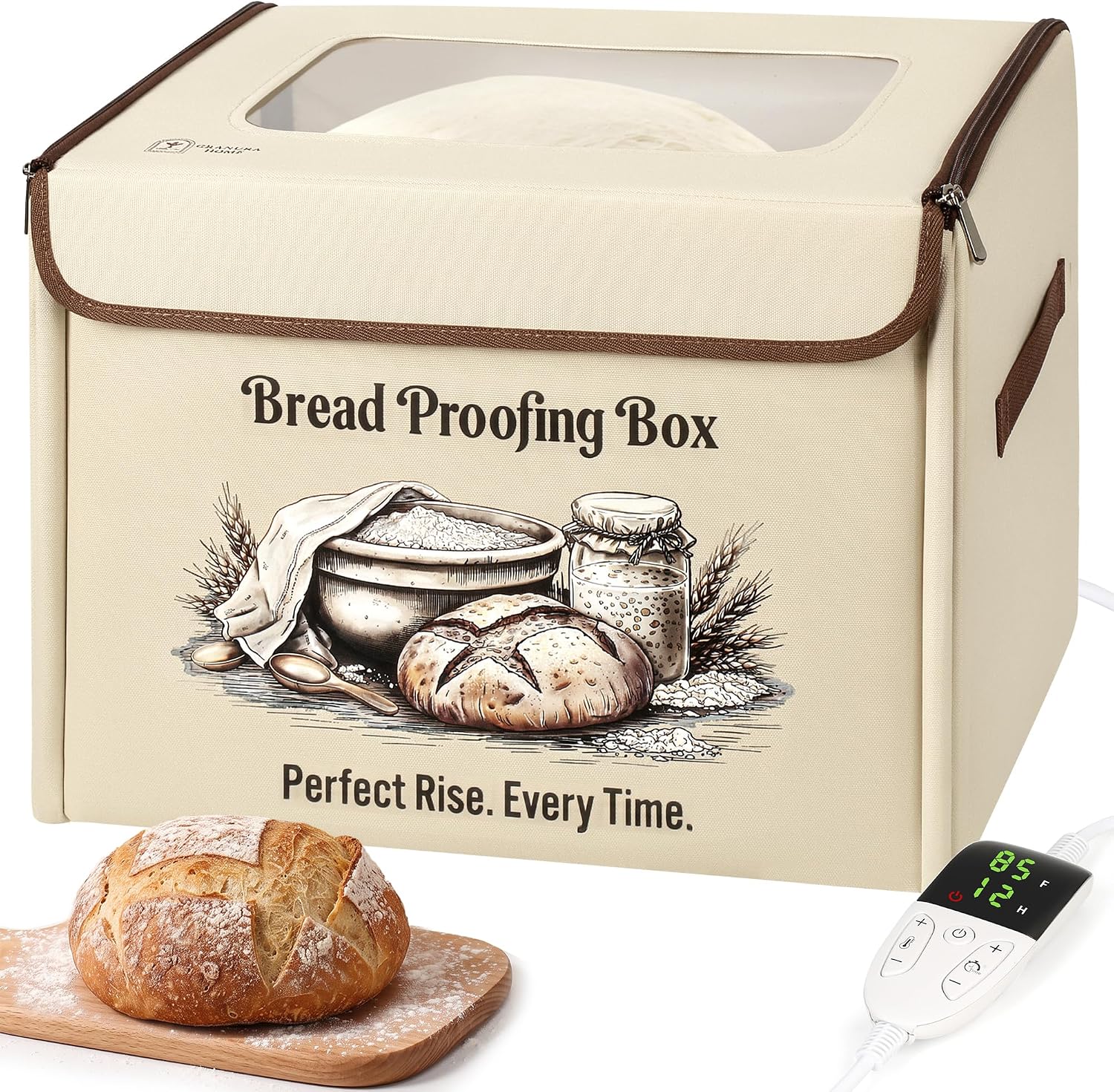
Choosing between an open heating mat and a fully enclosed proofing box depends heavily on your kitchen counter layout, storage availability, and typical baking batch size requirements. Enclosed chambers trap warm air effectively, shielding your fermenting jars and dough bowls from sudden kitchen drafts, open windows, and localized temperature drops that typically stall active yeast development.
Compact heating mats slip easily underneath existing mixing bowls and single mason jars without requiring dedicated permanent storage space or complex assembly steps. Meanwhile, larger folding proofing boxes accommodate multiple bannetons and tall jars simultaneously, making them ideal for dedicated home bakers who routinely handle heavy baking schedules or larger family-sized artisan bread batches.
Timer Options and Automation
Managing fermentation schedules becomes significantly easier when your heating device includes automated digital timing functions and reliable safety shut-off mechanisms. Built-in timers allow you to safely initiate bulk fermentation before bedtime or departure for work without worrying about accidentally overheating your valuable sourdough starter during unsupervised overnight hours or busy daily routines.
Operational choices range from short six-hour cycles to extended 24-hour, 48-hour, or continuous operating modes designed specifically for long cold ferments and multi-day starter upkeep routines. Selecting a thermal device with proper timer versatility ensures your dough reaches its peak expansion on a predictable schedule every single time without requiring constant manual oversight from the baker.
Monitoring and Probe Capabilities
Observing your sourdough starter without releasing trapped heat is a major practical advantage when troubleshooting a stubborn non-rising batch in a chilly kitchen room. Transparent lids, clear acrylic viewing windows, and built-in humidity gauges let you check fermentation progress instantly without disrupting internal thermal stability or letting cold ambient drafts inside the chamber.
Advanced warming models even integrate specialized stainless-steel internal probes that measure the exact core temperature of the fermenting dough directly rather than just evaluating the surrounding ambient air temperature. This level of direct data eliminates guesswork and ensures your starter environment stays perfectly balanced for maximum wild yeast activity and reliable rising results.
Material Quality and Storage Convenience
Kitchen appliances should be easy to store and maintain, especially when dealing with sticky dough residues and regular sourdough starter overflow incidents during daily feeding routines. Foldable proofing boxes constructed from durable Oxford fabric, polyester, or food-grade silicone collapse flat quickly for convenient drawer or cabinet storage when the equipment is not in active use.
Removable electric heating units and dishwasher-safe components significantly simplify routine cleanup tasks after messy baking sessions and regular daily starter maintenance routines. Choosing models equipped with waterproof interior linings ensures accidental liquid spills wipe clean effortlessly, maintaining a hygienic and sanitary environment for all your sensitive fermented creations over the long term.
Versatility Beyond Bread Baking
Investing in a reliable thermostatic warming device offers practical benefits that extend far beyond solving a stubborn non-rising sourdough starter in a cold winter kitchen environment. Many dedicated proofing boxes and heated mats effortlessly double as functional thermal environments for safely culturing homemade yogurt, kefir, kombucha, and tempeh at precise target temperatures.
Gentle controlled warmth also effectively supports various household kitchen tasks like thawing frozen meat, gently warming breakfast items, or proofing delicate pizza dough and enriched sandwich rolls. Choosing a versatile multi-purpose fermentation tool maximizes your overall kitchen equipment investment by handling diverse daily warming needs all year round without requiring separate specialized countertop gadgets.
Frequently asked questions
Why did my sourdough starter stopped rising in the winter?
Wild yeast and beneficial bacteria experience a significant slowdown in metabolic activity when ambient room temperatures drop below optimal levels. Cold kitchen counters, unheated rooms, or seasonal drafts cause fermentation to stall entirely, making the starter appear flat and lifeless. Introducing a controlled thermal heat source such as a proofing mat, warming base, or regulated proofing box restores the stable temperature range required for active gas production and reliable daily rising schedules.
How does temperature control help revive a sluggish starter?
Precise temperature control eliminates the guesswork associated with traditional room-temperature or oven-light proofing methods. By maintaining a steady warmth within the ideal microbial activity zone, these specialized devices accelerate fermentation and encourage consistent gas bubble formation. Whether utilizing a direct core temperature probe or a three-sided surround heating enclosure, maintaining a consistent thermal environment allows wild yeast cultures to metabolize flours efficiently and resume their normal rising patterns.
Can I use a proofing box for things other than sourdough?
Yes, thermostatic proofing boxes and heated mats are highly versatile kitchen appliances suitable for a wide variety of cultured foods and general warming tasks. The exact temperature settings that revive a sluggish sourdough starter can also be used to culture homemade yogurt, kefir, kombucha, and tempeh. Furthermore, these heated enclosures provide a reliable, gentle environment for thawing frozen meat, warming breakfast items, or proofing pizza dough and enriched sweet rolls.
What is the advantage of a core temperature probe for a starter?
A stainless-steel core temperature probe measures the actual internal temperature of the fermenting starter rather than simply monitoring the surrounding ambient air inside a room or enclosure. This direct measurement ensures that your microbes experience the exact thermal conditions you set, preventing overheating or under-warming caused by jar thickness or ambient drafts. It removes uncertainty from daily feeding routines and delivers consistent fermentation results across various seasons and kitchen conditions.
How do I clean and maintain my sourdough warming equipment?
Maintenance requirements vary by model, but most fabric or silicone proofing boxes feature waterproof interior linings that allow accidental spills and starter overflows to be wiped clean effortlessly. Folding fabric enclosures should be spot cleaned carefully according to manufacturer guidelines. Silicone components and stainless steel racks are often dishwasher safe once any electrical heating units or removable control modules are detached, ensuring a hygienic storage space.