Appliances · Buying Guide
Best Sourdough Starter Warming Box for Consistent Bread Fermentation
Baking artisan bread at home requires careful attention to ambient temperatures, especially when keeping yeast cultures active during cooler months. A dedicated sourdough starter warming box takes the guesswork out of fermentation by offering controlled environments designed specifically to maintain ideal warmth for wild yeast. Without a stable climate, your dough can become sluggish, leading to inconsistent rises and dense loaves that fail to reach their full potential.
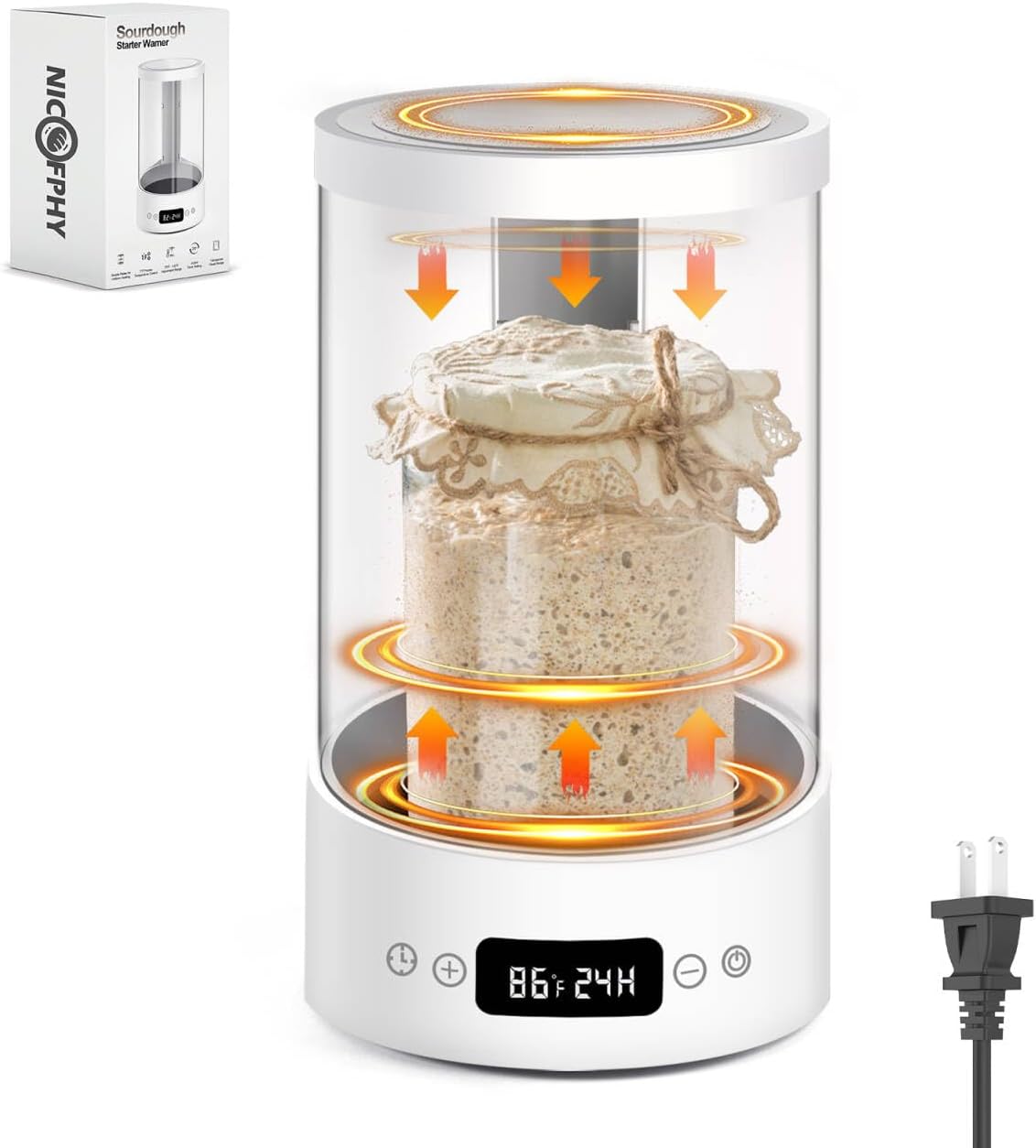
Modern warming devices range from compact mats with glass domes to foldable insulated chambers and dual-zone heating setups. These tools let you monitor core temperatures or adjust degrees precisely to match your baking schedule. Whether you manage a small jar on a crowded counter or need a collapsible unit for diverse baking tasks, choosing the right warming accessory directly impacts your daily baking routine.
As an Amazon Associate, StacyLaughs earns from qualifying purchases.
Buying guide
Evaluating Temperature Control Ranges
Selecting a proper sourdough starter warming box begins with evaluating the precise temperature range offered by the onboard thermostat. Most quality devices operate effectively between fifty and one hundred thirteen degrees Fahrenheit, catering to both slow ambient resting and rapid yeast activation. Having degree-by-degree adjustments allows you to fine-tune warmth for wild yeast development without risking overheating.
Review your kitchen ambient baseline before choosing a model to ensure adequate heating capacity during freezing winter months. Digital sensors and NTC thermostats help maintain this stability by continuously monitoring internal air or core temperatures. Choosing a unit with reliable thermostatic governance prevents erratic fermentation spikes and ensures predictable, repeatable baking schedules regardless of external household weather shifts.
Internal Capacity and Jar Fit
Physical dimensions dictate which fermentation vessels fit safely inside your chosen warming enclosure. While open heating bases accommodate tall or wide containers without restriction, enclosed domes and dedicated climate cubes enforce strict height and width limitations. Measuring your favorite glass mason jars beforehand prevents compatibility frustrations upon delivery.
Ensure the internal clearance accommodates both your jar height and maximum expected rise volume without touching upper heating elements or restrictive covers. Some compact units require specialized narrow jars, whereas foldable proofing boxes offer expansive vertical room for large mixing bowls and multiple starter vessels simultaneously. Balancing your typical batch size with appliance footprint ensures seamless daily integration.
Heating Mechanisms and Thermal Uniformity
Achieving consistent dough fermentation requires understanding how different warming boxes distribute thermal energy across the interior chamber. Dual-zone models incorporate heating plates at both top and bottom positions, utilizing magnetic attraction and conductivity to establish a uniform environment. This setup prevents cold spots that frequently stall wild yeast activity during chilly winter weather conditions.
Single-surface mats rely on upward radiant heat, which works wonderfully when paired with insulated covers or glass domes to trap warmth effectively. Evaluating whether you prefer multi-sided thermal distribution or a direct base heater helps match your preferred baking style and household ambient temperatures. Proper thermal design eliminates guesswork and keeps your culture thriving reliably.
Timing Features and Automation
Built-in timing controls transform a basic heating pad into an intelligent fermentation station that operates safely around the clock. Devices equipped with twenty-four or forty-eight-hour timers allow bakers to automate warm cycles, preventing over-fermentation when schedules run long. Automatic shut-off mechanisms provide essential peace of mind by cutting power if temperatures exceed safe operating thresholds or completion times arrive.
Memory functions further streamline daily workflows by automatically retaining your last used temperature setting. This eliminates repetitive button pressing during routine feedings and guarantees identical warmth across consecutive baking cycles. Assessing these digital conveniences ensures you select a device that aligns with your desired level of hands-on monitoring versus automated reliability.
Storage and Portability Considerations
Kitchen counter space is often at a premium, making the physical footprint of your warming box a vital purchasing factor. Compact acrylic mats and slender glass dome kits take up minimal room, allowing them to sit permanently next to coffee makers or mixers without creating kitchen clutter. Heavy-duty climate cubes occupy slightly more countertop estate due to internal refrigeration components.
Conversely, foldable proofing boxes offer expansive interior volumes for larger baking tasks while collapsing flat into narrow cabinet gaps when storage space is required. Evaluating how frequently you bake versus your available storage capacity guides you toward a permanent countertop fixture or a storable folding chamber that preserves your workflow.
Material Quality and Maintenance
Long-term durability depends heavily on the materials used in constructing the warming base, housing dome, and internal insulation layers. Food-grade plastics, thick tempered glass, and waterproof polyester fabrics ensure robust resistance against accidental flour spills and sticky starter overflows. Selecting smooth, wipeable interior surfaces simplifies routine cleanup routines after active fermentation cycles conclude successfully.
Following manufacturer maintenance guidelines keeps sensitive electronic components functioning safely over years of regular baking use. Checking for stainless steel shelves or protective barriers also safeguards internal heaters from direct dough contact, extending the lifespan of your equipment significantly. Prioritizing quality construction materials ensures your investment withstands messy kitchen environments without deteriorating.
Frequently asked questions
Can I use a sourdough starter warming box for other types of fermentation?
Yes, many warming boxes feature adjustable temperature ranges that accommodate diverse culinary fermentation projects beyond bread dough. You can easily prepare homemade yogurt, set butter, brew kombucha, or proof pizza dough by adjusting the digital thermostat to the recommended temperature for each specific task. This versatility makes temperature-controlled enclosures valuable multi-purpose kitchen appliances for home cooks who enjoy experimenting with fermented foods. However, always verify that your chosen model's temperature ceiling matches the requirements of your specific secondary project before starting.
How do I know if my jar will fit inside an enclosed warming dome?
Enclosed warming boxes and glass domes specify strict interior clearance dimensions, usually limiting jar height to seven inches and diameter between four and four point five inches. Before purchasing a kit, measure your preferred mason glass containers from base to lid to ensure they clear these boundaries. If your jars are too tall, many systems allow you to remove the dome and use the heating base alone, though this sacrifices the enclosed draft-free microclimate. Always check manufacturer specifications carefully to avoid fitting issues.
Do warming boxes consume a lot of electricity during long fermentation cycles?
Sourdough starter warming boxes are engineered for energy efficiency, typically operating on low wattage ranging from twenty to sixty-three watts depending on the heating mechanism size. This low power draw means they consume minimal electricity even when running continuous twenty-four or forty-eight-hour fermentation timers. Devices with automatic shut-off features and advanced insulation further reduce power consumption by maintaining stable internal heat without constantly drawing maximum current. You can run these appliances daily without significantly impacting your household electricity bill.
What is the advantage of using a temperature probe directly inside the dough?
Integrating a stainless steel temperature probe directly into your starter measures the core temperature inside the fermenting mixture rather than merely tracking the surrounding air temperature. Ambient room air can fluctuate significantly, leading to misleading readings, whereas core temperature monitoring provides exact data on how warm your yeast culture actually is. This precision eliminates guesswork, ensuring consistent fermentation speeds and predictable rise times regardless of how drafty or cool your kitchen counter happens to be during baking day.
How should I clean and maintain my sourdough starter warming equipment?
Maintenance routines depend primarily on your device's exterior and interior materials, but most units feature wipeable waterproof surfaces or removable glass domes that simplify cleanup. Always unplug the warming base before cleaning and wipe spills immediately using a damp cloth with mild soap, avoiding abrasive scrubbers that could scratch acrylic or glass components. Follow manufacturer guidelines strictly regarding water exposure around electronic heating plates and control panels to ensure long-lasting performance and electrical safety in your kitchen.