Appliances · Buying Guide
Best Spring Pan For Baking Options To Elevate Your Desserts
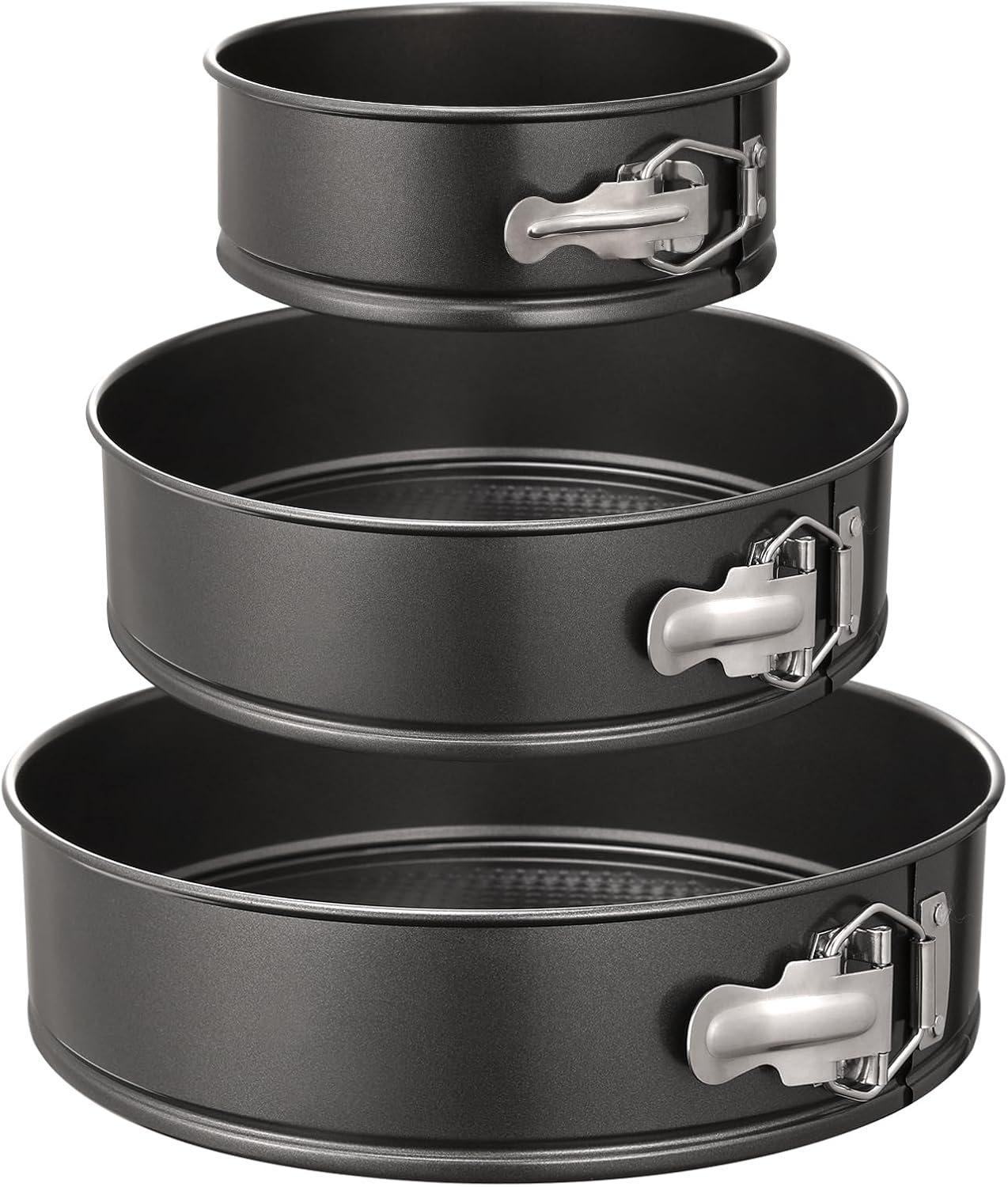
Baking delicate desserts like cheesecakes, frozen mousses, and rich quiches requires specialized equipment that prevents structural damage during release. A reliable spring pan for baking uses a removable collar and secure buckle mechanism, letting you lift the outer ring away cleanly without inverting your favorite delicate creations onto a serving plate. High-quality materials ensure dependable performance across frequent baking tasks.
Whether you prefer a multi-sized set for tiered celebration cakes or a heavy-duty single mold for weekly family treats, finding the right option depends on your specific kitchen workflow. Exploring various carbon steel and aluminized steel models helps you select a dependable tool that distributes heat evenly, withstands high oven temperatures, and simplifies post-baking cleanup.
As an Amazon Associate, StacyLaughs earns from qualifying purchases.
Buying guide
Material Composition and Heat Distribution
Choosing the right spring pan for baking starts with evaluating its core metal material. Carbon steel and aluminized steel dominate the market because they conduct heat rapidly and promote even baking across your favorite recipes. Heavy-gauge metals resist warping under high temperatures, ensuring your pans maintain their structural integrity through years of regular use in busy home kitchens.
While thinner metals heat up very quickly, they may sometimes develop hot spots that cause uneven browning across delicate desserts. Selecting a sturdy, thick construction helps regulate thermal transfer, keeping delicate cheesecakes and quiches cooking uniformly from edges to center without burning sensitive crusts or undercooking creamy fillings.
Latch Mechanisms and Leak Resistance
The defining feature of any springform pan is its side latch and removable collar assembly. A smooth, sturdy stainless steel buckle lets you expand and lock the ring effortlessly, securing dense batters firmly during pouring and baking. Quality latches maintain their spring tension over time, preventing accidental loosening inside hot oven environments during long baking cycles.
While manufacturers design these molds to hold liquid batters securely, certain thin mixtures may require careful handling or parchment paper linings to prevent minor seepage along the base seams. Understanding how the removable base fits snugly against the collar helps you achieve clean releases without ever damaging the delicate structural integrity of your finished baked goods.
Non-Stick Coatings and Surface Safety
Non-stick surfaces are essential for sliding delicate cheesecakes and sticky mousses out of the pan without tearing the crust. Look for modern coatings free from harmful chemicals like PFAS, PFOA, and BPA to ensure safe food contact during high-heat baking sessions. Double-layer non-stick finishes make both cake release and post-baking cleanup significantly faster for busy home bakers.
Protecting this non-stick layer often requires avoiding metal utensils that can scratch or gouge the delicate surface. Using silicone, wooden, or plastic spatulas preserves the coating's longevity, ensuring your pan continues to release food smoothly across countless baking sessions without sticking or losing its protective qualities over extended periods.
Size Options and Recipe Scaling
Selecting the correct pan dimensions depends entirely on the types of recipes you bake most frequently in your kitchen. Standard nine-inch pans accommodate most traditional dessert recipes, while multi-size sets provide incredible versatility for everything from miniature treats to impressive three-tier celebration cakes. Matching your bakeware dimensions to your typical baking volume prevents messy recipe overflow.
If you frequently cook for large family gatherings or enjoy experimenting with different dessert scales, investing in a multi-piece set expands your baking possibilities. Conversely, cooks with limited cabinet space might prefer a single, high-performance mold that handles daily baking tasks without cluttering kitchen storage areas unnecessarily or creating organization challenges.
Temperature Tolerance and Appliance Compatibility
Different baking pans handle maximum oven temperatures differently based on their construction materials and protective coatings. Most carbon steel and alloy steel springform pans safely withstand temperatures up to four hundred or four hundred fifty degrees Fahrenheit, while specialized aluminized steel models can handle up to five hundred degrees for rigorous high-heat baking tasks and specialty recipes.
Furthermore, appliance compatibility varies across models, with certain pans engineered specifically for use inside large pressure cookers, air fryers, or conventional ovens. Verifying that your chosen bakeware matches your preferred cooking appliances ensures safe operation and prevents warping or surface degradation when subjected to intense appliance heat environments over extended periods of time.
Cleaning Maintenance and Accessories
Maintaining the longevity of your springform pan requires carefully following manufacturer care guidelines regarding washing and drying routines. Although some models claim dishwasher safety, hand washing with mild soap is frequently recommended to protect non-stick coatings from harsh automatic detergents and maintain smooth buckle operation over years of frequent dessert preparation tasks.
Additionally, considering bundled accessories like pre-cut parchment paper, silicone water bath protectors, or cake scrapers can significantly streamline your entire baking preparation process. These helpful extras eliminate the need for makeshift aluminum foil wrapping, saving you valuable preparation time and ensuring cleaner, more professional results when baking delicate cheesecakes and layered desserts.
Frequently asked questions
How do I prevent my springform pan from leaking during a water bath?
Preventing leaks during a water bath involves understanding that springform pans have removable bottoms and are not inherently waterproof. While some modern sets include specialized silicone water bath protectors that encase the base entirely, traditional methods often require wrapping the bottom securely in heavy-duty aluminum foil. Additionally, placing parchment paper inside the pan before locking the collar can catch minor seepage. Always inspect your pan buckle and base alignment before pouring thin batters to ensure a snug fit and minimize potential liquid escape.
Should I wash my springform pan in the dishwasher or by hand?
While several manufacturers indicate that their springform pans are dishwasher safe, hand washing is almost universally recommended to preserve the integrity of the non-stick coating. Automatic dishwashers use harsh detergents and high heat that can degrade non-stick surfaces over time and potentially cause corrosion on carbon steel or alloy steel components. Washing your pan gently with warm soapy water and a non-abrasive sponge, followed by thorough drying, ensures your bakeware maintains its smooth release performance and longevity across many years of baking.
What is the best way to release a cheesecake without damaging it?
Releasing a cheesecake successfully starts with letting the dessert cool completely in the pan to allow the structure to firm up properly. Once chilled, run a thin plastic or silicone spatula gently around the interior edge to loosen any clinging crust or filling. Next, unlatch the stainless steel buckle and carefully lift the outer ring straight up and away from the cake base. If your pan includes a removable bottom, you can either leave the cake on the metal disc or carefully slide it onto a serving platter using a spatula.
Can I use a springform pan for recipes other than cheesecake?
Springform pans are exceptionally versatile tools that go far beyond standard cheesecakes. You can use them for baking rich frozen mousses, quiches, lasagna, deep-dish pizzas, coffee cakes, fruit tarts, and multi-layered celebration cakes. Because the removable collar allows you to lift the outer ring away rather than inverting the pan, it is ideal for any delicate recipe where turning the mold upside down would ruin the presentation. This makes springform pans an invaluable addition to both casual home kitchens and professional bakeries alike.
Why is carbon steel a popular material for baking pans?
Carbon steel is widely favored for baking pans because it offers an exceptional balance of strength, durability, and rapid heat conduction. The material heats up quickly and distributes thermal energy evenly across the entire base and sides, ensuring your cakes and pastries bake uniformly without developing scorched spots. Additionally, carbon steel provides high structural rigidity, resisting warping under elevated oven temperatures up to four hundred fifty degrees Fahrenheit. When paired with a quality non-stick coating, carbon steel pans deliver reliable food release and long-lasting kitchen performance.