Appliances · Buying Guide
Best Springform Pan Options for Layered Cakes and Delicate Cheesecakes
Baking delicate desserts like cheesecakes, quiches, towering multi-layered cakes, and frozen treats requires specific kitchen equipment that protects fragile structures during removal. Unlike standard cake pans that demand inversion, a dedicated springform pan utilizes a removable outer collar and a secure latch mechanism to release fragile treats safely and completely intact.
Selecting the right pan involves carefully evaluating material construction, size variations, and thermal conductivity to achieve evenly baked crusts and smooth dessert edges every single time. Whether preparing a single rich dessert for a casual family dinner or a set of scaled tiers for a major gathering, understanding these core baking tools simplifies your everyday kitchen preparation process.
As an Amazon Associate, StacyLaughs earns from qualifying purchases.
Buying guide
Material Construction and Durability
Choosing the right springform pan starts with examining its core material construction. Manufacturers typically use alloy steel, carbon steel, or aluminized steel to build these bakeware items. Carbon steel and aluminized steel offer strong structural integrity and effective thermal conductivity, ensuring your crusts brown evenly. Heavy-gauge metals resist warping over time, providing a reliable foundation for regular baking projects.
Material choice also dictates maximum heat tolerances and cleaning methods. Some models support high oven temperatures up to 500 degrees Fahrenheit, while others top out around 400 or 450 degrees. Reviewing your favorite recipes helps determine which temperature threshold you need. Selecting a robust metal framework prevents structural twisting, ensuring your removable collar fits snugly against the base every time.
Sizing Options and Recipe Scale
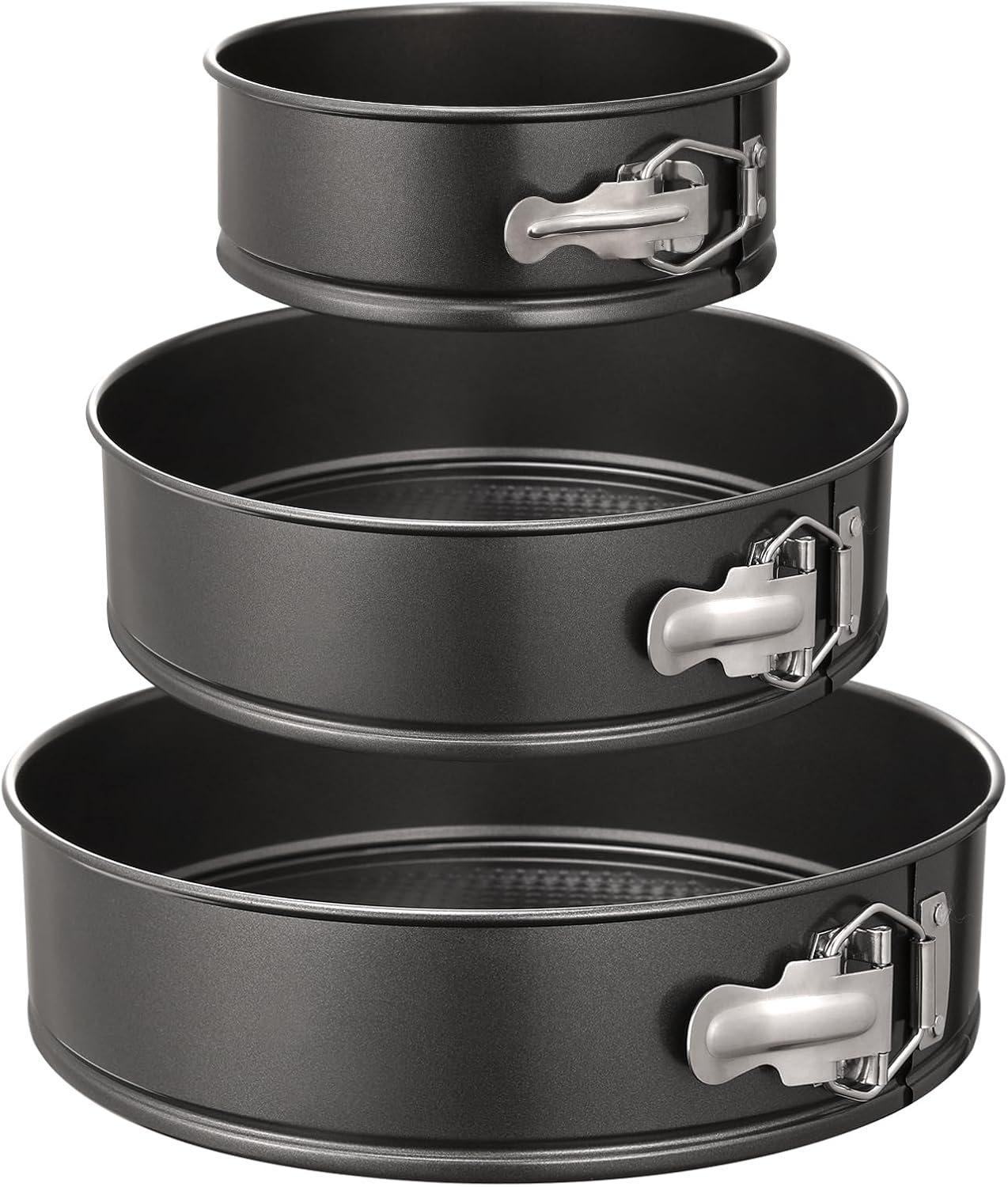
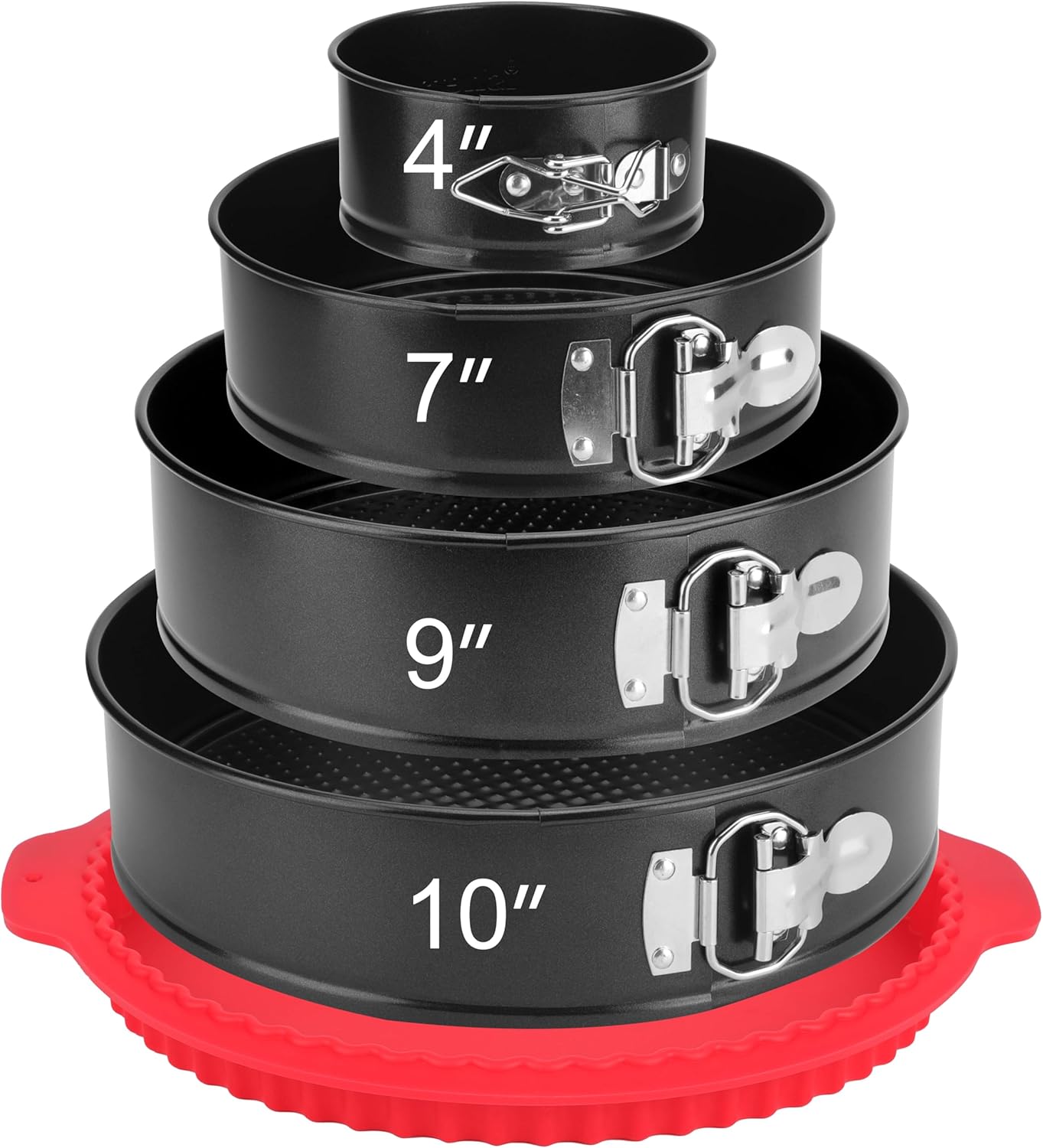
Springform pans come in various diameters, ranging from compact four-inch molds to large ten-inch versions. A standard nine-inch pan accommodates most traditional cheesecake and quiche recipes found in cookbooks. Buying a multi-piece set gives you the flexibility to scale recipes up or down depending on whether you are baking a small treat for two people or preparing a large dessert for a family celebration.
Matching pan dimensions to your typical baking habits prevents overflow and uneven cooking. Smaller pans cook dense batters faster than wide pans, altering baking times significantly. Assessing your standard guest count guides whether a single standard diameter suffices or if a graduated set offers better utility for your household culinary routines and entertaining schedules.
Latch Mechanisms and Release Reliability
The defining feature of any springform pan is its side latch mechanism. A sturdy stainless steel buckle secures the outer collar tightly around the base during mixing and baking. Smooth-operating latches allow you to release the collar effortlessly once the dessert cools down, protecting fragile crusts and smooth edges from cracking or tearing.
Evaluating the durability of the buckle prevents frustrating equipment failures mid-bake. Upgraded steel buckles resist bending and maintain strong tension over repeated uses. A reliable locking mechanism ensures a tight seal against batter leakage, giving you peace of mind when pouring liquid-heavy fillings like custard or soft cheesecake batter into the prepared mold.
Non-Stick Coatings and Cleanup
Non-stick interior coatings simplify the process of removing delicate cakes and desserts without leaving crumbs behind. Double-layer food-grade coatings ensure baked goods slide out cleanly, eliminating the frustration of stuck crusts. This feature also reduces the effort required during post-baking cleanup, as residual batter washes away much faster from treated metal surfaces than from raw steel.
Maintenance requirements vary depending on the specific manufacturing finish applied to the pan. While some modern bakeware tolerates automated dishwasher cycles, many manufacturers recommend hand washing to protect non-stick properties over the long term. Following these care guidelines preserves the coating integrity, ensuring your pans maintain their smooth release performance across numerous baking sessions.
Temperature Thresholds and Oven Safety
Understanding temperature limits is crucial for safe baking performance in home kitchens. Most springform pans handle moderate to high heat, with upper temperature ratings typically falling between 400 and 500 degrees Fahrenheit. Checking these thresholds ensures your bakeware will not degrade when subjected to high-heat roasting or specialized baking techniques that require elevated oven environments.
Exceeding the manufacturer maximum temperature rating can damage delicate non-stick coatings and warp the metal frame over time. Always match your recipe requirements to the specifications of your specific pan. Proper thermal management guarantees that your bakeware retains its shape and structural integrity, delivering consistent heat distribution for perfectly baked desserts every single time you bake.
Specialized Accessories and Water Baths
Baking cheesecaks often involves placing the springform pan inside a water bath to achieve a smooth, crack-free texture. Some specialized sets include dedicated food-grade silicone protectors designed to wrap securely around the pan base. These accessories prevent water from seeping into the pan and keep batter from leaking outward during the cooking process.
If your chosen pan lacks an included protector, you must rely on wrapping the exterior in heavy-duty foil before submerging it in water. Evaluating whether you frequently bake desserts requiring water baths helps determine if purchasing a set with dedicated accessories provides meaningful convenience for your specific culinary style and favorite recipes.
Frequently asked questions
How do I prevent batter from leaking out of a springform pan?
Springform pans feature a removable bottom and outer collar, which can occasionally allow thin batters to seep through the seam. To minimize leaks, you can line the base with parchment paper before locking the collar into place. Additionally, wrapping the exterior bottom of the pan in heavy-duty aluminum foil creates an effective barrier against liquid penetration. Some specialized pan sets also include custom food-grade silicone protectors designed specifically to seal the base during water bath baking, ensuring your batter stays securely inside the pan.
Should I wash my springform pan in the dishwasher or by hand?
Cleaning instructions depend entirely on the specific manufacturer guidelines provided for your particular pan model. While certain heavy-gauge aluminized steel pans explicitly permit automated dishwasher cleaning, many alloy steel and carbon steel springform pans strongly recommend hand washing. Hand washing protects the delicate non-stick coating from harsh dishwasher detergents and abrasive water jets, which can degrade the non-stick surface over time. Taking a few extra moments to wash the pan gently with warm soapy water helps preserve its performance.
What is the difference between carbon steel and aluminized steel springform pans?
Carbon steel and aluminized steel are both popular metal choices for high-quality bakeware due to their excellent thermal conductivity and structural strength. Carbon steel offers a sturdy build that heats evenly and is commonly finished with specialized non-stick coatings for effortless dessert release. Aluminized steel typically consists of a steel base coated with an aluminum-silicon alloy, providing exceptional resistance to corrosion and warping at higher oven temperatures. Both materials deliver reliable baking results, but check individual temperature limits before use.
Can I use a springform pan for regular cakes and savory dishes?
Absolutely, springform pans are remarkably versatile tools that extend far beyond traditional cheesecakes and frozen desserts. You can easily use them to bake towering multi-layered birthday cakes, quiches, deep-dish pizzas, lasagna, coffee cakes, and fruit tarts. Because you cannot invert a springform pan like a traditional solid cake pan without ruining fragile structures, using a removable collar makes it simple to slide savory quiches and delicate tortes directly onto serving platters intact, making them practical for everyday cooking.
Why do some springform pan sets include multiple sizes?
Multi-piece springform sets include graduated pan diameters, such as four, six, eight, nine, or ten-inch options, to accommodate a wide variety of recipes and guest counts. Having multiple sizes allows bakers to create impressive multi-layered celebration cakes, scale down recipes for smaller households, or match specific dessert dimensions to upcoming dinner parties. Instead of being restricted to a single standard nine-inch diameter, a multi-size collection gives you immediate flexibility for different baking projects without requiring separate individual purchases.