Appliances · Buying Guide
Best Stainless Steel Flour Sifter Choices for Baking

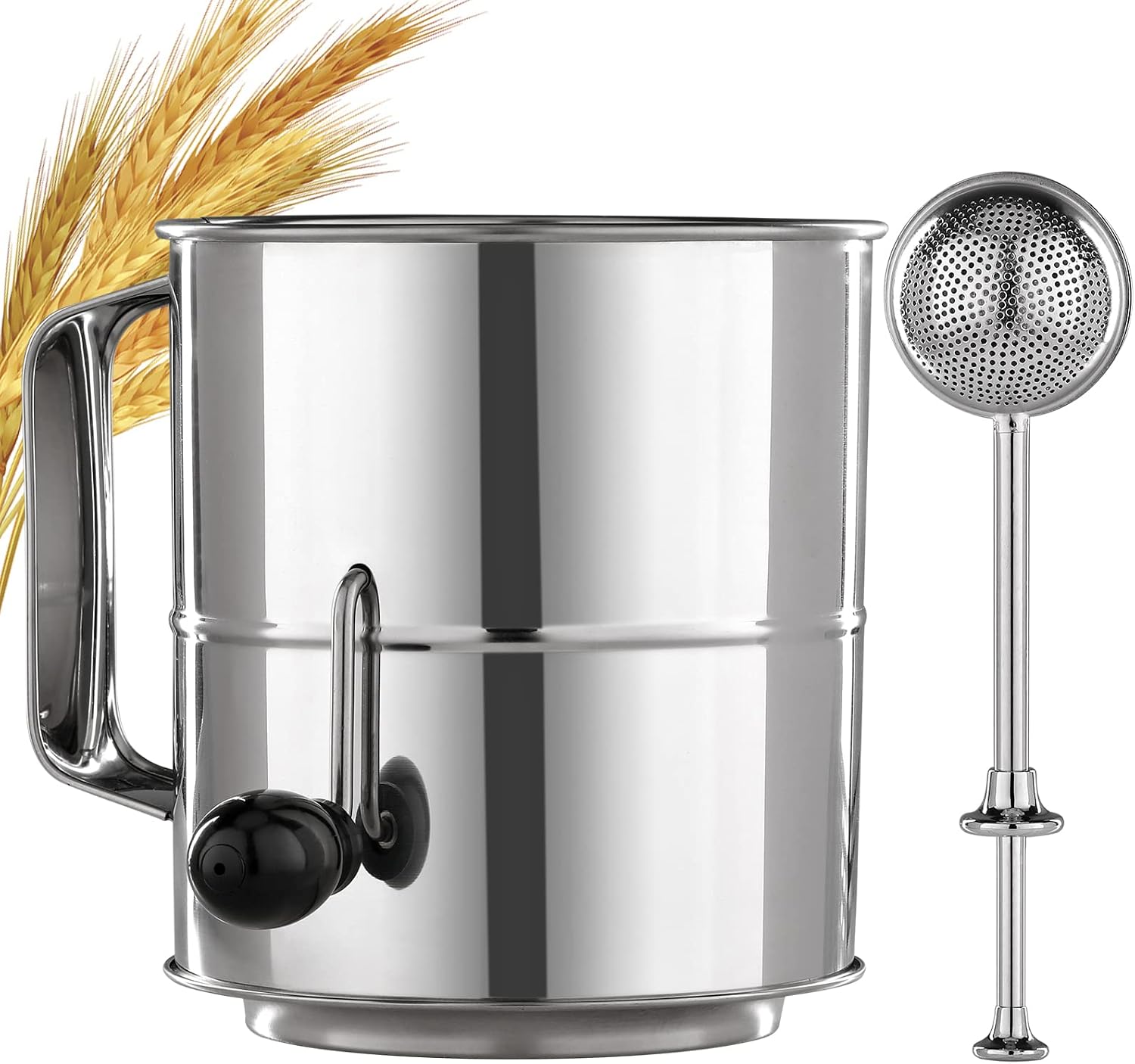
Baking requires precise preparation, and a reliable stainless steel flour sifter helps aerate dry ingredients and remove unwanted lumps before mixing. Whether you are preparing delicate pastries or dusting desserts with powdered sugar, choosing the right physical design impacts your kitchen routine. Options range from traditional hand crank models to squeeze-grip styles, each built with distinct material profiles and mesh configurations to handle various baking powders and flours effectively.
Evaluating these tools involves looking closely at capacity measurements, mechanical operation styles, and physical dimensions. Some bakers prefer single mesh rotary cranks for smooth operation, while others favor double-layer sieve filters for finer separation. Understanding how these features align with your specific baking habits ensures you select a practical tool that fits comfortably into your daily culinary projects without adding unnecessary strain or complicated maintenance steps.
As an Amazon Associate, StacyLaughs earns from qualifying purchases.
Buying guide
Evaluating Material Composition and Durability
When selecting a stainless steel flour sifter, examine the grade of metal used in its construction. Food-grade stainless steel resists rust, corrosion, and everyday wear much better than aluminum or plastic alternatives. This material choice prevents cracking or denting over time.
A durable metal body ensures the sifter withstands frequent washing and heavy baking schedules. Choosing quality stainless steel safeguards your investment, ensuring the kitchen tool remains functional and reliable across years of regular recipe preparations and baking projects.
Understanding Capacity Requirements
Capacity is a critical factor determining how many ingredients you can process at once. Standard home sifters typically hold three cups, which suits average cake and bread recipes. Larger models accommodate up to five cups for bigger batches.
Matching the volume of the sifter to your typical baking habits prevents constant refilling interruptions. Consider your usual recipe sizes and storage space availability before selecting a compact or high-capacity model for your kitchen.
Comparing Hand Crank Versus Squeeze Handles
The operating mechanism dictates how much physical effort is required during use. Hand crank models rotate smoothly, making them ideal for bakers seeking to minimize wrist strain and fatigue. They handle repeated turning effortlessly.
Squeeze-grip handles offer a one-handed operation style that some users find intuitive. However, they may require more manual grip strength, making crank styles a more comfortable alternative for bakers with sensitivity or arthritis.
Analyzing Mesh Layers and Filtration
Mesh configuration directly affects how finely your ingredients are aerated and filtered. Single mesh designs provide straightforward cleaning and prevent clogging with coarse flours like almond meal or oat bran.
Double-layer mesh filters offer finer particle separation for delicate powdered sugars and flours. While they excel at catching minute lumps, they may require more attention during the washing process to clear trapped particles completely.
Assessing Size and Storage Dimensions
Physical dimensions dictate how easily a sifter fits into your existing cabinet or drawer space. Taller models with wider hoppers need vertical clearance, while compact shapes slide neatly into tight kitchen shelves.
Reviewing the listed length, width, and height specifications helps you plan storage effectively. Choosing a tool with a balanced footprint prevents kitchen clutter and ensures convenient access whenever baking preparation begins.
Maintenance and Cleaning Considerations
Keeping your flour sifter clean maintains hygiene and ensures smooth mechanical performance. Stainless steel models often allow for easy rinsing, and some variants feature dishwasher-safe construction for added convenience.
Reviewing manufacturer cleaning guidance helps preserve the agitator wires and mesh screens. Simple maintenance routines prevent flour buildup, ensuring your sifter remains ready for the next baking session without mechanical sticking.
Frequently asked questions
What are the main benefits of a stainless steel flour sifter?
Stainless steel flour sifters offer superior durability, rust resistance, and a lightweight profile compared to plastic or aluminum alternatives. They withstand frequent use, resist dents and scratches, and provide a reliable structure for aerating flours, powdered sugar, and cocoa powder over many years of home baking tasks.
How do hand crank sifters compare to squeeze-handle models?
Hand crank sifters utilize a rotary motion that operates smoothly and reduces hand fatigue, making them ideal for bakers who want effortless sifting. Squeeze-handle models offer a grab-and-squeeze grip suitable for quick one-handed action, though they typically require more manual hand strength during extended baking sessions.
Can a stainless steel sifter handle coarse flours like almond meal?
Many stainless steel sifters equipped with double loop agitators or single mesh designs can process coarse ingredients like almond meal and oat bran. The internal agitator wires help push coarser particles through the screen without clogging, though you should check specific model compatibility for best results.
What capacity should I choose for everyday baking?
A three-cup capacity sifter suits most standard home baking recipes, handling everyday cakes, cookies, and breads efficiently. If you routinely bake large family-sized batches or commercial quantities, a five-cup capacity model reduces the need to refill the hopper repeatedly during preparation.
How should I clean and maintain my stainless steel flour sifter?
Maintenance involves following manufacturer instructions, which often include simple hand rinsing or dishwasher-safe cleaning depending on the specific model. Ensuring the mesh screens and agitator mechanisms are dried thoroughly after washing prevents moisture retention and keeps the stainless steel surface in optimal condition.