Appliances · Buying Guide
Best Stainless Steel Wire Cooling Rack Options for Every Baking Pan Size
Finding the right stainless steel wire cooling rack can completely change how you handle freshly baked cookies, roasted vegetables, and crispy chicken dinners in your home kitchen. Selecting a durable, food-grade metal rack ensures your baked goods cool evenly without sagging or absorbing unwanted residues from cheap coated surfaces. Quality metal construction stands up to high oven temperatures when you need to roast or crisp proteins directly on the grid.
Different kitchen setups require specific dimensions, whether you are baking for a large crowd using standard half sheets or preparing smaller single-batch meals in a compact quarter sheet pan. Reviewing these distinct options helps you match precise dimensions, high-heat tolerances, and configuration styles to your everyday cooking habits. Finding a matching fit prevents sliding and ensures easy cleanup after dinner.
As an Amazon Associate, StacyLaughs earns from qualifying purchases.
Buying guide
Material Composition and Food Safety
Selecting a wire cooling rack begins with examining its underlying material composition. Pure stainless steel options, particularly grade 304, provide exceptional durability without relying on artificial metal platings or chemical non-stick coatings. These protective layers can chip or scratch over time, potentially transferring unwanted toxins into your food during high-temperature baking sessions.
Choosing solid metal construction guarantees that your equipment will not rust, warp, or bend when exposed to heavy weights or intense thermal stress. Home bakers benefit greatly from investing in un-plated stainless steel because it maintains structural integrity across years of frequent use. Always verify the metal grade to ensure long-term reliability in your kitchen.
Dimensions and Pan Compatibility
Matching your cooling rack to your existing bakeware prevents frustrating fitting issues in the kitchen. Manufacturers design specific models to pair with quarter sheets, jelly roll pans, or large standard half-sheet pans. Measuring your interior pan dimensions before making a purchase ensures the rack sits flat without rocking or sliding around during food transfer.
Using an appropriately sized rack also ensures that grease and air circulate evenly around the edges of your baked goods. If a rack is too large, it will not fit inside your sheet pan for roasting meats. Selecting the correct size keeps your cooking workflow smooth and prevents messy spills.
Wire Spacing and Grid Design
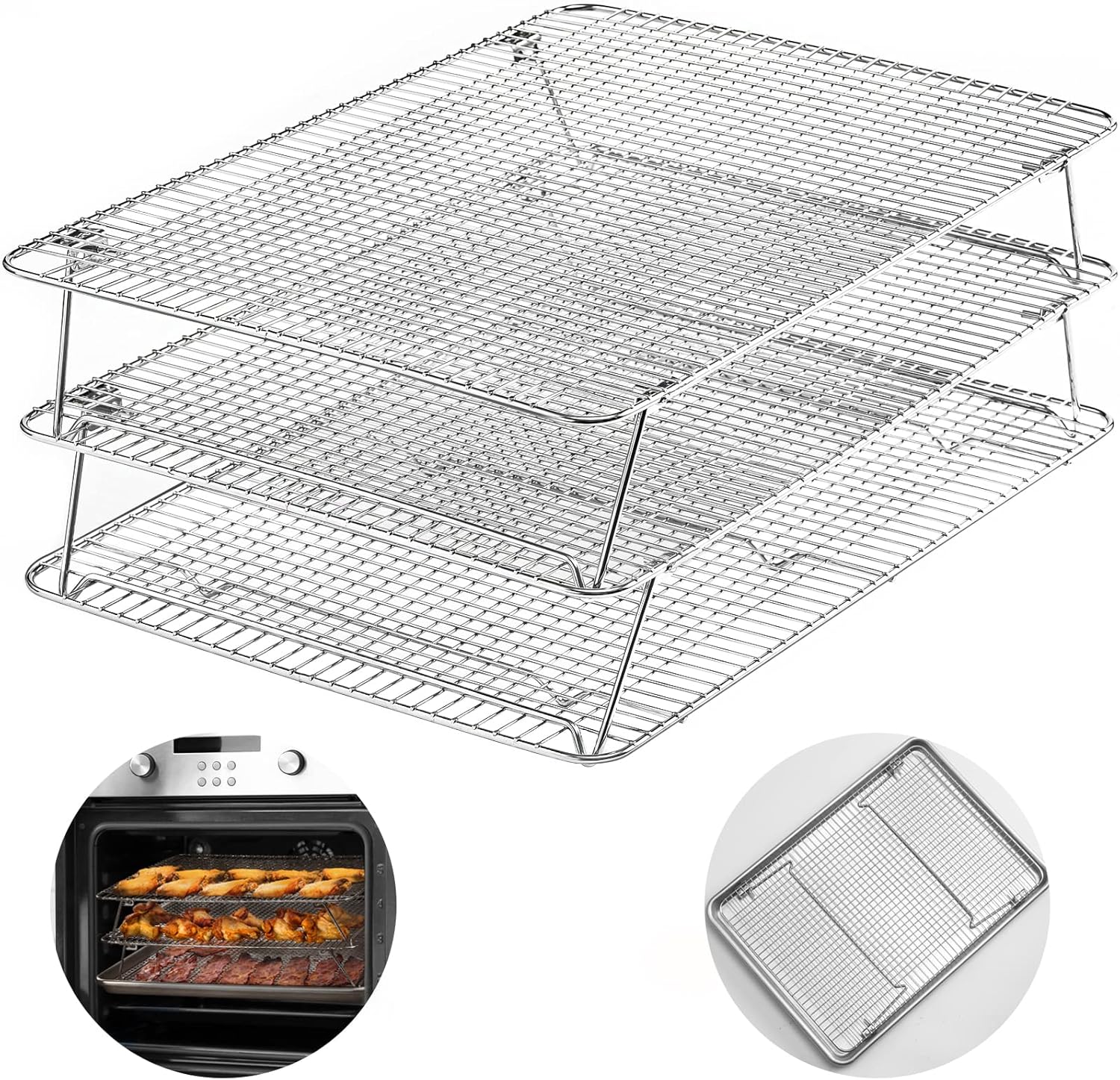
The grid pattern and wire spacing of a cooling rack dictate how well it handles various types of food. Tight wire grids or square spacing prevent smaller cookies, delicate pastries, and roasted vegetables from slipping through the gaps. Parallel lines with wide spacing often cause small items to sag or break during cooling.
Crosshatch patterns and narrow gaps also provide structural support that resists bowing when holding heavy food items like large briskets or roasted chickens. Evaluating the grid layout ensures your baked goods maintain their shape while allowing optimal air circulation beneath the surface for crisp results.
Heat Tolerance and Oven Safety
Many modern cooling racks double as roasting and baking tools capable of withstanding extreme oven temperatures. Checking the maximum temperature rating is essential if you plan to crisp chicken wings, roast vegetables, or broil meats directly on the grid. Quality stainless steel models typically handle temperatures up to 575 degrees Fahrenheit safely.
Utilizing an oven-safe rack elevates proteins above accumulated fats and oils, promoting even browning on all sides without requiring manual flipping. Confirming thermal limits prevents warping and structural damage, ensuring your kitchen tools perform reliably whether you are cooling fresh bread or roasting dinner.
Single-Tier Versus Stackable Configurations
Counter space management is a primary consideration when choosing between single-tier racks and vertical stackable systems. Stackable multi-tier racks feature folding legs that let you cool dozens of cookies or multiple cake layers simultaneously while utilizing vertical room. This setup is ideal for holiday baking marathons or large family gatherings.
Single-tier racks offer simpler storage profiles and slide easily into cabinets or flat storage slots without requiring assembly. Assessing your available counter space and typical baking volume helps determine whether a vertical multi-tier system or traditional single-layer racks suit your kitchen.
Cleaning and Maintenance Requirements
Ease of cleaning directly impacts how often you will want to use your wire cooling racks for sticky baking tasks. Smooth stainless steel surfaces release baked-on residue much easier than rough or coated alternatives, minimizing the scrubbing required after preparing glazed pastries or roasted meats.
Most quality stainless steel racks are fully dishwasher safe, allowing for fast cleanup between heavy baking batches without special seasoning or oiling steps. Reviewing manufacturer care instructions ensures your equipment remains bright and corrosion-free across years of regular family meal preparation.
Frequently asked questions
Can stainless steel wire cooling racks be used inside the oven for roasting?
Yes, high-grade stainless steel cooling racks designed for baking are typically oven-safe up to 575 degrees Fahrenheit. You can confidently place them inside your oven to roast vegetables, bake chicken, or allow fats to drip away from meats during cooking. Always verify the specific manufacturer temperature rating before placing any metal rack in a high-heat environment. Utilizing an oven-safe rack elevates your food, allowing hot air to circulate freely for even cooking and crispier results without flipping.
Will stainless steel cooling racks rust or flake over time?
Pure stainless steel construction, especially grade 304, resists rust, corrosion, and warping across years of heavy kitchen use. Unlike cheap non-stick racks that feature metallic platings or chemical coatings, solid stainless steel will not chip or flake toxic substances into your food. While they withstand frequent washing and high heat exceptionally well, following standard dishwasher-safe guidelines ensures they remain clean, bright, and structurally sound for all your everyday baking projects.
How do I choose the correct size cooling rack for my baking pans?
Choosing the correct size requires measuring the interior dimensions of your primary baking sheets or roasting pans. Standard half-sheet pans typically pair with racks measuring around eleven by sixteen inches, while smaller quarter sheets or jelly roll pans require compact options like eight by twelve-inch models. Matching the dimensions accurately ensures the rack fits flat inside your pan during roasting tasks and prevents unwanted sliding or tilting while transferring heavy batches of food across your kitchen counter.
Are stackable cooling racks difficult to store in standard kitchen cabinets?
Stackable cooling racks feature folding legs or modular support feet designed to collapse or disengage when not in use. While the multi-tier assembly adds some weight and height compared to traditional single-layer options, the folding design allows them to store flat inside most standard cabinets. Home bakers managing large batches find the vertical space-saving benefits outweigh the minor storage adjustment, though users with very limited cabinet space may prefer slim single-tier racks.
What is the advantage of tight-wire grid patterns over parallel lines?
Tight-wire grid patterns and square spacing provide superior structural support for smaller baked goods like miniature cookies, tarts, and delicate pastries. Traditional parallel-line wires often feature wide gaps that cause small items to sag, break, or slip through entirely during cooling. Furthermore, crosshatch and tight square configurations distribute weight evenly across the entire surface, preventing bowing under heavy roasted meats and ensuring uniform air circulation reaches every side of your food for optimal culinary results.