Appliances · Buying Guide
Best Glass Mixing Bowls for Baking and Meal Prep
Shoppers searching for target glass mixing bowls will find that selecting reliable kitchen vessels transforms how home cooks handle daily food preparation, mixing batters, and storing leftovers securely. Glass options provide durable non-porous surfaces that resist lingering food odors and stains during heavy culinary use. Unlike lightweight plastic alternatives, quality glass bowls offer a solid foundation that stays balanced on countertops while you whisk vigorously or knead sticky dough by hand.
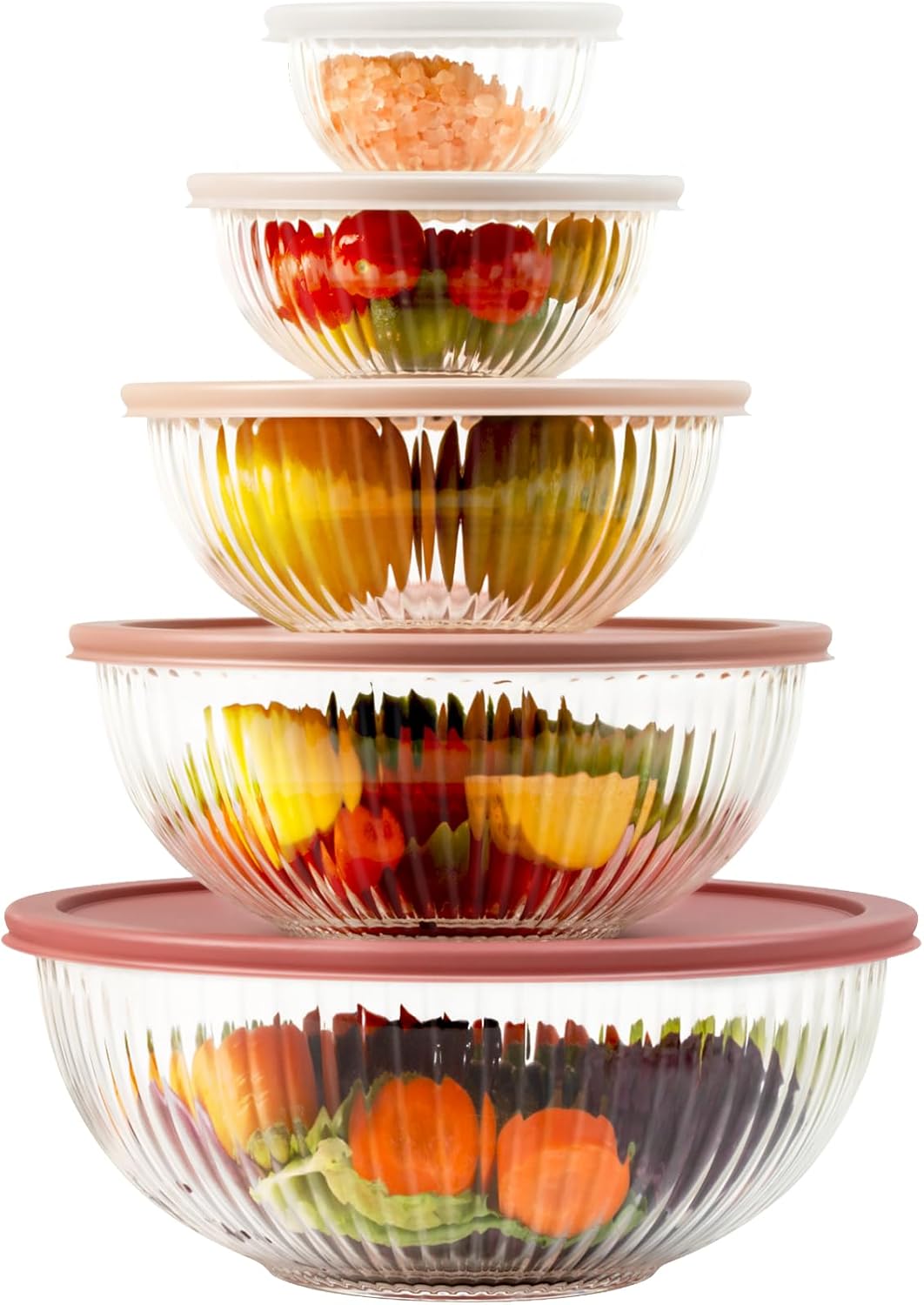
Choosing the right set depends heavily on evaluating capacity ranges, included airtight lids, and specific heat tolerance capabilities for your daily routines. Whether you need compact prep dishes for spices or large multi-quart vessels for family-sized salads, examining these popular collections helps identify exact configurations that match your home cooking style and kitchen storage limits.
As an Amazon Associate, StacyLaughs earns from qualifying purchases.
Buying guide
Glass Material Composition
Selecting the right glass composition determines how your mixing bowls handle sudden temperature shifts during active cooking routines. Borosilicate formulations offer exceptional thermal shock resistance, allowing safe transitions from cold freezers directly into hot preheated ovens without structural compromise or unexpected cracking.
Tempered glass alternatives provide robust everyday durability against accidental kitchen bumps and drops during vigorous whisking sessions. Evaluating your specific baking habits ensures you pick a material composition matching your daily thermal demands and general kitchen lifestyle.
Capacity Range Selection
Kitchen tasks demand vastly different bowl sizes, ranging from tiny prep dishes for minced garlic and measured spices to massive multi-quart vessels capable of holding heavy bread doughs. Having smaller options under one quart keeps individual ingredients neatly organized before active cooking begins, preventing stressful countertop clutter during complex baking recipes.
Larger bowls exceeding three quarts provide sufficient lateral room to toss crisp vegetable salads or whip thick cake batters vigorously without splashing contents over the rims. Choosing balanced multi-piece sets ensures you always possess the correct scale for every household food preparation requirement without forcing awkward compromises.
Storage Lid Integration
Bowls equipped with matching lids transform standard mixing vessels into convenient food storage containers for leftover meals. Flexible plastic covers create tight seals that lock out ambient air and moisture, keeping prepared ingredients fresh inside refrigerators for extended periods between cooking sessions.
Households that frequently meal prep or store extra ingredients benefit immensely from sets featuring dedicated lids. Conversely, cooks who only mix and bake immediately may prioritize open bowls without lid constraints, streamlining cleanup and cabinet organization significantly.
Thermal Shock Tolerance
Understanding the specific heat limits of your glass mixing bowls prevents accidental damage when moving vessels between extreme environments. Certain glass types handle microwave heating and oven baking seamlessly, while others are strictly intended for room temperature or cold prep tasks only.
Always verify manufacturer guidelines regarding preheated ovens and microwave compatibility before attempting to warm food or melt ingredients directly inside a bowl. Respecting these thermal boundaries ensures long-lasting safety and preserves the structural integrity of your kitchenware collection over years of regular use.
Cleaning and Maintenance
Non-porous glass surfaces naturally resist absorbing stubborn food odors, oils, and bright vegetable stains that typically ruin plastic alternatives. This inherent property makes post-cooking cleanup straightforward, allowing effortless washing by hand or placement inside standard automatic dishwashers after heavy use.
Textured exterior designs or wide rolled rims require brief attention during manual washing to ensure no food particles linger in crevices. Following proper dishwasher loading practices also prevents scratching, keeping your glassware clear and pristine for every upcoming culinary project.
Nesting and Storage Space
Kitchen cabinet space is often at a premium, making nesting bowl designs an essential consideration for efficient home organization. Sets engineered to nest compactly inside one another free up valuable shelving, keeping your kitchen tidy when the vessels sit idle between baking tasks.
Keep in mind that attaching bulky storage lids can sometimes prevent bowls from nesting fully, requiring alternative storage arrangements for the covers. Evaluating your available cupboard dimensions helps determine whether a nested stack or an expanded footprint fits best.
Frequently asked questions
Can glass mixing bowls go directly into the oven?
Whether glass mixing bowls can enter an oven depends entirely on their specific material formulation and manufacturer guidelines. Borosilicate and certain tempered glass variants withstand high temperatures safely and can be used in preheated ovens for baking tasks. However, other glass bowls explicitly exclude oven or microwave use due to their composition. Always check the official product specifications before exposing any bowl to direct heat sources to avoid structural damage or safety hazards.
Are glass mixing bowls safe for the dishwasher?
Most standard glass mixing bowls are completely dishwasher safe, offering a convenient way to clean up after messy baking or meal prep sessions. The non-porous glass material does not warp, absorb food odors, or retain stubborn stains during wash cycles. If your specific set includes flexible plastic storage lids, check whether those covers require top-rack placement or hand washing to maintain their shape and tight sealing capabilities over time.
Do glass bowls retain food odors or stains?
High-quality glass mixing bowls possess non-porous surfaces that naturally resist retaining food odors, oils, and bright vegetable stains. Unlike plastic alternatives that often hold lingering smells after mixing garlic or tomato-based ingredients, glass stays neutral and clean wash after wash. This makes glass an excellent choice for switching rapidly between sweet baking mixtures and savory meal preparation without transferring unwanted flavors to your next culinary creation.
How do I store glass mixing bowls efficiently?
Many glass mixing bowl sets feature a nesting design that allows smaller bowls to fit neatly inside larger ones, drastically reducing the cabinet space required for storage. If your set includes plastic lids, you may need to store the covers separately in a drawer if attaching them prevents the bowls from nesting compactly. Assessing your available cupboard dimensions ensures you can keep your kitchen organized without cluttering valuable shelf space.
Are glass mixing bowls heavy to use?
Glass bowls generally feel heavier than plastic or stainless steel alternatives, providing a sturdy base that stays firmly planted on countertops during vigorous whisking or dough kneading. While this added weight enhances stability, larger multi-quart capacities can feel substantial when filled with dense ingredients or heavy batters. Selecting a set with wide rolled rims can improve your grip security, making it easier to lift and tilt the bowls safely during prep.