Appliances · Buying Guide
Best Temp for Sourdough Starter: Precision Heating and Climate Control Tools
Maintaining the correct temp for sourdough starter is essential for reliable fermentation, especially during colder months when kitchen counters drop below ideal yeast activity ranges. Dedicated temperature control devices take the guesswork out of daily baking by providing stable, adjustable heat directly to your fermentation jars.
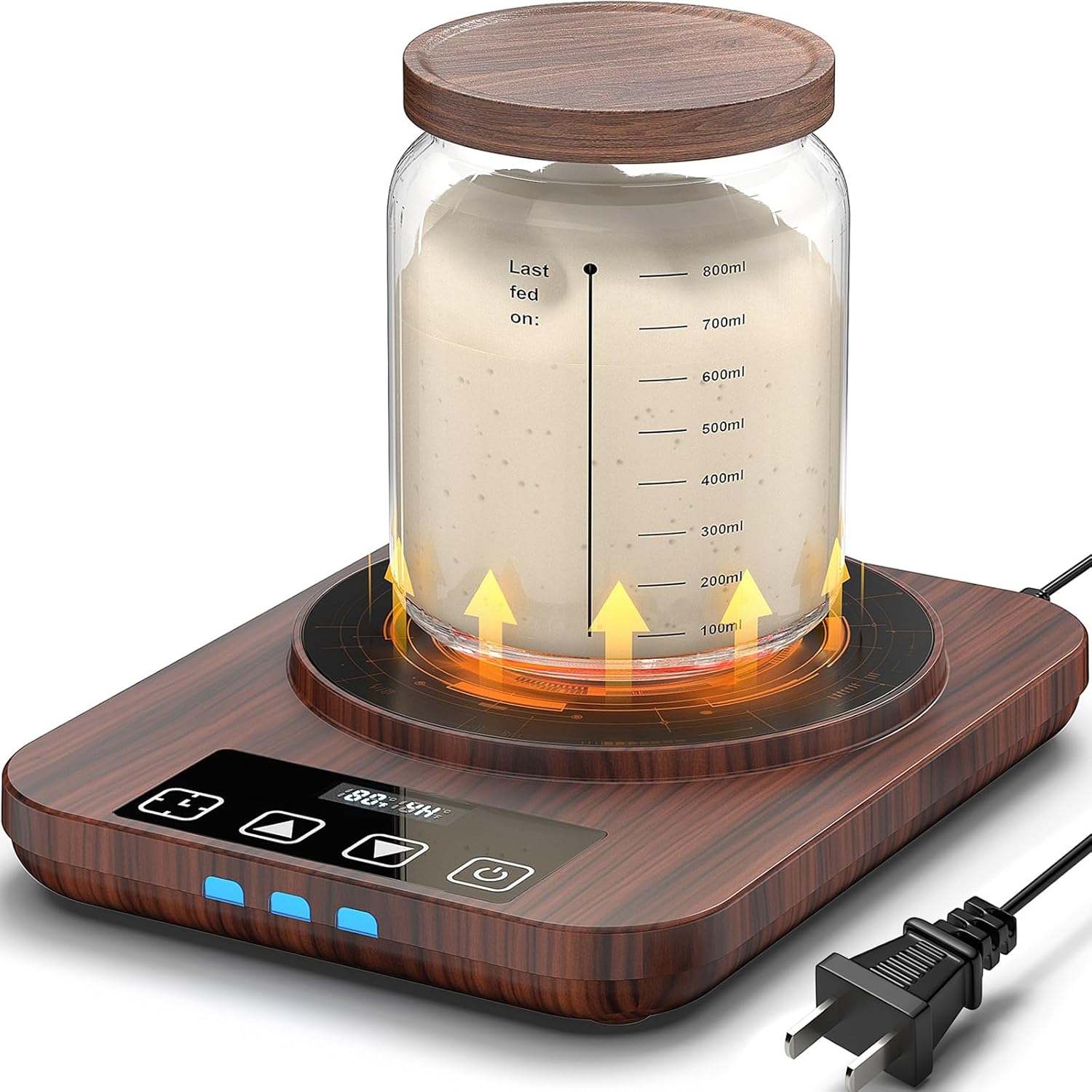
Whether you choose a slim warming mat with a digital timer, a base equipped with an internal dough probe, or an enclosed climate cube that both warms and cools, managing your starter's thermal environment ensures predictable results. These specialized tools help home bakers achieve consistent rise times, shorter fermentation periods, and better bread texture regardless of fluctuating ambient room conditions.
As an Amazon Associate, StacyLaughs earns from qualifying purchases.
Buying guide
Temperature Range and Precision
Achieving the correct temp for sourdough starter requires precise control over your heating environment. Most dedicated warming mats and plates offer adjustable ranges spanning from 70 to 110 degrees Fahrenheit. One-degree increments allow you to fine-tune the warmth to match specific yeast activity requirements, whether you are trying to speed up a slow fermentation cycle in winter or maintain a steady baseline during routine daily feedings.
Selecting a device with accurate digital sensors prevents overheating your wild yeasts, which can weaken or kill the culture. Look for thermostats equipped with heat compensation to minimize ambient errors. Accurate temperature control ensures predictable rise times, giving you greater confidence when scheduling your baking routine and eliminating frustrating guesswork caused by cold kitchen counters.
Internal Probes Versus External Pads
When evaluating tools for maintaining the proper temp for sourdough starter, you will encounter two primary heating configurations. External mats transfer heat through the bottom and walls of your container, relying on ambient jar warmth. Devices featuring integrated stainless steel probes insert directly into the culture, measuring internal core temperature rather than just the surrounding air or container surface.
Core probes eliminate variables related to thick glass walls or fluctuating kitchen drafts, delivering highly reliable readings. However, flat warming mats offer simpler setup without requiring you to clean a probe after each feeding. Your choice depends on whether you prefer direct internal data or a fuss-free platform where you simply place your jar on top.
Vessel Compatibility and Jar Sizes
Physical dimensions play a major role when determining the ideal temp for sourdough starter setup in your kitchen. Warming mats generally accommodate standard mason jars ranging from 24 to 40 fluid ounces. Enclosed climate chambers and domed systems feature strict internal height and width limits, restricting you to specific container dimensions like 34-ounce jars or vessels under 7 inches tall.
Always check your preferred jar measurements before purchasing a warming system to ensure a proper fit. Using oversized vessels on small heating zones results in uneven heat distribution, while containers that are too tall will not fit inside enclosed domes or cubes. Matching your container capacity to the manufacturer specifications guarantees optimal thermal transfer.
Timers and Automation Features
Managing the temp for sourdough starter is significantly easier with built-in timers and smart automation controls. Many warming mats and bases include 24-hour appointment timers with automatic shut-off functions, preventing your culture from overheating during extended overnight proofs. These features eliminate the need for constant monitoring, allowing you to set your target duration and walk away with complete peace of mind.
Memory functions represent another valuable addition, recalling your last used temperature, time, and schedule settings for quick one-touch restarts. Indicator lights also help you track operational states at a glance, shifting colors when the target warmth is reached. Choosing a model with reliable automation simplifies your daily baking workflow and protects your starter from accidental neglect.
Warming Versus Cooling Capabilities
While most devices focus exclusively on raising the temp for sourdough starter during chilly months, advanced systems offer dual climate control. Active chambers can both warm and cool your culture, helping regulate activity levels across changing seasonal room temperatures. Cooling functionality is particularly useful if your kitchen runs warm and you need to slow down fermentation rates between baking days.
Keep in mind that cooling features usually operate relative to ambient room conditions, often capped at a specific temperature drop. If your environment remains consistently cold, a standard heating mat or probe base is usually sufficient. Evaluate your local climate and seasonal kitchen shifts to determine whether active cooling is a necessary addition to your setup.
Energy Efficiency and Countertop Footprint
Kitchen space is often at a premium, making the physical footprint an important factor when maintaining the correct temp for sourdough starter. Slim heating pads take up minimal room and can be easily stored in drawers when not in use. Compact cubes and domed units demand dedicated counter space but offer enclosed environments that protect your jars from household dust and accidental bumps.
Power consumption is another practical consideration for devices running over extended periods. Many modern warming mats utilize efficient heating films that draw very little electricity, providing economical operation even when left running for 24 hours. Assessing your available counter space and power preferences helps you choose a tool that integrates seamlessly into your daily baking routine.
Frequently asked questions
What is the ideal temp for sourdough starter fermentation?
The ideal temp for sourdough starter typically ranges between 75 and 82 degrees Fahrenheit. Maintaining this specific temperature range encourages healthy yeast and lactic acid bacteria activity, resulting in faster fermentation times and improved bread texture. While lower temperatures slow down the rising process, temperatures exceeding 100 or 110 degrees Fahrenheit can weaken or damage the culture. Using a dedicated warming mat or probe base helps keep your jar within this safe window, eliminating the guesswork caused by fluctuating kitchen temperatures.
Do I need a dough probe or is a warming mat better?
Choosing between a dough probe and a flat warming mat depends on your preferred baking style and measurement needs. Warming mats provide exterior heat to the base of your jar, offering a simple setup without extra cleaning steps. In contrast, devices with integrated stainless steel probes measure the core temperature directly inside the fermenting culture, bypassing ambient room drafts and jar thickness variables. If you want precise internal data, a probe is ideal; if you prefer fuss-free placement, a flat mat works well.
Can I use any jar with these sourdough warmers?
Compatibility varies depending on the specific warming device you choose. Flat heating mats and probe bases generally accommodate a wide variety of mason jars, glass containers, and standard fermentation vessels ranging from 24 to 40 fluid ounces. However, enclosed systems like glass domes or climate cubes have strict internal clearance limits, often restricting you to specific container heights and widths, such as 34-ounce jars under 7 inches tall. Always check your container measurements against manufacturer specifications before starting.
Why do some sourdough warmers include cooling features?
Sourdough warmers with active cooling capabilities help regulate starter activity in environments where ambient kitchen temperatures fluctuate significantly or run too hot. While heating tools accelerate fermentation during cold winter months, cooling functions slow down yeast activity to prevent your starter from over-fermenting or depleting its food supply too quickly between baking days. This dual-temperature control offers year-round stability, though cooling performance is typically limited to a specific range below your room temperature.
How long should I leave my sourdough starter on a warming mat?
The duration you leave your starter on a warming mat depends on your specific recipe, feeding schedule, and desired fermentation stage. Many modern warming mats feature built-in 24-hour timers and automatic shut-off functions, allowing you to program custom durations without constant monitoring. You can set the timer to match your preferred proofing window, shortening typical 8-hour fermentation cycles down to around 4 hours while preventing accidental overheating during overnight or unattended rest periods.