Appliances · Buying Guide
Best Three Tier Cooling Rack Options for Batch Baking and Smart Storage

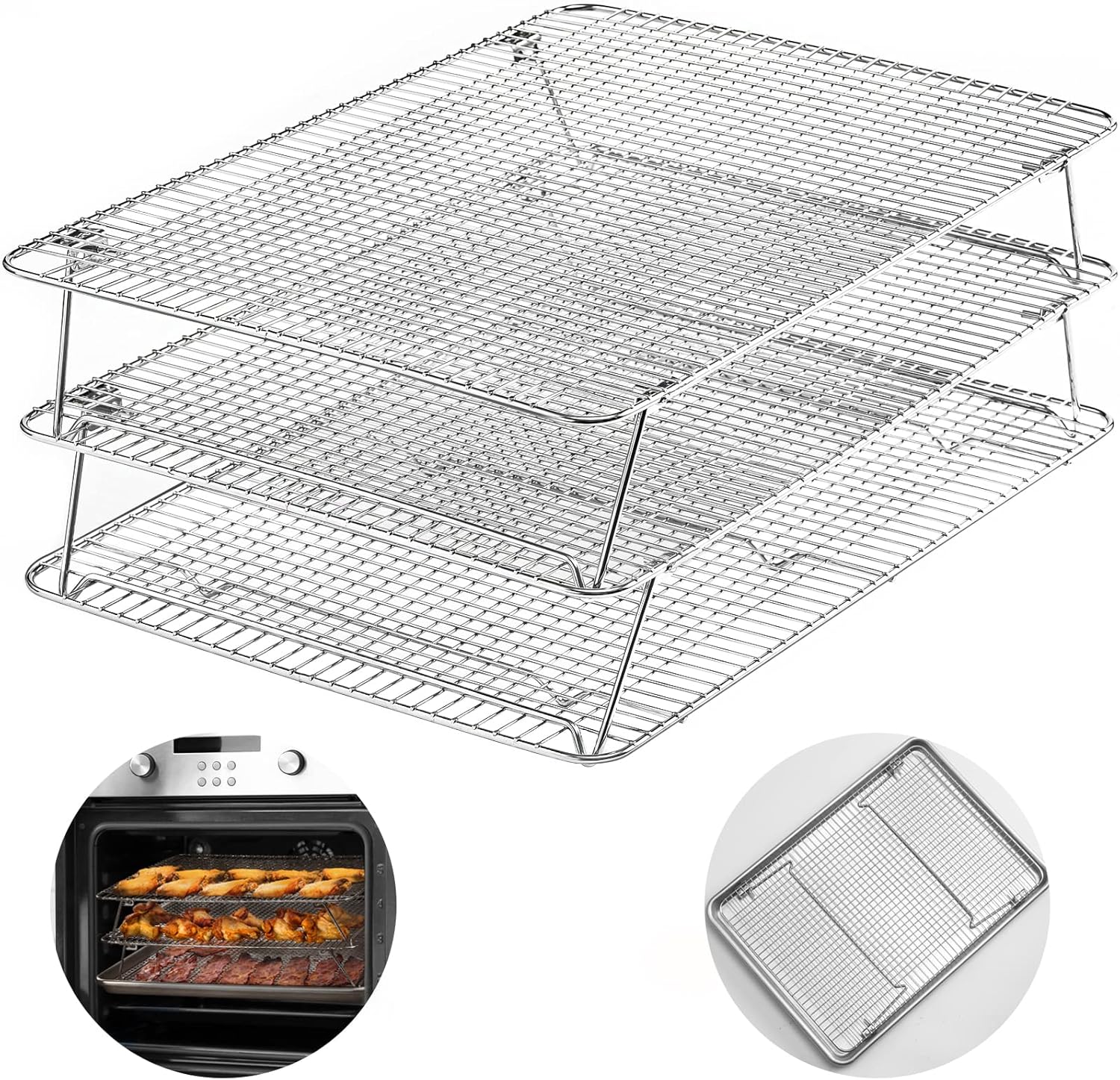
Managing counter space while baking large batches of cookies, muffins, or cakes often presents a logistical challenge in busy kitchens. A three tier cooling rack provides an effective vertical solution by allowing bakers to stack multiple baking layers without cluttering valuable workspace. These specialized racks elevate freshly baked goods, ensuring proper airflow around pastries, breads, and roasted items for optimal temperature reduction and texture preservation.
Choosing the right multi-tier rack depends heavily on specific kitchen dimensions, material preferences, and intended baking volumes. Options range from stainless steel models designed to fit standard half-sheet pans to collapsible units built for effortless storage or outdoor gatherings. Reviewing the physical attributes, structural designs, and heat tolerances of available choices helps home bakers select a configuration that seamlessly integrates into their daily baking routines.
As an Amazon Associate, StacyLaughs earns from qualifying purchases.
Buying guide
Material Selection and Heat Tolerance
Selecting a cooling rack requires careful consideration of the underlying materials used in its construction. Stainless steel models offer exceptional resistance to rust, corrosion, and bending under heavy loads. Many stainless steel variants also feature high temperature thresholds, allowing them to function inside ovens for roasting tasks. Coated steel alternatives often provide non-stick surfaces that simplify food release and routine cleanup procedures after heavy baking sessions.
Checking temperature ratings ensures the rack remains safe when transitioning from counter cooling to oven baking. Some robust wire racks tolerate heat up to 575 degrees Fahrenheit, while others function at lower thresholds. Matching material specifications to your standard recipes prevents accidental damage. Evaluating these physical attributes guarantees long-term durability and maintains a reliable performance standard across various baking projects.
Tier Height and Vertical Clearance
Evaluating vertical clearance between tiers is essential for accommodating different types of baked goods. Taller pastries like multi-layered cakes, frosted cupcakes, and thick sourdough loaves require sufficient vertical space to prevent surface damage during cooling. Some multi-tier racks feature adjustable height positions, letting you customize the gap between shelves. Fixed-tier models offer consistent spacing that works well for standard cookies, biscuits, and flat baked items without requiring manual adjustments.
Measuring your available counter space and upper cabinet clearance prevents placement issues in smaller kitchens. Taller assembled towers demand adequate vertical room beneath upper cabinetry. Assessing these dimensional factors ensures the stacked rack fits your workspace comfortably while handling your preferred batch sizes with ease and structural stability.
Storage and Collapsible Design
Kitchen storage space heavily influences the ideal rack design for your home. Collapsible models fold completely flat, allowing them to tuck effortlessly into narrow drawers, tight cabinets, or beside baking sheets. This space-saving attribute benefits bakers with limited storage capacity or compact apartment kitchens. Non-collapsible towers provide rigid stability but demand more permanent storage footprint allocation when not actively cooling batches of pastries.
Assessing how easily a rack collapses or disassembles streamlines post-baking cleanup routines. Models with folding support feet or hinged tiers transition quickly from functional towers to flat panels. Reviewing these mechanical features ensures the accessory stores neatly without creating clutter, making it practical for frequent bakers who value an organized kitchen environment after completing large baking projects.
Grid Spacing and Wire Configuration
Wire grid spacing directly affects how securely delicate foods rest on the cooling surface. Tightly spaced square wire configurations prevent small items like miniature cookies, macarons, and fruit slices from slipping through gaps. Traditional parallel wire designs work adequately for larger breads and pie pans but may cause smaller pastries to sag. Choosing a fine grid pattern ensures uniform airflow while maintaining structural integrity for all baked items.
The structural layout of the wires also influences cooling efficiency. Open wire designs promote rapid air circulation around all sides of the pastry, leading to faster temperature reduction. Examining the spacing dimensions helps you select a rack that supports your specific baking repertoire, preventing frustrating food deformation while maximizing crispness and cooling speed across every batch.
Footprint and Sheet Pan Compatibility
Matching your cooling rack footprint to standard half-sheet pans enhances your baking workflow. Racks designed to fit inside sheet pans allow you to bake and cool multiple layers simultaneously without transferring food items manually. Reviewing exact length and width dimensions ensures the rack rests securely within your existing bakeware collection. This compatibility simplifies complex baking tasks, especially when preparing large quantities of meats, roasted vegetables, or uniform pastry batches.
Independent leg configurations provide added versatility for sheet pan use. Racks featuring folding feet can transition from stacked towers to standalone sheets easily. Assessing whether a system relies on individual modular racks or an interconnected tower helps you choose a setup that aligns with your preferred baking techniques and available storage parameters.
Cleaning and Maintenance Requirements
Maintenance demands vary based on the surface coatings and materials of each cooling rack. Stainless steel models often feature dishwasher-safe construction, allowing for automated cleanup after messy baking sessions. Coated steel racks typically require manual hand washing in warm soapy water to protect their non-stick surfaces from scratching. Evaluating cleaning instructions ensures your chosen rack remains hygienic and easy to maintain over years of regular use.
Smooth wire joints and rounded corners prevent food residue buildup during cleanup. Racks engineered with meticulous finishing reduce scrubbing time, making post-baking maintenance straightforward. Reviewing manufacturer care guidelines helps preserve the protective coating and structural integrity of the rack, ensuring long-term reliability whether you choose dishwasher-friendly stainless steel or hand-washed non-stick variants for your kitchen.
Frequently asked questions
Can a three tier cooling rack be used inside an oven?
Many stainless steel and coated wire cooling racks are rated for oven use, with upper temperature thresholds typically ranging between 450 and 575 degrees Fahrenheit. This allows bakers to utilize the racks for roasting meats, baking bacon, or supporting half-sheet pans during high-heat cooking tasks. However, checking the specific manufacturer guidelines for your model is essential before introducing any rack to direct oven heat, as not all multi-tier cooling accessories are engineered to withstand high thermal environments.
How do collapsible cooling racks save kitchen space?
Collapsible cooling racks feature hinged tiers or folding support legs that collapse completely flat into a compact profile when not in use. This mechanical design allows you to slide the flattened unit effortlessly into narrow storage drawers, tight cabinet slots, or directly beside flat baking sheets. By eliminating the bulky vertical footprint of an assembled tower, collapsible models help maintain an organized kitchen environment, making them especially practical for bakers with limited cabinet space or smaller apartment kitchens.
What is the advantage of square wire grid spacing over parallel lines?
Tightly spaced square wire configurations provide superior support for smaller baked goods like miniature cookies, delicate macarons, and sliced fruits, preventing them from falling or sagging through the gaps. Regular square spacing also ensures uniform air contact across the bottom of the pastry, promoting even cooling and helping maintain crisp textures. In contrast, wide parallel wire lines can cause smaller items to tilt or drop if not placed with careful precision across the surface.
Are multi-tier cooling racks compatible with standard half-sheet pans?
Certain multi-tier cooling racks are specifically engineered with dimensions designed to fit seamlessly inside standard half-sheet pans. This compatibility allows bakers to stack layers directly within the pan for simultaneous baking, roasting, or grease-draining tasks. However, exterior dimensions vary significantly across different brands and models, meaning you should always verify the exact length and width measurements of the rack against your existing bakeware collection before attempting a direct sheet pan placement.
What is the best way to clean and maintain a coated cooling rack?
Most coated or non-stick cooling racks require gentle manual hand washing in warm, soapy water rather than automated dishwasher cycles to preserve their protective surfaces. Soaking the rack briefly after use can help loosen stubborn baked-on food residue without requiring abrasive scrubbing pads that might damage the coating. Following the manufacturer care guidelines ensures the wire structure remains rust-free and maintains its smooth, food-safe release properties throughout years of regular baking activities.