Appliances · Buying Guide
Best Vintage Mixing Bowl Set Choices for Classic Kitchens

Finding the right vintage mixing bowl set transforms everyday cooking, baking, and food prep into an enjoyable routine while adding charm to your countertop. These specialized kitchen collections combine classic aesthetics with modern material durability, offering reliable performance for tasks ranging from whipping heavy batters to tossing leafy salads. Selecting a suitable set depends heavily on how frequently you bake, your available storage space, and whether you prefer glazed stoneware, smooth ceramic, or tempered glass constructions designed for multiple kitchen appliances.
Manufacturers design these nesting sets to handle diverse culinary workflows efficiently, ensuring that prepping, serving, and storing food requires minimal physical effort. Evaluating options involves looking closely at piece counts, individual bowl capacities, surface finishes, and appliance compatibility such as microwave or oven safety. By reviewing the specific structural attributes and physical dimensions of each option, you can choose a coordinated bowl collection that integrates seamlessly into your daily kitchen routines and matches your storage capacity requirements perfectly.
As an Amazon Associate, StacyLaughs earns from qualifying purchases.
Buying guide
Material Selection in Stoneware and Ceramic
Choosing the correct bowl material impacts daily kitchen workflows significantly, influencing everything from thermal retention to countertop stability. Stoneware and heavy ceramic options provide substantial heft, preventing bowls from sliding around during aggressive hand-whisking or dough kneading. These dense materials often feature smooth glazed surfaces that resist staining and block food odors from penetrating the inner walls over years of repeated use.
Alternatively, glass options offer complete transparency and chemical neutrality, ensuring that acidic foods never react with the container surface. Reviewing your primary cooking habits helps determine whether dense stoneware or tempered glass best fits your routine. Each material brings distinct tactile qualities and cleaning requirements that influence long-term satisfaction.
Nesting Capabilities for Small Kitchen Storage
Kitchen cabinet space is a premium commodity for most home cooks, making nested bowl designs an essential purchase criterion. A properly engineered nesting set allows smaller bowls to slide completely inside larger counterparts, reducing the horizontal footprint to that of a single large container. This vertical consolidation keeps kitchen cupboards organized and eliminates clutter.
When evaluating storage dimensions, check the overall height and maximum diameter of the stacked configuration to ensure it clears your shelf spacing. Selecting well-designed nesting bowls prevents awkward stacking angles and protects decorative exterior glazes from chipping during daily retrieval and storage routines.
Heat Resistance for Microwave and Oven Tasks
Modern kitchen routines frequently require cookware that transitions directly from the refrigerator into the microwave or oven without requiring extra transfer dishes. Stoneware and porcelain mixing bowls are typically fired at high temperatures, endowing them with thermal shock resistance suitable for baking casseroles or melting ingredients. Always verify specific manufacturer guidelines regarding maximum temperature limits.
Glass bowls also offer versatile heating performance, though lids made of plastic usually require removal before entering heated ovens. Understanding these thermal boundaries protects your cookware investment and ensures safe food preparation during high-heat baking sessions or rapid reheating tasks.
Capacity Planning for Everyday Food Prep
Evaluating individual bowl capacities ensures you have the right sizing options for specific tasks, ranging from whisking eggs in small prep bowls to kneading multi-pound bread dough in extra-large vessels. A versatile set typically spans multiple volume tiers, providing small containers for chopped garnishes and large bowls for massive salad tosses.
Purchasing a set with well-distributed sizing prevents the common frustration of working with containers that are too cramped for batter mixing or too bulky for minor ingredients. Assessing your typical family meal size guides you toward the ideal volume range for your kitchen needs.
Surface Glazes and Scratch Resistance
The interior finish of a mixing bowl determines how easily it releases food residues and withstands abrasion from metal whisks, spoons, and hand mixers. High-quality natural glazes create a smooth, non-porous barrier that prevents fork tines and knife edges from leaving permanent grey scratch marks on the ceramic surface.
Maintaining a scratch-free interior not only preserves the aesthetic charm of vintage-inspired bowls but also prevents microscopic fissures where bacteria might otherwise accumulate. Checking for polished, durable glaze specifications ensures your bowls retain their visual appeal through years of heavy culinary use.
Lid Integration and Food Storage Utility
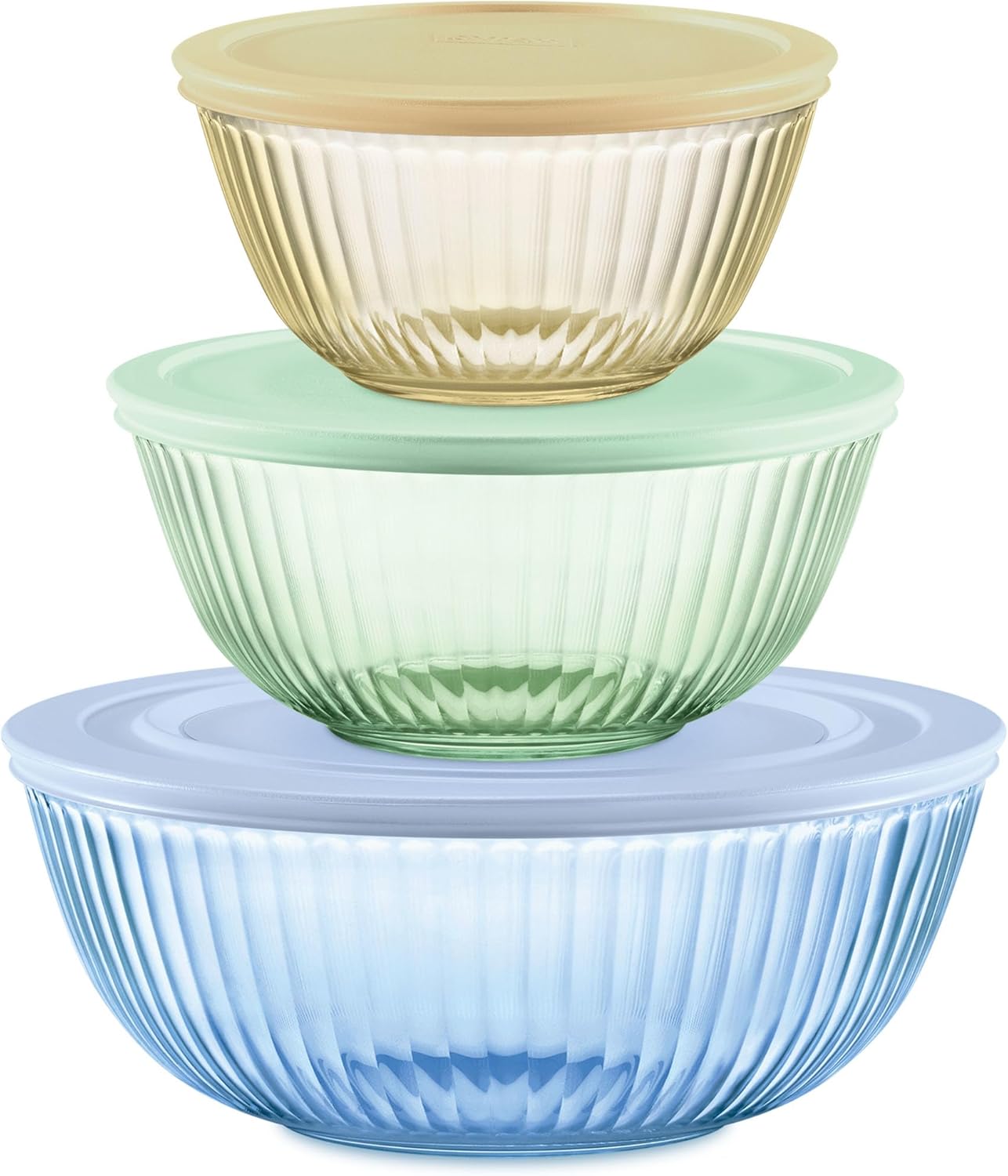
While traditional mixing bowls focus exclusively on food prep and serving, certain modern sets include fitted airtight lids that transform mixing vessels into reliable refrigerator storage containers. These specialized lids minimize the need for plastic wrap and keep leftover salads or dough fresh for extended periods.
When selecting sets with storage lids, confirm whether the lids are rated for microwave or freezer use to maximize their versatility. Integrated sealing lids add significant practical value for busy households that frequently store food prep components ahead of scheduled meal times.
Frequently asked questions
Are ceramic mixing bowls safe for microwave use?
Most high-quality ceramic and stoneware mixing bowls are designed to be microwave safe, allowing you to melt butter, warm liquids, or reheat leftovers directly in the bowl. However, you should always check the manufacturer specifications before heating, especially if the bowls feature metallic decorative accents or hand-painted details that might react negatively to electromagnetic radiation.
How do nesting bowls help with cabinet storage?
Nesting bowls optimize cabinet space by allowing smaller bowls to fit entirely inside the cavity of the next larger size, creating a single vertical stack. This design concentrates multiple mixing and serving capacities into the footprint of the largest bowl, keeping your kitchen cupboards tidy and preventing clutter.
Can stoneware mixing bowls go straight into the oven?
High-fired stoneware mixing bowls are generally engineered to withstand oven baking temperatures, making them suitable for casseroles and baked desserts. It is important to avoid subjecting cold stoneware straight from the refrigerator to extremely hot preheated ovens, as sudden thermal shock can cause cracking or structural damage.
What makes hobnail or embossed styles distinct?
Hobnail and embossed patterns feature raised textural elements molded directly into the exterior wall of the stoneware or ceramic bowl. Beyond providing a classic vintage aesthetic, these raised bumps and geometric designs create a tactile surface that enhances your grip, helping you hold the bowl securely during vigorous mixing tasks.
Do glass mixing bowls include airtight storage lids?
Certain glass mixing bowl sets come equipped with matching plastic lids designed to provide a secure, airtight seal for food storage. These lids allow you to use the same glass container for mixing, baking, and storing leftovers in the refrigerator or freezer, streamlining your food prep workflow.