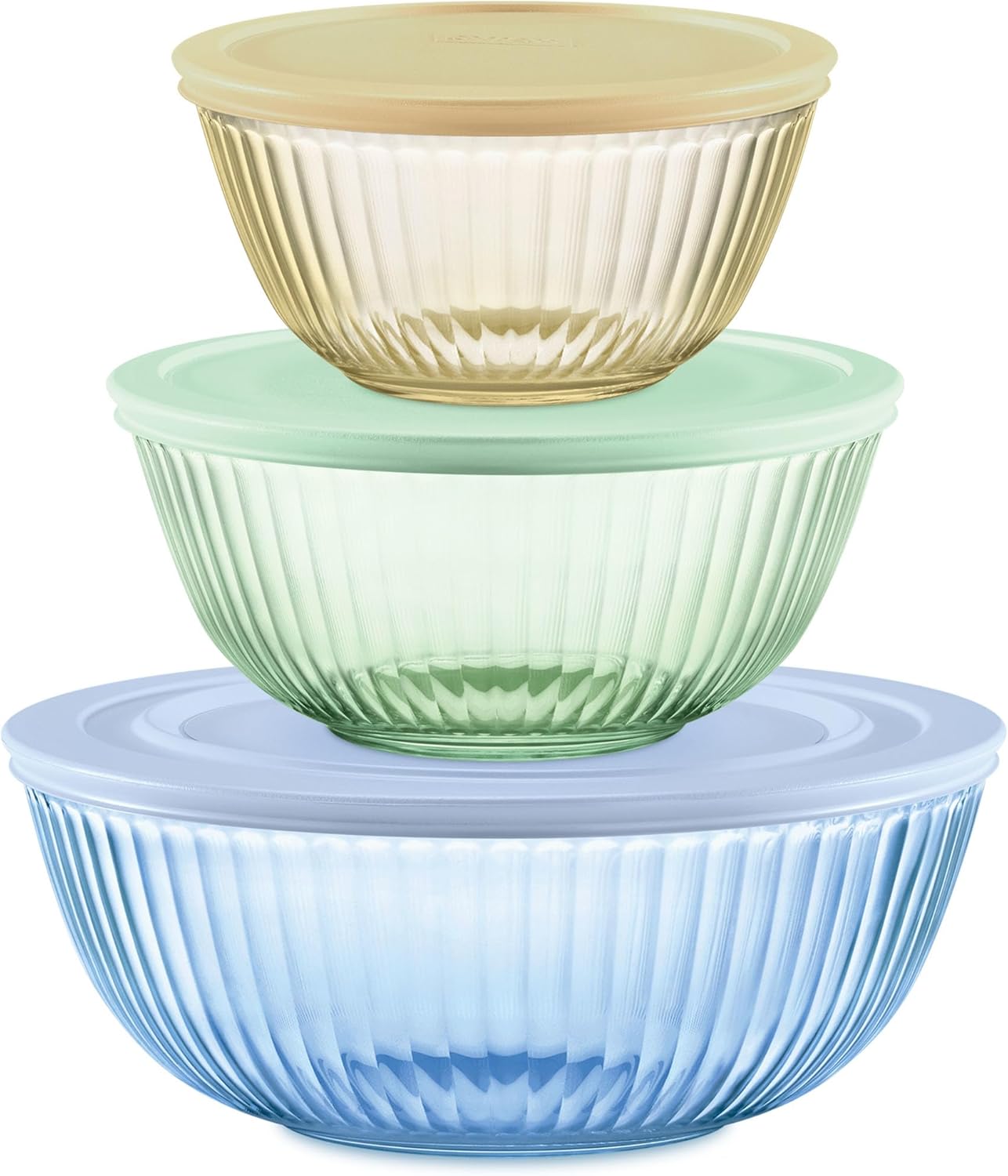
Appliances · Buying Guide
Best Vintage Pyrex Mixing Bowls for Retro Kitchen Style and Prep
Finding the right mixing bowls for daily kitchen prep often involves balancing classic aesthetics with modern utility. Many home cooks appreciate the colorful heritage and durable build of traditional glass kitchenware. Whether you want to outfit your counters with iconic primary colors or streamline your baking routine with clear glass vessels, selecting the right set depends on your specific cooking habits and storage needs.
Evaluating these options requires looking closely at dimensions, material types, and included components like plastic lids. While some collectors lean toward nostalgic hues, others prioritize dishwasher-safe glass for effortless cleanup. Understanding the practical differences among these popular sets helps you find reliable kitchen helpers that fit smoothly into your daily routine without guesswork.
As an Amazon Associate, StacyLaughs earns from qualifying purchases.
Buying guide
Material Selection and Durability
Choosing the right material for your mixing bowls impacts both daily performance and long-term maintenance. Traditional vintage glass offers a classic look that many collectors adore, but it often requires hand washing to preserve decorative exterior finishes. Modern glass variations, such as borosilicate or tempered glass, provide greater resistance to thermal shock and food odors.
When selecting bowls for heavy mixing or frequent microwave use, verify whether the specific material can handle temperature changes. Reviewing care instructions helps ensure your glassware remains clear and sturdy through years of regular food preparation, baking, and serving tasks without unexpected chipping.
Capacity Range and Sizing
Evaluating your typical recipe sizes helps determine whether you need compact prep bowls or large multi-quart mixing vessels. Small eleven-ounce or one-quart bowls work well for whisking eggs, melting butter, or holding measured spices. Larger options exceeding two or four quarts provide the necessary room for tossing salads or kneading dough.
Consider how the bowl dimensions fit your counter space and storage areas. Wide bowls offer stability during vigorous stirring, while deeper vessels prevent ingredients from splashing over the sides. Matching the capacity to your cooking habits ensures you always have the right tool for the job.
Lid Inclusion and Storage
Deciding whether you need matching lids depends on how often you store leftovers directly in your mixing bowls. Sets that include BPA-free plastic covers allow you to move prepared ingredients or remaining food straight from the counter into the refrigerator without switching containers. Look for lids designed to maintain a secure, airtight fit.
If you prefer open-faced bowls for traditional baking and display, sets without lids reduce clutter and simplify stacking. Keep in mind that lidded sets require extra space for storing the plastic covers separately, which can influence how efficiently your kitchen cabinets stay organized over time.
Cleaning and Maintenance Needs
Understanding manufacturer cleaning guidelines is essential for keeping your glassware in top condition. Vintage and decorative painted bowls typically require gentle hand washing to protect colored exteriors from fading or scratching. Modern tempered glass sets often feature dishwasher-safe construction for quick cleanup after heavy baking sessions.
BPA-free plastic lids generally require top-rack dishwasher placement to avoid heat warping. Balancing your willingness to hand wash delicate items against the convenience of automatic dishwasher compatibility will guide you toward the most practical kitchen set for your daily routine.
Nesting and Space Saving
Kitchen storage capacity often dictates how many mixing bowls you can comfortably own and keep organized. Nesting bowls fit inside one another, allowing multi-piece sets to take up the footprint of just a single large bowl on your shelf. This design feature is especially helpful for smaller kitchens with limited cupboard space.
Check the shape and rim design of each bowl to confirm how smoothly they stack together. Sets engineered for nesting reduce sliding and rattling in your cabinets, keeping your cookware tidy and accessible whenever you start a new baking or food preparation project.
Aesthetic Appeal Versus Utility
Balancing visual charm with practical utility is a key consideration when shopping for kitchen glassware. Retro primary colors and sculpted tinted designs add personality and warmth to open shelving and countertop displays. However, classic clear glass offers a timeless look that adapts to any kitchen decor style easily.
Determine whether you value nostalgic collector appeal or streamlined modern functionality more in your kitchen. Choosing a set that satisfies both your aesthetic preferences and your daily cooking requirements ensures you will reach for the bowls frequently rather than leaving them tucked away.
Frequently asked questions
Are vintage-style glass mixing bowls safe for use in the microwave?
Microwave safety depends heavily on the specific glass composition and product specifications provided by the manufacturer. Modern tempered and borosilicate glass mixing bowls are generally designed to handle microwave heating safely. However, older vintage decorative bowls with painted primary colors often require hand washing and may not be recommended for microwave or oven use. Always check the individual product care instructions before exposing any bowl to high heat or sudden temperature shifts.
Do all glass mixing bowl sets include matching storage lids?
Not all glass mixing bowl sets come with lids. Many traditional or essential sets consist solely of open glass bowls designed for prepping, baking, and serving. Other modern configurations include BPA-free plastic lids that provide a secure fit for food storage and refrigeration. If storing leftovers directly in your mixing bowls is a priority for you, look specifically for sets that explicitly list included lids in their product configuration.
How should I clean bowls with painted vintage finishes?
Bowls featuring painted vintage finishes, such as classic primary color sets, typically require gentle hand washing. Using harsh scouring pads, abrasive detergents, or automatic dishwashers can fade, scratch, or ruin the decorative exterior coating over time. Washing these pieces by hand with mild dish soap and a soft sponge helps preserve their nostalgic appearance and extends the decorative life of the painted glass surfaces for years to come.
What are the advantages of borosilicate glass over standard glass?
Borosilicate glass is widely recognized for its superior resistance to thermal shock compared to standard glass formulations. This means borosilicate bowls can transition between different temperature environments more reliably without cracking under sudden heat changes. Additionally, high-quality glass options resist absorbing food odors and stubborn stains, making them exceptionally low-maintenance and durable choices for everyday kitchen prep, baking, and routine food storage tasks.
How do nesting bowls help save kitchen storage space?
Nesting bowls are engineered in graduated sizes that fit compactly inside one another, allowing multiple pieces to occupy the storage footprint of the largest bowl alone. This clever design prevents cluttered cupboards and keeps your mixing vessels organized in a single stack. When evaluating sets, look for nesting compatibility to ensure your bowls slide together smoothly without catching or wasting valuable cabinet space in your kitchen.