Appliances · Buying Guide
Best Water Temperature For Sourdough Starter Control Units
Maintaining the ideal water temperature for sourdough starter is essential for consistent fermentation, especially during colder months when ambient kitchen temperatures fluctuate unexpectedly. Dedicated water bath warmers provide a controlled environment, circulating gentle warmth around your fermentation vessel to keep yeast active and predictable without causing sudden overheating that disrupts the delicate microbial balance.
Selecting the right temperature control system depends heavily on your specific container size, desired temperature range, and personal monitoring preferences. Units featuring precise single-degree thermostat adjustments and integrated extended timers help remove the guesswork from daily feedings and long-term proofing routines, allowing home bakers to achieve reliable, repeatable results across various dough types and shifting household conditions throughout the year.
As an Amazon Associate, StacyLaughs earns from qualifying purchases.
Buying guide
Understanding Water Bath Heat Transfer Principles
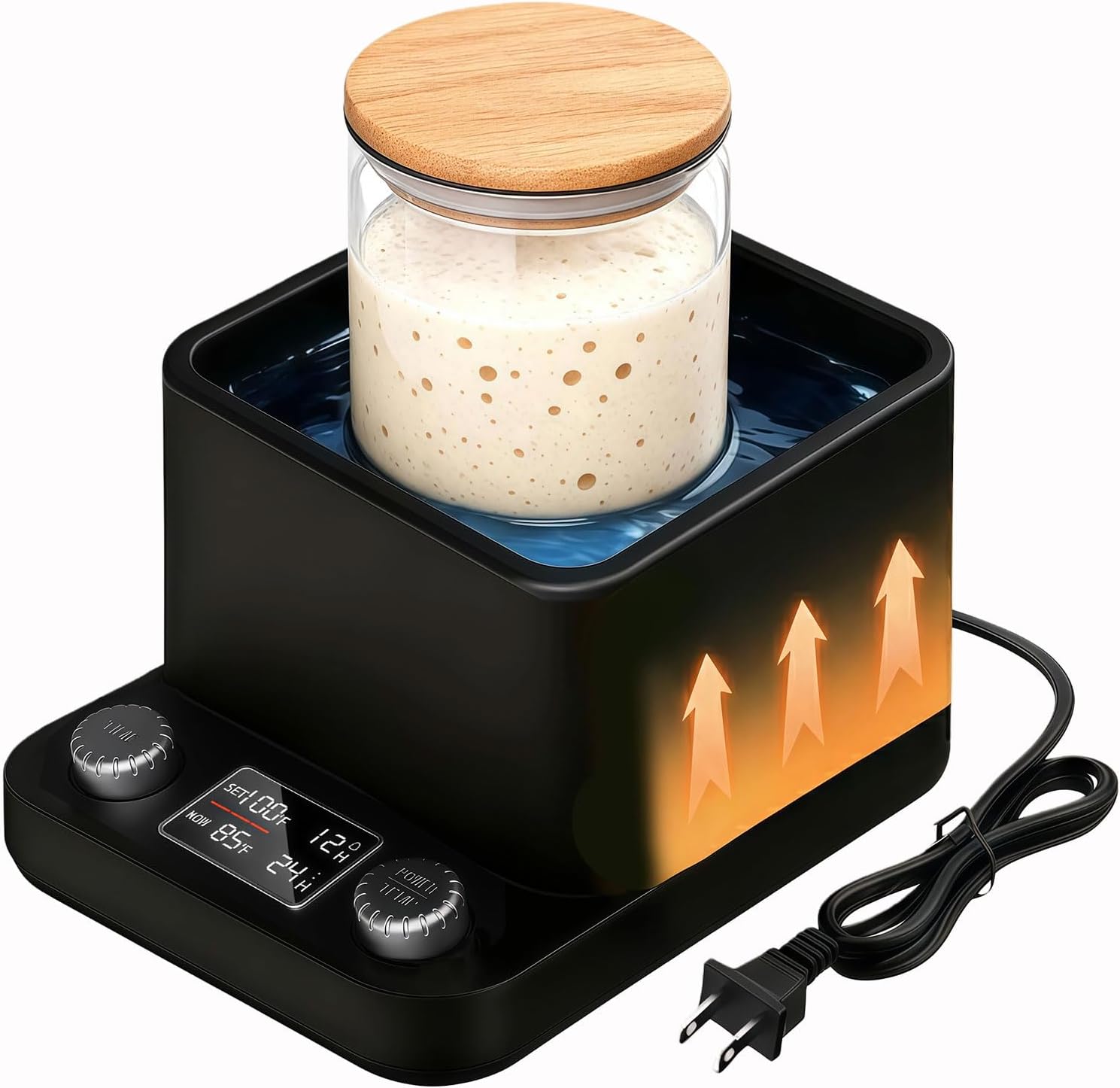
Water acts as an exceptional thermal medium for sourdough fermentation because it transfers heat much more gently than direct electric heating plates. By surrounding your glass jar with a regulated water bath, you completely eliminate localized hot spots that can easily scorch or stress sensitive wild yeast cultures during long resting phases. This method supports predictable biological activity.
This gradual thermal distribution ensures your starter maintains a steady, uniform internal temperature throughout its entire rise cycle. When evaluating different models, look for reservoir groove designs that distribute warmth evenly around the entire base of your preferred fermentation vessel without causing sudden temperature spikes or inconsistent bubbling patterns during colder winter months.
Evaluating Temperature Precision Ranges
Maintaining exact temperature parameters is critical for encouraging optimal lactic acid bacteria and yeast development in your sourdough starter. Most dedicated warmers offer adjustable ranges spanning from seventy up to one hundred and ten degrees Fahrenheit, allowing you to easily target the ideal warm zone required for vigorous microbial activity during cold winter months.
Single-degree thermostat controls allow you to precisely dial in the exact sweet spot required for your specific flour blend and shifting ambient room conditions. Choosing a device with fine digital adjustments ensures you can replicate successful bakes consistently without relying on guesswork or risky kitchen placement strategies throughout the entire baking year.
Understanding Timer and Feeding Reminder Functions
Managing long-term fermentation schedules becomes significantly easier when your warmer includes an extended digital timer. Options featuring up to 198 hours of runtime allow you to manage multi-day proofing processes with complete peace of mind and automated low-power standby modes that prevent accidental over-fermentation risks during extended periods away from the main kitchen workspace.
Built-in automated alert systems and acoustic reminders notify you precisely when it is time to refresh your sourdough starter with fresh flour and water. This helpful feature prevents neglected cultures and ensures regular maintenance routines are never forgotten during busy daily schedules or overnight resting periods, supporting healthy microbial growth consistently over time.
Container Compatibility and Sizing Limits
Carefully selecting a compatible glass jar or fermentation bowl is a vital step before purchasing any dedicated water bath warmer. Most heating plates and reservoir zones accommodate standard containers ranging from twenty-four up to fifty ounces in total capacity, giving you plenty of room for active starter expansion during peak feeding cycles throughout the week.
Always verify the maximum base diameter specified by the manufacturer to ensure your preferred mason jars or ceramic crocks fit securely inside the heating zone without tipping over or blocking the internal water reservoir areas required for even thermal transfer across the glass bottom surface during operation.
Internal Temperature Probing and Real-Time Tracking
Advanced proofing warmers often incorporate stainless steel dough probes designed to monitor the internal temperature of your fermenting culture directly. This eliminates guesswork and provides precise data regarding how your starter reacts to environmental warmth, ensuring your yeast remains within safe and active thresholds at all times during the entire fermentation process without fail.
Real-time monitoring allows you to fine-tune your proofing environment instantly if readings deviate from the optimal microbial growth zone. This helpful feature benefits both novice bakers and experienced professionals seeking absolute consistency across multiple batches of homemade bread without relying on complicated external thermometers or manual check procedures daily.
Safety Features and Energy Efficiency Standards
Operating electrical appliances continuously for multi-day fermentation cycles requires dependable safety mechanisms and low power consumption. Most dedicated sourdough warmers operate on minimal wattage, consuming significantly less electricity than a standard night light while delivering stable heating performance day and night across various household voltage setups safely and efficiently.
Integrated automatic shut-off functions and thermal overheat protection provide essential reassurance when running units overnight or while away from home for hours at a time during busy weekdays. These safety protocols protect your electronic equipment while maintaining eco-friendly operation throughout long-term baking projects without running up unexpected household utility bills over time.
Frequently asked questions
What is the ideal water temperature for a sourdough starter?
The ideal temperature range for maintaining an active and healthy sourdough starter generally falls between seventy-five and eighty-two degrees Fahrenheit. This specific thermal window accelerates yeast activity and lactic acid bacteria development, resulting in predictable fermentation and better bread texture. Dedicated water bath warmers help you maintain this exact sweet spot consistently, even during cold winter months when ambient kitchen temperatures drop significantly below optimal levels, ensuring your starter remains robust and ready for baking at any time.
How do water bath sourdough warmers work?
Water bath sourdough warmers use a small reservoir groove on the heating base that you fill with water. This water acts as a natural heat-conducting medium that wraps completely around the bottom of your fermentation jar or bowl. Instead of applying harsh direct heat from a single point, the warmed water delivers gentle, uniform thermal energy from all sides. This balanced distribution prevents localized overheating and creates a stable, mild environment that supports steady, predictable yeast fermentation over long periods.
Can I leave a sourdough starter warmer running 24/7?
Yes, most dedicated sourdough warmers are specifically designed and engineered for continuous operation. They typically consume very low wattage, often using less electricity than a standard night light. Equipped with safety features like automatic overheat protection and intelligent shut-off timers, these units provide stable heating day and night without consuming excessive power. However, it is always important to monitor water levels in reservoir models to ensure consistent heat conduction during extended multi-day proofing cycles.
Why does my sourdough starter take longer to heat up on a water warmer?
Water acts as a gentle thermal buffer, which naturally causes the overall temperature rise to be slower compared to direct-contact electric heating mats. It typically takes about half an hour for a water bath warmer to bring your fermentation jar up to the target temperature. This gradual warming method is actually an intentional design benefit because it protects your delicate wild yeast cultures from sudden thermal shock, ensuring a smooth and stable transition into the optimal fermentation range.
How do I clean and maintain my water bath sourdough warmer?
Maintaining your water bath warmer requires simple routine care. Always unplug the unit and let it cool completely before cleaning. Wipe down the outer surfaces and the water reservoir groove with a damp cloth or sponge using mild, food-safe soap if necessary. Avoid submerging the entire electronic base in water or using abrasive scrubbers that could damage the surface finish. Regularly emptying and wiping the reservoir prevents mineral buildup and keeps your heating station hygienic.