Appliances · Buying Guide
Best Glass Mixing Bowls for Baking and Meal Prep
Glass mixing bowls remain a kitchen staple for home cooks who value durability and safe food contact during daily baking tasks. Unlike plastic or metal alternatives, quality glass construction resists stains, odors, and chemical leaching while offering clear visibility of ingredients. Selecting the right set involves balancing piece counts, rim designs, and whether matching lids are needed for convenient refrigerator storage after preparation finishes.
Modern glassware options range from compact multi-piece assortments designed for tiny prep tasks to large capacity bowls equipped with airtight covers. Evaluating your typical cooking habits helps determine whether you require deep sides to minimize splashes or lightweight nesting designs that maximize available cabinet space. Reviewing available features ensures your chosen kitchenware supports seamless transitions from countertop mixing directly to serving or chilling.
As an Amazon Associate, StacyLaughs earns from qualifying purchases.
Buying guide
Material Composition and Durability
Choosing glass mixing bowls starts with understanding material variations like tempered glass versus borosilicate alternatives. Tempered variants offer strong resistance to everyday knocks and thermal shock during standard kitchen routines. Borosilicate options push temperature tolerance further, allowing direct transitions from freezing environments to baking heat without structural compromise. Evaluating your typical cooking habits helps identify which glass formulation suits your household demands.
Non-porous glass surfaces naturally prevent the absorption of food odors and stubborn stains that typically ruin plastic alternatives. This hygienic quality ensures your bowls remain neutral in taste and appearance over years of frequent use. Cleaning is straightforward since smooth glass withstands rigorous scrubbing and dishwasher cycles. Prioritizing robust glass construction guarantees reliable performance whether you are whipping delicate egg whites or heavy bread doughs.
Capacity Range and Sizing Options
Selecting an appropriate set requires analyzing the range of capacities included in the collection. Smaller vessels holding under a cup excel at staging spices, whisking single eggs, or melting small butter portions during baking prep. Mid-range options between one and three quarts handle standard cake batters, side dish tossing, and marinade mixing. Large bowls exceeding four quarts provide ample clearance for tossing giant family salads or kneading hefty bread loaves.
Assess your typical meal preparation scale to avoid purchasing excessive specialty sizes that occupy cabinet space without adding practical value. Cooks who frequently bake large batches benefit immensely from extensive ten-piece assortments featuring micro-sizes alongside giant mixing vessels. Conversely, minimalist cooks might prefer streamlined three-pack or five-piece configurations covering core daily requirements. Matching your bowl selection to actual recipes ensures optimal utility during every kitchen session.
Rim Design and Ergonomic Handling
Ergonomic design elements significantly influence how comfortably you manage glass mixing bowls during active food preparation. Wide rims and rolled edges provide a secure finger hold when carrying heavy contents across the kitchen floor. Raised rims also improve stability when lifting bowls out of sinks or tilting them toward baking pans. Paying attention to rim architecture prevents accidental drops and makes continuous stirring sessions noticeably more comfortable.
Flat bases represent another critical structural feature that directly affects countertop stability during vigorous whipping or hand-kneading tasks. A well-balanced flat bottom prevents the vessel from rocking or sliding while you vigorously incorporate stiff ingredients. Deep side walls complement this stability by containing splashes when mixing liquids at high speeds. Evaluating these physical design attributes ensures your glassware remains steady under heavy hand pressure.
Storage Lids and Refrigerator Convenience
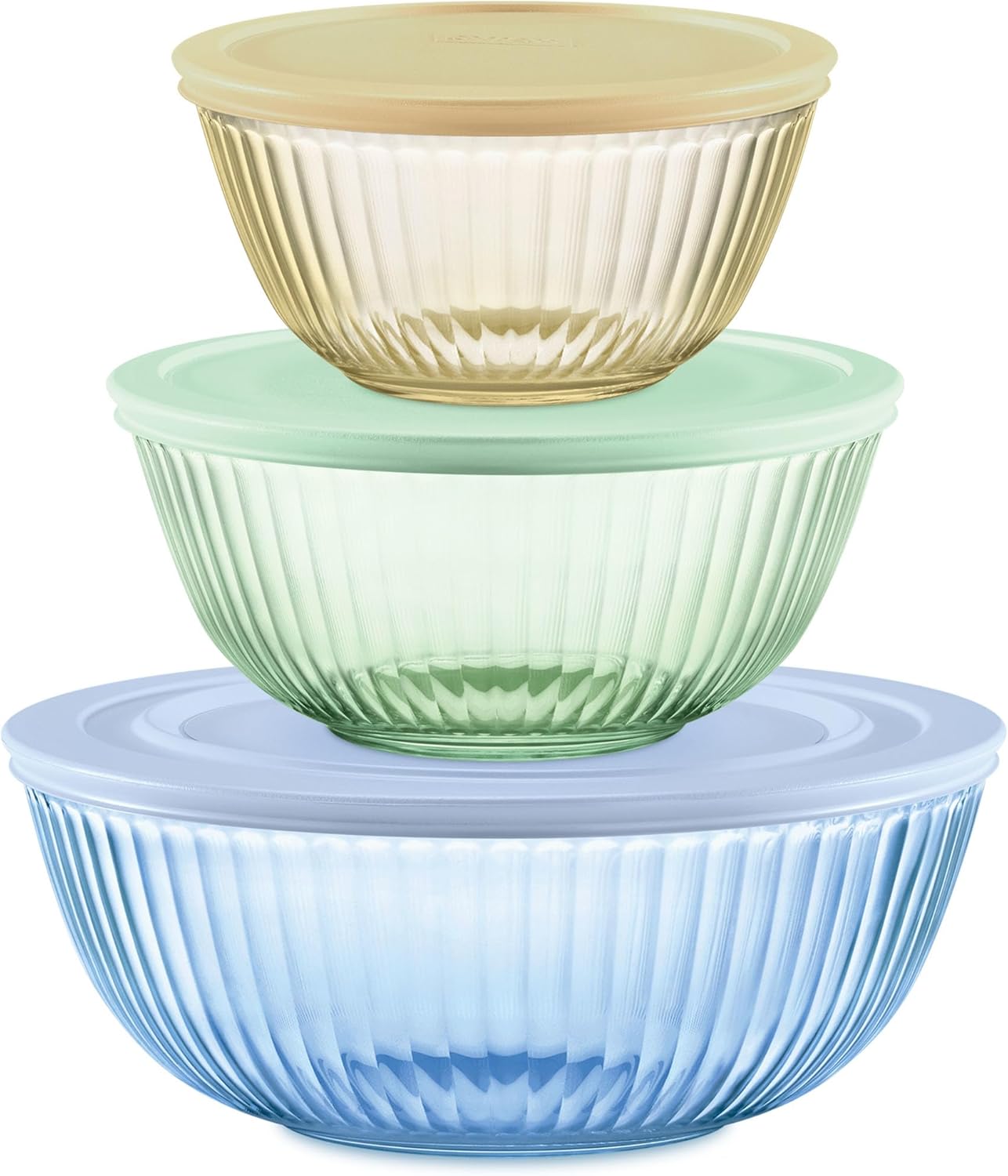
Many modern glass mixing bowl collections include matching plastic covers designed to streamline meal prep and leftover storage. Airtight or snap-on lids eliminate the constant need for disposable plastic wrap when refrigerating pre-portioned ingredients or cooked side dishes. This integrated functionality allows a single bowl to serve as a mixing vessel, baking dish, and storage container. Checking lid compatibility ensures your kitchen workflow remains efficient from counter to fridge.
However, shoppers must review manufacturer instructions regarding lid limitations, particularly concerning microwave or dishwasher safety. Many storage lids are strictly designated for refrigerator use and will warp if exposed to intense heat sources. Understanding these operational boundaries prevents accidental damage while preserving the longevity of your storage covers. Selecting sets with durable, BPA-free lids enhances overall kitchen versatility without compromising safety standards.
Storage Footprint and Nesting Capabilities
Kitchen cabinet space is often at a premium, making nesting bowl designs an essential consideration for home cooks. Nesting sets allow smaller bowls to slide neatly inside larger counterparts, drastically reducing the overall storage footprint on kitchen shelves. This compact arrangement keeps your culinary workspace tidy and prevents cluttered cabinets from becoming chaotic. Evaluating how efficiently a collection stacks together helps maintain an organized home kitchen.
While most glass bowl sets feature space-saving nesting profiles, the total number of pieces influences how high the stack rises. Larger multi-piece assortments create taller stacks that require careful lifting to access smaller bowls buried underneath. Consider your cabinet shelf height and frequency of use when deciding between compact three-piece sets and expansive nine-piece collections. Balancing storage efficiency with accessibility ensures daily cooking tasks remain frictionless.
Maintenance and Temperature Guidelines
Proper maintenance preserves the structural integrity and optical clarity of glass kitchenware over many years of service. Most quality glass mixing bowls are dishwasher safe, allowing for effortless cleanup after messy baking sessions involving flour and sugar. Hand washing remains a safe alternative for preserving specific finishes or delicate rim details. Always follow the manufacturer guidelines regarding sudden temperature shifts to prevent thermal shock fractures in standard glassware.
Temperature limits vary significantly between standard tempered glass and high-end borosilicate options regarding oven and microwave compatibility. Certain specialty glassware collections explicitly forbid direct heating inside microwave or conventional oven appliances, restricting their use to mixing and cold storage. Verifying these thermal thresholds before purchase prevents costly accidents and ensures your new bowls safely handle your preferred cooking methods, from chilling salads to baking casseroles.
Frequently asked questions
Are glass mixing bowls safe for microwave and oven use?
Compatibility varies significantly depending on specific manufacturer instructions and the underlying glass composition of each collection. Many tempered and high borosilicate glass bowls safely withstand microwave heating and oven baking without structural issues. However, certain multi-piece sets explicitly prohibit oven or microwave usage due to specific glass formulations or included materials. Always review the product care guidelines provided by the manufacturer before subjecting any glass bowl to extreme heat or thermal appliances to prevent cracking or safety hazards during food preparation.
Do glass mixing bowls absorb food odors or stains?
High-quality glass mixing bowls feature exceptionally smooth, non-porous surfaces that naturally resist absorbing food odors, cooking oils, and stubborn tomato or grease stains. Unlike plastic alternatives that frequently retain lingering smells and permanent discoloration over time, glass remains completely neutral in appearance and scent. This non-porous characteristic ensures your bowls stay fresh and clean through years of heavy use, whether you are marinating pungent garlic meats or mixing delicate pastry batters without flavor cross-contamination.
Can I store food in glass mixing bowls using plastic lids?
Many modern glass mixing bowl collections include matching BPA-free plastic lids specifically engineered for convenient refrigerator and freezer food storage. These flexible covers create a secure seal over the bowl rim to lock in food freshness and prevent accidental spills on your refrigerator shelves. However, users should carefully verify whether the lids are rated for microwave or dishwasher use, as many storage covers require top-rack placement or must be kept entirely away from heat sources to avoid warping.
How do I clean and maintain glass mixing bowls properly?
Glass mixing bowls are generally dishwasher safe, allowing for simple cleanup after messy baking and cooking sessions involving flour, dough, or sugar. The smooth glass surface cleans easily with standard dish detergent and warm water when washing by hand. To maintain long-term clarity, avoid using harsh abrasive scouring pads that might scratch the exterior finish. Always follow manufacturer guidelines regarding sudden temperature changes, letting hot bowls cool gradually before exposing them to cold water to prevent thermal shock.
Are nesting glass mixing bowls space-saving in small kitchens?
Nesting glass mixing bowl sets provide an exceptionally space-saving solution for crowded kitchen cabinets. By allowing smaller bowls to fit neatly inside larger counterparts, these sets consolidate multiple sizing options into a single vertical stack. This design keeps your shelves organized and frees up valuable cabinet space for other diningware. When selecting a nesting set, consider your shelf height and how often you need to access items buried at the bottom of the stack.