Appliances · Buying Guide
Best Wire Cooling Racks for Baking and Cooling Bread Safely
Finding the right wire cooling rack for baking can completely transform how your cookies, cakes, and artisan loaves turn out after leaving the oven. Proper air circulation prevents moisture from trapping underneath baked goods, keeping crusts crisp and preventing soggy bottoms during cooling sessions.
Whether you need compact tiered storage for massive batches or heavy-duty stainless steel grids that double as roasting trays, evaluating construction materials and dimensions ensures you choose a reliable kitchen companion tailored specifically to your daily baking routine.
As an Amazon Associate, StacyLaughs earns from qualifying purchases.
Buying guide
Material Composition and Durability
Choosing the right material for your wire cooling rack directly impacts long-term kitchen performance, cleaning convenience, and safety in high-heat environments. Stainless steel models, particularly professional grade 304 variants, resist rust, warping, and bending without relying on chemical coatings. This robust metallic build ensures safe performance up to 575 degrees Fahrenheit, letting you transition smoothly from cooling delicate cookies to roasting savory meats inside a hot oven.
Alternatively, coated wire versions offer non-stick benefits that help prevent delicate items from sticking during release, though they typically demand careful hand washing to preserve their protective finish. Evaluate whether you prefer unplated stainless steel for aggressive scrubbing or coated steel for delicate pastries, matching your cleaning habits and heat requirements to the right physical build.
Dimensions and Oven Compatibility
Dimension matching remains a critical factor when pairing wire cooling racks with your existing baking sheets and oven interiors. Standard half-sheet pans generally require eleven-and-a-half by sixteen-and-a-half-inch grids, while jelly roll pans accommodate slightly smaller ten-by-fifteen-inch options. Verifying these measurements prevents frustrating size mismatches that leave your rack sliding around or failing to sit flat inside your pans.
Furthermore, checking maximum temperature limits ensures your chosen wire rack can safely endure high-heat roasting tasks. Many stainless steel options withstand up to 575 degrees Fahrenheit, allowing versatile transitions from countertop cooling to oven baking. Always confirm that your chosen rack matches both your bakeware sizes and your typical cooking temperatures to maximize everyday kitchen utility.
Air Circulation and Height Clearance
Proper air circulation is the primary functional reason to use a wire cooling rack rather than placing baked goods directly on a flat countertop. Elevated feet raise baked items off surfaces, allowing cool air to flow freely underneath cookies, cakes, and artisan breads. This continuous airflow prevents condensation from forming on the bottom of your pastries, eliminating soggy textures and preserving desired crust crispness.
Height clearance matters significantly for bulky items like sourdough loaves, which benefit from taller elevated legs reaching up to three inches. Higher clearance ensures that thick crusts cool evenly without steaming against the counter. When selecting a rack, consider your typical baking items to determine whether standard low-profile feet or tall elevated legs best support your culinary cooling needs.
Storage Solutions and Stackable Tiers
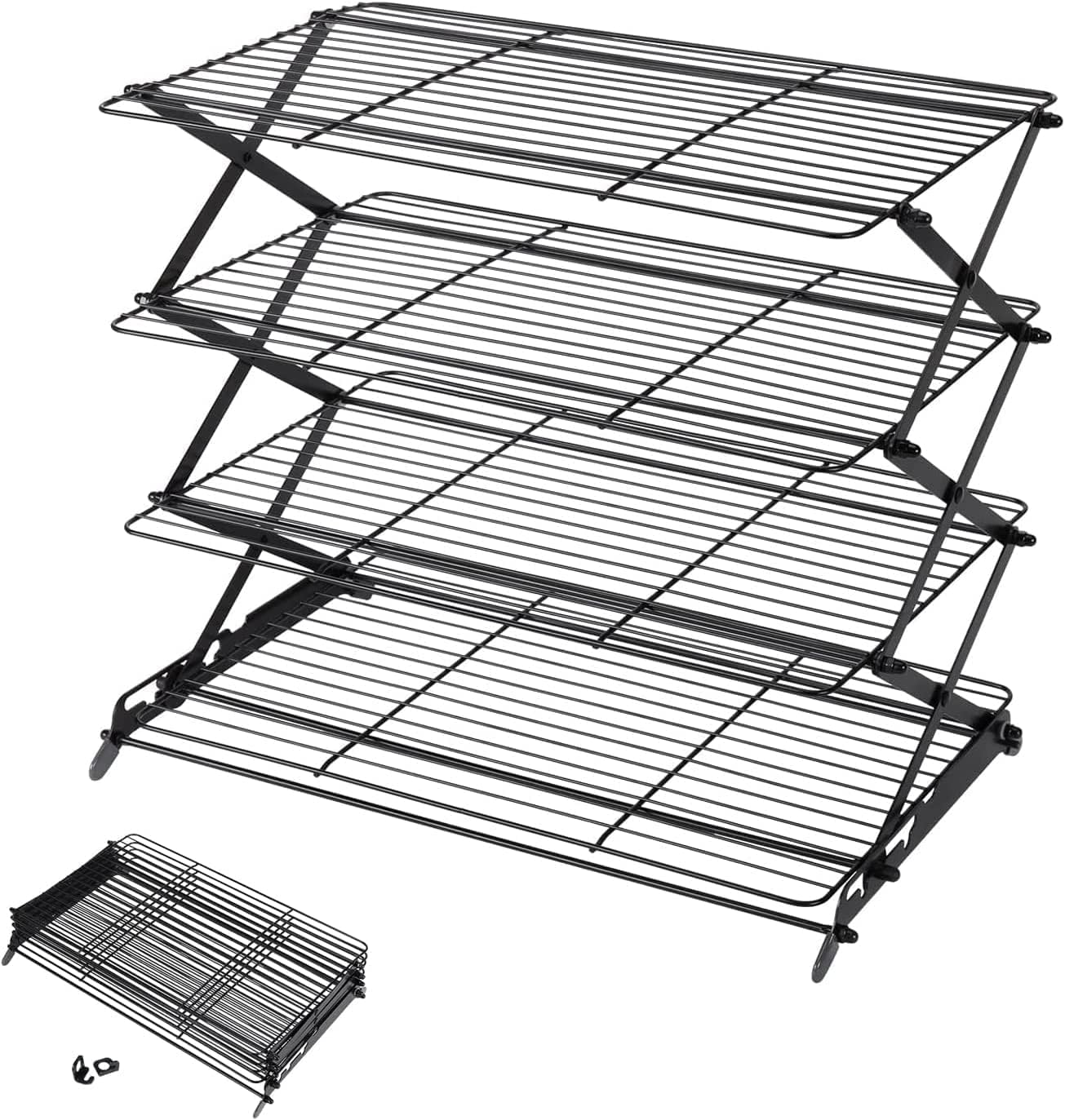
Managing kitchen storage space requires careful thought when selecting cooling racks, especially if your cabinets are already filled with bakeware. Multi-tier stackable systems provide an ingenious way to cool massive batches of cookies or muffins simultaneously without hogging valuable countertop real estate. These collapsible units fold down compactly after use, making them ideal for home bakers who love baking in volume but struggle with tight storage constraints.
On the other hand, traditional single-layer stainless steel racks cannot be stacked vertically, meaning they require flat storage space inside cabinets or pantries. However, their sturdy one-piece build often allows them to double as storage shelves or roasting trays. Weigh your available kitchen storage against your typical batch sizes to decide whether a space-saving vertical tier system or a classic flat rack fits your lifestyle.
Cleaning and Maintenance Requirements
Maintaining your wire cooling racks properly ensures they remain sanitary and visually appealing over years of heavy baking use. Food-grade stainless steel options are generally dishwasher friendly and tolerate aggressive scrubbing or soaking without degrading. This makes post-baking cleanup straightforward, allowing you to remove sticky sugar glazes or roasted food residues quickly with a simple brush or run through the automatic dishwasher cycle.
Conversely, models featuring non-stick coatings require gentler handling, such as hand washing in warm soapy water using soft cloths rather than abrasive metal pads. Following manufacturer maintenance guidelines prevents premature chipping or scratching of the protective surface. Assessing your willingness to hand-wash coated items versus tossing stainless steel grids directly into the dishwasher helps guide you toward a low-maintenance kitchen tool.
Pairing Racks with Baking Sheets
Combining wire cooling racks with matching sheet pans creates a versatile cooking system that handles everything from crispy bacon to roasted vegetables. Purchasing a coordinated set ensures that the wire grid fits snugly inside the rimmed baking sheet without sliding or scratching the pan finish. This seamless pairing allows fats to drip away from meats during oven roasting while keeping your heating elements clean.
Evaluating whether you need a bundled set or standalone racks depends entirely on your current bakeware inventory. If your cabinets already overflow with high-quality baking sheets, buying individual wire grids is more practical and cost-effective. However, investing in a matched combo set provides immediate readiness for roasting, baking, and cooling without worrying about compatibility issues between separate brands.
Frequently asked questions
Can I use wire cooling racks inside a hot oven?
Many stainless steel wire cooling racks are engineered to withstand high temperatures up to 575 degrees Fahrenheit, making them completely safe for oven use during roasting and baking tasks. You can confidently place them inside your oven for roasting meats, baking pastries, or crisping bacon on top of sheet pans. However, it is essential to check the specific manufacturer guidelines for your exact model, as certain coated racks or multi-tier systems may have different heat limitations compared to heavy-duty stainless steel.
How do I prevent baked goods from sticking to wire cooling racks?
Preventing sticking depends largely on the material of your cooling rack and how you handle baked items after removal from the oven. For stainless steel grids, letting baked goods cool slightly in their pan before transferring them can reduce sticking risks. Additionally, lightly oiling the wires or choosing models featuring corrugated surfaces or non-stick coatings helps facilitate smooth food release. Cleaning the racks thoroughly after every use also prevents baked-on residue buildup that causes future sticking issues.
Are multi-tier cooling racks stable enough for heavy cakes?
Multi-tier cooling racks manufactured from heavy-gauge steel are specifically designed to support significant weight, including heavy artisan pies and dense cakes. Their sturdy construction distributes weight evenly across the stacked tiers. However, you must assemble the tiers correctly according to the manufacturer instructions and place the system on a flat, stable surface. While they handle heavy loads impressively, always exercise caution and center large items carefully to prevent tipping during busy baking sessions.
Can I put my stainless steel wire cooling racks in the dishwasher?
Food-grade stainless steel wire cooling racks are generally dishwasher friendly and designed to resist rust and corrosion during automated cleaning cycles. This makes post-baking cleanup effortless after handling sticky desserts or savory roasted meals. On the other hand, racks with specialized non-stick coatings often require gentle hand washing in warm soapy water to protect their finish from harsh dishwasher detergents. Always verify the manufacturer care instructions before placing coated items into the machine.
What size wire cooling rack fits a standard half-sheet pan?
A standard half-sheet baking pan typically pairs best with wire cooling racks measuring approximately eleven and a half by sixteen and a half inches. This specific dimension allows the rack to drop securely inside the rimmed edges of the pan without sliding around during use. Smaller jelly roll pans usually require ten-by-fifteen-inch grids. Measuring your existing baking sheets before purchasing new wire racks ensures a proper fit for both countertop cooling and oven-roasting tasks.