Appliances · Buying Guide
Best Wood Stone Pizza Oven Choices for Crispy Crusts
Creating pizzeria-quality pizza at home relies heavily on proper heat distribution, steady thermal retention, and consistent moisture absorption. Whether you use a dedicated backyard wood-fired setup or convert a standard indoor kitchen oven, cordierite baking stones and specialized accessories provide the reliable thermal mass needed for authentic, crispy crusts every single time you bake.
Exploring these versatile baking setups allows home cooks to prepare flatbreads, artisan bread, calzones, and frozen pizzas with professional results. This curated selection covers various rectangular and round stone dimensions, complete accessory kits, and outdoor wood-fired appliances designed to elevate your regular baking routine without complicated guesswork or excessive preparation steps.
As an Amazon Associate, StacyLaughs earns from qualifying purchases.
Buying guide
Material Composition and Thermal Endurance
When selecting a baking stone, the primary material dictates its long-term durability and overall heat performance. Cordierite is widely favored across various culinary applications because of its exceptional thermal shock resistance, allowing the structure to transition between wide temperature ranges without cracking under intense heat exposure from domestic ovens or open-flame grills.
High-grade manufacturing options can safely withstand extreme temperature thresholds, often ranging from 1112 degrees up to 1500 degrees Fahrenheit during active cooking sessions. Evaluating your typical cooking temperatures ensures the chosen stone matches your kitchen oven or outdoor grill capabilities safely over years of regular baking use without unexpected thermal failure or material degradation.
Sizing and Dimensional Clearance
Sizing requires careful attention to both your cooking appliance interior space and your daily portion sizes for family meals. Round stones typically range from 13 inches to 16 inches in diameter, while rectangular models offer specific width and length proportions designed to sit comfortably on standard indoor oven wire racks or outdoor grill grates.
Measuring your oven or grill cooking surface before purchasing prevents frustrating clearance issues during food placement. Larger surfaces provide ample room for family-sized pizzas or back-to-back baking sessions, whereas compact dimensions fit smaller kitchen appliances easily without blocking necessary hot air circulation paths inside the heated chamber.
Moisture Absorption and Crust Quality
The secret to achieving an authentic pizzeria-style crispy crust lies in the microscopic porosity of quality baking stones. Porous cordierite materials actively pull excess moisture away from raw pizza dough during the initial baking phase, successfully preventing soggy center spots and uneven baking results across the entire pie surface during cooking.
This effective moisture management promotes steady heat transfer and reliable crisp bottom crusts across a wide variety of daily baked goods. Beyond standard pizza recipes, this inherent material property benefits artisan breads, flatbreads, calzones, and flaky pastries by delivering professional textures directly in your home kitchen environment every single time you bake.
Included Accessories and Tool Value
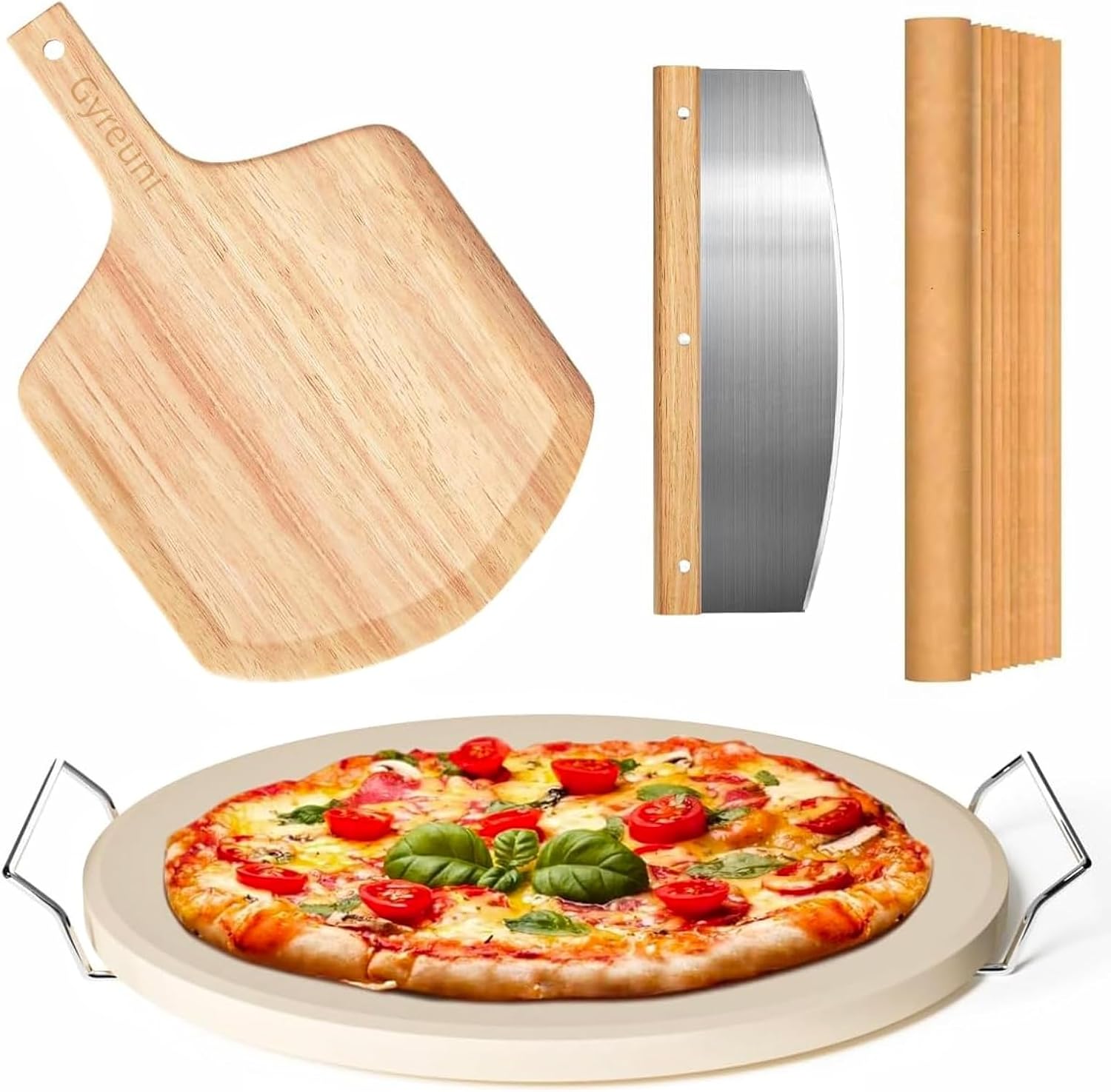
Many baking stone purchases include supplementary tools designed to streamline the entire pizza-making process from initial dough preparation to final serving stages in your home kitchen. Wooden peels featuring tapered front edges allow cooks to slide unbaked dough smoothly onto hot stone surfaces without bunching or tearing the delicate crust structure during transfer.
Additional components such as stainless steel rocking cutters, protective serving racks, metal dough scrapers, and parchment sheets add significant practical value to any product bundle. Evaluating which accessories are included in a set helps determine overall convenience and reduces the need for purchasing multiple separate kitchen tools over time.
Maintenance and Cleaning Guidelines
Proper maintenance ensures your baking stone lasts for years while retaining its essential functional characteristics. Because cordierite stones feature porous surfaces, manufacturers explicitly advise against using soap or harsh chemical detergents during cleaning, as the stone will absorb those chemical residues and emit unpleasant odors during future preheating cycles in home ovens.
Instead, let the stone cool completely after use, scrape off excess food debris with a flat spatula, and scrub gently with warm water and a brush. Surface staining from baking oils and cheese is completely normal and actually improves cooking performance over time without harming structural functionality or baking quality.
Fuel Types and Outdoor Appliance Versatility
Outdoor wood-fired pizza ovens offer a distinct cooking experience compared to standard indoor kitchen oven setups. Utilizing natural wood fuel imparts authentic smoky flavors to pizzas, meats, and roasted dishes while achieving high ambient cooking temperatures quickly within an enclosed powder-coated carbon steel chamber during operation.
These backyard appliances often feature adjustable chimneys, built-in thermometers, ash storage drawers, and mobility wheels for convenient patio placement and transport. Choosing between an indoor baking stone and a dedicated outdoor wood-fired oven depends entirely on your available backyard patio space, fuel preferences, and desired outdoor cooking style throughout the year.
Frequently asked questions
Can I use soap to clean my cordierite pizza stone?
No, you should never use soap or harsh chemical detergents to clean a cordierite pizza stone. Because the stone is porous, it will absorb the soap residue and release unpleasant chemical odors or soapy flavors into your food during the next preheating cycle. Instead, let the stone cool down completely after baking, scrape away excess food residue with a spatula, and scrub it gently using only warm water and a stiff brush. Normal surface staining from oils is completely expected.
Do I need to preheat my pizza stone before baking?
Yes, preheating your pizza stone is an essential step for achieving a properly baked, crispy crust. Manufacturers generally recommend placing the cold stone into a cold oven and preheating it for at least thirty minutes at high temperatures, such as 400 degrees Fahrenheit or higher, before sliding your pizza onto the surface. Putting a cold stone into a hot oven or placing dough onto an unheated stone can result in uneven cooking, soggy dough, or thermal shock cracking.
What causes dark stains on a pizza stone, and do they affect performance?
Dark spots and brownish discoloration on a cordierite baking stone are caused by natural oils, melted cheese, and crust crumbs absorbing into the porous material during high-heat baking. These stains are completely normal, expected, and harmless. They do not negatively affect the performance, functionality, or safety of the stone in any way. In fact, many experienced bakers prefer a well-used stone that has accumulated character over time, though you can use parchment paper if you prefer to avoid direct contact staining.
Can outdoor wood-fired pizza ovens be used for cooking foods other than pizza?
Absolutely, outdoor wood-fired pizza ovens are highly versatile appliances designed for much more than just baking pizzas. You can use them to roast meats, steaks, fish, whole chickens, and vegetable dishes, as well as bake artisan bread, calzones, and flatbreads. The enclosed cooking chamber and adjustable airflow components allow you to manage heat levels effectively, making these patio ovens suitable for a wide range of backyard culinary explorations and outdoor roasting tasks beyond standard pizza nights.
What is the purpose of a wooden pizza peel included in these sets?
A wooden pizza peel serves as a dedicated transfer tool designed to help you safely slide unbaked pizza dough onto a scorching hot baking stone inside an oven or grill without burning your hands. The tapered edge allows the paddle to slip easily underneath prepared dough, while wood materials prevent raw dough from sticking as easily compared to certain metal surfaces. Additionally, the long handle keeps your hands and arms safely away from extreme heat sources during loading and unloading.