Appliances · Buying Guide
Best Coffee and Sugar Jars for Stylish Kitchen Countertops
Organizing a coffee station or kitchen countertop requires reliable storage containers that keep dry ingredients fresh while enhancing your kitchen decor. Selecting the right coffee and sugar jars depends heavily on your available counter space, preferred materials like borosilicate glass or ceramic, and whether you need included accessories such as matching spoons, labels, or storage stands to streamline your daily routine.
The market offers numerous practical configurations featuring airtight seals, specialized waterproof labels, and matched wooden trays to suit different aesthetic preferences. Reviewing specific design attributes, capacities, and construction materials helps match a container set precisely to your daily storage habits, pantry organization goals, and available cabinet or countertop space limits.
As an Amazon Associate, StacyLaughs earns from qualifying purchases.
Buying guide
Material Selection and Durability
Choosing the appropriate material for your coffee and sugar containers directly impacts both daily durability and the overall visual harmony of your kitchen counter. Borosilicate glass offers transparent visibility and impressive thermal resistance, while glazed ceramic provides an opaque, solid structure with timeless aesthetic appeal. Evaluating these options helps align your storage choice with daily handling requirements and aesthetic preferences.
Consider how each structural material fits your household cleaning habits, noting that transparent glass lets you monitor remaining inventory levels instantly, whereas ceramic protects sensitive contents from direct light exposure. Matching the construction material to your maintenance routine ensures long-term satisfaction without introducing unexpected burdens into your kitchen upkeep schedule.
Capacity and Storage Volume
Selecting correct container capacities prevents constant refilling while avoiding oversized jars that crowd limited countertop space. Smaller fifteen to sixteen-ounce jars suit modest quantities of specialty coffee or sweeteners, whereas twenty-five to thirty-five-ounce containers accommodate larger baking staples like flour and sugar. Assess your typical consumption rates before choosing a specific container volume.
Think about whether uniform sizing or mixed capacities best serve your daily workflow. Uniform sets create a streamlined visual rhythm, but varied volumes accommodate asymmetrical ingredient quantities more effectively. Matching jar dimensions to your actual pantry inventory ensures efficient space utilization without cluttering your preparation areas.
Airtight Lids and Sealing Mechanisms
Maintaining freshness for dry goods like coffee and sugar requires reliable sealing mechanisms integrated into the container lids. Silicone rubber gaskets paired with bamboo or wooden lids create a tight barrier against ambient air and household moisture. This prevents clumping in sugar and preserves aromatic oils in roasted coffee beans over extended storage periods.
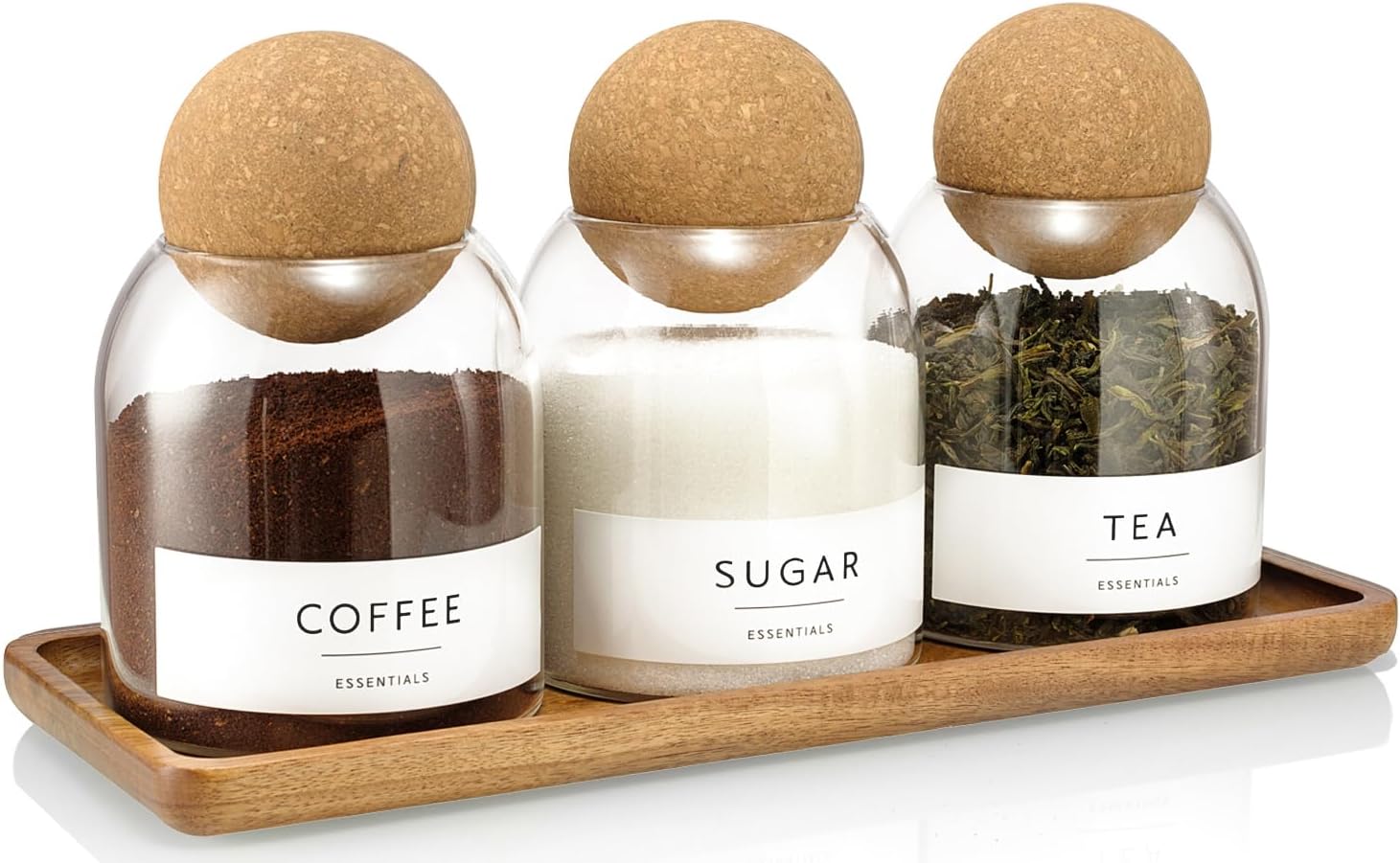
Alternative closures like natural cork stoppers offer rapid manual access but generally lack mechanical gaskets for airtight protection. Review your local humidity levels and storage duration expectations when deciding between gasketed wooden lids and simple stoppers. Prioritizing proper sealing performance protects ingredient quality over daily use cycles.
Included Accessories and Stands
Integrated accessories such as matching spoons, hanging loops, and wooden display stands enhance the functional convenience of storage jar sets. Hanging spoons keep scooping tools instantly accessible, eliminating the need to search through drawers during morning routines. Dedicated wooden trays or stands organize multiple containers into a single stable footprint.
Evaluate whether your counter setup benefits from a structured stand or if independent jars offer better placement flexibility. While stands consume slightly more vertical or horizontal space, they prevent shifting and maintain an orderly appearance. Assess how included accessories align with your preferred countertop arrangement and dispensing habits.
Labeling and Content Identification
Clear labeling systems prevent mix-ups between similar-looking white ingredients like sugar, salt, and flour during busy cooking sessions. Many container sets include preprinted and write-in polyester labels designed to resist water and oil splashes near coffee stations. Alternatively, permanent laser-engraved lettering integrates directly onto ceramic bodies for enduring identification.
Assess whether you prefer minimalist adhesive labels that allow custom text placement or permanent engravings that never peel or fade. Waterproof label materials withstand routine wiping and cleaning without degrading. Choosing an effective identification method ensures your coffee and sugar canisters remain clearly marked through daily kitchen tasks.
Cleaning and Maintenance Requirements
Proper maintenance preserves the finish and structural integrity of your storage containers over years of daily kitchen use. Glass and ceramic bodies often support dishwasher cleaning, while wooden lids and cork stoppers typically require careful hand wiping to prevent warping. Review manufacturer care instructions before purchasing to match upkeep demands.
Removable silicone seal rings simplify deep cleaning by eliminating hidden crevices where moisture or residue might accumulate. Establishing a straightforward cleaning routine prevents stubborn stains and keeps your containers hygienic. Balancing aesthetic wood elements with easy-to-sanitize glass or ceramic components ensures effortless upkeep.
Frequently asked questions
Are glass coffee and sugar jars safe for the dishwasher?
Most borosilicate glass and ceramic jar bodies are designated as dishwasher safe, allowing for convenient sanitization between refills. However, wooden lids, bamboo covers, cork stoppers, and attached silicone gaskets generally require hand washing or gentle wiping to preserve their natural finishes and prevent warping. Always check specific manufacturer instructions before placing any component into a dishwasher, as mixed-material sets often require different cleaning methods for the lids and the main container bodies.
Do wooden lids provide an airtight seal for keeping coffee fresh?
Wooden and bamboo lids equipped with flexible silicone rubber gaskets create an effective airtight seal that locks out ambient air and moisture. This tight barrier helps protect roasted coffee beans from losing their aromatic oils and prevents granulated sugar from clumping in humid environments. While traditional cork stoppers offer quick manual closure, lids featuring rubber gasket rings deliver superior protection against moisture intrusion, ensuring your stored dry ingredients remain fresh over longer periods.
How do I choose the right container capacity for my kitchen?
Choosing the correct capacity depends on how quickly you consume specific ingredients and your available counter space. Smaller fifteen to sixteen-ounce jars work well for specialty coffee blends or limited sweetener quantities where frequent refilling is not an issue. Larger twenty-five to thirty-five-ounce containers accommodate bulk baking staples like flour or everyday sugar supplies. Evaluate your household consumption rates and counter footprints to determine whether compact or high-volume jars best fit your routine.
What are the advantages of containers with included spoons and stands?
Containers featuring matching spoons and storage stands offer enhanced convenience and countertop organization. Hanging or resting spoons ensure that a scooping tool is always instantly available, saving time during busy morning routines and preventing misplacement. Dedicated wooden stands or trays group multiple jars into a single stable footprint, keeping your coffee station tidy while preventing individual containers from sliding around. These integrated accessories streamline dispensing tasks and elevate the overall appearance of your kitchen counter setup.
How should I clean and maintain wooden lids and silicone seals?
Wooden lids and acacia accessories should be wiped clean with a damp cloth and dried promptly rather than being immersed in water or run through a dishwasher. Applying natural wood wax oil periodically helps maintain their durability and food-safe finish. Silicone seal rings can usually be removed from the lids to wash away accumulated residue, ensuring thorough hygiene without damaging the natural wood components. Following these simple maintenance practices extends the lifespan of your container set.